Introduction: Unlocking Financial Freedom Through Smart Passive Income
In an era defined by dynamic financial landscapes and a persistent pursuit of financial independence, passive income has emerged as a beacon of hope for many. The allure of earning money while you sleep, travel, or pursue your passions is undeniably strong. However, not all passive income opportunities are created equal, and the journey from aspiration to achievement is paved with careful evaluation and strategic decision-making.
This article serves as a comprehensive guide for both budding and seasoned investors looking to navigate the diverse world of passive income. We will delve into the critical factors one must consider before committing time, capital, and effort to any passive income venture. From understanding the true definition of passive income to assessing risk, scalability, and long-term viability, this guide will equip you with the tools and insights needed to make informed investment decisions. Our goal is to demystify complex concepts, offer actionable insights, and provide a framework for evaluating passive income opportunities that resonate with your financial goals and risk tolerance.
Table of Contents
What Exactly is Passive Income? Defining the Dream
Before we dive into evaluation, it’s crucial to establish a clear understanding of what “passive income” truly means. Often, the term is misconstrued as “get-rich-quick” schemes or income requiring absolutely no effort. In reality, truly passive income typically involves an initial investment of time, money, or both, which then generates ongoing income with minimal additional active involvement.
Distinguishing Passive from Active Income
The fundamental difference lies in the ongoing effort required.
- Active Income: Directly tied to the hours you work or the direct services you provide. Examples include your salary from a job, freelance fees, or commissions. If you stop working, the income stops.
- Passive Income: Income generated from an asset, investment, or business where you are not actively involved in the day-to-day operations. It requires upfront work or capital, but then continues to pay you.
“The best way to differentiate passive from active income is to ask yourself, ‘If I stopped working on this tomorrow, would the money continue to flow?’ If the answer is yes, you’re likely dealing with a passive income stream,” notes financial author and advisor David Chilton.
Common Misconceptions: The “Set It and Forget It” Fallacy
While the goal is minimal ongoing effort, few passive income streams are truly “set it and forget it.” They often require:
- Initial Setup and Investment: Creating an online course, buying a rental property, or building a dividend portfolio.
- Maintenance and Monitoring: Occasional updates, dealing with tenant issues, rebalancing portfolios, or marketing.
- Scalability Efforts: Expanding your reach, adding new products, or finding new investment opportunities.
Understanding this distinction is the first step towards a realistic and successful passive income strategy.
Key Evaluation Criteria for Passive Income Opportunities
Now, let’s explore the essential criteria you should use to thoroughly evaluate any passive income opportunity.
1. Initial Investment Required: Time vs. Money
Every passive income stream demands an investment. This can be significant capital, considerable time, or a combination of both.
- Capital-Intensive Opportunities: These often require a substantial financial outlay upfront.
- Examples: Real estate rentals, dividend stock portfolios, peer-to-peer lending.
- Evaluation Points:
- Availability of Funds: Do you have the necessary capital without overextending yourself?
- Opportunity Cost: What else could you do with that capital?
- Financing Options: Are loans or other financing mechanisms available, and what are their terms?
- Time-Intensive Opportunities: These require significant upfront effort to create or build the asset.
- Examples: Creating an online course, writing an e-book, starting a blog with affiliate marketing, developing an app.
- Evaluation Points:
- Skill Set: Do you possess the necessary skills, or are you willing to acquire them?
- Time Commitment: How much time will it realistically take to build the asset to a revenue-generating stage?
- Long-Term Vision: Is this a project you are passionate enough about to see through?
Table 1: Investment Requirements Spectrum
| Opportunity Type | Initial Time Input | Initial Money Input | Ongoing Effort |
| Rental Property | Low-Moderate | High | Moderate |
| Dividend Stocks/ETFs | Low | Moderate-High | Low |
| Online Course | High | Low-Moderate | Low-Moderate |
| Affiliate Marketing Blog | High | Low | Low-Moderate |
| Peer-to-Peer Lending | Low | Moderate | Low |
Export to Sheets
Note: These are general estimations and can vary widely based on specific circumstances.
2. Potential Return on Investment (ROI) and Income Stream
This is arguably the most exciting, yet most frequently overestimated, aspect. It’s crucial to be realistic.
- Projected Income: Research and understand the typical income generated by similar ventures. Be wary of opportunities promising exceptionally high, unrealistic returns.
- ROI Calculation: For capital-intensive investments, calculate the potential ROI.
- Example: Rental Property
- Purchase Price: $200,000
- Renovation Costs: $20,000
- Annual Rental Income: $18,000
- Annual Expenses (taxes, insurance, maintenance): $6,000
- Net Annual Income: $12,000
- Initial Investment: $220,000
- ROI: ($12,000 / $220,000) * 100% = 5.45%
- Example: Rental Property
- Income Stability and Predictability:
- Highly Predictable: Bond interest, fixed annuities, some peer-to-peer lending platforms.
- Moderately Predictable: Dividend stocks (though dividends can be cut), established rental properties.
- Variable/Unpredictable: Affiliate marketing, online course sales (subject to market trends, competition, marketing effort).
3. Risk Assessment: Understanding the Downside
Every investment carries risk. Passive income is no exception. A thorough risk assessment is paramount.
- Market Risk: Changes in economic conditions, consumer demand, interest rates, or regulatory environment.
- Example: A recession could lead to higher vacancy rates for rental properties or lower sales for digital products.
- Liquidity Risk: How easily can you convert your investment back into cash without significant loss?
- Example: Selling a rental property can take months; selling individual stocks is quick.
- Credit Risk (for lending-based opportunities): The risk that a borrower will default on their payments.
- Example: Peer-to-peer lending platforms carefully vet borrowers, but defaults can still occur.
- Operational Risk: Problems with the day-to-day management of the passive income stream.
- Example: Dealing with difficult tenants, platform changes for online businesses, technical glitches.
- Regulatory/Legal Risk: Changes in laws or regulations that could impact your income.
- Example: New zoning laws for short-term rentals, changes in tax codes.
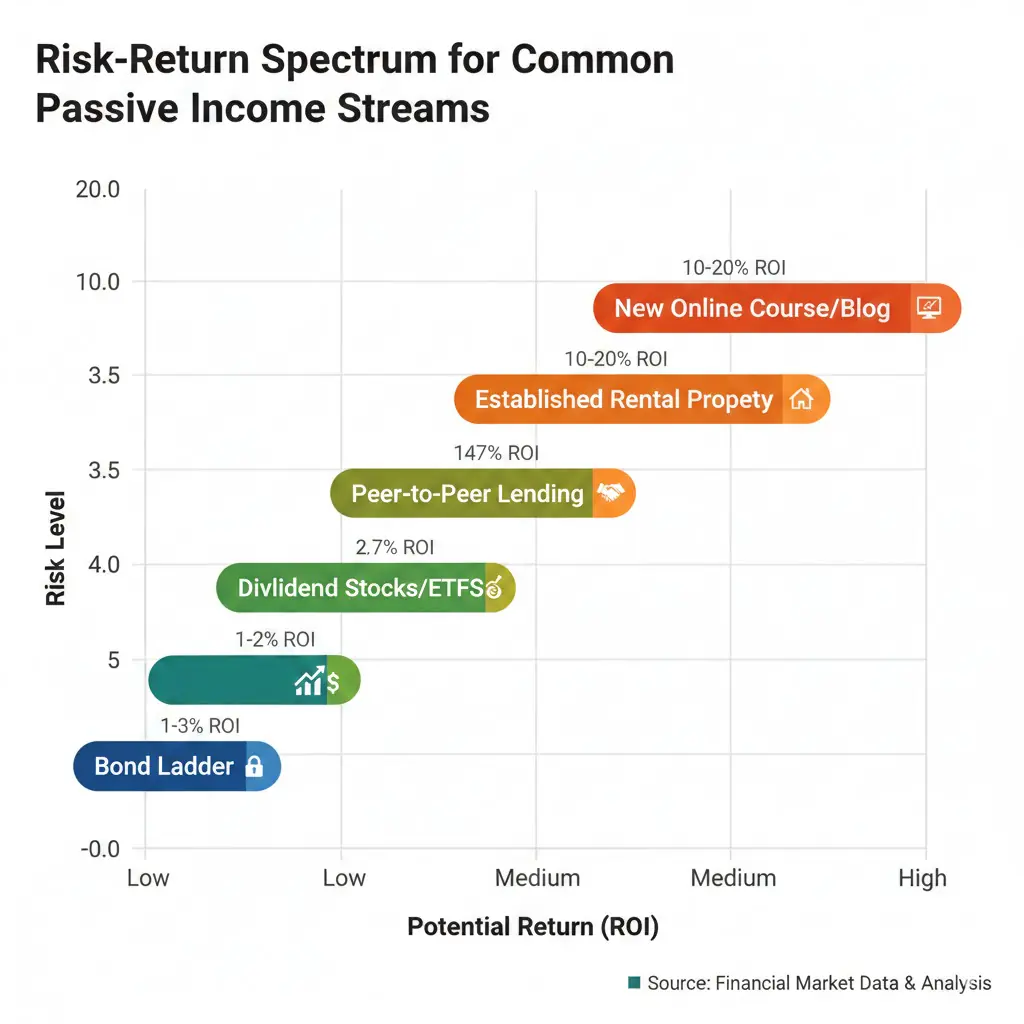
Chart 1: Risk-Return Spectrum for Common Passive Income Streams
4. Scalability Potential: Growth and Expansion
Scalability refers to the ease with which you can increase your income from a particular stream without a proportional increase in effort or cost.
- High Scalability:
- Examples: Digital products (e-books, courses), software subscriptions. Once created, these can be sold repeatedly to an unlimited number of customers with minimal additional cost per sale.
- Evaluation: Can you automate delivery? How easily can you reach new audiences?
- Moderate Scalability:
- Examples: Dividend portfolios (can add more capital), real estate (can buy more properties, but each requires significant new investment and management).
- Evaluation: Does scaling require substantial additional capital or hands-on management?
- Low Scalability:
- Examples: Vending machine routes (each new machine requires physical placement and maintenance), certain service-based passive models.
- Evaluation: Is there a cap on how much income can be generated without significantly increasing your active involvement?
5. Alignment with Your Skills, Interests, and Lifestyle
The most sustainable passive income streams are often those that leverage your existing strengths and align with your personal preferences.
- Leveraging Existing Skills:
- Example: If you’re an expert in digital marketing, creating an online course or providing marketing templates could be highly effective.
- Example: If you have carpentry skills, you might consider building and renting out small sheds or unique furniture.
- Matching Interests:
- Example: If you love travel, exploring short-term rental arbitrage might appeal to you.
- Example: If you’re passionate about a niche topic, building a blog and monetizing it through affiliate links or ads could be a rewarding endeavor.
- Lifestyle Compatibility:
- Do you want something entirely hands-off (like index funds) or something that allows for occasional engagement (like property management with a good team)?
- How much of your free time are you willing to dedicate to the initial setup and ongoing maintenance?
“Investing in passive income opportunities that align with your passions and expertise not only makes the initial work more enjoyable but also increases your likelihood of long-term success,” states Ramit Sethi, author of I Will Teach You To Be Rich.
6. Due Diligence and Research: The Foundation of Smart Investing
Never skip this step. Thorough research is your best defense against scams and poor investments.
- Independent Reviews and Testimonials: Look for unbiased reviews, not just those presented by the opportunity provider. Check forums, social media, and independent financial review sites.
- Financial Health of the Platform/Company: If investing through a platform (e.g., P2P lending, crowdfunding), research its history, financial stability, and management team.
- Understanding the Business Model: How exactly does the money flow? What are the underlying economics? Is it transparent?
- Legal and Tax Implications: Consult with a financial advisor or tax professional to understand how the income will be taxed and any legal responsibilities you might incur. This is especially crucial for real estate or setting up a small business.
- Competition Analysis: If you’re creating a product or service, understand the competitive landscape. What makes your offering unique?
7. Exit Strategy: Planning for the Future
Even with passive income, circumstances can change. Having an exit strategy is prudent.
- Liquidity: How easily can you divest from the investment if needed?
- Transferability: Can you sell your asset or business interest to someone else?
- Succession Planning: If the passive income stream is tied to a business, what happens if you can no longer manage even the minimal ongoing tasks?
Practical Steps to Evaluate Passive Income Opportunities
Let’s consolidate the criteria into a step-by-step evaluation process.
Step 1: Define Your Financial Goals and Risk Tolerance
- Goals: How much passive income do you need/want? By when? Is it for early retirement, supplemental income, or wealth growth?
- Risk Tolerance: Are you comfortable with high-risk, high-reward ventures, or do you prefer stable, lower-return options?
Step 2: Brainstorm Potential Opportunities
- List out passive income ideas that pique your interest and align with your skills.
- Examples: Rental properties, REITs, dividend stocks, bond ladders, P2P lending, online courses, e-books, affiliate marketing, YouTube channel, laundromats, vending machines.
Step 3: Initial Vetting – Quick Elimination
- For each idea, ask:
- Does it require an investment I can realistically afford (time or money)?
- Does it seem to offer a reasonable return for the risk involved?
- Does it align with my general interests?
- Eliminate any opportunities that are clearly not a fit or seem too good to be true.
Step 4: In-Depth Research and Due Diligence
- For the remaining opportunities:
- Crunch the Numbers: Create detailed projections for initial investment, ongoing costs, and potential income. Use conservative estimates.
- Research the Market: Understand demand, competition, and potential growth.
- Investigate the Platform/Company: If applicable, look into their reputation, financials, and legal standing.
- Seek Expert Advice: Talk to people already successful in that area, consult financial advisors, or legal experts.
Step 5: Assess Risks and Mitigation Strategies
- List all potential risks for each opportunity.
- For each risk, consider how you might mitigate it.
- Example: For rental property, risk of bad tenants can be mitigated by thorough tenant screening and a robust lease agreement.
Step 6: Consider Scalability and Long-Term Viability
- How easy will it be to grow this income stream?
- What are the long-term trends affecting this opportunity? Is it likely to remain relevant?
Step 7: Compare and Decide
- Create a simple scoring system or a pros and cons list for your top few opportunities.
- Compare them against your personal goals, risk tolerance, and available resources.
- Start small if possible, especially with new ventures, to test the waters before fully committing.
Conclusion: Investing in Your Financial Future Wisely
Evaluating passive income opportunities before investing is not merely a recommendation; it is a fundamental requirement for building sustainable wealth and achieving financial freedom. The journey begins with a clear definition of what passive income entails, progresses through a rigorous assessment of investment requirements, potential returns, and inherent risks, and culminates in a strategic decision aligned with your personal financial blueprint.
Remember, truly passive income is often the reward for significant upfront effort and smart decision-making. By meticulously applying the evaluation criteria discussed—considering initial investment, potential ROI, risk, scalability, personal alignment, and thorough due diligence—you empower yourself to distinguish between fleeting trends and genuinely lucrative ventures. Approach each opportunity with a critical eye, an analytical mind, and a long-term perspective. Your financial independence is a worthy goal, and by mastering the art of evaluating passive income, you are taking a definitive step towards realizing it.