The world of money is on the cusp of its most significant transformation in decades. For most of human history, money has been a physical object—shells, metals, or paper notes. The digital age has already shifted the majority of our transactions onto commercial bank ledgers, but a new, fundamental change is approaching: the introduction of Central Bank Digital Currencies (CBDCs). This innovation, currently being explored by central banks across the globe, promises to reshape the very foundation of how we save, transfer, and, most importantly, spend our money. The question is no longer if CBDCs will arrive, but how they will fundamentally alter our daily financial lives. Understanding the CBDC impact on spending is crucial for every consumer, business owner, and financial institution today, as this shift will touch everything from your morning coffee purchase to international remittances.
A CBDC is, in essence, a digital form of a nation’s fiat currency, issued and backed by the central bank. Unlike the money in your current bank account, which is a liability of a commercial bank, a CBDC would be a direct liability of the central bank itself. This distinction is vital because it means a CBDC would carry virtually no credit or liquidity risk, making it the safest form of digital money available to the general public [1]. This unprecedented level of safety, combined with the potential for new payment rails, is what makes the prospect of a CBDC so transformative. We will explore the mechanisms of this new digital money, its profound benefits for consumers, the critical risks it introduces, and the long-term implications for the global financial landscape.
The Mechanism of Digital Central Bank Money
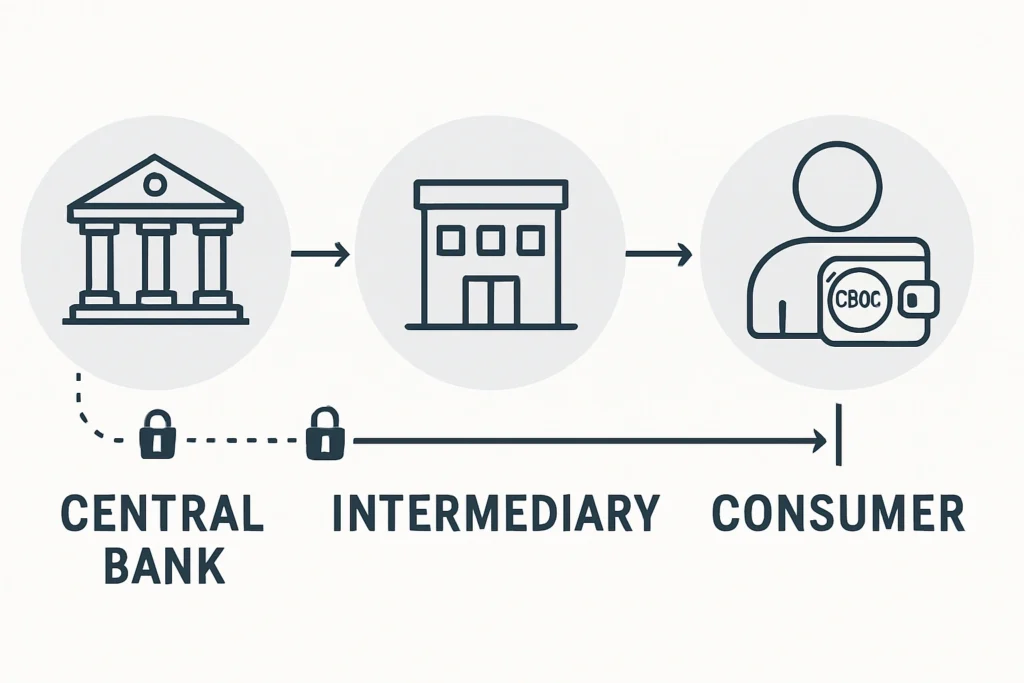
To grasp the CBDC impact on spending, one must first understand what a CBDC is and how it differs from the digital payment methods we use today. Currently, when you use a debit card or a mobile payment app, you are transacting with commercial bank money. This money is a digital entry on a commercial bank’s ledger, and while it is highly secure due to deposit insurance, it is not a direct liability of the central bank. CBDCs, on the other hand, are a direct liability of the central bank, akin to a digital banknote. This is a critical difference that underpins its safety and stability.
The most likely model for a retail CBDC—the kind that would affect everyday spending—is an intermediated model. In this structure, the central bank issues the digital currency, but private-sector financial institutions (commercial banks, payment providers, etc.) manage the customer-facing aspects, such as providing digital wallets, conducting identity verification, and processing transactions. This model leverages the innovation and customer service of the private sector while retaining the safety and trust of central bank money. For the consumer, this means the experience of spending a CBDC might feel similar to using a mobile payment app, but the underlying asset would be fundamentally different and more secure. The technology enabling this could range from distributed ledger technology (DLT), similar to that used by cryptocurrencies, to a more centralized, traditional database system, depending on the design choices made by the issuing central bank [2]. The choice of technology will heavily influence the speed, privacy, and programmability of the currency, all of which directly affect its utility in daily transactions.
| Feature | Commercial Bank Money (Current) | Central Bank Digital Currency (CBDC) |
|---|---|---|
| Issuer/Liability | Commercial Banks | Central Bank (e.g., Federal Reserve) |
| Risk Profile | Low (Protected by Deposit Insurance) | Virtually Zero (Direct Central Bank Liability) |
| Access | Requires a Commercial Bank Account | Could be accessible via a digital wallet, potentially without a bank account |
| Settlement Speed | Varies (Instant with services like FedNow, or slower with ACH) | Potentially Instant and Final (Real-time settlement) |
| Privacy | Subject to commercial bank data policies and regulatory reporting | Design-dependent; a key policy debate is balancing privacy with anti-crime measures |
The Direct CBDC Impact on Spending: Efficiency and Cost
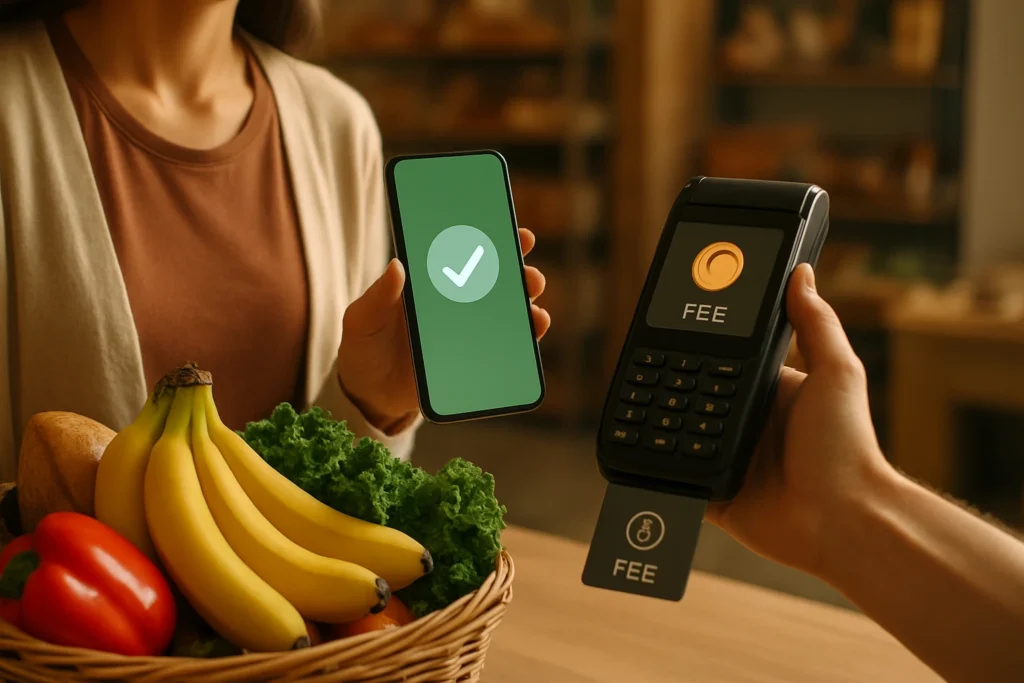
The most immediate and tangible CBDC impact on spending for the average consumer will be felt in the speed and cost of transactions. The current payment ecosystem, while functional, is riddled with inefficiencies, especially for cross-border payments and for small businesses that pay high interchange fees. A well-designed CBDC could drastically streamline this process.
Faster and Cheaper Payments
CBDCs have the potential to enable real-time, 24/7/365 settlement. Unlike traditional systems that rely on batch processing or interbank transfers that can take days, a CBDC transaction could be settled instantly and finally, regardless of the time or day. This is particularly beneficial for e-commerce and for small businesses that rely on quick access to funds. Furthermore, the introduction of a CBDC could introduce competition into the payment processing market. Currently, a few large card networks dominate, leading to significant interchange fees that are ultimately passed on to consumers through higher prices. If a CBDC offers a low-cost, direct payment rail, it could force these private networks to lower their fees, resulting in overall lower transaction costs for merchants and potentially lower prices for consumers [3].
Revolutionizing Cross-Border Transactions
The current system for international payments is notoriously slow, opaque, and expensive, often involving multiple intermediary banks (correspondent banking) and high foreign exchange fees. This friction is a major barrier to global commerce and a significant burden for individuals sending remittances. A CBDC, especially if designed for interoperability with other national CBDCs, could facilitate near-instantaneous and significantly cheaper cross-border payments. Imagine a scenario where a U.S. consumer could send digital dollars to a relative in a country with its own CBDC, with the exchange and transfer happening seamlessly and at a fraction of the current cost. This would have a profound CBDC impact on spending by unlocking global markets and providing substantial savings for migrant workers and their families.
Financial Inclusion and Accessibility
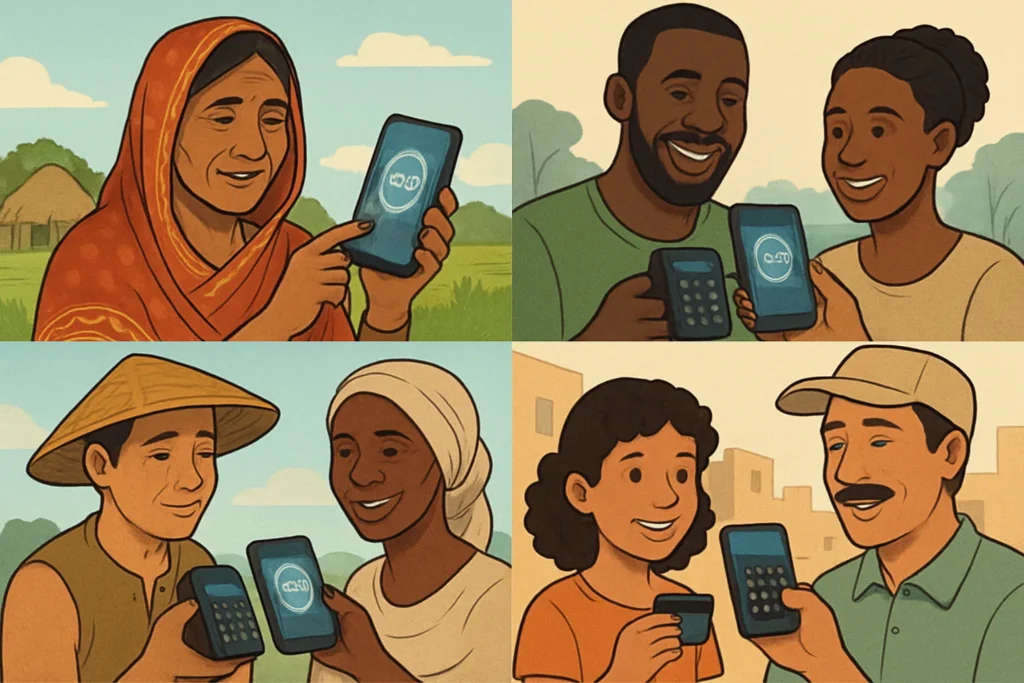
One of the most compelling arguments for a CBDC is its potential to address the issue of financial inclusion. Globally, billions of people remain “unbanked,” meaning they lack access to basic financial services like a bank account. In developed nations, this group often includes low-income individuals, those in remote areas, and those who distrust the traditional banking system.
A CBDC could be designed to be accessible to everyone, regardless of their relationship with a commercial bank. By allowing individuals to hold a digital wallet directly linked to the central bank’s liability, a CBDC could provide a safe, reliable, and low-cost means of payment and value storage. This is a significant CBDC impact on spending because it brings the unbanked into the formal digital economy, allowing them to participate in e-commerce, receive government benefits directly, and build a digital financial history.
Furthermore, a CBDC could be designed to function offline, which is a critical feature for areas with unreliable internet connectivity. This “offline capability” would ensure that the digital currency remains a viable means of payment even in times of natural disaster or infrastructure failure, providing a resilience that current digital payment systems lack.
Risks and Policy Debates: Privacy and Financial Stability

While the benefits to spending are clear, the introduction of a CBDC is not without significant risks and policy challenges that must be addressed before implementation. The debates surrounding privacy and financial stability are particularly intense.
The Privacy Paradox
The most contentious issue is privacy. Because a CBDC is a central bank liability, it raises concerns about the government’s potential ability to monitor and track every single transaction. For a CBDC to gain public trust and achieve widespread adoption, it must offer a level of privacy comparable to cash. However, central banks also have a mandate to prevent illicit activities, such as money laundering and terrorist financing.
The policy challenge is to find a design that balances these two competing interests. An identity-verified, but privacy-protected model is often proposed. This would mean that while the central bank or its intermediaries would know the identity of the wallet holder (to comply with Know Your Customer/Anti-Money Laundering laws), the transaction data itself would be protected and only accessible under strict legal conditions, similar to how bank records are treated today. The design choices here—whether the system is account-based or token-based—will determine the ultimate level of privacy and the public’s willingness to embrace the new currency [4].
Impact on Financial Stability
Another major concern is the potential for a CBDC to disrupt the existing financial system, specifically commercial banks. If a CBDC is perceived as a perfectly safe, risk-free alternative to commercial bank deposits, it could lead to a phenomenon known as disintermediation. In times of financial stress, customers might rapidly withdraw their funds from commercial bank accounts and convert them into CBDC, leading to a digital “bank run.”
To mitigate this risk, central banks are considering several design features:
- Holding Limits: Placing a cap on the amount of CBDC an individual can hold (e.g., $5,000 or $10,000). This would encourage people to use the CBDC for transactions (spending) but not as a primary vehicle for long-term savings.
- Tiered Interest Rates: Offering a zero or even negative interest rate on CBDC holdings above a certain threshold. This would make commercial bank deposits more attractive for savings, preserving the banks’ role in lending and credit creation.
The goal is for the CBDC to complement, not replace, commercial bank money, ensuring that the financial system remains stable while still delivering the benefits of a central bank-backed digital currency.
Long-Term Implications for Consumer Behavior
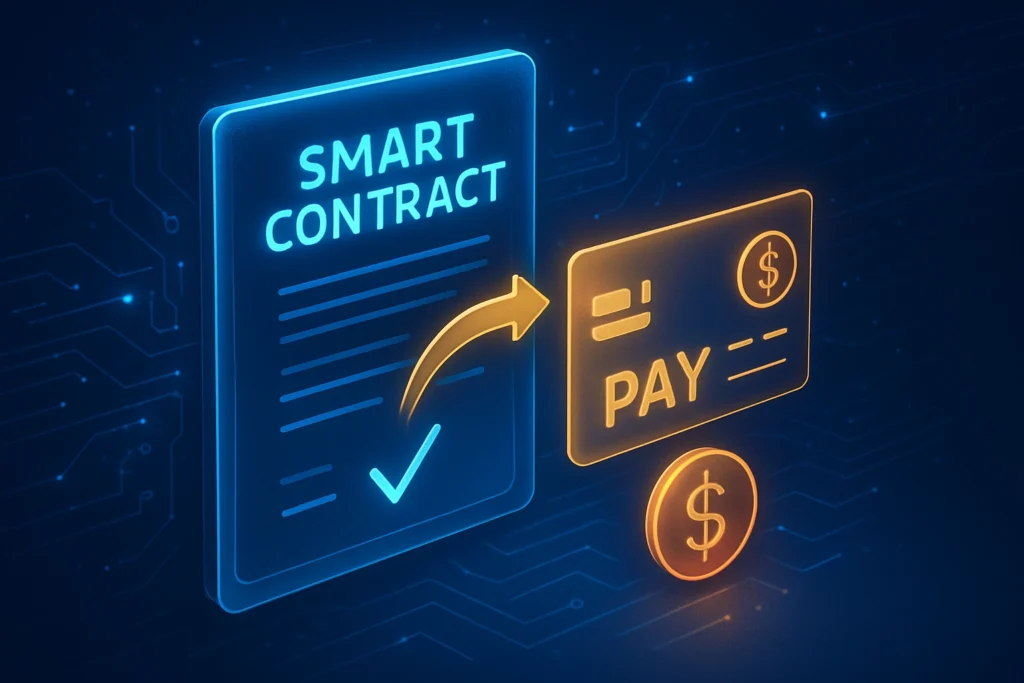
Beyond the immediate changes to transaction speed and cost, the long-term CBDC impact on spending lies in the potential for programmable money. While this feature is highly controversial and not universally planned, it represents the most radical shift in consumer behavior.
Programmable money means that the currency itself could be embedded with conditions or rules that dictate how, when, or where it can be spent. For example, a government could issue a stimulus payment that is programmed to expire if not spent within 90 days, or a food assistance voucher that can only be used to purchase specific categories of goods.
While proponents argue this could make government aid more efficient and targeted, critics view it as a massive overreach into personal financial freedom. The debate centers on whether the central bank should have the ability to enforce policy through the money itself. For the consumer, this could fundamentally change the nature of discretionary spending, moving from a system of free choice to one governed by digital rules. Any implementation of programmability would require extensive public debate and legislative oversight to ensure it serves the public good without infringing on individual liberty.
CBDC vs. Private Digital Payments: A Comparison
The emergence of CBDCs is happening alongside the rapid growth of private digital payment systems, stablecoins, and cryptocurrencies. It is essential to understand how a CBDC fits into this crowded digital landscape.
| Aspect | CBDC | Stablecoins (e.g., USDC) | Cryptocurrencies (e.g., Bitcoin) |
|---|---|---|---|
| Backing/Trust | Central Bank (Sovereign Guarantee) | Private Entity (Backed by reserves, subject to audit/regulation) | Decentralized Network (Backed by cryptography and network consensus) |
| Primary Goal | Monetary Policy, Financial Stability, Payment Efficiency | Profit, Fast Settlement, Bridging Fiat and Crypto Worlds | Decentralization, Censorship Resistance, Alternative Store of Value |
| Risk | Virtually Zero | Credit Risk, Operational Risk, Regulatory Risk | Extreme Volatility, Regulatory Risk, Operational Risk |
| Control | Centralized (Central Bank) | Centralized (Issuing Company) | Decentralized (Network Participants) |
The key takeaway for consumers is that a CBDC offers the safety and trust of central bank money in a digital format, something no private digital asset can fully replicate. Stablecoins, while pegged to a fiat currency, still carry the risk of the issuing entity, and cryptocurrencies are too volatile for everyday spending. The CBDC is designed to be the digital equivalent of cash—the ultimate safe asset for transactions.
The Future of Everyday Spending
The CBDC impact on spending will be a gradual, multi-faceted process. Initially, consumers will likely notice faster, cheaper, and more reliable payment options, especially for international transfers. For businesses, the reduction in transaction costs could lead to greater profitability and potentially lower prices for goods and services.
The long-term implications, however, are tied to the policy decisions made today regarding privacy, programmability, and the role of commercial banks. If central banks adopt a design that prioritizes user privacy and complements the existing financial system, the CBDC could become a seamless, highly secure, and efficient layer of the digital economy. If, however, the design leans too heavily toward surveillance or disrupts financial stability, public adoption could be slow, and the benefits may be overshadowed by public distrust.
The transition to a CBDC is not merely a technological upgrade; it is a fundamental re-architecture of the monetary system. As this transformation unfolds, staying informed and participating in the public discourse is the best way to ensure that the future of digital money serves the interests of the public.
Frequently Asked Questions
What is the difference between a CBDC and the money in my bank account?
The money in your commercial bank account is a liability of that bank, and it is protected by government deposit insurance (like the FDIC in the U.S.). A CBDC, by contrast, is a direct liability of the central bank (like the Federal Reserve). This means it is a form of central bank money, which is considered the safest form of money because it carries no credit or liquidity risk.
Will a CBDC replace physical cash?
Central banks, including the Federal Reserve, have consistently stated that a CBDC is intended to complement physical cash, not replace it. Cash is still vital for privacy, resilience (it works without power or internet), and financial inclusion. A CBDC would offer a digital alternative that provides the same safety and trust as cash.
Will the government be able to track all my purchases with a CBDC?
This is the most significant policy debate. While a CBDC could be designed for full transaction traceability, most proposals for a retail CBDC aim for a privacy-protected model. The goal is to balance the privacy of cash-like transactions with the need to prevent illicit activities like money laundering. The final design will depend on legislative and public support for specific privacy safeguards.
How will a CBDC affect my credit card rewards?
A CBDC is likely to offer a low-cost payment rail, which could reduce the interchange fees that merchants pay to credit card companies. These fees are what fund credit card rewards programs. If CBDC adoption significantly reduces the use of credit cards, it could put pressure on card issuers to reduce or restructure their rewards programs.
Will I need a bank account to use a CBDC?
One of the primary goals of a CBDC is to promote financial inclusion. Therefore, a CBDC could be designed to be accessible through a digital wallet provided by a non-bank payment provider, meaning you might not need a traditional commercial bank account to hold and spend the digital currency.
The future of money is being decided now. We encourage you to research the proposals put forth by your nation’s central bank and engage in the public conversation. Your voice is crucial in shaping a digital currency that balances innovation, privacy, and financial stability. Share your thoughts on the CBDC impact on spending in the comments below!
References
[1] Federal Reserve. Money and Payments: The U.S. Dollar in the Age of Digital Transformation.
[2] Bank for International Settlements (BIS). Central bank digital currencies: foundational principles and core features.
[3] International Monetary Fund (IMF). The Impact of Central Bank Digital Currency on Payments.
[4] World Economic Forum. What are Central bank digital currencies (CBDCs)?.