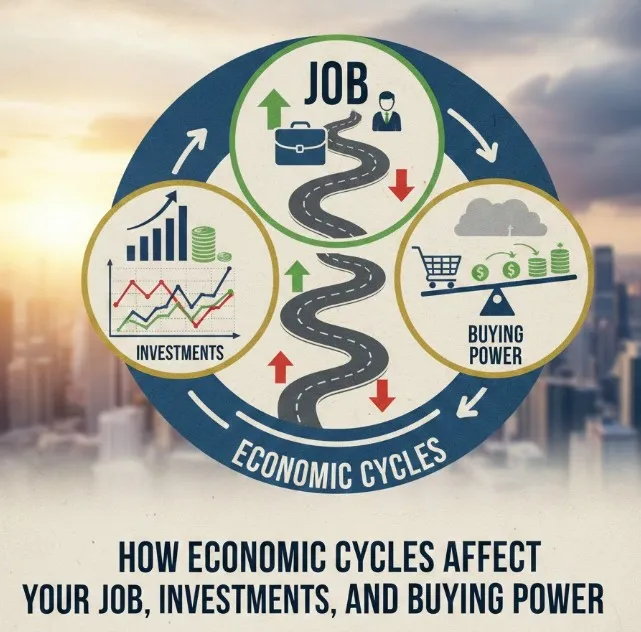
Economic cycles basically impact life daily whether you realize it or not. They actually change everything from jobs to investments. Understanding these cycles helps you plan better financially. Let us explore their fascinating effects across different areas.
Table of Contents
Understanding Economic Cycles: An Overview
Economic cycles, also called business cycles, are basically repeating patterns in an economy. These cycles include ups, downs, and stabilising phases over time. Many factors influence them. Governments, businesses, consumer confidence, and external shocks can drive these ever-shifting phases.
These cycles impact countries, companies, and individuals as well. In a prosperous phase, jobs grow, and so does spending. When there is a decline, profits shrink, so losses increase. Knowing cycles helps people actually manage money decisions better.
Governments step in to manage economies in downturns like 2020. Central banks adjust rates a lot to stabilise stuff. Recognising cycles helps you prepare for upcoming challenges easily.
The Four Phases of Economic Cycles and Their Characteristics
The economic cycle is made up of boom, peak, recession, and recovery. Each phase has unique signs.
- Boom Phase: Economic output rises strongly. Jobs increase. Businesses expand. Wages are higher.
- Peak Phase: Maximum growth is reached, inflation grows, but spending slows due to cost sensitivity.
- Recession Phase: Decline begins. Companies lose profits. Unemployment rises. Weak demand lowers prices or sales.
- Recovery Phase: Growth starts again. Demand, interest rates, and consumer activity stabilise slowly in this phase.
Recognising where the economy stands can help. It shapes how you actually spend, invest, and manage risks.
How Economic Expansions Influence Employment Trends
When economy expands I think businesses grow and hire more. Job markets thrive during these periods. This gives opportunities to job seekers as companies compete for talent.
Employees often earn higher wages because companies have greater profits then. Spending power also improves, which fuels retail. However, this expansion is not permanent. While the expansion allows for career growth, overconfidence can create risky investments.
If demand suddenly slows, the current growth cannot continue to be sustainable. During expansions, individuals should prepare for slowdowns. Workplace stability depends heavily on careful company decisions.
Recessions and Their Impact on Job Security
Recessions are slowdowns threatening job security, basically for many. During recession times, industries face challenges in actually keeping up. Companies cut jobs in sectors like IT, construction, and travel.
Layoffs increase because businesses lose profits. Unemployment rising weakens spending power, basically. People kind of stop spending on non-essential items. Entry-level jobs drop sharply as companies freeze hiring, basically. Job seekers actually stay unemployed for a longer time.
Some sectors, like healthcare and utilities, are less affected by basic demand. Workers in flexible careers usually recover faster. Savings and skills can kind of help avoid long-term problems.
The Role of Interest Rates During Economic Fluctuations
Interest rates shape the economy momentum managed by RBI or Federal Reserve. Borrowing becomes more expensive when higher interest rates apply. Consumer purchases slow due to less affordability.
On the other hand banks usually lower borrowing rates in downturns. Interest rate cuts aim to fuel activity by making loans cheaper. Fixed incomes or retirees actually suffer reduced savings returns.
Policy consistency matters in stabilising inflation against growth aims conflicts. Rates influence investment bubbles, potentially rising overvaluations. Keeping an eye on makes financial adjustments easier.
Investment Strategies During Different Economic Phases
Economic phases shift where and like how investments happen. Choices should match the cycle’s conditions and personal goals.
- Expansion Phase: Stock markets are best. Rising profits fuel demands for equities. Avoid fixed deposit low-growth.
- Peak Phase: Consider diversified funds including mixes like blue-chip stocks. Too-risky assets should be reduced tactically.
- Recession Phase: Fixed-income, like bonds, offers better safety in the short term. Avoid physical asset-dependent overreliance right now.
- Recovery Phase: Stepping cautiously reenter might benefit growth-focused opportunities before inflation hikes challenge.
Basing investments using a clear assessment prevents emotional reactions. Long horizons reduce interim panic, regardless of whether the phases are seen as up or down in evolution.
Inflation and Deflation: Effects on Your Buying Power
Inflation-deflation extremes impact money’s overall practical use. Over the years, higher bills eroded monthly allowances, and products worth seeing have deflated concerns about the balance. Emergencies, caution-wise, renewed; ensure secondary never held unchecked.
What are the main phases of an economic cycle?
Main phases of cycles include boom peak recession recovery. Each cycle phase shows gradual growth and demand shifts through highs and lows.
How can recessions impact individual job stability?
Recessions often lead to job losses as companies reduce expenses to survive lower demand. Every individual’s career stability depends heavily on industry dependence and other external economic dynamics.
What investment options are ideal during economic downturns?
Bonds or fixed-income securities are good as they lower financial risk. Avoid volatile stocks marketed heavily during fewer predictable liquidating, avoid unnecessary safer picks, mismanaging, and planning.
How does inflation affect purchasing power during economic cycles?
Inflation raises costs outpacing wages and limiting affordability drastically. Affordability rates topple, supported, and destabilised regularly, measured alternative concerns changing-time counter non-correspondent minimised tracked.
Keep Learning To Be Ready
Economic cycles keep recurring, so improving awareness ensures better individual decision resilience. Small steps safeguard income dependency amid fluctuations, helping confidence react, tweak wisely, and ensure survival ahead. All preparation, driving, tailoring, surviving unique conditions!