Introduction: The Making of the World’s Wealthiest Entrepreneur
In December 2025, Elon Musk’s net worth stands at approximately $684 billion according to Forbes, making him not only the wealthiest person alive but potentially the richest human being in recorded history. This staggering fortune represents more than just accumulated wealth—it tells the story of serial entrepreneurship, calculated risk-taking, and revolutionary innovation across multiple industries.
From a young programmer in South Africa selling a video game for $500 to commanding a business empire spanning electric vehicles, space exploration, artificial intelligence, and social media, Musk’s journey offers invaluable lessons for investors, entrepreneurs, and anyone interested in wealth creation in the digital age. This article traces his complete financial evolution, examining each venture’s impact on his net worth and the broader economic implications of his business decisions.
Whether you’re an investor seeking to understand the companies driving modern markets, an entrepreneur looking for inspiration, or simply curious about how one person accumulated such unprecedented wealth, this comprehensive analysis will provide the insights you need.
Table of Contents
Early Years: From South Africa to Silicon Valley (1971-1995)
Childhood and Education: Foundations of a Tech Visionary
Born on June 28, 1971, in Pretoria, South Africa, into a wealthy family, Elon Reeve Musk showed early signs of the entrepreneurial drive that would later define his career. His father was an engineer and his mother a model and nutritionist, providing him with both technical exposure and a glimpse into diverse career paths.
At age ten, Musk developed an interest in computing and video games, teaching himself programming from the VIC-20 user manual. This self-directed learning approach would become a hallmark of his career. By age twelve, he sold his BASIC-based game Blastar to PC and Office Technology magazine for approximately $500—his first taste of turning code into cash.
The Immigration Decision: A Strategic Move
Musk applied for a Canadian passport through his Canadian-born mother to avoid South Africa’s mandatory military service and to facilitate his eventual move to the United States. This decision proved financially astute, positioning him in the heart of the technology revolution that would create unprecedented wealth in the 1990s and 2000s.
After attending Queen’s University in Canada, Musk transferred to the University of Pennsylvania, where he received bachelor’s degrees in physics and economics in 1997. This combination of technical and business education would prove invaluable in his future ventures.
Financial Snapshot (1995):
- Net Worth: Minimal
- Primary Asset: Education and technical skills
- First Earnings: $500 from Blastar game sale
Zip2: The First Millionaire Milestone (1995-1999)
Building the Foundation
In 1995, Musk founded Zip2, a company that provided maps and business directories to online newspapers. This was before Google existed, and online navigation was still in its infancy. Musk, his brother Kimbal, and Greg Kouri founded the web software company with funding from angel investors and housed the venture at a small rented office in Palo Alto.
The company developed city guides for newspaper publishers, combining maps, directions, and yellow pages functionality. According to Musk, “The website was up during the day and I was coding it at night, seven days a week, all the time”. This intense work ethic would become legendary in Silicon Valley.
Major Contracts and Growth
The Musk brothers obtained contracts with The New York Times and the Chicago Tribune, establishing Zip2 as a serious player in the emerging internet publishing space. By 1998, the company was providing solutions to over 160 newspapers.
The $307 Million Exit
In 1999, Zip2 was bought by computer manufacturer Compaq for $307 million. Compaq sought to enhance their AltaVista search engine with Zip2’s technology. Musk received $22 million for his 7-percent share.
This sale marked Musk’s entry into the millionaire’s club at just 28 years old. However, rather than rest on his laurels, he immediately reinvested his earnings into his next venture.
Financial Snapshot (1999):
- Net Worth: $22 Million
- Primary Asset: Cash from Zip2 sale
- Key Learning: First successful exit taught him the value of timing and strategic acquisitions
X.com and PayPal: The Foundation of Future Billions (1999-2002)
Launching X.com: Banking’s Digital Disruption
In 1999, Musk co-founded X.com, an online financial services and e-mail payment company. Musk invested approximately $12 million of his Zip2 proceeds into this venture, betting heavily on the future of digital banking.
The startup was one of the first federally insured online banks, and in its initial months of operation, over 200,000 customers joined the service. This explosive growth validated Musk’s vision of online financial services.
The Turbulent Merger and Leadership Changes
In March 2000, X.com merged with competitor Confinity, a software company also based in Palo Alto that had developed PayPal, a money-transfer service. The merger was strategic but tumultuous.
In September 2000, when Musk was in Australia for a honeymoon trip, the X.com board voted for a change of CEO from Musk to Peter Thiel due to disagreements over the company’s direction. Despite this setback, Musk remained the largest shareholder.
The eBay Acquisition: Creating Real Wealth
In 2002, PayPal was acquired by eBay for $1.5 billion in stock. This was the deal that transformed Musk from a millionaire into someone with resources to pursue truly ambitious projects.
Musk, the largest shareholder with 11.72% of shares, received $175.8 million. In today’s dollars, this would be worth over $300 million—enough capital to launch multiple ventures simultaneously.
Financial Snapshot (2002):
- Net Worth: ~$175-180 Million
- Primary Asset: Cash and securities from PayPal sale
- Investment Strategy: Prepared to deploy capital into high-risk, high-reward ventures
SpaceX: Betting on the Final Frontier (2002-Present)
The $100 Million Gamble
With $100 million of his early fortune, Musk founded SpaceX in May 2002 and became the company’s CEO and Chief Engineer. Most observers thought this was financial suicide—private space exploration had bankrupted numerous entrepreneurs before him.
Musk’s vision was ambitious: reduce space transportation costs and enable the colonization of Mars. The financial community was skeptical, with many predicting SpaceX would burn through Musk’s PayPal windfall within a few years.
Near-Death Experience: 2008 Crisis
The company’s early years were harrowing. Musk invested $100M of his own money into SpaceX, which was enough to fund three rocket launches, and when all three failed, it nearly crippled the company.
By 2008, SpaceX faced bankruptcy. The fourth and final launch attempt succeeded, and a few days later they signed a $1.6B contract with NASA that saved the company. This contract validated SpaceX’s technology and provided the financial stability needed to continue operations.
Current Valuation: The Most Valuable Private Company
SpaceX and its investors agreed to purchase as much as $1.25 billion of insider shares in December 2024, with the deal valuing SpaceX at roughly $350 billion. This makes SpaceX the most valuable private startup in the world.
Musk owns approximately 42% of SpaceX, making his stake worth around $147 billion. Bloomberg applies a 15% liquidity discount for private holdings, but even with this adjustment, SpaceX has become Musk’s most valuable asset, surpassing even his Tesla holdings.
The company generates substantial revenue through contracts with the U.S. government. As of November 2024, the federal government has signed contracts worth $20 billion with SpaceX, providing a stable revenue base for continued innovation.
SpaceX Financial Impact:
- Initial Investment: $100 million (2002)
- Current Valuation: $350 billion (December 2024)
- Musk’s Stake Value: ~$147 billion
- Return on Investment: 147,000%
Tesla: Electrifying Personal Wealth (2004-Present)
Early Investment and Taking Control
Musk had long been interested in electric cars, and in 2004 he became one of the major funders of Tesla Motors, an electric car company founded by entrepreneurs Martin Eberhard and Marc Tarpenning. Musk joined Tesla as an early investor in 2004 and became its CEO and product architect in 2008.
The timing seemed questionable—the 2008 financial crisis was devastating the automotive industry. Things were so bad for car manufacturers that General Motors eventually filed for bankruptcy.
The 2008 Near-Collapse
As Musk explained: “Tesla financing round closed at 6pm Dec 24th 2008 – last hour of last day possible or payroll would’ve bounced 2 days later. I gave Tesla last of my remaining cash from PayPal”. This moment represented Musk putting his entire fortune at risk.
The bet paid off. After securing emergency financing, Tesla received a $40M battery deal with Daimler, and Daimler later acquired a 10% stake for $50 million, stabilizing the company.
Public Offering and Explosive Growth
In 2010, Tesla’s initial public offering raised about $226 million. This was just the beginning. The Model S sedan, launched in 2012, received critical acclaim. The Model 3, introduced in 2017, became the best-selling electric car of all time.
Tesla shares closed at a record high on Wednesday, hitting $424.77 at market close in December 2024. Since Election Day, the EV maker’s stock has rallied roughly 65% on investors’ belief that Musk’s influence in the Trump administration will usher in an era of deregulation that will benefit the company.
The Controversial Compensation Package
Musk’s 2018 Tesla pay package became one of the most debated compensation arrangements in corporate history. The package, based on achieving specific market capitalization and operational milestones, could potentially be worth over $100 billion.
A Delaware judge struck down his 2018 Tesla pay package, currently valued at more than $100 billion, for a second time in December 2024. Tesla announced it would appeal, and in November 2025, a Tesla pay package worth $1 trillion for Musk was approved, which he is to receive over 10 years if he meets specific goals.
Current Tesla Holdings
Musk owned approximately 715 million Tesla shares as of March 31, 2024, representing around 20.5% of the company’s outstanding shares. Even with recent volatility, Tesla remains a cornerstone of Musk’s wealth.
Tesla Financial Impact:
- Initial Investment: Millions (2004)
- Peak Market Cap: $1.5 trillion (December 2024)
- Current Value: Fluctuates between $700B-$1T
- Contribution to Net Worth: $150-200 billion (varies with stock price)
The Broader Empire: X, xAI, Neuralink, and The Boring Company
Twitter/X Acquisition: The $44 Billion Controversy
Musk acquired the social network Twitter for $44 billion in 2022, which he admits was an overpayment. He implemented significant changes and rebranded it as X in 2023.
As of February 2024, X is worth 71.5% less than what Elon paid for it back in 2022, representing a significant paper loss. However, Musk has repeatedly stated he views X as a long-term bet on creating a “super app” similar to China’s WeChat.
Musk owns about 33% of XAI Holdings following a merger between his social media company X and artificial intelligence startup xAI in March 2025.
xAI: Competing in the AI Race
His artificial intelligence startup, xAI, more than doubled in value in November 2024 amid a new funding round, surging to $50 billion. It was valued at roughly $105 billion by investors Fidelity and Barron in 2025 filings.
Musk founded xAI after leaving OpenAI, the AI research organization he co-founded in 2015. Musk exited OpenAI three years later citing a conflict of interest with software being developed at Tesla.
Neuralink and The Boring Company
Musk co-founded Neuralink, a neurotechnology company, in 2016, focused on developing brain-computer interfaces. According to a June 2023 valuation, Neuralink was worth $5 billion, with Musk having invested $100 million of his own money.
Musk founded The Boring Company in 2016 as a subsidiary of SpaceX in 2017, focusing on tunnel construction. The company was started with initial funding of $113 million, out of which Elon invested $102 million himself.
- X (Twitter): ~$12-15 billion current estimated value
- xAI: $50-105 billion valuation
- Neuralink: ~$5 billion valuation
- The Boring Company: ~$5.7 billion valuation
The Wealth Trajectory: Understanding the Numbers
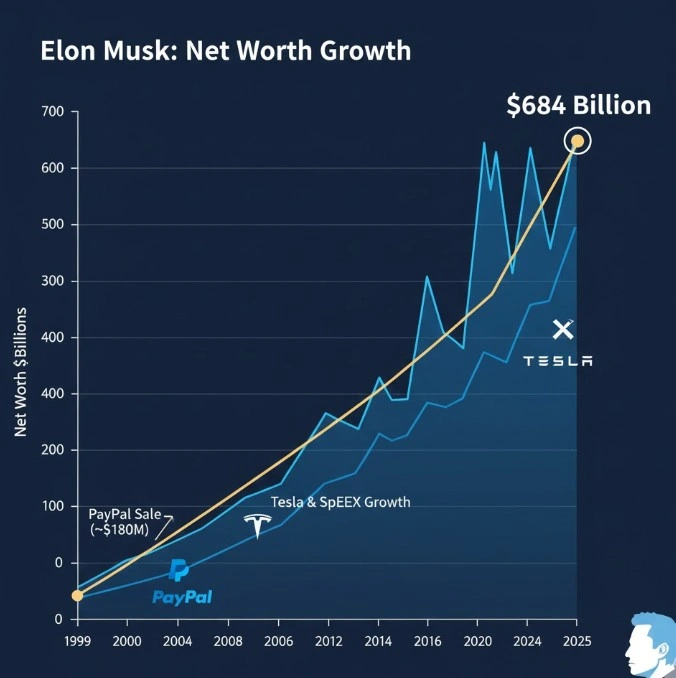
The Historic Climb to $684 Billion
At the start of 2020, Musk had a net worth of $27 billion, but by the end of the year his net worth had increased by $50 billion, mostly driven by his ownership of around 20% of Tesla stock.
The growth accelerated dramatically:
- 2021: Musk became the first person in history to have a net worth above $300 billion in November 2021
- December 2022: Musk lost his title of richest person when his $165 billion net worth was overtaken by Bernard Arnault’s $167 billion
- 2023: Musk ended the year with a fortune of $210 billion
- November 2024: Musk’s net worth hit $348 billion
- December 2024: Musk became the first person to have a net worth of more than $400 billion
- December 2025: Musk’s net worth hit $640 billion on the heels of Tesla having a market cap of $1.5 trillion and SpaceX raising money at an $800 billion valuation
Volatility: The $200 Billion Swing
Musk’s wealth is notably volatile. His fortune staged a dramatic turnaround since late 2022, when at one point he saw his net worth drop by more than $200 billion.
Musk’s association with the second Trump administration received backlash, resulting in his net worth dropping by $126 billion between December 2024 and March 2025. By February 2025, his net worth had decreased to approximately $355 billion before recovering again.
This volatility stems from most of his wealth being tied to publicly traded Tesla stock and privately held SpaceX equity, both of which can fluctuate significantly based on market sentiment, product developments, and geopolitical factors.
Wealth Composition (December 2025 Estimate)
Based on available data, Musk’s ~$684 billion net worth breaks down approximately as follows:
| Asset | Estimated Value | Percentage |
|---|---|---|
| SpaceX (42% stake) | $147 billion | 21.5% |
| Tesla (~20.5% stake) | $250-350 billion | 36.5-51% |
| xAI Holdings | $35-70 billion | 5-10% |
| X (Twitter) | $12-15 billion | 1.8-2.2% |
| Other (Neuralink, Boring Co., cash, real estate) | $10-20 billion | 1.5-3% |
| Options/Warrants from comp packages | Variable | – |
Note: These figures fluctuate daily with market movements and are subject to various discounts for illiquidity and leverage.
Investment Lessons from Musk’s Journey
1. Reinvest Aggressively in High-Conviction Bets
After selling PayPal for $175.8 million, Musk could have retired comfortably. Instead, he invested $100 million in SpaceX and significant amounts in Tesla, risking everything on ventures with historically low success rates. This aggressive reinvestment strategy, while risky, generated exponential returns.
Key Takeaway: For investors with high risk tolerance and long time horizons, concentrating capital in high-conviction opportunities can generate life-changing returns, though it also carries the risk of total loss.
2. Leverage Timing and Market Cycles
Musk’s major wealth accumulation coincided with:
- The dot-com boom (Zip2, PayPal)
- The rise of electric vehicles and renewable energy
- The commercialization of space
- The AI revolution
Key Takeaway: Understanding macro trends and positioning capital ahead of major technological shifts can amplify returns. However, timing these correctly requires vision, research, and often some luck.
3. Maintain Significant Ownership Stakes
Unlike many founders who dilute their ownership extensively through multiple funding rounds, Musk maintained substantial stakes in his companies (20.5% of Tesla, 42% of SpaceX). This meant he captured the full benefit of their appreciation.
Key Takeaway: For entrepreneurs, maintaining meaningful ownership while raising capital is crucial for long-term wealth creation. For investors, consider how much dilution is acceptable in growth companies.
4. Vertical Integration and Ecosystem Building
Musk’s companies often support each other: SpaceX technology benefits from Tesla’s battery innovations; The Boring Company uses Tesla’s electric vehicle expertise; Neuralink could eventually integrate with Tesla’s autonomous systems.
Key Takeaway: Companies that control their supply chains and create ecosystems can generate higher margins and build competitive moats, potentially leading to superior investment returns.
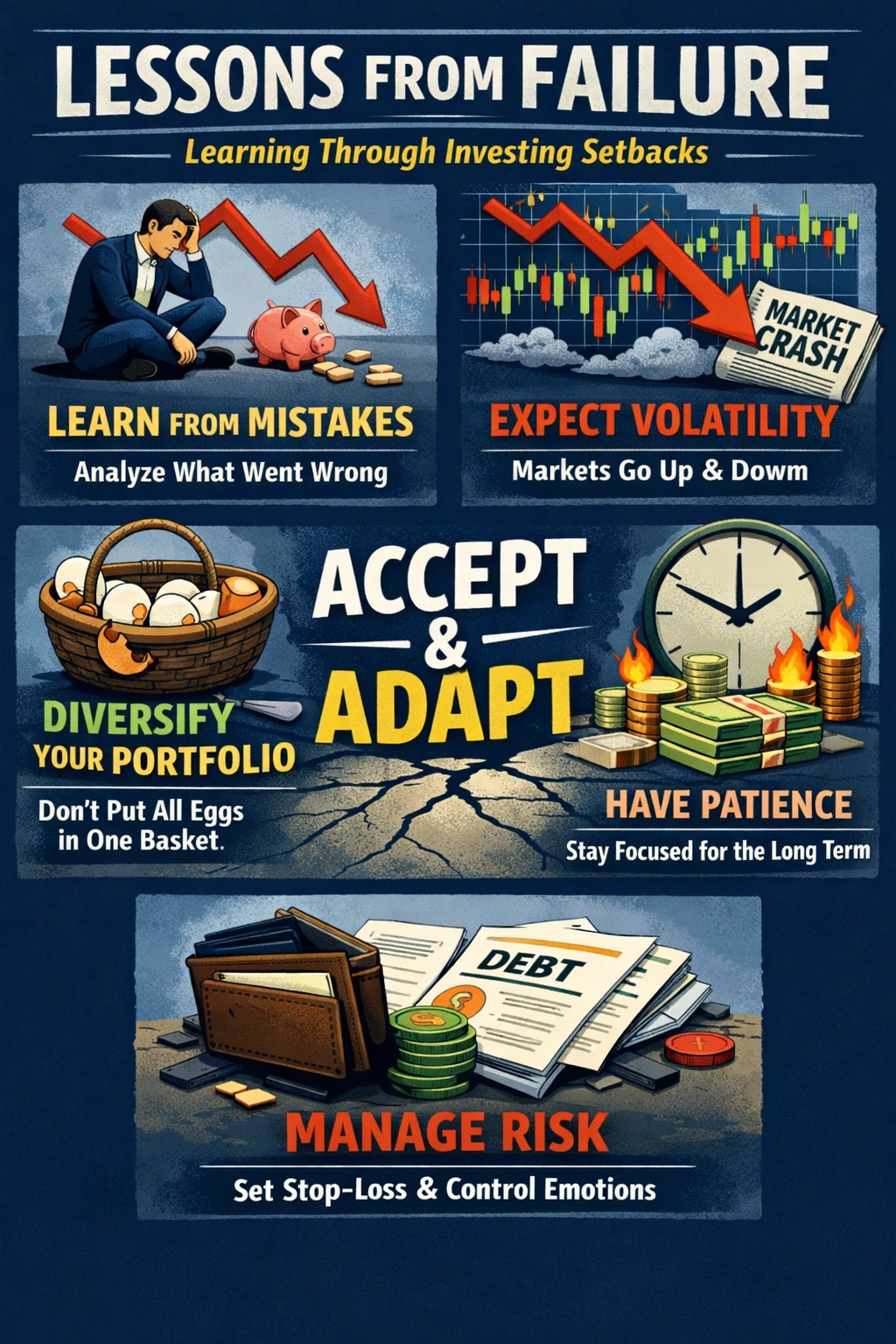
5. Accept Extreme Volatility
Musk has repeatedly described himself as “cash poor” and has “professed to have little interest in the material trappings of wealth”. His net worth has swung by hundreds of billions, demonstrating that paper wealth differs significantly from liquid assets.
Key Takeaway: High growth investments come with extreme volatility. Investors must have the emotional fortitude to withstand significant drawdowns without panic selling.
The Political Factor: Government Influence on Wealth
The 2024 Election and Net Worth Surge
Musk was the largest donor in the 2024 U.S. presidential election, where he supported Donald Trump, with donations totaling more than $291 million.
Following Trump’s win, Musk was tapped to lead a newly-created organization dubbed the Department of Government Efficiency. The world’s wealthiest man is now roughly $136 billion richer since November 5, election day.
This wealth surge was driven by:
- Expectations of favorable EV policy
- Anticipated reduction in regulatory burdens
- Increased government contracts for SpaceX
- General market optimism about his companies
Investment Implication: Political connections and policy changes can significantly impact company valuations. Investors should monitor regulatory environments and government relationships when evaluating long-term holdings.
Passive Income and Wealth Management
The “Cash Poor” Billionaire
Despite his enormous net worth, Musk maintains relatively little liquid wealth. His fortune is tied up in company stock and options, which he occasionally borrows against rather than selling.
Musk had pledged 57% of his Tesla shares to secure personal indebtedness, with the maximum loan possibly reaching $3.5 billion.
This strategy allows him to:
- Avoid triggering capital gains taxes from selling shares
- Maintain voting control and influence over his companies
- Access liquidity for personal expenses and new ventures
Key Takeaway: Ultra-high-net-worth individuals often use securities-backed lending to access cash without selling appreciated assets, deferring or avoiding capital gains taxes.
Tax Strategies
Musk paid $455 million in taxes on $1.52 billion of income between 2014 and 2018. According to ProPublica, Musk paid no federal income taxes in 2018—a year when his wealth increased substantially but he had no realized gains.
He stated his 2021 tax bill was estimated at $12 billion based on his sale of $14 billion worth of Tesla stock, representing one of the largest individual tax payments in U.S. history.
Key Takeaway: The U.S. tax system taxes realized gains, not paper wealth appreciation. Strategic timing of asset sales can significantly impact tax liabilities.
Philanthropy and the Musk Foundation
Musk is president of the Musk Foundation he founded in 2001, whose stated purpose is to provide solar-power energy systems in disaster areas, with an interest in human space exploration, pediatrics, renewable energy, and “safe artificial intelligence”.
At the end of 2024, the Musk Foundation had over $14 billion in assets. However, since 2020, donations have largely been sent to organizations affiliated with Musk and his businesses.
According to biographer Walter Isaacson, Musk has little interest in traditional philanthropy and believes he can do more for humanity by leaving his money in his companies and pursuing goals of sustainable energy, space exploration and AI safety with them.
This approach represents a different philosophy from traditional billionaire philanthropy exemplified by Bill Gates or Warren Buffett.
Current Status and Future Outlook (December 2025)
Market Position
Musk has been the wealthiest person in the world since 2021, with brief interruptions. As of December 10, 2024, he was already $140 billion richer than the second-richest man on Earth, Amazon founder Jeff Bezos.
His lead over other billionaires has grown substantially, with his net worth now exceeding the combined wealth of many other top billionaires.
Growth Catalysts
Several factors could drive Musk’s wealth higher:
- Tesla Autonomous Driving: Full self-driving capability could dramatically increase Tesla’s valuation
- SpaceX Mars Mission: Successfully landing humans on Mars would cement SpaceX’s position and likely increase its valuation
- xAI Competition: If xAI can successfully compete with OpenAI and Google in AI, its valuation could soar
- Neuralink Clinical Trials: Successful human trials could revolutionize the neurotechnology market
- X Super App Vision: If X successfully becomes a payment and services platform, it could regain its acquisition value
Downside Risks
Conversely, several factors could significantly reduce Musk’s wealth:
- Tesla Competition: Increasing competition in the EV market could compress margins and market share
- Regulatory Challenges: Government scrutiny of Tesla’s autonomous driving claims or SpaceX’s operations
- Market Corrections: A broader market downturn would likely impact Tesla’s high valuation multiple
- Execution Risk: Failure to meet ambitious goals could disappoint investors
- Personal Controversies: Ongoing controversies related to his public statements and political activities could impact brand value
Conclusion: Key Takeaways for Investors and Entrepreneurs
Elon Musk’s journey from a $500 video game sale to a $684 billion fortune represents one of the most remarkable wealth creation stories in human history. His path offers several critical lessons:
For Investors:
- Concentration vs. Diversification: While conventional wisdom favors diversification, Musk’s concentrated bets on high-conviction ideas generated extraordinary returns
- Long-Term Vision: All of Musk’s major ventures required decade-long timeframes to bear fruit, emphasizing the power of patient capital
- Volatility is the Price: Musk’s net worth has swung by over $200 billion, demonstrating that high returns come with extreme volatility
- Government Policy Matters: Regulatory environment and government contracts can significantly impact company valuations
- Technological Disruption: Identifying and investing ahead of major technological shifts (EVs, private space, AI) can generate life-changing returns
For Entrepreneurs:
- Reinvest Aggressively: Musk consistently reinvested proceeds from successful exits into new ventures rather than diversifying into safe assets
- Think Multi-Decade: His most valuable companies took 15-20 years to reach their current valuations
- Maintain Ownership: Keeping significant equity stakes despite multiple funding rounds preserved his wealth creation potential
- Vertical Integration: Controlling key technologies and supply chains creates competitive advantages
- Risk Everything: On at least two occasions (2008 crisis), Musk risked complete financial ruin, demonstrating extreme commitment to his vision
For Personal Finance:
- Paper Wealth vs. Liquidity: Musk’s “cash poor” status despite $684 billion net worth shows the difference between net worth and liquid assets
- Securities-Backed Lending: Borrowing against appreciated assets can provide liquidity while deferring capital gains taxes
- Tax Optimization: Strategic timing of asset sales can significantly impact tax liabilities
- Concentrated Risk: Extreme wealth concentration in a few assets can generate extreme returns but also extreme risk
Final Thoughts
Elon Musk’s story is not easily replicable. It required extraordinary vision, risk tolerance, work ethic, and timing. Most entrepreneurs who pursue similar strategies fail completely. However, studying his journey provides valuable insights into wealth creation, investment strategy, and the relationship between technological innovation and financial success.
As of December 2025, with interests spanning space exploration, electric vehicles, artificial intelligence, neurotechnology, and social media, Musk continues to push the boundaries of multiple industries. Whether his net worth continues its upward trajectory or faces significant corrections, his impact on finance, technology, and wealth creation will be studied for generations.
For those seeking to build wealth, the key lessons aren’t to simply copy Musk’s strategies—few can access similar opportunities or tolerate similar risk levels—but rather to understand the principles: identify transformative trends early, maintain high-conviction positions, think in decades not quarters, and be willing to accept significant volatility in pursuit of exceptional returns.
Sources and Further Reading
- Wikipedia: Elon Musk
- Wikipedia: Wealth of Elon Musk
- Bloomberg Billionaires Index
- Forbes Real-Time Billionaires List
- CNN Business: Elon Musk $400 Billion Net Worth