
Introduction: Understanding Passive Income in Today’s Economy
Passive income has become a central topic in modern personal finance—and not without reason. As living costs rise, job markets evolve, and economic uncertainty increases, relying solely on a fixed salary is no longer enough for many people. This is where passive income comes in.
Passive income refers to money earned with limited ongoing effort after an initial setup phase. While it does not mean “no work at all,” it does mean building systems, assets, or investments that continue generating income over time.
For beginners, passive income can seem complex, risky, or reserved for the wealthy. In reality, many passive income opportunities are accessible, scalable, and suitable for people starting with limited capital or experience.
In this article, you will learn:
- What passive income really means—and what it does not
- Why beginners should prioritize passive income early
- The most practical passive income ideas for beginners
- The risks, costs, and effort involved in each option
- How to build a sustainable passive income strategy step by step
This guide is designed to be easy to understand for beginners while offering enough depth to support informed financial decisions.
Table of Contents
What Is Passive Income?
Passive income is income generated from assets or systems that do not require continuous active labor to maintain. Unlike salaries or hourly wages, passive income is not directly tied to time worked.
Passive Income vs Active Income
| Active Income | Passive Income |
|---|---|
| Earned by trading time for money | Earned from assets or systems |
| Stops when work stops | Continues with minimal effort |
| Salary, freelancing, overtime | Dividends, rent, royalties |
It is important to note that most passive income streams require:
- Initial effort or capital
- Ongoing monitoring or light maintenance
- Patience before meaningful results appear
Why Passive Income Is Important for Beginners
Starting early provides beginners with several long-term advantages:
- Financial resilience: Reduced dependence on a single income source
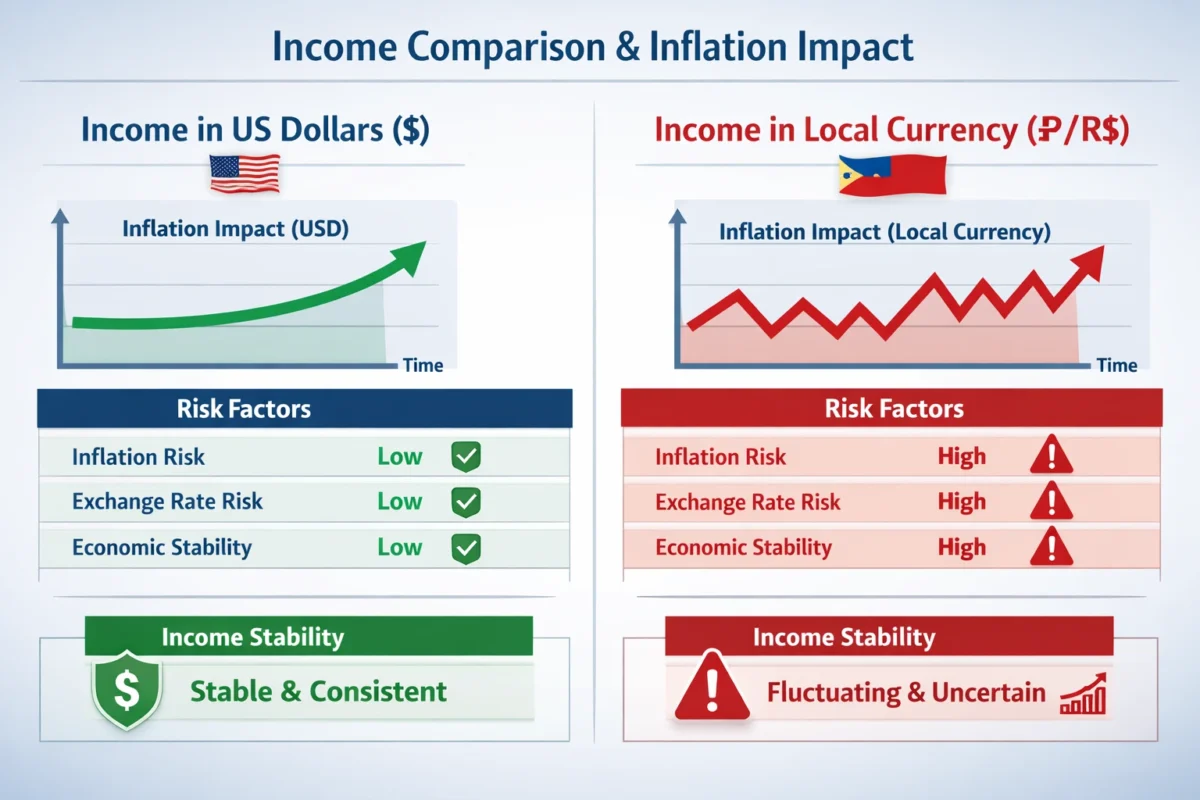
- Inflation protection: Income that can grow faster than wages
- Time flexibility: More control over how you spend your time
- Wealth compounding: Reinvested income accelerates growth
Even small passive income streams can significantly improve financial stability over time.
Core Principles Every Beginner Should Understand
Before exploring specific ideas, beginners should understand these key principles.
Passive Income Is Built, Not Found
There are no shortcuts. Sustainable passive income requires:
- Learning
- Planning
- Consistency
Risk and Return Are Connected
Low-risk income streams usually offer lower returns. Beginners should prioritize stability over speed.
Diversification Reduces Risk
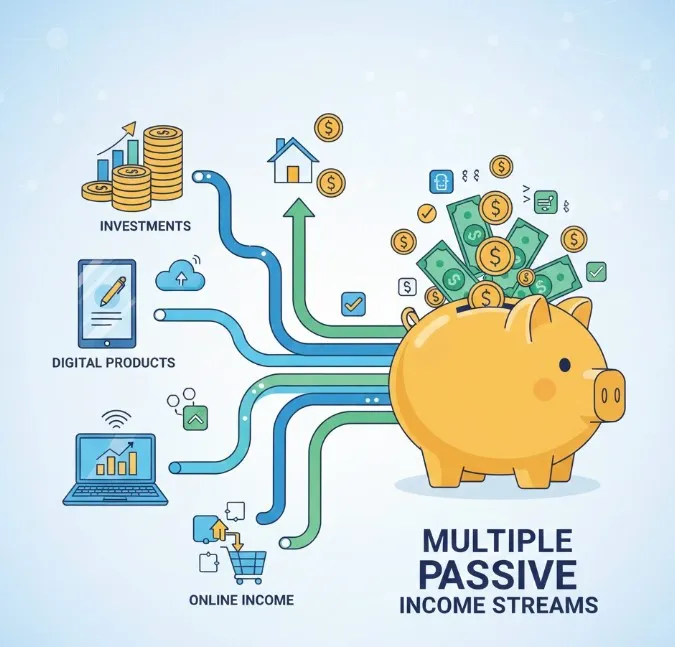
Relying on one passive income source increases vulnerability. Multiple income streams provide balance.
Best Passive Income Ideas for Beginners
Below are beginner-friendly passive income ideas, explained clearly with practical context.
Dividend-Paying Stocks
How Dividend Income Works
Dividend-paying companies distribute a portion of their profits to shareholders, usually on a quarterly basis.
Why It’s Suitable for Beginners
- Easy access through online brokerages
- Regulated and transparent
- Can be started with modest capital
Example
An investment of $10,000 in dividend stocks with a 4% annual yield generates approximately $400 per year.
Advantages
- Regular income
- Potential for capital appreciation
- Reinvestment accelerates growth
Risks
- Market volatility
- Dividends are not guaranteed
Exchange-Traded Funds (ETFs)
What Are Income ETFs?
ETFs bundle multiple assets into a single investment, offering diversification and passive income.
Common Income-Focused ETFs
- Dividend ETFs
- Bond ETFs
- REIT ETFs
Why ETFs Are Ideal for Beginners
- Low fees
- Built-in diversification
- Minimal research required
ETFs reduce exposure to individual company risk, making them a strong foundation for beginners.
High-Yield Savings Accounts and Fixed Deposits
How They Generate Passive Income
Banks pay interest on deposited funds over time.
Benefits
- Very low risk
- High liquidity
- Ideal for emergency funds
Limitations
- Returns often below inflation
- Limited long-term growth potential
Best used as a capital preservation tool, not a wealth-building engine.
Real Estate Investment Trusts (REITs)
What Are REITs?
REITs invest in income-generating properties such as apartments, offices, and commercial spaces.
Why Beginners Use REITs
- No property management
- Trade like stocks
- Consistent dividend payouts
Example
A REIT yielding 6% provides $600 annually on a $10,000 investment.
Digital Products (E-books, Courses, Templates)
How Digital Products Create Passive Income
You create a product once and sell it repeatedly online.
Common Examples
- E-books
- Online courses
- Design templates
- Productivity planners
Key Characteristics
- High upfront effort
- Very low ongoing costs
- Strong scalability
This option is ideal for beginners with specific skills or expertise.
Affiliate Marketing
How Affiliate Income Works
You earn commissions by promoting products or services through content platforms.
Channels
- Blogs
- YouTube
- Social media
- Email newsletters
Why It Becomes Passive
Once content ranks or gains traffic, commissions can continue with minimal effort.
Success depends on trust, consistency, and long-term content value.
Print-on-Demand Businesses
What Is Print-on-Demand?
Custom designs are printed and shipped only after a sale is made.
Why It’s Beginner-Friendly
- No inventory
- Automated fulfillment
- Low startup costs
Risks
- Competitive market
- Requires basic marketing skills
Peer-to-Peer Lending
How It Works
You lend money through platforms that connect borrowers and investors.
Potential Returns
Higher than traditional savings accounts, with moderate risk.
Diversification across borrowers is essential for risk control.
Royalties and Intellectual Property
Sources of Royalty Income
- Photography
- Music
- Stock videos
- Written content
Once created, royalties can generate income repeatedly over many years.
Comparing Passive Income Ideas for Beginners
| Income Source | Capital Needed | Risk Level | Effort Required |
|---|---|---|---|
| Dividend Stocks | Medium | Medium | Low |
| ETFs | Medium | Low–Medium | Very Low |
| Savings Accounts | Low | Very Low | None |
| REITs | Medium | Medium | Low |
| Digital Products | Low | Medium | High upfront |
| Affiliate Marketing | Low | Medium | Medium |
Common Beginner Mistakes to Avoid
- Expecting fast or guaranteed results
- Ignoring fees and taxes
- Failing to reinvest income
- Relying on a single income stream
- Chasing trends without understanding risks
Passive income rewards patience, not urgency.
How to Build a Beginner Passive Income Plan
- Define financial goals
- Assess risk tolerance
- Start with one simple stream
- Reinvest early income
- Track performance regularly
- Diversify gradually
Consistency matters more than size at the beginning.
Tax Considerations
Passive income may be subject to:
- Dividend taxes
- Capital gains taxes
- Withholding taxes
Always understand local tax rules before scaling any income stream.
Conclusion: Building Passive Income the Right Way
Passive income is not about quick wins. It is about building systems that compound over time. Beginners who focus on education, realistic expectations, and diversification position themselves for long-term success.
Key Takeaways
- Passive income requires upfront effort or capital
- Beginners should prioritize low-risk, scalable strategies
- Small income streams compound significantly
- Long-term thinking is essential
The most sustainable wealth is built patiently.