Introduction: Understanding Risk in Modern Investing
Risk is at the heart of every investment decision. Whether you are buying stocks, bonds, real estate, or building passive income streams, you are constantly balancing potential returns against uncertainty. For beginners, risk often feels like something to avoid entirely. For experienced investors, it is a tool to be managed and priced correctly.
This article explores investing risk management in a clear, practical way. You will learn what investment risk really means, how much risk is “too much,” and how to align risk with your financial goals, time horizon, and personal circumstances. By the end, you’ll have a structured framework to make smarter, more confident investment decisions across financial markets.
As Warren Buffett famously said, “Risk comes from not knowing what you’re doing.” Understanding risk is the first step toward controlling it.
Table of Contents
What Is Risk in Investing?
Defining Investment Risk
In investing, risk refers to the possibility that the actual return on an investment will differ from expectations, including the chance of losing some or all of your capital.
Risk is not inherently bad. In fact, higher long-term returns usually require accepting some level of risk. The key is managing it intelligently.
Common Types of Investment Risk
- Market Risk: Price fluctuations caused by economic cycles, interest rates, or investor sentiment
- Inflation Risk: Loss of purchasing power over time
- Credit Risk: The risk that a borrower cannot repay debt
- Liquidity Risk: Difficulty selling an asset quickly without a price discount
- Concentration Risk: Overexposure to a single asset, sector, or market
A simple table can help visualize how risk varies across asset classes:
| Asset Class | Typical Risk Level | Typical Return Potential |
|---|---|---|
| Cash | Very Low | Very Low |
| Bonds | Low to Medium | Low to Medium |
| Stocks | Medium to High | Medium to High |
| Alternatives (RE, Crypto) | High | High |
Why Risk Is Necessary for Wealth Building
The Risk–Return Tradeoff
In financial markets, there is a fundamental relationship: higher expected returns require higher risk. If an investment promises unusually high returns with no risk, it is almost always misleading.
As economist Harry Markowitz explained through Modern Portfolio Theory, “Diversification is the only free lunch in finance.” You cannot eliminate risk entirely, but you can manage it efficiently.
Risk and Passive Income
Passive income strategies, such as dividend stocks or rental properties, also carry risk:
- Dividends can be cut
- Tenants may default
- Market values can decline
However, when managed correctly, these risks can be reduced and compensated by consistent cash flow over time.
How Much Risk Is Too Much?
Risk Tolerance vs. Risk Capacity
Understanding how much risk is “too much” requires separating two key concepts:
Risk Tolerance
Your emotional ability to handle losses and volatility.
- Can you stay invested during market downturns?
- Do price swings cause stress or panic?
Risk Capacity
Your financial ability to absorb losses.
- Time horizon (short-term vs. long-term)
- Income stability
- Emergency savings
An investor may have high risk tolerance but low risk capacity—or the opposite. Smart investing risk management aligns both.
Measuring Risk in Financial Markets
Key Risk Metrics Explained Simply
- Volatility: How much prices fluctuate over time
- Standard Deviation: A statistical measure of return variability
- Maximum Drawdown: Largest peak-to-trough loss
- Beta: Sensitivity to market movements
For example, a stock with high volatility may deliver strong long-term returns but requires patience and discipline during downturns.
A well-described chart might show:
- Stock market returns rising over decades
- Short-term fluctuations masking long-term growth
This illustrates why time horizon matters as much as risk level.
Practical Risk Management Strategies
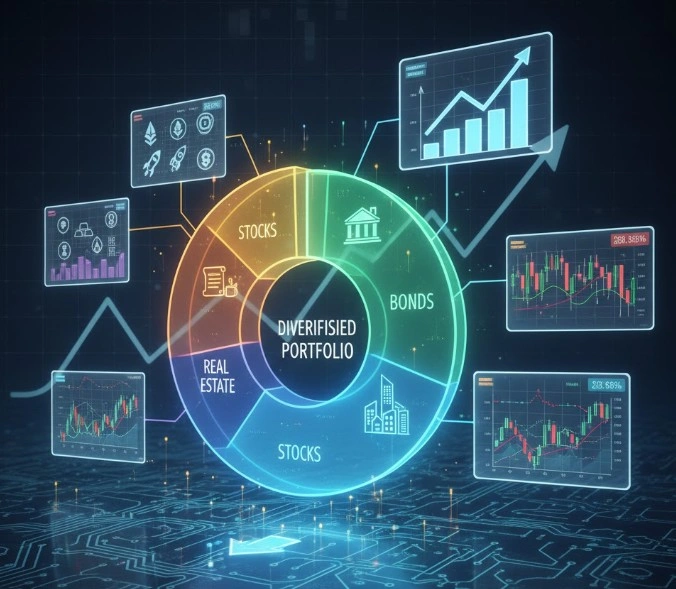
1. Diversification Across Assets
Spreading investments across asset classes reduces concentration risk:
- Stocks + bonds
- Domestic + international markets
- Growth + income assets
2. Asset Allocation Based on Goals
Your portfolio should reflect your objectives:
- Short-term goals: Lower risk, higher liquidity
- Long-term goals: Higher risk tolerance, growth focus
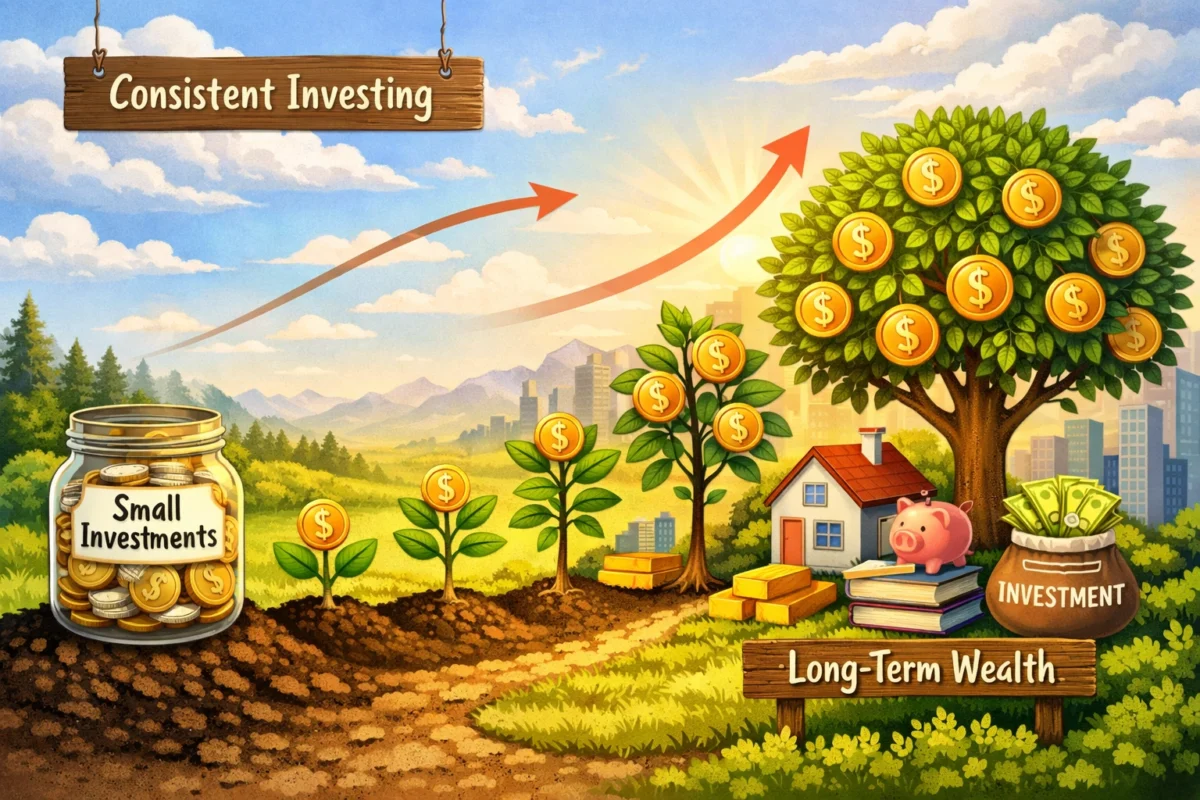
3. Dollar-Cost Averaging
Investing regularly reduces the risk of poor market timing and smooths entry prices over time.
4. Margin of Safety
Benjamin Graham emphasized, “The margin of safety is the cornerstone of investing.” Buying assets below intrinsic value reduces downside risk.
Behavioral Risk: The Most Dangerous Risk
Emotional Investing
Many investors fail not because of markets, but because of behavior:
- Panic selling during crashes
- Chasing hype during bubbles
- Overconfidence after short-term gains
Long-term data consistently shows that investor returns often lag market returns due to emotional decision-making.
Managing behavior is a critical but often overlooked part of investing risk management.
Risk Across Different Life Stages
Young Investors
- Longer time horizon
- Higher ability to recover from losses
- Greater capacity for growth-oriented assets
Mid-Career Investors
- Balancing growth with stability
- Increasing focus on diversification
Near Retirement
- Capital preservation becomes critical
- Lower tolerance for volatility
Risk should decline gradually as financial goals approach.
Conclusion: Managing Risk, Not Avoiding It
Risk is not the enemy of investing—mismanaged risk is. The goal is not to eliminate risk, but to understand it, price it, and align it with your personal financial situation.
Key Takeaways
- Risk and return are inseparable
- Too much risk depends on time horizon, goals, and psychology
- Diversification and asset allocation are core tools
- Emotional discipline is as important as financial knowledge
Practical Actions
- Assess your risk tolerance and risk capacity honestly
- Review portfolio diversification regularly
- Focus on long-term fundamentals, not short-term noise
When managed correctly, risk becomes a strategic ally rather than a threat.