Introduction
Bad economic news has a powerful effect on human behavior. Headlines about recessions, inflation, interest rate hikes, or market crashes instantly trigger fear. Many investors react emotionally, selling assets, freezing decisions, or abandoning long term plans. Yet history shows that markets reward a very different behavior over time. Understanding what successful investors do in crises is less about predicting the future and more about mastering reactions when uncertainty dominates.
This topic matters today because economic shocks are no longer rare events. Global markets are deeply connected, meaning problems in one region can ripple worldwide. Central banks tighten or loosen policy, geopolitical risks rise, and financial conditions shift faster than ever. For everyday investors, this constant noise creates confusion and stress.
In this article, you will learn how experienced and successful investors behave when bad economic news hits. We will explore how they think, what actions they take, and just as importantly, what they avoid doing. Using real world examples, historical market behavior, and simple financial explanations, you will see why crises often create opportunity rather than permanent damage. By the end, you will have a clear framework for staying rational, protecting capital, and positioning yourself wisely when markets feel most uncomfortable.
Table of Contents
Why Bad Economic News Feels Worse Than It Is
Bad news spreads faster than good news. Media outlets focus on negative developments because fear captures attention. During economic slowdowns, reports from institutions such as the International Monetary Fund and the World Bank often highlight risks like slowing growth or rising debt. These reports are valuable, but when consumed without context, they can distort perception.
From a psychological perspective, humans are wired to prioritize threats. This is known as negativity bias. In investing, it causes people to overestimate short term danger and underestimate long term recovery. Markets, however, are forward looking. Prices often reflect bad news well before it appears in headlines.
Successful investors understand this disconnect. They recognize that by the time economic problems dominate the news, asset prices have often already adjusted. According to research summarized by Morningstar, the worst investment decisions are frequently made during periods of peak pessimism.
How Successful Investors Interpret Crises Differently
The key difference between average investors and successful ones lies in interpretation. While many see crises as signals to retreat, experienced investors see them as periods of adjustment. They ask different questions. Instead of asking “How bad will this get?” they ask “What has already been priced in?” and “What changes permanently versus temporarily?”
Understanding what successful investors do in crises begins with perspective. Economic downturns are not anomalies. They are part of market cycles. The Federal Reserve itself emphasizes that expansions and contractions are natural features of economic systems, not signs of failure.
Successful investors focus on fundamentals rather than noise. They examine earnings, balance sheets, cash flows, and long term demand. This approach reduces emotional reactions and creates space for rational decision making.
This mindset does not eliminate risk. It reframes it. Risk becomes something to manage, not something to flee from entirely.
Staying Invested While Others Panic
One of the most consistent behaviors among successful investors is staying invested. This does not mean ignoring risk or refusing to adjust portfolios. It means avoiding panic driven exits.
Historical data from multiple market cycles shows that missing just a few of the best recovery days can significantly reduce long term returns. Investopedia explains that many of these strong days occur shortly after periods of extreme fear, when many investors are still on the sidelines.
Successful investors understand that timing markets perfectly is nearly impossible. Instead, they prioritize time in the market. They accept short term volatility as the cost of long term growth.
Table 1: Typical Reactions to Bad Economic News
| Investor Type | Common Reaction | Long Term Outcome |
|---|---|---|
| Emotional investor | Panic selling | Locks in losses |
| Passive avoider | Freezes decisions | Misses recovery |
| Successful investor | Stays disciplined | Benefits from rebound |
Liquidity and Cash Management During Crises
While successful investors stay invested, they also respect liquidity. Liquidity simply means having access to cash or assets that can be quickly converted to cash. During crises, liquidity provides flexibility and peace of mind.
Rather than selling everything, experienced investors prepare in advance. They maintain emergency funds and avoid overleveraging, which means using excessive borrowed money. This allows them to ride out downturns without being forced to sell at unfavorable prices.
Central banks like the European Central Bank often emphasize financial stability and liquidity as foundations of resilience. Successful investors apply this principle at a personal level. They balance exposure to growth assets with sufficient cash reserves.
Table 2: Survival Liquidity vs Strategic Liquidity
| Aspect | Survival Cash | Strategic Cash |
|---|---|---|
| Purpose | Cover emergencies | Deploy during opportunity |
| Timing | Reactive | Planned |
| Emotional impact | Fear driven | Confidence driven |
What Successful Investors Buy During Bad News
Contrary to popular belief, successful investors do not necessarily rush to buy everything during a crisis. They are selective. They look for quality assets temporarily mispriced due to fear rather than permanently damaged businesses or sectors.
Quality, in simple terms, refers to strong balance sheets, reliable cash flows, and durable demand. These characteristics increase the likelihood of recovery once conditions stabilize. Research from academic institutions frequently shows that high quality companies outperform during recoveries after downturns.
Understanding what successful investors do in crises includes recognizing patience. They scale into positions gradually rather than attempting to time the exact bottom. This reduces regret and emotional pressure.
Risk Management Over Prediction
One defining trait of successful investors is humility. They do not assume they can predict the future accurately. Instead, they focus on risk management. This includes diversification, position sizing, and realistic expectations.
Diversification means spreading investments across different assets, sectors, or regions to reduce reliance on any single outcome. During crises, diversification does not eliminate losses, but it reduces catastrophic risk.
Risk management also means accepting that some investments will underperform. Successful investors do not chase every opportunity. They protect downside first, knowing upside takes care of itself over time.
Table 3: Prediction vs Risk Management
| Approach | Focus | Typical Result |
|---|---|---|
| Market prediction | Short term forecasts | High stress, inconsistent |
| Risk management | Process and discipline | Stability over cycles |
Learning and Rebalancing During Market Stress
Crises are periods of learning. Market stress reveals weaknesses in portfolios and assumptions. Successful investors use this time to review allocations, costs, and exposure rather than ignoring accounts altogether.
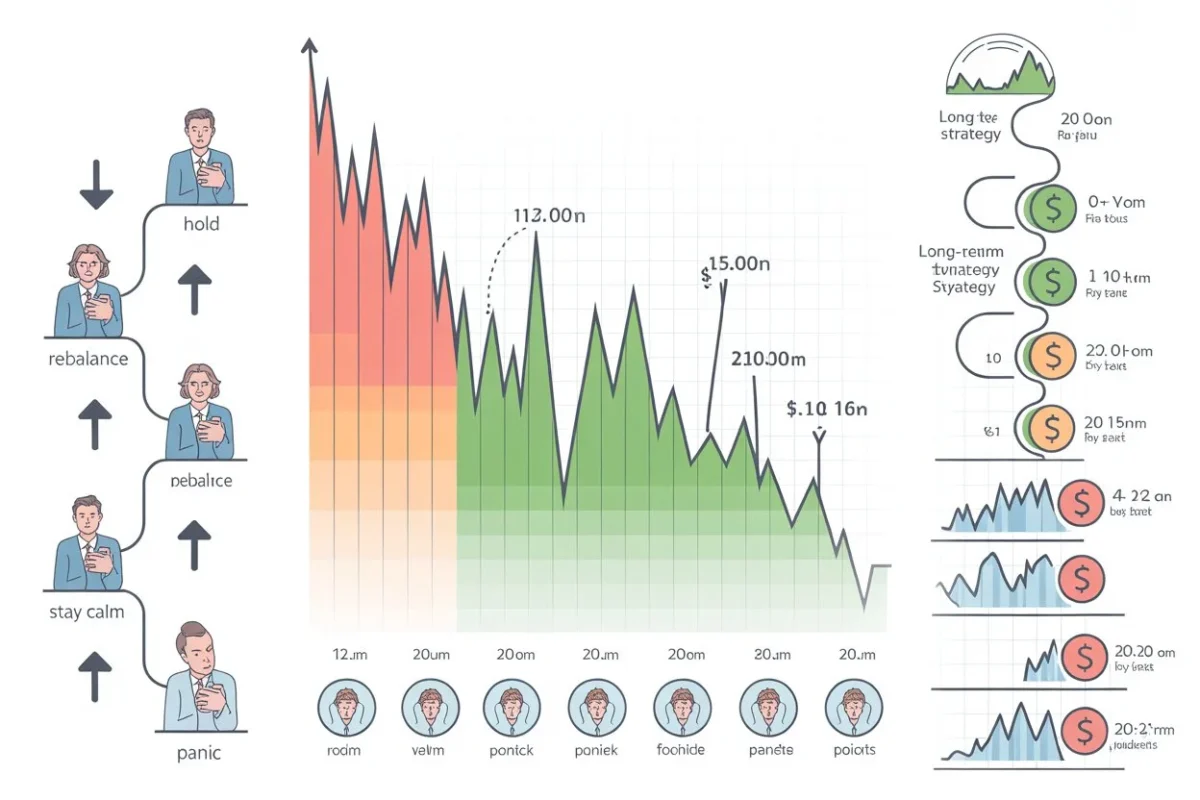
Rebalancing is a practical action often taken during downturns. It means adjusting portfolio weights back to intended targets. For example, if equities fall sharply and bonds rise, rebalancing may involve buying equities at lower prices and trimming bonds. This process enforces discipline and counters emotional bias.
Morningstar highlights rebalancing as a key driver of long term portfolio performance. It encourages buying low and selling high without relying on predictions.
Long Term Thinking When Short Term Data Looks Terrible
Economic data during crises often looks alarming. Rising unemployment, falling output, and declining confidence dominate reports. Successful investors contextualize this information within longer time frames.
They understand that data is backward looking. Markets often begin recovering before economic indicators improve. This gap confuses many investors who wait for confirmation that arrives too late.
Long term thinking involves accepting discomfort. It means acknowledging uncertainty while staying aligned with goals that extend years into the future. This mindset separates investing from speculation.
Common Mistakes Successful Investors Avoid
Understanding what successful investors do in crises also requires knowing what they avoid. They do not constantly check prices, argue with markets, or seek certainty from headlines. They avoid overtrading, excessive leverage, and emotional decision making.
They also avoid isolation. Many rely on structured plans, professional advice, or predefined rules. This reduces impulsive behavior when emotions run high.
Conclusion
Bad economic news tests investors more psychologically than financially. Fear, uncertainty, and constant negative headlines push many toward decisions that feel safe in the moment but harm long term outcomes. Successful investors behave differently because they understand cycles, emotions, and the limits of prediction.
This article has shown that what successful investors do in crises revolves around discipline, liquidity management, selective opportunity, and long term thinking. They stay invested while managing risk, prepare rather than panic, and view crises as periods of adjustment rather than permanent loss.
The most important insight is that success during crises is not about bold moves or perfect timing. It is about consistency and perspective. Markets recover not because fear disappears, but because economies adapt and grow over time.
By focusing on process instead of prediction, and preparation instead of reaction, investors can navigate bad economic news with greater confidence. The goal is not to eliminate uncertainty, but to function effectively within it. Over full market cycles, this approach has repeatedly proven to be the foundation of lasting investment success.
Frequently Asked Questions
What successful investors do in crises that others do not
They stay disciplined, manage risk, and avoid panic driven decisions while others react emotionally.
Do successful investors buy aggressively during downturns
They buy selectively and gradually, focusing on quality rather than chasing bargains blindly.
Should investors follow economic news closely during crises
They stay informed but avoid constant exposure that amplifies fear and clouds judgment.
How important is cash during market stress
Cash provides flexibility and emotional stability, allowing investors to avoid forced selling.
Can beginners act like successful investors during crises
Yes, by following simple rules such as diversification, patience, and long term focus.
If this article helped you understand market behavior during uncertainty, tell us in the comments if you find value in this article. Share how you respond to bad economic news, and join the discussion with your experience or questions.