In the journey toward financial security and wealth accumulation, two terms often stand out: saving and investing. While frequently used interchangeably, they represent distinct yet complementary strategies. Understanding the nuances between saving and investing, and more importantly, knowing how to balance them effectively, is crucial for anyone looking to build a robust financial future. This article will delve into the core differences, explore the unique benefits of each, and provide a practical framework for integrating both into your financial plan, regardless of your current financial literacy or net worth.
We will explore how saving provides the foundation of financial stability, acting as a buffer against unforeseen circumstances, and how investing propels your wealth forward, leveraging the power of compounding to achieve long-term goals. By the end of this comprehensive guide, you will have a clear understanding of when to save, when to invest, and how to create a balanced approach that aligns with your personal financial objectives.
Table of Contents
The Fundamentals: Defining Saving and Investing
Before we can discuss balancing these two critical components, it’s essential to clearly define what each entails.
What is Saving?
Saving refers to the act of setting aside money for future use, typically in a highly liquid and secure account, such as a traditional savings account, money market account, or a certificate of deposit (CD). The primary characteristics of saving include:
- Low Risk: Saved money is generally protected from market fluctuations and economic downturns.
- High Liquidity: Funds are readily accessible when needed, often within a day or two.
- Modest Returns: Savings accounts typically offer low interest rates, meaning your money grows slowly, sometimes even below the rate of inflation.
- Short-to-Medium Term Goals: Saving is ideal for immediate financial needs and goals spanning from a few months to a few years.
Examples of Saving Goals:
- Emergency fund (3-6 months of living expenses)
- Down payment for a car
- Vacation fund
- Upcoming tax payments
- Short-term home repairs
The core purpose of saving is to create a financial safety net and to accumulate funds for specific, near-term goals without exposing those funds to significant risk.
What is Investing?
Investing, on the other hand, involves committing money or capital to an endeavor with the expectation of generating an income or profit. This typically involves purchasing assets like stocks, bonds, real estate, or mutual funds. Key characteristics of investing include:
- Higher Risk (and Potential Reward): Investments are subject to market volatility, meaning their value can go up or down. However, with higher risk comes the potential for significantly higher returns over time.
- Lower Liquidity (often): While some investments are highly liquid, many are intended for long-term growth, and accessing funds quickly might incur penalties or require selling at an inopportune time.
- Potential for Significant Returns: Through capital appreciation, dividends, interest, or rental income, investments aim to outpace inflation and grow wealth substantially over the long term.
- Long-Term Goals: Investing is best suited for financial objectives that are many years, or even decades, away.
Examples of Investing Goals:
- Retirement planning
- Funding a child’s college education
- Building long-term wealth
- Purchasing a home (if far in the future)
Investing is about putting your money to work, leveraging market growth and compounding returns to achieve substantial wealth accumulation over an extended period.
The Core Differences: Risk, Return, and Time Horizon
The distinction between saving and investing can be summarized by three key factors:
- Risk Profile:
- Saving: Generally low to no risk of losing principal.
- Investing: Higher risk, with the possibility of losing principal, but also higher potential for growth.
- Expected Returns:
- Saving: Low, stable returns, often just enough to maintain purchasing power (or slightly less than inflation).
- Investing: Variable returns, with the potential for significant growth that can outpace inflation and savings rates.
- Time Horizon:
- Saving: Short to medium-term goals (0-5 years).
- Investing: Long-term goals (5+ years, ideally 10+ years).
This table provides a quick overview of these differences:
| Feature | Saving | Investing |
| Primary Goal | Security, liquidity, short-term goals | Growth, wealth building, long-term goals |
| Risk Level | Low | Moderate to High |
| Expected Return | Low (e.g., 0.5% – 2%) | Moderate to High (e.g., 5% – 12%+) |
| Liquidity | High | Variable, often lower |
| Time Horizon | Short to Medium (0-5 years) | Long (5+ years) |
| Typical Assets | Savings accounts, CDs, money markets | Stocks, bonds, mutual funds, real estate |
Why You Need Both: The Synergy of Saving and Investing
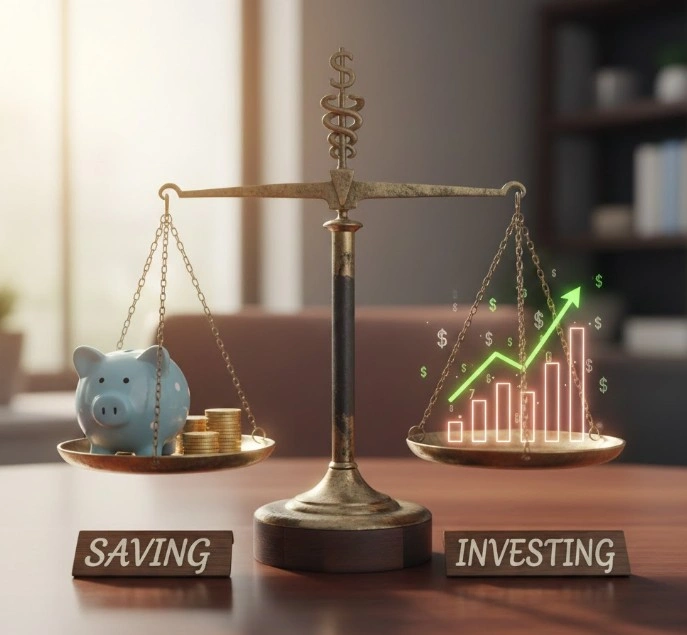
While distinct, saving and investing are not mutually exclusive. In fact, a robust financial plan requires both working in tandem. Saving provides the essential foundation, while investing builds upon that foundation to achieve greater financial freedom.
The Foundation: Why Saving Comes First
Before you even think about significant investments, establishing a solid savings base is paramount. Without it, your investment journey could be derailed by unexpected events.
1. The Emergency Fund: Your Financial Safety Net
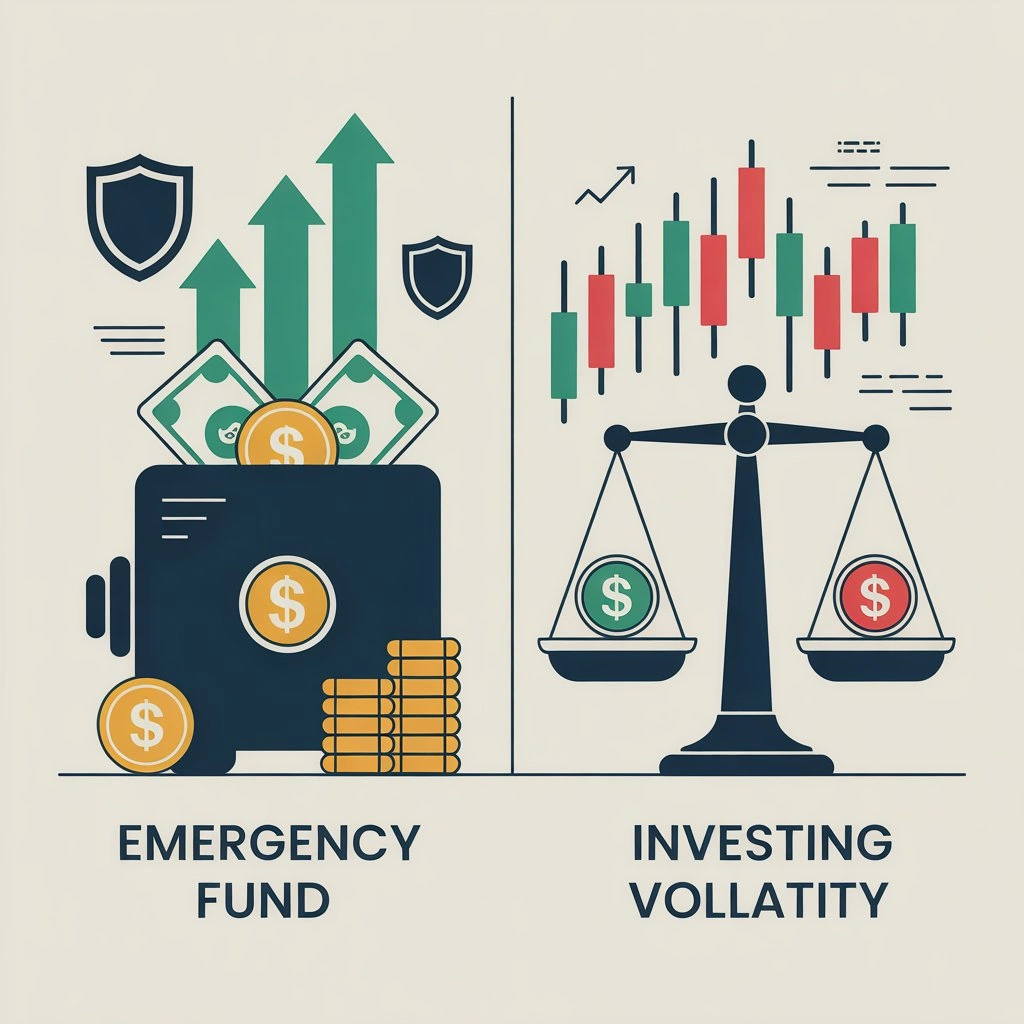
The most critical savings goal is building an emergency fund. This fund should ideally cover 3 to 6 months (or even up to 12 months for self-employed individuals) of your essential living expenses. It acts as a buffer against job loss, medical emergencies, unexpected home or car repairs, or any other unforeseen financial shock.
“An emergency fund isn’t about getting rich; it’s about not getting poor,” says financial expert Dave Ramsey. This sentiment underscores its importance. Without an emergency fund, unexpected expenses often lead to high-interest debt (like credit card debt) or forcing you to liquidate investments at an inopportune time, potentially incurring losses or missing out on future growth.
Imagine a scenario: You’ve invested heavily, but suddenly your car breaks down, requiring a $2,000 repair. If you don’t have an emergency fund, you might have to sell some of your investments when the market is down, locking in losses, or put the expense on a high-interest credit card, effectively erasing any investment gains with interest payments. An emergency fund prevents these domino effects.
2. Saving for Short-to-Medium Term Goals
Beyond emergencies, saving is the appropriate strategy for goals you want to achieve within the next five years. This could include a down payment for a house or car, a major vacation, or a planned large purchase. Since the time horizon is relatively short, these funds shouldn’t be exposed to the volatility of the stock market. A sudden market downturn could significantly reduce the value of your goal-specific funds just when you need them, forcing you to delay or abandon your plans.
For these goals, high-yield savings accounts or short-term Certificates of Deposit (CDs) are suitable options, offering slightly better returns than traditional savings accounts while maintaining liquidity and security.
The Growth Engine: Why Investing Powers Your Future
Once your emergency fund is robust and your short-term savings goals are on track, it’s time to shift your focus to investing. This is where your money truly starts working for you, leveraging the power of compounding.
1. Outpacing Inflation
Inflation erodes the purchasing power of your money over time. If your money is sitting in a savings account earning 1% while inflation is at 3%, you’re effectively losing 2% of your purchasing power each year. Investing, particularly in assets like stocks, has historically provided returns that significantly outpace inflation.
The S&P 500, a common benchmark for the U.S. stock market, has historically returned an average of about 10-12% annually over long periods. While past performance is not indicative of future results, this demonstrates the potential for investments to not only preserve but also grow your wealth in real terms.
2. The Magic of Compounding
Albert Einstein is often (though perhaps apocryphally) quoted as calling compound interest “the eighth wonder of the world.” Compounding is the process where the returns on your investments also start earning returns. This exponential growth is the most powerful force in wealth accumulation.
Table 1: The Power of Compounding over Time
Let’s illustrate with a simple example:
If you invest $10,000 today and add $100 per month for 30 years, assuming an average annual return of 8%:
| Time Horizon | Investment Value (No Compounding) | Investment Value (with 8% Compounding) |
| 5 Years | $16,000 | $20,323 |
| 10 Years | $22,000 | $35,391 |
| 20 Years | $34,000 | $89,141 |
| 30 Years | $46,000 | $207,453 |
Note: This table assumes consistent contributions and returns. Initial investment: $10,000. Monthly contribution: $100. Annual return: 8%.
As you can see, the difference between simply saving (no compounding shown explicitly but represented by the initial investment + contributions) and investing with compounding becomes dramatically apparent over longer periods. The earlier you start investing, the more time compounding has to work its magic.
3. Achieving Long-Term Financial Goals
Retirement, funding a child’s education, or leaving a legacy all require substantial amounts of money that are unlikely to be accumulated through saving alone. Investing in a diversified portfolio across different asset classes provides the best opportunity to reach these significant, long-term financial milestones.
How to Balance Saving vs. Investing Correctly: A Step-by-Step Approach
Finding the right balance isn’t a one-size-fits-all solution; it depends on your individual financial situation, goals, risk tolerance, and time horizon. However, a structured approach can guide you.
Step 1: Assess Your Current Financial Situation
Before making any decisions, take stock of your finances:
- Income and Expenses: Create a budget to understand where your money is going.
- Debt: Identify and prioritize high-interest debt (e.g., credit cards).
- Existing Savings: How much do you currently have in emergency funds or short-term savings?
- Financial Goals: Clearly define your short-term, medium-term, and long-term financial aspirations.
Step 2: Prioritize High-Interest Debt Repayment
If you have high-interest debt, it often makes more financial sense to pay it down before heavily investing. The guaranteed return from avoiding 18-24% interest on a credit card typically outweighs the uncertain returns from investments, especially for beginners.
Step 3: Build a Robust Emergency Fund
This is non-negotiable. Aim for 3-6 months of essential living expenses in a liquid, accessible savings account. Do not invest these funds. This provides the security needed to weather financial storms without disrupting your long-term investment strategy.
Step 4: Contribute to Employer-Sponsored Retirement Plans (Especially with a Match)
Once your emergency fund is in place, if your employer offers a 401(k) or similar retirement plan with a matching contribution, contribute enough to get the full match. This is essentially “free money” – an immediate, guaranteed return on your investment that you shouldn’t pass up.
Step 5: Save for Near-Term Goals (Less than 5 Years)
For goals like a down payment on a car or a vacation fund within the next five years, use secure savings vehicles. High-yield savings accounts are ideal here. Keep these funds separate from your emergency fund.
Step 6: Automate Your Savings and Investments
Consistency is key. Set up automatic transfers from your checking account to your savings and investment accounts on payday. This “pay yourself first” strategy ensures you’re consistently putting money towards your goals before you have a chance to spend it.
Step 7: Diversify Your Investments for Long-Term Goals
Once the previous steps are covered, you can focus on building a diversified investment portfolio for your long-term goals like retirement or education. This typically involves:
- Retirement Accounts: Max out contributions to tax-advantaged accounts like IRAs (Traditional or Roth) and 401(k)s.
- Brokerage Accounts: For investments beyond retirement accounts.
Within these accounts, diversify across different asset classes. A common approach for beginners is to invest in low-cost index funds or ETFs that track broad market indexes like the S&P 500, providing instant diversification across hundreds or thousands of companies.
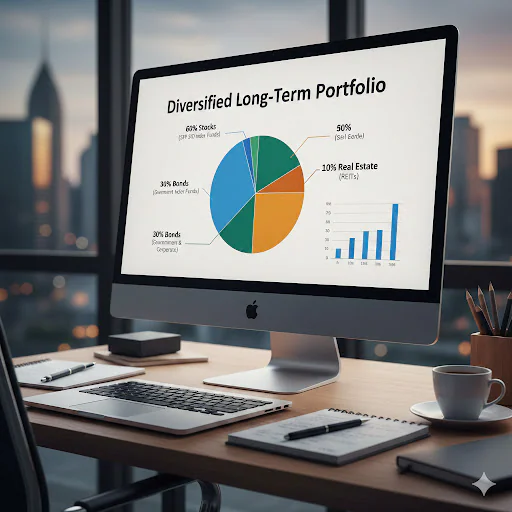
A well-diversified portfolio helps mitigate risk by not putting all your eggs in one basket. As shown above, a typical portfolio might include a mix of stocks for growth, bonds for stability and income, and potentially real estate through REITs (Real Estate Investment Trusts) for further diversification.
Step 8: Regularly Review and Adjust
Your financial situation and goals will change over time. It’s crucial to review your savings and investment strategy annually. This includes:
- Emergency Fund Adequacy: Has your cost of living increased?
- Goal Progress: Are you on track for your short-term and long-term goals?
- Investment Performance: Rebalance your portfolio as needed to maintain your desired asset allocation.
- Risk Tolerance: Has your comfort level with risk changed?
Real-World Examples and Expert Insights
Many financial experts advocate for a phased approach to building wealth, starting with savings and then transitioning to investing.
“You should have at least three to six months of expenses in an emergency fund before you start investing in the stock market,” advises Suze Orman, a prominent personal finance advisor. This highlights the foundational role of savings.
Furthermore, Nobel laureate Robert C. Merton emphasizes the long-term perspective of investing: “The individual must plan over a lifetime, not just over a few years, and must integrate consumption, saving, and investment decisions.” This reinforces the idea that investing is a journey, not a sprint.
Consider the hypothetical journeys of two individuals:
Scenario A: Sarah, the Saver
Sarah diligently saves $500 per month in a high-yield savings account for 20 years. Assuming an average annual interest rate of 1.5%, after 20 years, she would have approximately $135,000. While a respectable sum, its purchasing power might have been eroded by inflation, and it pales in comparison to what she could have achieved through investing. This is ideal for short-term goals but falls short for long-term wealth building.
Scenario B: Mark, the Balancer
Mark first builds an emergency fund of $10,000. Then, he invests $500 per month into a diversified portfolio of index funds for 20 years, earning an average annual return of 8%. After 20 years, his investment portfolio would be worth approximately $283,000. This is significantly more, demonstrating the power of balancing savings (for security) with investing (for growth).
Passive Income and Financial Markets: Where Investing Shines
Investing is the primary vehicle for generating passive income and engaging with financial markets.
Passive Income Streams Through Investing
Passive income, money earned with minimal active effort, is a hallmark of successful investing. Examples include:
- Dividends from Stocks: Many companies distribute a portion of their profits to shareholders as dividends. Investing in dividend-paying stocks or dividend-focused ETFs can provide a regular income stream.
- Interest from Bonds: Bonds are essentially loans to governments or corporations that pay investors regular interest payments.
- Rental Income from Real Estate: Owning rental properties can provide a consistent stream of income, although it often requires more active management than other passive income sources. Real Estate Investment Trusts (REITs) offer a more passive way to invest in real estate.
- Peer-to-Peer Lending: Lending money to individuals or small businesses through online platforms can generate interest income.
These passive income streams can supplement your active income, accelerate your wealth accumulation, or even fund your lifestyle in retirement.
Navigating Financial Markets
For beginners, the financial markets can seem daunting. However, with a disciplined approach and focus on long-term growth, they offer unparalleled opportunities.
- Start Simple: Begin with broad-market index funds or ETFs. These offer diversification and typically lower fees than actively managed funds.
- Understand Risk: All investments carry risk. Educate yourself on the risks associated with different asset classes and how they fit into your overall portfolio.
- Avoid Market Timing: Trying to predict market ups and downs is a futile exercise for most investors. A consistent, long-term approach (dollar-cost averaging) is generally more effective.
- Seek Professional Advice: If you feel overwhelmed, consider consulting a fee-only financial advisor who can help you tailor a plan to your specific needs.
Conclusion: Your Path to Financial Mastery
The journey to financial mastery requires a nuanced understanding and skillful execution of both saving and investing. Saving provides the essential bedrock of security, protecting you from life’s inevitable curveballs and enabling you to achieve short-term goals without undue stress. Investing, on the other hand, is the engine of long-term wealth creation, harnessing the incredible power of compounding to outpace inflation and achieve your most ambitious financial dreams.
By following a structured approach – prioritizing debt repayment, building an emergency fund, tackling short-term savings, and then strategically investing for the long term – you can create a balanced financial ecosystem. Remember to automate your contributions, diversify your investments, and regularly review your plan to ensure it remains aligned with your evolving life circumstances and financial aspirations.
There is no single “correct” balance, but rather an optimal balance that adapts to your stage of life, income, and goals. Embrace the synergy of saving and investing, and you will be well on your way to building lasting financial security and prosperity.