Introduction
For many people, investing feels like something reserved for the wealthy—those with large salaries, insider knowledge, or access to elite financial advisors. In reality, this belief is one of the biggest barriers preventing individuals from building long-term wealth. Today, you can start investing with low capital, sometimes with as little as a few dollars, thanks to modern financial markets, digital platforms, and diversified investment products.
As the saying goes, “It’s not how much money you make, but how much money you put to work for you.”
In this guide, you’ll learn how to start investing with low capital step by step, understand the key principles behind smart investing, and discover practical strategies that work for both beginners and experienced readers looking to optimize small portfolios.
Table of Contents
Why Investing Early Matters (Even with Small Amounts)
The Power of Compounding
Albert Einstein is often quoted as saying, “Compound interest is the eighth wonder of the world.” While the quote’s attribution is debated, the principle is undeniable.
Compounding means:
- You earn returns not only on your original investment
- But also on the returns generated over time
Example (Illustrative):
| Monthly Investment | Annual Return | Value After 20 Years |
|---|---|---|
| $50 | 8% | ~$29,500 |
| $100 | 8% | ~$59,000 |
The key lesson: starting early with small capital often beats starting late with large sums.
Step 1: Build a Financial Foundation First
Before you invest a single dollar, your personal finances need basic stability.
1. Create an Emergency Fund
- Save 3–6 months of essential expenses
- Keep it in cash or a high-liquidity savings account
- This prevents you from selling investments at a loss during emergencies
As Warren Buffett famously said, “Do not save what is left after spending; spend what is left after saving.”
2. Eliminate High-Interest Debt
- Credit cards and payday loans often charge 20%+ interest
- Paying these off is a risk-free return better than most investments
Step 2: Understand What “Low Capital Investing” Really Means
Low-capital investing doesn’t mean low quality or high risk. It means:
- Starting with small, consistent contributions
- Using low-cost, diversified assets
- Leveraging time instead of money
Common Myths
- ❌ “You need thousands to invest”
- ❌ “Small investors can’t diversify”
- ❌ “Investing with little money isn’t worth it”
Modern markets have made all of these false.
Step 3: Choose the Right Investment Options for Small Budgets
1. Index Funds and ETFs (Best for Beginners)
Index funds and ETFs track broad markets like the S&P 500.
Why they work well for low capital:
- Low minimum investment
- Instant diversification
- Low fees (expense ratios often below 0.20%)
“In my view, for most people, the best thing to do is own the S&P 500 index fund.” — Warren Buffett
2. Fractional Shares
Fractional investing allows you to:
- Buy part of expensive stocks (e.g., Apple, Amazon)
- Invest exact dollar amounts instead of whole shares
This removes one of the biggest barriers to starting with low capital.
3. Bonds and Bond Funds (Stability Component)
For risk balance:
- Government bond funds add stability
- Useful for conservative investors or short-term goals
Step 4: Decide How Much Risk You Can Handle
Risk vs. Return Explained Simply
| Asset Type | Risk Level | Potential Return |
|---|---|---|
| Cash | Very Low | Very Low |
| Bonds | Low | Low–Moderate |
| Stocks | High | High |
A common beginner-friendly allocation:
- 80% stocks / 20% bonds (young, long-term)
- 60% stocks / 40% bonds (more conservative)
As markets fluctuate, remember: “Volatility is the price you pay for higher returns.”
Step 5: Automate Your Investing
Automation is one of the most powerful tools for small investors.
Why Automation Works
- Removes emotional decision-making
- Ensures consistency
- Builds discipline over time
Actionable Tip:
- Set up automatic monthly investments
- Increase contributions when income rises
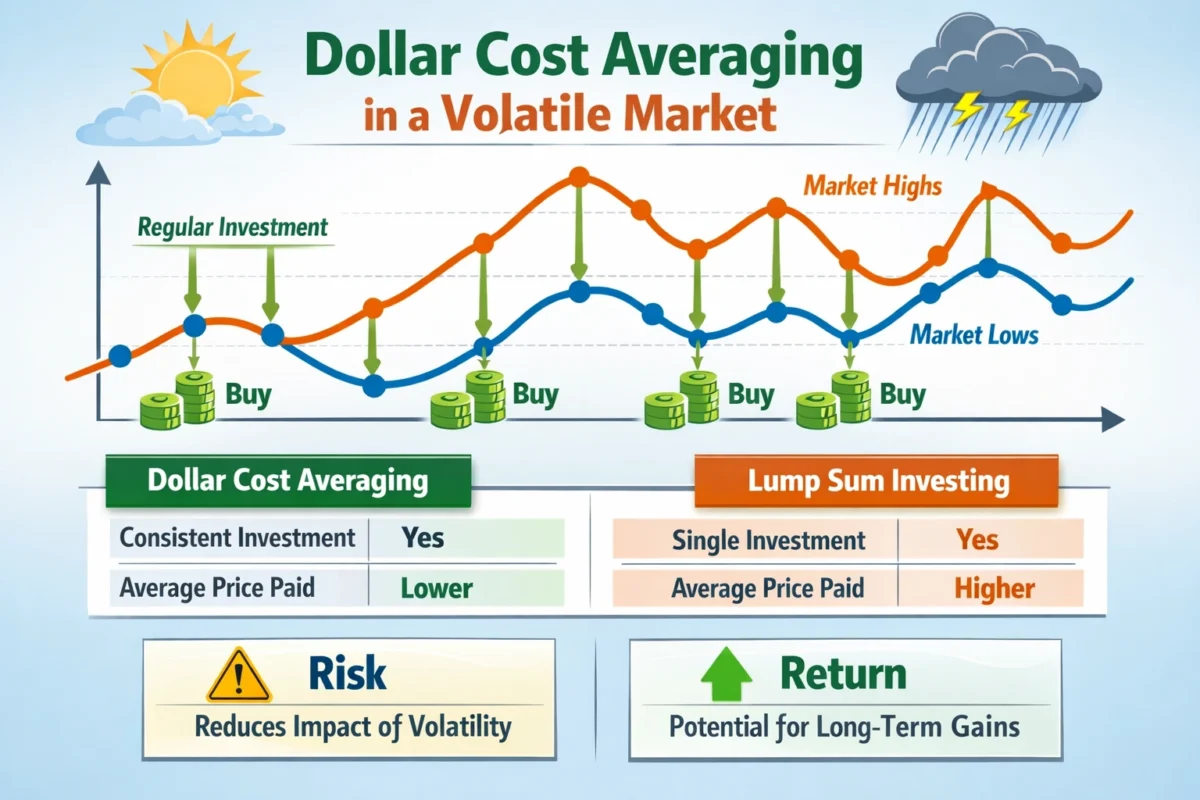
This strategy is known as dollar-cost averaging, where you invest regularly regardless of market conditions.
Step 6: Avoid Common Beginner Mistakes
1. Chasing Quick Profits
- Day trading and speculation often lead to losses
- Especially dangerous with limited capital
2. Ignoring Fees
Even small fees matter.
| Annual Fee | Portfolio Value After 30 Years ($10,000 initial) |
|---|---|
| 0.2% | ~$57,000 |
| 1.5% | ~$43,000 |
3. Emotional Investing
Fear and greed cause:
- Panic selling during crashes
- Overbuying during market bubbles
As Benjamin Graham said, “The investor’s chief problem—and even his worst enemy—is likely to be himself.”
Step 7: Think Long-Term and Grow Gradually
Low-capital investing is not about overnight success. It’s about:
- Consistency
- Patience
- Education
Over time, your small investments can evolve into:
- Dividend income
- Retirement savings
- Passive income streams
Conclusion: Key Takeaways and Practical Actions
Starting small is not a weakness—it’s a strategy.
Key takeaways:
- You can start investing with low capital by focusing on time, not size
- Index funds, ETFs, and fractional shares lower the barrier to entry
- Automation and discipline matter more than market timing
- Long-term thinking turns small steps into meaningful wealth
Practical actions to take today:
- Review your budget and free up a small monthly amount
- Choose a low-cost diversified investment
- Automate contributions and stay consistent
Remember: “The best time to invest was yesterday. The second-best time is today.”