Introduction
Global trade is going through one of its most important transitions in decades. After years of deep economic integration, open markets, and expanding supply chains, countries around the world are rethinking how much they rely on international trade. Rising geopolitical tensions, supply chain disruptions, inflation shocks, and national security concerns have pushed governments to place economic self-interest ahead of global efficiency. This shift has made trade protectionism 2026 a defining theme for policymakers, investors, and businesses alike.
Trade protectionism refers to government actions that restrict imports or favor domestic industries, usually through tariffs, subsidies, or regulatory barriers. While these policies are not new, their scale and coordination in recent years signal a deeper structural change rather than a temporary reaction. Today’s trade environment is no longer just about free trade versus tariffs. It is about resilience, strategic autonomy, and economic security.
This matters because global trade shapes prices, employment, investment flows, and long-term growth. When trade rules change, the effects ripple through supply chains, financial markets, and consumer behavior. Understanding why protectionism is rising, how deglobalization is unfolding, and what it means for the global economy helps individuals and institutions make smarter, forward-looking decisions.
In this article, you will learn what is driving the new trade order, how protectionist policies work in practice, which regions are most affected, and what risks and opportunities lie ahead. The goal is not to argue for or against globalization, but to explain how the world economy is being reshaped and what that means for the years ahead.
Table of Contents
The Rise of Trade Protectionism in a Changing World
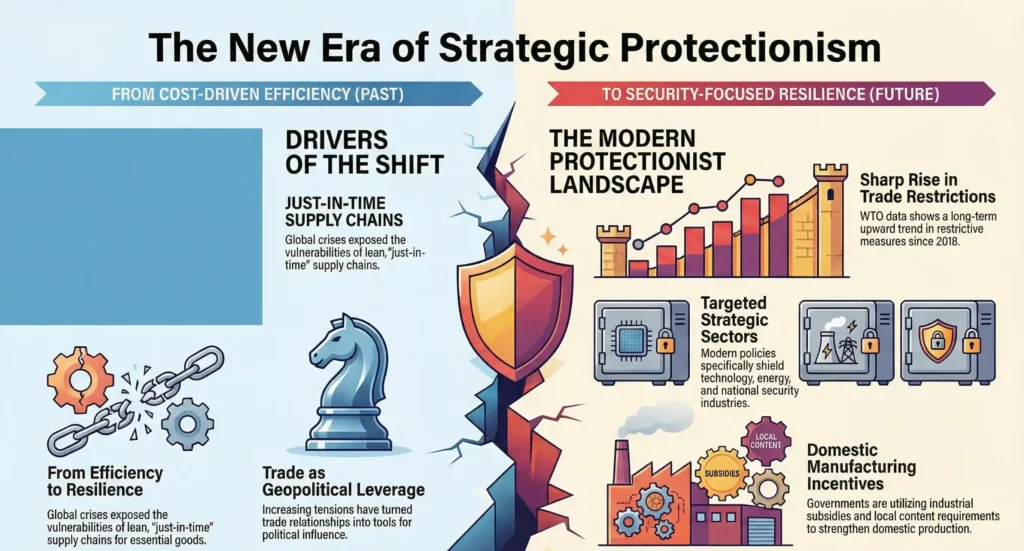
The renewed rise of trade protectionism did not happen overnight. It developed gradually as countries began questioning whether fully open markets always serve national interests. For decades, globalization prioritized efficiency and cost reduction. Production was spread across borders, and companies relied on just-in-time supply chains. While this model lowered prices, it also created vulnerabilities that became painfully visible during global crises.
The COVID-19 pandemic exposed how dependent many countries were on foreign suppliers for essential goods, including medical equipment and semiconductors. At the same time, geopolitical tensions highlighted how trade relationships could be used as political leverage. These experiences reshaped policy priorities, shifting focus from maximum efficiency to economic resilience.
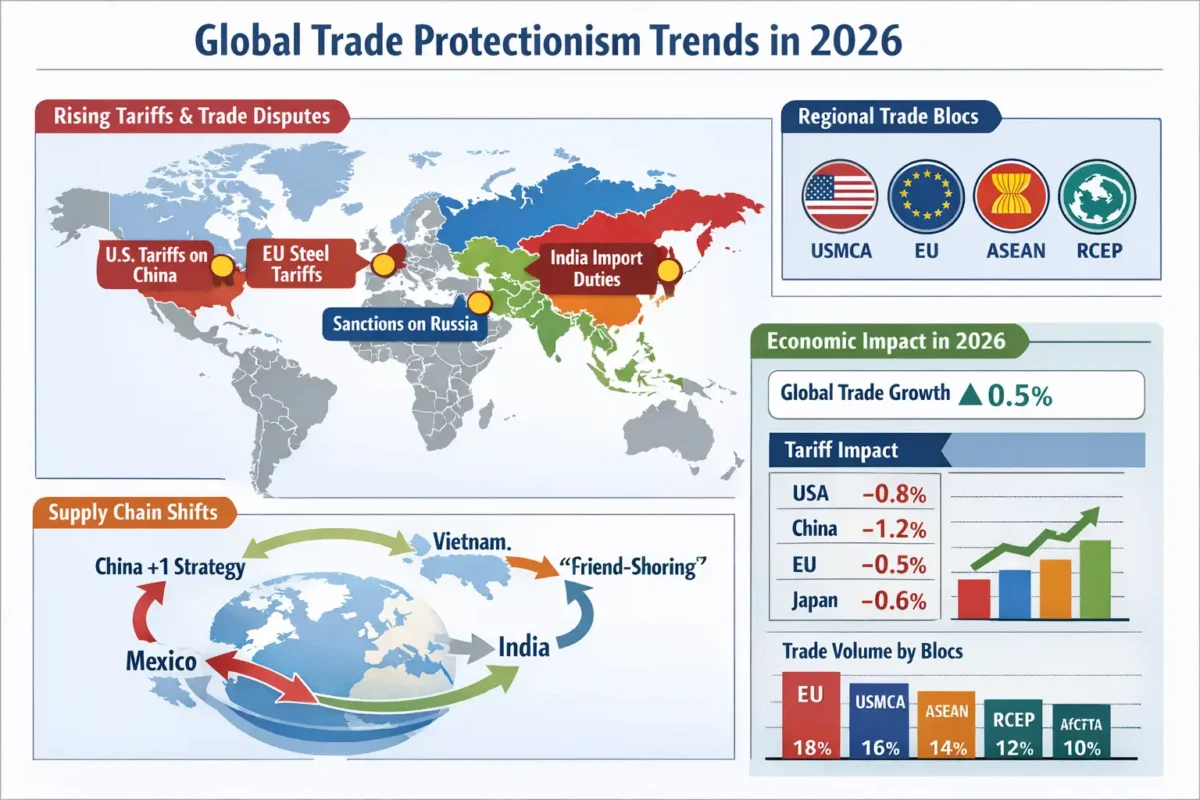
Governments now increasingly use tariffs, industrial subsidies, and local content requirements to protect strategic industries. The United States and the European Union, for example, have introduced policies aimed at strengthening domestic manufacturing and reducing reliance on specific foreign suppliers. According to the World Trade Organization, the number of trade-restrictive measures has risen sharply since 2018, signaling a long-term trend rather than a temporary response.
This environment defines trade protectionism 2026 as more targeted and strategic than past versions. Instead of blanket tariffs, modern protectionism often focuses on technology, energy, and national security sectors.
Deglobalization Versus Slowbalization: What Is Really Happening?
While headlines often use the term deglobalization, the reality is more nuanced. Deglobalization implies a reversal of global integration, where trade volumes shrink and economies pull inward. In practice, global trade has not collapsed. Instead, it has slowed and changed direction, a trend many economists call slowbalization.
Slowbalization describes a world where trade still exists but grows more slowly and becomes more regional. Companies are diversifying supply chains rather than abandoning them entirely. This means producing goods closer to end markets, relying on trusted trade partners, and reducing exposure to geopolitical risks.
Data from the World Bank shows that global trade as a share of GDP has plateaued since the mid-2010s. This does not mean countries are trading less, but that trade is no longer expanding faster than the overall economy. Regional trade agreements and nearshoring strategies are becoming more common, particularly in North America, Europe, and parts of Asia.
Understanding this distinction matters because it changes how we interpret protectionist policies. Instead of signaling economic isolation, many measures aim to reshape trade networks into smaller, more reliable systems.
| Term | Meaning | Economic Impact |
|---|---|---|
| Globalization | Expanding cross-border trade | Lower costs, higher efficiency |
| Slowbalization | Slower, more selective trade | Higher resilience, moderate costs |
| Deglobalization | Reversal of integration | Lower growth, higher prices |
Why Governments Are Embracing Trade Protectionism
To understand the new trade order, it is essential to examine why governments are embracing protectionist policies. The first driver is economic security. Countries want to ensure access to critical goods, such as energy, food, and advanced technology, even during global disruptions.
Another key factor is domestic politics. Trade liberalization often creates winners and losers. While consumers benefit from lower prices, certain industries and workers face job losses. In many countries, political pressure has grown to protect domestic employment and reduce inequality linked to globalization.
Strategic competition also plays a major role. Governments increasingly view economic strength as inseparable from national security. This is especially true in sectors like semiconductors, artificial intelligence, and clean energy. Policies such as subsidies and export controls aim to maintain technological leadership rather than simply protect local producers.
Institutions like the International Monetary Fund have noted that these policies can provide short-term stability but may reduce long-term efficiency if overused. The challenge lies in balancing national interests with global cooperation.
How Trade Protectionism Affects Global Supply Chains
Trade protectionism reshapes supply chains in complex ways. When tariffs or regulations increase the cost of importing goods, companies respond by adjusting where and how they produce. Some relocate factories closer to consumers, while others split production across multiple countries to reduce risk.
This restructuring often leads to higher upfront costs. Building new facilities or qualifying alternative suppliers takes time and investment. However, companies increasingly see these costs as insurance against future disruptions.
For consumers, the impact is mixed. Prices may rise in the short term as companies absorb higher production costs. Over time, however, increased regional competition can stabilize prices and improve supply reliability.
According to research published by the OECD, supply chain diversification can improve resilience but may reduce efficiency if protectionist barriers are too rigid. The key takeaway is that protectionism does not eliminate trade. It changes its structure.
| Impact Area | Short-Term Effect | Long-Term Effect |
|---|---|---|
| Production costs | Increase | Stabilize |
| Supply resilience | Limited | Stronger |
| Consumer prices | Rise | Mixed |
Winners and Losers in the New Trade Order
The shift toward protectionism creates clear winners and losers across the global economy. Domestic industries in protected sectors often benefit from reduced foreign competition and increased government support. Workers in these industries may see improved job security in the short term.
However, industries that rely heavily on imported inputs can suffer from higher costs. Export-oriented companies may also face retaliation from trading partners, reducing access to foreign markets.
Developing economies are particularly vulnerable. Many rely on export-led growth and integration into global supply chains. Increased trade barriers can limit their growth opportunities and slow poverty reduction efforts.
From an investor perspective, understanding trade protectionism 2026 is crucial for identifying structural trends. Sectors linked to infrastructure, energy transition, and domestic manufacturing often benefit, while globally integrated industries face greater uncertainty.

The Role of Central Banks and Global Institutions
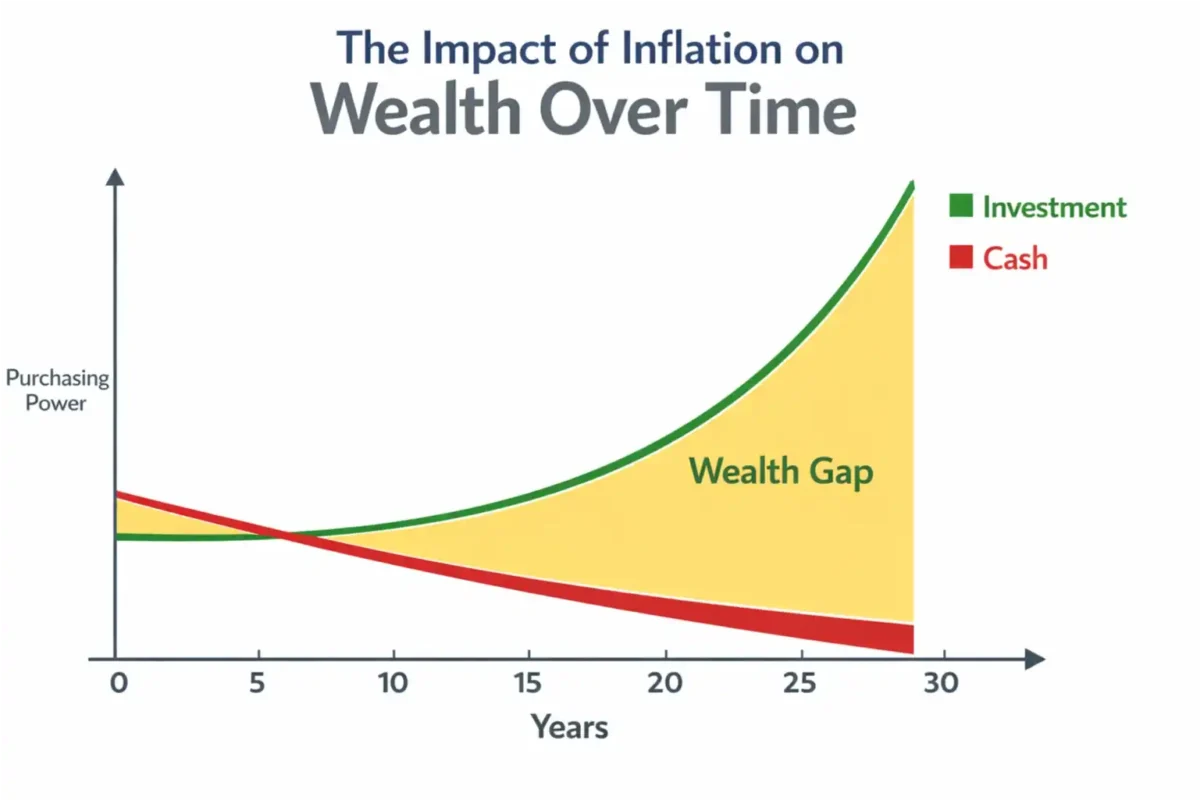
Trade protectionism also affects monetary policy and global financial stability. When trade barriers push prices higher, inflationary pressures increase. Central banks, such as the Federal Reserve and the European Central Bank, must then balance inflation control with economic growth.
The IMF and World Bank have repeatedly warned that uncoordinated protectionist measures could fragment the global economy. Fragmentation reduces efficiency and increases volatility, making it harder for central banks to manage economic cycles.
At the same time, these institutions recognize that some degree of strategic trade policy is now unavoidable. The debate has shifted from whether protectionism should exist to how it can be designed with minimal global harm.
External analysis from the IMF and OECD supports the idea that transparency and international cooperation are essential to prevent a race toward excessive trade restrictions.
Long-Term Implications for Growth and Innovation
One of the most important questions surrounding trade protectionism is its long-term impact on growth and innovation. Historically, open trade has supported innovation by increasing competition and spreading knowledge across borders.
Protectionist policies can encourage domestic innovation by providing stable funding and market access. However, if competition is reduced too much, efficiency and technological progress may slow.
Academic research from institutions such as Harvard University suggests that moderate protection tied to clear performance goals can support innovation, while permanent barriers tend to reduce productivity over time.
The future trade system will likely combine selective protection with continued international collaboration in research, climate policy, and digital standards.
Conclusion
The global trade landscape is no longer defined by a simple choice between free trade and protectionism. Instead, it reflects a complex effort to balance efficiency, resilience, and national security. As trade protectionism 2026 continues to shape policy decisions, understanding its causes and consequences becomes essential for governments, businesses, and individuals.
Protectionist measures are reshaping supply chains, influencing inflation, and altering investment strategies. While they offer short-term stability and strategic control, they also introduce risks related to higher costs, reduced competition, and slower global growth. The challenge lies in designing trade policies that protect critical interests without undermining long-term prosperity.
For businesses, adaptability is key. Diversified supply chains, regional partnerships, and careful risk management will define success in the new trade environment. For investors, understanding which sectors benefit from domestic support versus global integration helps identify sustainable opportunities.
Ultimately, the future of global trade will depend on cooperation as much as competition. Thoughtful policy design, transparent rules, and ongoing dialogue between nations can help ensure that protectionism remains a tool for resilience rather than a barrier to progress. By approaching the new trade order with clarity and balance, the global economy can adapt without losing the benefits that decades of integration have created.
Frequently Asked Questions
What is trade protectionism 2026?
Trade protectionism 2026 refers to the modern wave of trade policies focused on economic security, strategic industries, and supply chain resilience rather than broad tariff increases.
Is deglobalization inevitable?
Deglobalization is not inevitable. Most evidence suggests a shift toward slower, more regional trade rather than a full reversal of globalization.
How does protectionism affect inflation?
Trade barriers can raise production costs and consumer prices, contributing to inflation, especially in the short term.
Which sectors benefit most from protectionist policies?
Domestic manufacturing, energy, infrastructure, and technology sectors often benefit from subsidies and local content rules.
How should investors respond to trade protectionism 2026?
Investors should focus on structural trends, regional diversification, and sectors aligned with domestic policy priorities.
If you found value in this article, tell us in the comments which aspect of the new global trade order interests you most. You can also subscribe for regular insights on global economics, financial trends, and long-term investment strategies.