Introduction
Financial markets are constantly responding to new information. Every interest rate decision, inflation report, jobs number, or geopolitical headline sends ripples through asset prices. For everyday investors, this raises a practical and important question: which market reacts faster to economic news—crypto or stocks? Understanding this difference is not just an academic exercise. It directly affects how you manage risk, how you time decisions, and how you emotionally handle market volatility.
In recent years, cryptocurrencies like Bitcoin and Ethereum have moved from being niche assets to mainstream financial instruments discussed by central banks, hedge funds, and retail investors alike. At the same time, traditional stock markets remain the backbone of global investing, reflecting corporate profits, economic growth, and long-term wealth creation. Both markets respond to economic news, but they do so in very different ways, at very different speeds.
This difference matters more today than ever before. Economic news now spreads globally in seconds through social media, financial apps, and 24-hour news cycles. Algorithms react faster than humans. Retail investors can trade instantly from their phones. In this environment, the speed of reaction can amplify gains, deepen losses, and test even disciplined investors.
By the end of this article, you will deeply understand how and why crypto and stock markets react differently to economic news, what drives the speed of those reactions, and what that means for your investment strategy. We will explore market structure, investor behavior, liquidity, regulation, and psychology—step by step, without rushing. This is not about choosing sides between crypto and stocks. It is about learning how each market behaves so you can make smarter, calmer, and more informed decisions over the long term.
Table of Contents
Understanding Market Reactions to Economic News
Economic news is not just data; it is information that reshapes expectations about the future. When inflation rises, investors worry about purchasing power. When interest rates increase, borrowing becomes more expensive. When employment numbers surprise, confidence shifts. Markets exist to price these expectations as quickly as possible.
Both crypto and stock markets react because investors are constantly asking the same question: What does this news mean for future value? However, the way that question gets answered differs greatly between the two markets. Stocks represent ownership in real companies with cash flows, earnings, and balance sheets. Crypto assets, on the other hand, are largely driven by narratives, adoption trends, network usage, and investor sentiment rather than traditional financial statements.
This difference shapes reaction speed. In stock markets, economic news often passes through layers of interpretation. Analysts revise earnings forecasts. Institutions assess long-term impact. Regulatory disclosures and trading hours create natural pauses. In crypto markets, interpretation is often immediate and emotional. There are no earnings calls to wait for, no closing bell to slow things down. News hits, sentiment shifts, and prices move—sometimes violently.
The famous investor Benjamin Graham once said, “In the short run, the market is a voting machine, but in the long run, it is a weighing machine.” This idea applies differently to crypto and stocks. Crypto markets tend to vote faster and louder. Stock markets take more time before the weighing begins.
Key points to remember:
- Economic news changes expectations about the future.
- Stocks react through earnings, valuations, and fundamentals.
- Crypto reacts through sentiment, narratives, and liquidity.
- Reaction speed is shaped by market structure, not just news importance.
How Stock Markets React to Economic News
Stock markets are complex systems built over decades, with rules designed to balance efficiency and stability. When economic news is released, stocks rarely move randomly. Their reactions are filtered through company fundamentals, sector exposure, and long-term growth expectations.
For example, a rise in interest rates does not affect all stocks equally. Banks may benefit from higher lending margins, while technology companies may suffer because future earnings become less valuable when discounted at higher rates. This layered reaction slows down the process. Investors need time to interpret what the news means for different industries and companies.
Another important factor is institutional dominance. Pension funds, mutual funds, and insurance companies control a large portion of stock market capital. These investors do not react instantly. They follow mandates, risk models, and committee decisions. Even when algorithms trade on headlines, large capital reallocations take time. This creates a more measured response to economic news.
Stock market reactions also respect historical context. Investors compare new data to long-term trends. A single inflation report may move markets, but sustained trends matter more. As Warren Buffett famously said, “The stock market is designed to transfer money from the active to the patient.” This patience slows reaction speed but often improves long-term accuracy.
Why stock reactions are slower:
- Company fundamentals require analysis.
- Institutional investors dominate trading volume.
- Trading hours and regulations limit immediacy.
- Long-term valuation models matter more than headlines.
How Crypto Markets React to Economic News
Crypto markets are younger, less regulated, and structurally different from stock markets. These differences make them far more sensitive—and faster—to economic news. When news breaks, crypto prices often react within minutes, sometimes seconds.
One reason is simplicity. Crypto assets do not have earnings reports, dividend forecasts, or balance sheets. Investors interpret news directly through narratives. For example, inflation data may instantly trigger the idea that Bitcoin is a “hedge against fiat currency,” even if the long-term evidence is mixed. This narrative-based reaction accelerates price movement.
Another key factor is market access. Crypto markets operate 24/7, without weekends or holidays. There is no pause to reflect. News released at midnight can trigger immediate global trading. This constant openness amplifies speed and volatility.
Investor composition also matters. Crypto markets have a higher percentage of retail investors, many of whom react emotionally to headlines. Social media plays a powerful role. A single tweet or news alert can spread fear or excitement instantly. As economist John Maynard Keynes warned, “Markets can remain irrational longer than you can remain solvent.” Crypto markets often demonstrate this truth in real time.
Why crypto reactions are faster:
- Narrative-driven valuation.
- 24/7 global trading.
- High retail participation.
- Strong influence of social media and sentiment.
Comparing Reaction Speed: Crypto vs Stocks Reaction to News
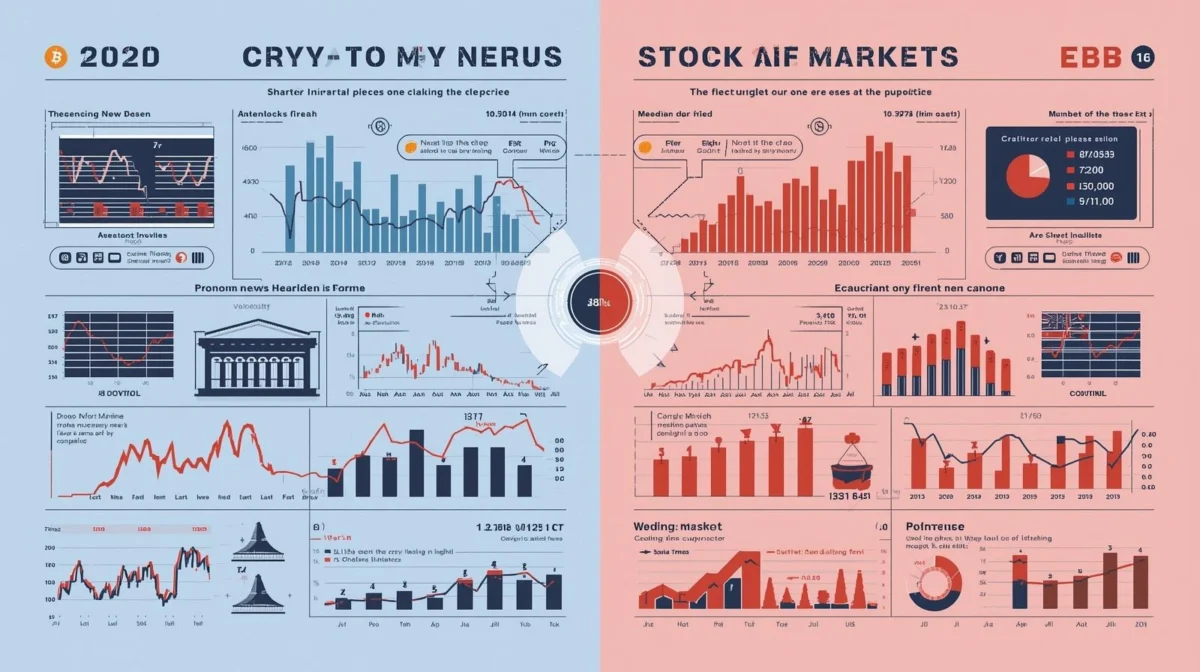
When comparing crypto vs stocks reaction to news, speed is one of the most visible differences. Crypto markets typically react faster, but speed does not always mean better or more accurate.
In crypto, prices often move before the full implications of news are understood. This can lead to overreactions, sharp reversals, and sudden liquidations. In stocks, reactions may be slower, but they are often more stable as information gets digested gradually.
Think of crypto as a sports car—fast, responsive, but sensitive to every bump. Stocks are more like a cargo ship—slower to turn, but steadier in rough waters. Neither is inherently superior. They serve different purposes and risk profiles.
Understanding this difference helps investors avoid frustration. If you expect stock-like stability from crypto, you may panic. If you expect crypto-like speed from stocks, you may overtrade. The key is alignment between expectations and reality.
Key comparison insights:
- Crypto reacts faster but with higher volatility.
- Stocks react slower but with more fundamental grounding.
- Speed increases risk as well as opportunity.
- Market structure determines behavior, not intelligence.
The Role of Liquidity and Market Depth
Liquidity refers to how easily assets can be bought or sold without causing large price changes. Market depth reflects how much capital is available at different price levels. These factors play a crucial role in reaction speed.
Stock markets, especially major indices like the S&P 500, are extremely deep and liquid. Large trades can be absorbed without dramatic price swings. This dampens immediate reactions to news. In contrast, many crypto markets have thinner order books. A relatively small amount of capital can move prices significantly, especially during emotional moments.
Lower liquidity acts like a microphone for news. It amplifies reactions. When fear or excitement hits, there may not be enough buyers or sellers to stabilize prices. This creates sharp, fast moves that feel sudden and extreme.
This is why the same economic headline can cause a 1% move in stocks and a 10% move in crypto within hours. Liquidity does not just affect volatility—it affects psychology. Rapid price changes reinforce emotional reactions, creating feedback loops.
Liquidity-driven effects:
- Stock markets absorb news more smoothly.
- Crypto markets amplify news through thin liquidity.
- Price swings reinforce emotional trading.
- Reaction speed increases as depth decreases.
Investor Psychology and Behavioral Differences
Markets are ultimately driven by humans, and humans are emotional. Investor psychology plays a central role in how quickly markets react to economic news.
Stock investors are often trained, experienced, and guided by long-term frameworks. Many view volatility as noise rather than signal. This mindset slows reaction speed. Crypto investors, especially newer participants, are more likely to respond emotionally to headlines, price alerts, and online sentiment.
Fear of missing out (FOMO) and fear of loss (FUD) spread faster in crypto markets. Without clear valuation anchors, investors rely on price movement itself as information. This creates rapid feedback loops where price changes drive further price changes.
Understanding psychology helps explain why faster reactions are not always rational. As legendary investor Howard Marks often says, “The biggest investing errors come not from factors that are informational or analytical, but from those that are psychological.”
Psychological factors influencing speed:
- Experience level of investors.
- Emotional sensitivity to price changes.
- Lack of clear valuation anchors in crypto.
- Social proof and herd behavior.
What Faster Reactions Mean for Investors
Speed changes the rules of the game. Faster reactions increase opportunity but also risk. In crypto, reacting late can mean buying near a peak or selling near a bottom. In stocks, reacting too early can mean misinterpreting temporary noise.
For long-term investors, speed matters less than discipline. Rapid market reactions can tempt investors to abandon plans. The real advantage comes from understanding how markets behave and positioning accordingly.
This is why many experienced investors separate strategy from emotion. They expect crypto to be volatile and size positions accordingly. They expect stocks to react more slowly and focus on fundamentals. Speed becomes something to respect, not chase.
Practical implications:
- Faster markets require smaller position sizes.
- Slower markets reward patience and analysis.
- Discipline matters more than reaction time.
- Understanding behavior reduces emotional mistakes.
Conclusion
The debate around crypto vs stocks reaction to news is ultimately about understanding market behavior, not choosing a winner. Crypto markets react faster because they are younger, more narrative-driven, less regulated, and more emotionally charged. Stock markets react more slowly because they are deeper, more institutional, and anchored in fundamentals.
Speed is neither good nor bad on its own. It is a characteristic. Like weather, it must be respected. Fast reactions can create opportunity, but they can also magnify mistakes. Slower reactions may feel frustrating, but they often protect investors from emotional overreach.
The most important takeaway is alignment. Align your expectations, risk tolerance, and strategy with the market you are investing in. Do not expect calm from crypto or instant gratification from stocks. Learn their rhythms. Respect their differences.
As markets continue to evolve, the ability to stay calm, informed, and disciplined will matter more than ever. Economic news will keep coming. Prices will keep moving. Your edge will not come from reacting fastest, but from understanding best—and acting wisely over time.