Introduction: Beyond Digital Currency
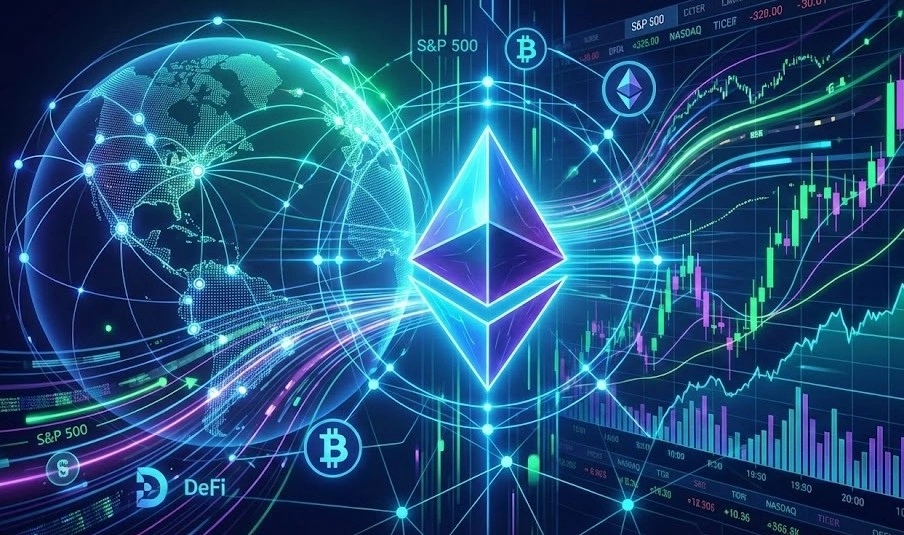
As we approach 2025, the narrative surrounding theEthereum Cryptocurrencyhas fundamentally shifted. No longer is it merely the “runner-up” to Bitcoin or just a speculative asset for tech enthusiasts. Ethereum has evolved into something far more structural and essential: it is becoming the settlement layer for the new global economy.
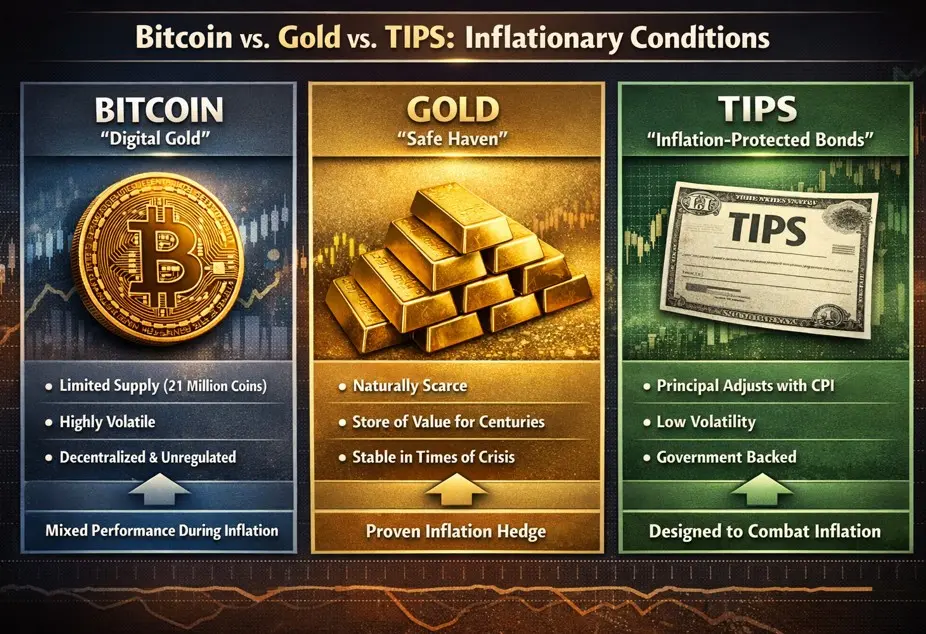
For investors and economic observers, understanding Ethereum in 2025 requires looking past daily price charts. It requires recognizing a technological infrastructure that is currently digitizing stocks, bonds, real estate, and global identity systems. While Bitcoin serves as “digital gold”—a store of value—Ethereum is operating as “digital oil,” fueling the decentralized applications (dApps) and smart contracts that automate modern finance.
This article provides a comprehensive analysis of Ethereum’s trajectory toward 2025. We will examine the technological leaps that have made it scalable, the institutional adoption driving its value, and why it represents one of the most compelling asymmetrical bets in the financial markets today. Whether you are a seasoned investor or new to the space, understanding Ethereum’s role is critical for navigating the financial landscape of the next decade.
Table of Contents
The Evolution: From Experiment to Global Standard
To forecast where Ethereum is going, we must appreciate how it has matured. In its early years (2015–2019), Ethereum was an experimental platform plagued by high transaction fees and slow processing speeds. However, the successful transition to “The Merge” in 2022 marked a pivotal turning point, shifting the network from a high-energy Proof-of-Work model to an eco-friendly Proof-of-Stake (PoS) consensus.
By 2025, this evolution has cemented Ethereum’s status as a “Triple Point Asset,” a concept popularized by economic analysts in the crypto space. It simultaneously functions as:
- A Capital Asset:Staking ETH generates yield (similar to a bond or dividend stock).
- A Consumable Asset:ETH is required to pay for transaction fees (gas) to use the network (similar to oil or electricity).
- A Store of Value:With its deflationary issuance mechanism, ETH supply can decrease over time during periods of high network activity.
Technological Maturity: Scaling the “World Computer”
The primary criticism of theEthereum Cryptocurrencyhas historically been scalability. In 2021, gas fees (transaction costs) could spike to over $100, making the network unusable for smaller participants. However, the roadmap to 2025 has largely solved this through Layer 2 (L2) scaling solutions.
The Rise of Layer 2 Networks
Think of Ethereum (Layer 1) as the high-security settlement layer, akin to the Fedwire system between banks. It is slow, expensive, but incredibly secure. Layer 2 networks (like Arbitrum, Optimism, and Base) sit on top of Ethereum, processing thousands of transactions quickly and cheaply, then bundling them up and settling the final result on the main Ethereum chain.
By 2025, the vast majority of user activity—trading, gaming, and payments—occurs on these L2s, with transaction costs averaging less than $0.01. This technological shift has unlocked the floodgates for mass adoption.
| Metric | 2020 (DeFi Summer) | 2025 (Projected) |
|---|---|---|
| Consensus Mechanism | Proof of Work (Energy Intensive) | Proof of Stake (99.9% Less Energy) |
| Transactions Per Second (TPS) | ~15 TPS | ~100,000+ TPS (via L2s) |
| Average Transaction Cost | $5.00 – $50.00+ | <$0.01 (on L2s) |
| Staking Yield | 0% (Native) | 3% – 5% APR |
| Asset Class Definition | Speculative Asset | Yield-Bearing Capital Asset |
Real-World Applications: The Tokenization of Everything
The true value of theEthereum Cryptocurrencylies not in currency speculation, but in its utility as a platform. In 2025, we are witnessing the migration of traditional financial assets onto the blockchain—a trend known as Real World Asset (RWA) tokenization.
1. Tokenized Securities and Bonds
Major financial institutions like BlackRock and Franklin Templeton have already begun launching tokenized money market funds on Ethereum. By 2025, this trend will have accelerated. Instead of waiting T+2 days for a stock trade to settle, tokenized assets on Ethereum settle instantly, 24/7. This efficiency saves banks billions in operational costs and collateral requirements.
2. Stablecoins as the New Fiat Rails
Stablecoins (cryptocurrencies pegged to the US Dollar like USDC or PayPal’s PYUSD) utilize Ethereum as their primary rail. In emerging markets where local currencies are volatile, businesses are increasingly using Ethereum-based stablecoins for payroll and supply chain payments. By 2025, annual stablecoin settlement volume on Ethereum is projected to rival major credit card networks like Visa.
3. Decentralized Finance (DeFi) 2.0
DeFi has matured from the “Wild West” of 2020 into a regulated, institutional-grade sector. “Permissioned DeFi” pools allow institutions to trade and lend in compliance with KYC (Know Your Customer) and AML (Anti-Money Laundering) laws, all while leveraging the efficiency of smart contracts. This removes the middleman—the banker—and replaces them with code, reducing costs for the end consumer.
Investment Perspective: The Bull Case for ETH
For the investor managing a personal portfolio, how doesEthereum Cryptocurrencyfit into a broader strategy? The investment thesis for 2025 rests on three pillars: Yield, Deflation, and Adoption.
The “Internet Bond” Thesis
Because Ethereum now pays a yield to those who stake their coins (validating the network), it has characteristics similar to a bond. However, unlike a US Treasury bond where the yield is paid by printing more money (inflation), Ethereum’s yield comes from actual transaction fees generated by economic activity.
If the Ethereum economy grows, fees increase, and the yield for stakers rises. This aligns the incentives of the investor with the growth of the network usage.
Supply Shock Dynamics
Ethereum’s fee burning mechanism (EIP-1559) dictates that a portion of every transaction fee is permanently destroyed (“burned”). During periods of high network usage, more ETH is burned than is created. This deflationary pressure is unique in the asset world. Imagine if Exxon Mobil bought back and destroyed shares every time someone bought gas at the pump; that is the economic model of Ethereum.
Challenges and Risks
Despite a bullish outlook, a professional analysis must acknowledge the risks that remain in 2025.
- Regulatory Uncertainty:While clarity is improving, different jurisdictions (US, EU, Asia) have conflicting classifications for crypto assets. A harsh regulatory stance in a major market could stifle growth.
- Competition:“Ethereum Killers” like Solana offer higher speeds at the base layer. While Ethereum leads in Total Value Locked (TVL) and developer activity, it must continue to innovate to maintain its dominance.
- Centralization Risks:If a large portion of staked ETH is controlled by a few entities (like centralized exchanges or liquid staking providers like Lido), it could theoretically threaten the decentralization of the network.
Conclusion: Strategic Takeaways for 2025
Ethereum in 2025 is the settlement layer of the digital age. It has successfully transitioned from a volatile experiment to a yield-bearing, deflationary asset that powers a new global financial infrastructure. For investors, it offers a dual benefit: the growth potential of a tech stock combined with the yield generation of a fixed-income instrument.
Key Actionable Takeaways
- Diversify Beyond Bitcoin:While Bitcoin is digital gold, Ethereum is the digital economy. A balanced crypto portfolio should likely include both to capture different value propositions.
- Understand “Staking”:Long-term holders should investigate staking options to earn yield on their ETH holdings, effectively compounding their investment.
- Monitor Institutional Flows:Watch the adoption rates of tokenized assets by major banks. This is the leading indicator of Ethereum’s long-term utility.
- Think Long Term:Volatility will persist. Focus on the underlying trend of network usage and developer activity rather than daily price swings.
As the lines between traditional finance and decentralized finance blur, Ethereum stands as the bridge connecting them. It is not just a cryptocurrency; it is the inevitable backbone of the 2025 global economy.
Source links: Detailed data regarding current network statistics and EIP proposals can be found atethereum.organd current market capitalization data is available viaCoinMarketCap.