Introduction
The concept of financial independence has become a cornerstone of modern personal finance discussions. For many, it represents the dream of living life on their own terms—free from the limits of a paycheck or the fear of running out of money. Yet, despite its popularity, many still misunderstand what it truly means, how to achieve it, and the real-world effort required.
This article offers a deep, realistic, and research-backed exploration of financial independence explained—covering what it really takes to reach it, how to calculate your “freedom number,” and the strategies that make it achievable for both average earners and high-income professionals.
By the end, you’ll understand:
- The true definition of financial independence (FI)
- The difference between financial independence and early retirement
- Key stages toward FI and how to measure progress
- The exact savings, investing, and income strategies that build lasting independence
Table of Contents
Understanding Financial Independence
What Is Financial Independence?
Financial independence (FI) means that your passive income—from investments, businesses, or other non-labor sources—covers all your living expenses. Simply put, you could stop working today and still maintain your lifestyle indefinitely.
In financial planning terms, FI is achieved when:Annual Passive Income≥Annual Expenses
Common sources of passive income include:
- Dividends from stocks or index funds
- Rental income from real estate
- Royalties or intellectual property earnings
- Business ownership or side hustle income that requires minimal involvement
Financial Independence vs. Early Retirement
While the two terms often overlap, they’re not identical.
- Financial Independence (FI): A financial state where work is optional.
- Retiring Early: A lifestyle choice to stop working after achieving FI.
As the well-known FIRE (Financial Independence, Retire Early) movement emphasizes, some people choose to keep working after FI—because they enjoy their careers but appreciate the freedom of choice.
The Numbers Behind Financial Independence
The 4% Rule and Why It Matters
At the heart of financial independence planning lies the 4% rule, first introduced by financial planner William Bengen in 1994. It suggests that withdrawing 4% of your portfolio annually (adjusted for inflation) allows your savings to last at least 30 years.
This gives us a simple formula:FI Number=Annual Expenses×25
For example:
If you spend $50,000 per year, you’ll need approximately:$50,000×25=$1,250,000
So, a portfolio of $1.25 million invested in a balanced mix of stocks and bonds could theoretically sustain your spending indefinitely.
Here’s a simple table illustrating different spending levels and required investment sizes:
| Annual Spending | FI Target (4% Rule) | Monthly Budget Supported |
|---|---|---|
| $30,000 | $750,000 | $2,500 |
| $50,000 | $1,250,000 | $4,166 |
| $80,000 | $2,000,000 | $6,666 |
| $100,000 | $2,500,000 | $8,333 |
Adjusting for Your Lifestyle
Of course, financial independence looks different depending on your personal goals and location. A family in Abu Dhabi, for instance, may face higher housing and education costs than someone living in a smaller city.
When customizing your FI plan:
- Account for geography: Consider local tax rates, housing, and healthcare.
- Plan for inflation: A 2–3% annual inflation assumption is standard.
- Build in flexibility: Adjust your lifestyle or spending as needed during market downturns.
The Stages of Financial Independence
Achieving financial independence isn’t a single leap—it’s a journey through several recognizable phases. Understanding these stages helps you track progress and stay motivated.
Stage 1: Financial Stability
At this stage, your income covers all expenses, and you have a small emergency fund (3–6 months of expenses). You’re no longer living paycheck to paycheck.
Stage 2: Debt Freedom
Here, all high-interest debts—especially credit cards and personal loans—are paid off. You might still have a mortgage or student loans, but your financial load is manageable.
Stage 3: Basic Financial Security
Your investments and cash reserves can cover essential costs (housing, food, healthcare) even if you lose your main job.
Stage 4: Partial Independence
You could reduce work hours or take a lower-paying but more fulfilling job because investment income covers part of your expenses.
Stage 5: Full Financial Independence
At this point, you no longer need to work for money. Investment income reliably covers your chosen lifestyle indefinitely.
Stage 6: Financial Abundance
Your passive income not only covers your needs but also allows philanthropic giving, legacy planning, and luxury experiences—without reducing principal wealth.
How to Achieve Financial Independence
Step 1: Master the Savings Rate
Your savings rate—the percentage of your income that you save and invest—is the most powerful variable in reaching FI.
According to research by Mr. Money Mustache and other FIRE advocates:
- Saving 10% = ~51 years to FI
- Saving 30% = ~28 years
- Saving 50% = ~17 years
- Saving 70% = ~8.5 years
To increase your savings rate:
- Reduce major fixed costs such as housing and transportation.
- Automate savings transfers before you can spend.
- Use windfalls and bonuses for investing, not consumption.
Step 2: Invest Wisely
You won’t reach financial independence by saving alone—returns matter. Historically, the U.S. stock market has produced average annual returns of around 7–10% over long periods.
A diversified portfolio typically includes:
- Stocks (60–80%) for growth. Index funds like S&P 500 ETFs are popular picks.
- Bonds (10–30%) for stability and income.
- Real estate (10–20%) for diversification and inflation protection.
“Compound interest is the eighth wonder of the world,” allegedly said Albert Einstein. “He who understands it, earns it; he who doesn’t, pays it.”
That’s exactly why consistent investing over decades beats sporadic high returns—time is the biggest multiplier in your favor.
Step 3: Build Multiple Income Streams
Depending solely on your day job makes FI far harder. Successful investors and savers diversify income just like they diversify investments.
Sources of passive income include:
- Dividend-paying stocks or ETFs.
- Rental properties or REITs.
- Peer-to-peer lending.
- Royalties from books, art, or apps.
- Online courses or digital product businesses.
A well-balanced financial independence plan combines capital growth (through investing) and recurring income streams.
Step 4: Control Lifestyle Inflation
Lifestyle inflation—spending more as you earn more—can quietly sabotage even high-income professionals. The wealthiest, financially independent individuals usually keep their expenses stable while income rises.
Simple habits to combat lifestyle creep:
- Upgrade your savings before your lifestyle whenever you get a raise.
- Track expenses using apps like YNAB or Mint.
- Adopt a “value-based spending” mindset—spend on what truly matters.
Step 5: Plan for Taxes and Inflation
Ignoring taxes and inflation can derail long-term plans.
Key principles:
- Use tax-advantaged accounts (like IRA, 401(k), or equivalents in your country).
- Diversify across tax-deferred, tax-free, and taxable accounts.
- Review your portfolio annually to rebalance and optimize for tax efficiency.
Inflation silently reduces purchasing power. For example, at 3% annual inflation, prices double roughly every 24 years. That’s why growth assets like equities are essential—they historically outpace inflation.
Step 6: Protect and Sustain Your Wealth
Once you near FI, risk management becomes vital.
- Maintain adequate health, disability, and property insurance.
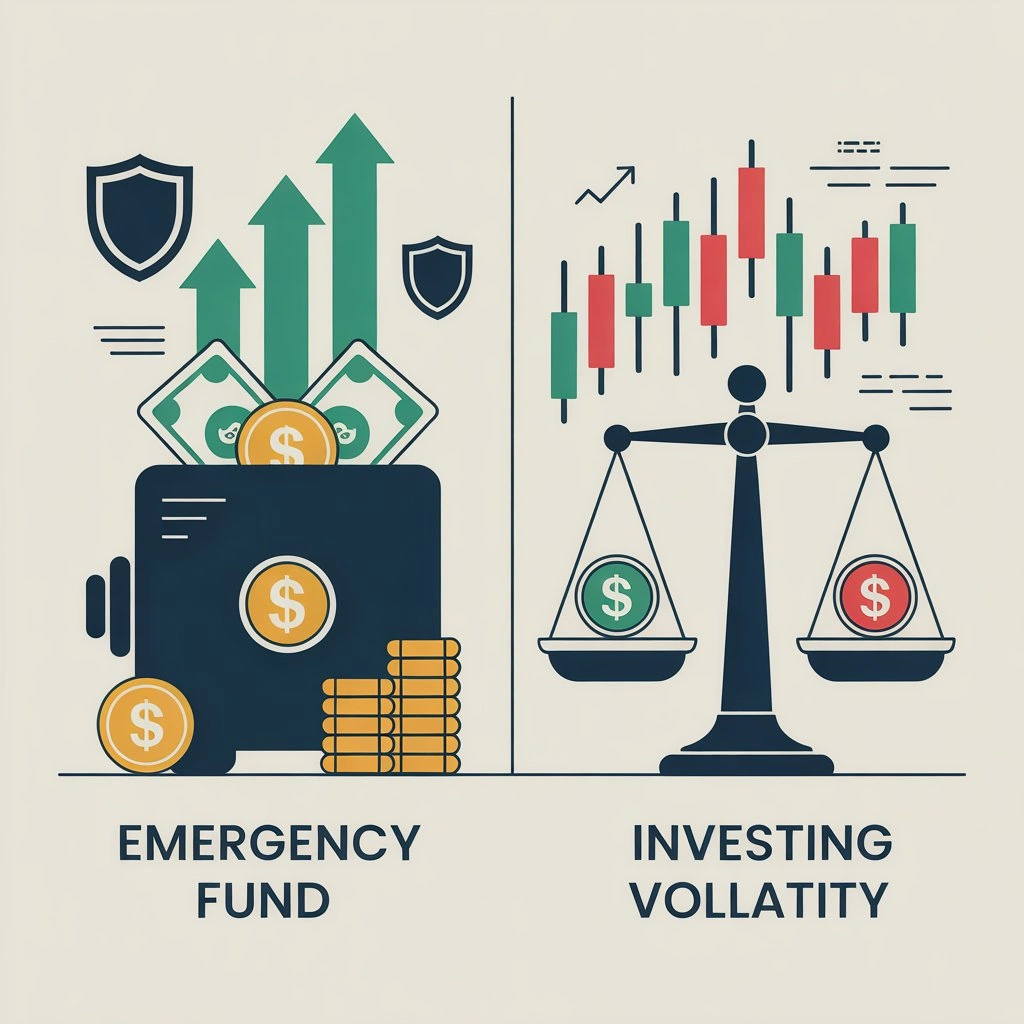
- Keep 1–2 years of expenses in a low-risk account for market downturns.
- Consider long-term care and estate planning.
“The goal isn’t just getting wealthy—it’s staying wealthy.” — Morgan Housel, The Psychology of Money
Real-World Examples of Financial Independence
Case 1: The Ordinary Professional Achiever
Emma, 35, earns $80,000 a year. She saves and invests 40% of her income in global index funds, with a 7% average annual return.
After 20 years, her portfolio will reach roughly:$32,000×0.07(1+0.07)20−1=$1,310,000
Her yearly spending of $32,000 means she crosses FI around age 55—possible even without a massive salary.
Case 2: The High-Income Power Saver
Ali, 30, earns $200,000 in Abu Dhabi and saves 60% due to low tax rates. Assuming 7% returns, he can reach FI (spending $60,000 annually) in under 12 years.
His key strategy: Keeping apartment rent modest while investing heavily in low-cost ETFs and regional real estate.
Chart: How Savings Rate Affects Years to Financial Independence
| Savings Rate | Years to FI | Notes |
|---|---|---|
| 10% | 51 | Average saver; slow progress |
| 30% | 28 | Above average; career long-term |
| 50% | 17 | Aggressive but realistic |
| 70% | 8.5 | Extreme dedication |
(Source: Mr. Money Mustache, Bogleheads forum)
Common Myths About Financial Independence
Myth 1: “It’s Only for High Earners”
Reality: Your savings rate matters more than your income. Even middle-income earners can achieve FI through disciplined investing.
Myth 2: “I’ll Need Millions”
Not necessarily. Financial independence depends on expenses, not arbitrary wealth targets. A minimalist in Portugal might need $600,000, while someone in London might need $2 million.
Myth 3: “Investing Is Too Risky”
Long-term, diversified investing is far less risky than relying on a single paycheck. Market volatility matters less when your time horizon spans decades.
Myth 4: “You Have to Retire Early”
Many financially independent people continue working—just on projects they love. The freedom to choose how to spend your time is the real reward.
Tools and Resources to Track Your Progress
The path to FI is data-driven. Here are recommended tools:
- Investment trackers: Personal Capital, Empower, or Interactive Brokers dashboard.
- Budgeting apps: YNAB, Mint, or Monarch Money.
- Retirement calculators: FIRECalc or EarlyRetirementNow’s Safe Withdrawal Rate tool.
- Books:
- Your Money or Your Life by Vicki Robin
- The Simple Path to Wealth by JL Collins
- The Psychology of Money by Morgan Housel
Conclusion: The Real Meaning of Financial Independence
Financial independence isn’t about escaping work—it’s about reclaiming freedom. It means replacing anxiety with security, trading time for purpose, and using money as a tool for a meaningful life.
Reaching it requires discipline, patience, and strategic decision-making. But with consistent saving, smart investing, and control over spending, almost anyone can reach financial independence within a few decades.
Whether you’re just starting your career or already building assets, begin today. The best time to plant the tree of independence was years ago; the second best time is now.