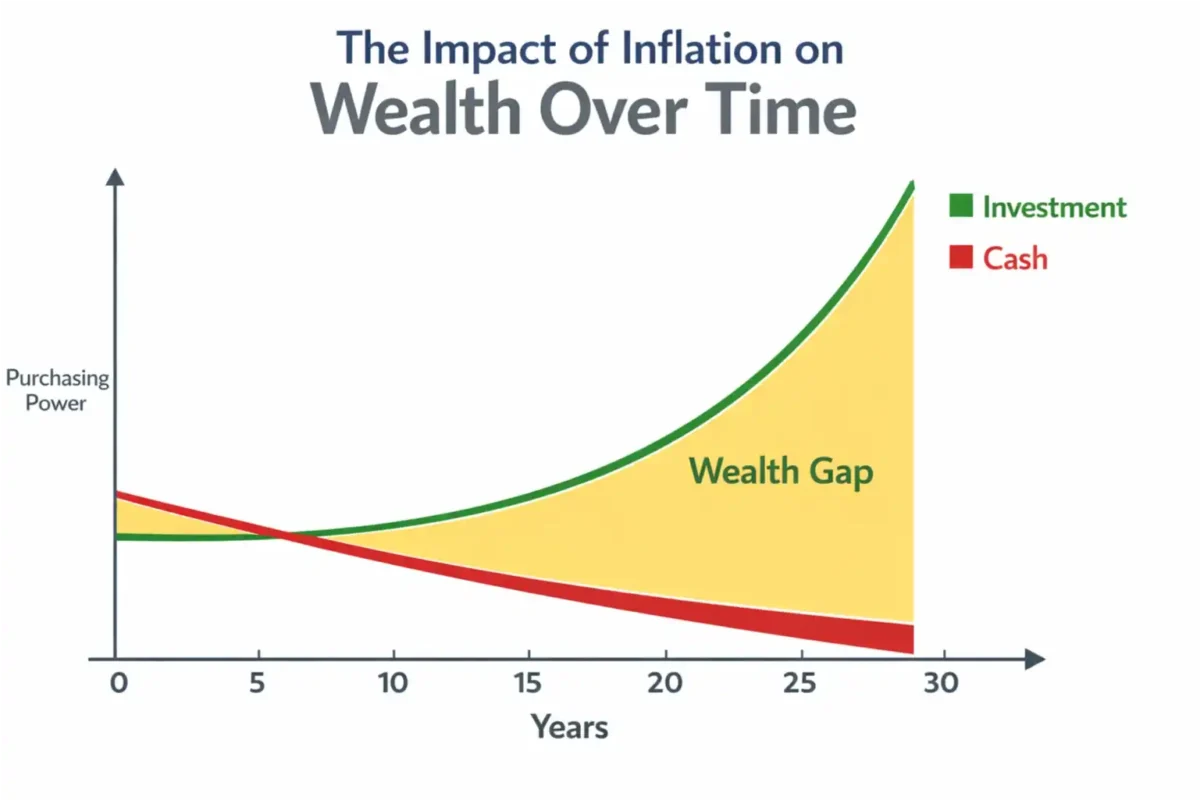
Inflation impact on wealth is a financial reality that affects everyone, whether you are saving for retirement, investing in stocks, or simply keeping money in a savings account. Many people underestimate how even modest inflation gradually reduces the purchasing power of their money, turning what seems like a secure nest egg into a slowly shrinking fund. Understanding inflation’s effect is crucial for anyone seeking to preserve or grow wealth over the long term.
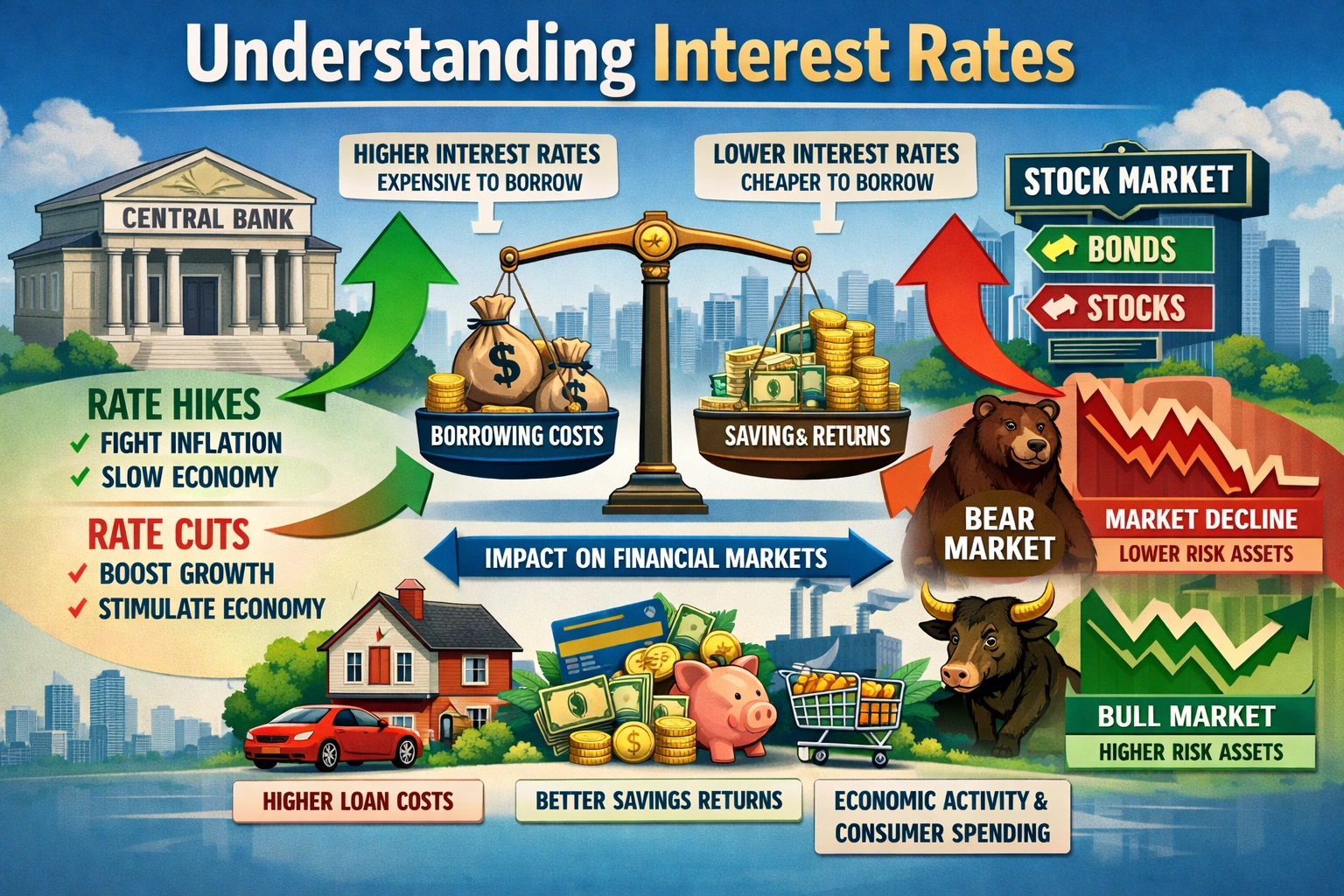
Today, inflation is more than just an economic buzzword. With global markets fluctuating and central banks adjusting interest rates to combat rising prices, individuals must recognize how inflation eats into their savings and investments. This article will explore the causes of inflation, its long-term consequences on personal wealth, and actionable strategies to protect your financial future. By the end, you will understand not just how inflation works, but how to actively manage its impact on your money.
Table of Contents
Understanding Inflation and Its Drivers
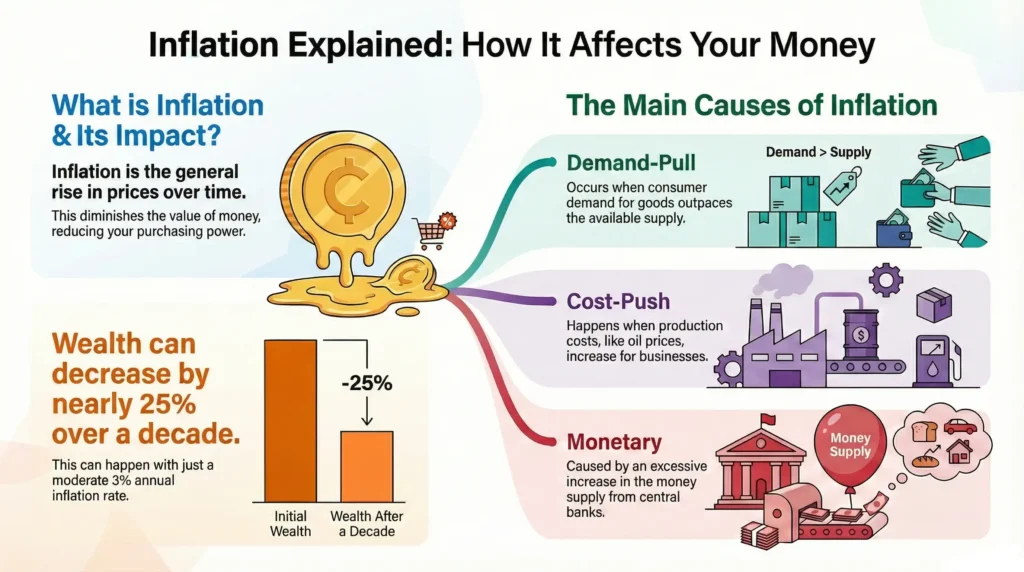
Inflation refers to the general rise in prices for goods and services over time, which diminishes the value of money. When inflation is present, each unit of currency buys fewer goods, meaning your savings and investments lose real value unless they grow at a rate equal to or higher than inflation.
Several factors contribute to inflation:
- Demand-pull inflation: When consumer demand exceeds supply, prices rise. For example, after a pandemic or during rapid economic growth, goods become scarcer, pushing costs higher.
- Cost-push inflation: When production costs increase, companies pass these costs onto consumers. A common example is rising oil prices, which affect transportation, energy, and ultimately the price of everyday goods.
- Monetary inflation: Excessive money printing by central banks can devalue the currency, reducing purchasing power.
Inflation doesn’t just hit savings accounts; it affects every layer of the economy. Even moderate annual inflation of 3% can reduce the real value of wealth by nearly a quarter over a decade.
The Long-Term Consequences of Inflation on Wealth
The erosion of wealth due to inflation can be subtle yet devastating if left unchecked. Imagine placing $50,000 in a savings account earning 1% interest while inflation runs at 4% per year. Over ten years, the real value of your savings would drop by nearly 30%, even though the nominal balance increased slightly.
Key Effects of Inflation:
- Reduced purchasing power: Everyday expenses, from groceries to healthcare, become more expensive.
- Lower real investment returns: Stock and bond returns may seem strong nominally but may fall short after accounting for inflation.
- Retirement risk: Fixed-income retirees often struggle as pensions and savings fail to keep pace with rising living costs.
| Scenario | Nominal Value | Inflation Rate | Real Value After 10 Years |
|---|---|---|---|
| Savings Account | $50,000 | 4% | $35,000 |
| Moderate Investment (6% return) | $50,000 | 4% | $67,000 |
| High-Growth Investment (10% return) | $50,000 | 4% | $88,000 |
Understanding the long-term implications of inflation helps investors adjust strategies, ensuring wealth grows faster than the inflation rate rather than merely nominally.
Inflation Impact on Different Asset Classes
Inflation does not affect all investments equally. Knowing which assets protect or suffer under inflation is key for preserving wealth.
- Cash and Savings Accounts
- Pros: Low risk, highly liquid
- Cons: Virtually no protection against inflation; real value declines over time
- Bonds
- Pros: Stable income stream
- Cons: Fixed interest payments lose value when inflation rises
- Stocks
- Pros: Historically outpace inflation over long periods; companies can raise prices
- Cons: Market volatility; not immune to recessions
- Real Estate
- Pros: Property values often rise with inflation; rental income increases
- Cons: Illiquid; maintenance costs rise
- Commodities and Precious Metals
- Pros: Often considered hedges against inflation
- Cons: High volatility; no guaranteed returns
| Asset Class | Inflation Sensitivity | Risk | Expected Long-Term Protection |
|---|---|---|---|
| Cash & Savings | High | Low | Poor |
| Bonds | Medium | Low-Medium | Moderate |
| Stocks | Medium-Low | Medium-High | Good |
| Real Estate | Low | Medium | Good |
| Gold/Commodities | Low | High | Moderate |
Strategies to Mitigate Inflation Impact on Wealth
While inflation is unavoidable, individuals can employ multiple strategies to preserve purchasing power and grow real wealth.
1. Invest in Inflation-Resilient Assets
Stocks, real estate, and inflation-protected securities such as TIPS (Treasury Inflation-Protected Securities) can help your investments outpace inflation.
2. Diversify Globally
Investing in international markets can reduce the risk of domestic inflation eroding wealth.
3. Increase Financial Literacy
Understanding how inflation works allows smarter financial decisions, from debt management to investment choices.
4. Consider Alternative Investments
Assets like commodities or even inflation-adjusted annuities may offer partial protection in high-inflation periods.
| Strategy | Example | Benefit | Risk |
|---|---|---|---|
| Inflation-Protected Bonds | TIPS | Steady inflation-adjusted returns | Lower nominal yield |
| Real Estate | Rental properties | Potential income growth | Illiquidity |
| Diversified Global Portfolio | Emerging markets, ETFs | Hedge against domestic inflation | Market risk |
Real-Life Example: Inflation During the 1970s
The 1970s in the United States were marked by “stagflation,” a combination of high inflation and stagnant growth. Prices rose over 13% in some years, eroding savings for anyone relying solely on cash or fixed-income investments. Those who invested in equities, real estate, or commodities generally maintained or grew their wealth despite the turbulent economic environment.
This period demonstrates why understanding inflation impact on wealth is not theoretical—it has real-world consequences that can affect life plans, retirement, and long-term financial stability.
Monitoring Inflation and Adjusting Plans
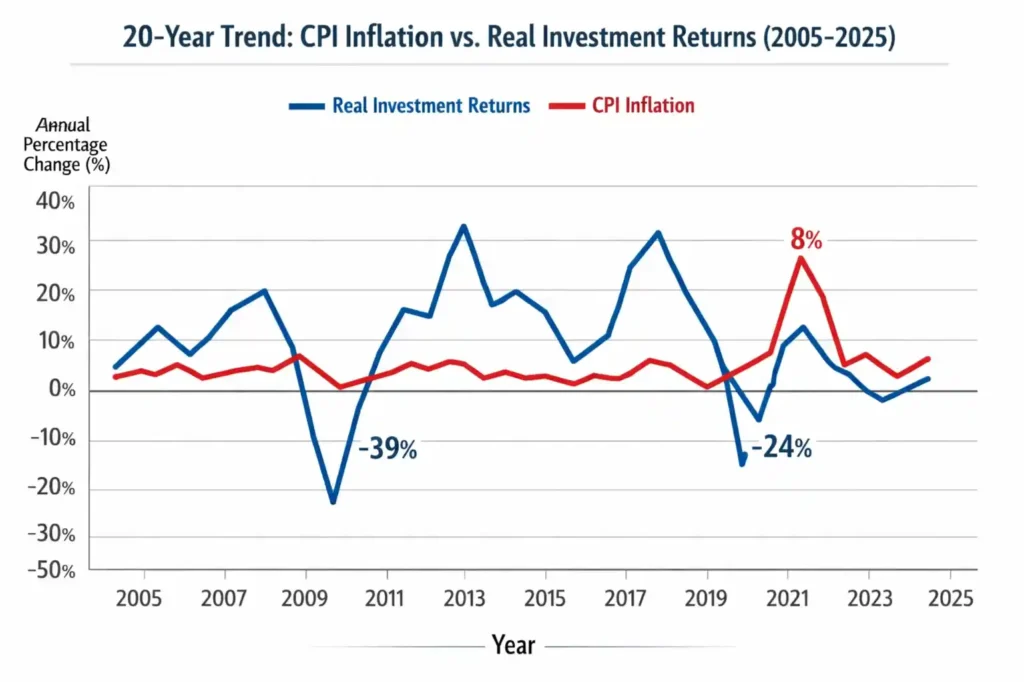
Regularly reviewing personal finances and investment portfolios is essential. Key tools include:
- Consumer Price Index (CPI): Measures average price changes; a core metric for inflation trends.
- Inflation calculators: Estimate future purchasing power of current savings.
- Financial advisory services: Professionals can suggest portfolio adjustments to counter inflation.
Staying proactive ensures wealth grows in real terms rather than merely nominally.
Conclusion
Inflation impact on wealth is a critical consideration for anyone who wants to preserve and grow their money. Left unchecked, even moderate inflation can drastically reduce purchasing power over time, turning careful savings into shrinking assets. By understanding inflation’s causes and effects, analyzing how different investments respond, and implementing strategies to protect wealth, individuals can make smarter, long-term financial decisions.
Diversification, investment in inflation-resistant assets, and continuous monitoring of both personal finances and broader economic trends are essential for combating the subtle erosion of wealth. Historical examples, from stagflation in the 1970s to recent global inflation spikes, highlight the real-world consequences of ignoring this financial force. Protecting wealth is not about chasing the highest returns but about balancing risk, growth, and inflation-proofing to secure financial stability.
Taking informed, proactive steps now ensures your financial security for the decades to come.
FAQ
1. What is inflation impact on wealth?
Inflation impact on wealth refers to the reduction in the purchasing power of money over time. As prices rise, money saved or invested must grow faster than inflation to maintain its real value.
2. How can I protect my wealth from inflation?
Invest in inflation-resistant assets like stocks, real estate, and Treasury Inflation-Protected Securities. Diversify globally, and review portfolios regularly to adjust for inflation trends.
3. Is cash a safe option during inflation?
While cash is low risk, it loses real value in inflationary periods. Keeping money in high-yield savings accounts or investing in assets that outpace inflation is generally more effective.
4. How does inflation affect retirees?
Fixed pensions or savings can lose value, reducing purchasing power. Retirees may need investments that grow with or faster than inflation to maintain their lifestyle.
5. What historical examples show inflation impact on wealth?
The 1970s U.S. stagflation is a prime example, where high inflation significantly eroded savings and fixed-income assets, emphasizing the importance of inflation-resistant investments.
If you found this article useful, subscribe to our newsletter for more insights on protecting your wealth and making informed financial decisions. Share your thoughts in the comments below—how do you manage inflation in your financial planning?