Introduction
Economic uncertainty has a way of changing how people think, behave, and make decisions. When inflation rises, jobs feel less secure, and headlines focus on crisis, most people naturally move into survival mode. Bills, rent, and basic needs become the priority. While this reaction is human and understandable, it often limits long term progress. Understanding the mindset shift in tough economy is about recognizing when survival thinking protects you and when it quietly holds you back.
This topic matters today because many individuals and businesses are navigating prolonged economic pressure rather than a short term shock. Central banks are tightening monetary policy, borrowing costs are higher, and easy growth is no longer guaranteed. In this environment, the difference between falling behind and quietly moving ahead is often psychological before it is financial.
This article will explain why survival mode emerges during difficult times, how it affects decision making, and what it really means to reposition yourself for opportunity without ignoring risk. You will learn how mindset influences income, investing, career growth, and business choices. We will use real world examples, simple financial explanations, and historical context to show how people who adapt their thinking during downturns often emerge stronger. By the end, you will have a practical framework to move from fear based reactions toward thoughtful positioning, even when the economy feels uncertain.
Table of Contents
Why Survival Mode Dominates During Economic Stress
When the economy weakens, the human brain shifts into protection mode. Survival thinking focuses on avoiding loss rather than pursuing growth. Psychologists refer to this as loss aversion, which means people feel the pain of losses more strongly than the pleasure of gains. In financial terms, this leads to overly cautious behavior, delayed decisions, and missed opportunities.
During recessions or inflationary periods, survival mode is reinforced by constant negative news. Reports from institutions such as the International Monetary Fund and the World Bank often highlight slowing growth, rising debt, or financial instability. While these insights are valuable, repeated exposure can narrow perspective and make the future feel permanently bleak.
Survival thinking is useful in the short term. It helps people cut unnecessary spending, build emergency savings, and avoid reckless risk. The problem arises when this mindset becomes permanent. People stop investing in skills, delay strategic moves, or avoid calculated risks that could improve their position. Over time, survival mode can quietly turn into stagnation.
Understanding the Mindset Shift in Tough Economy
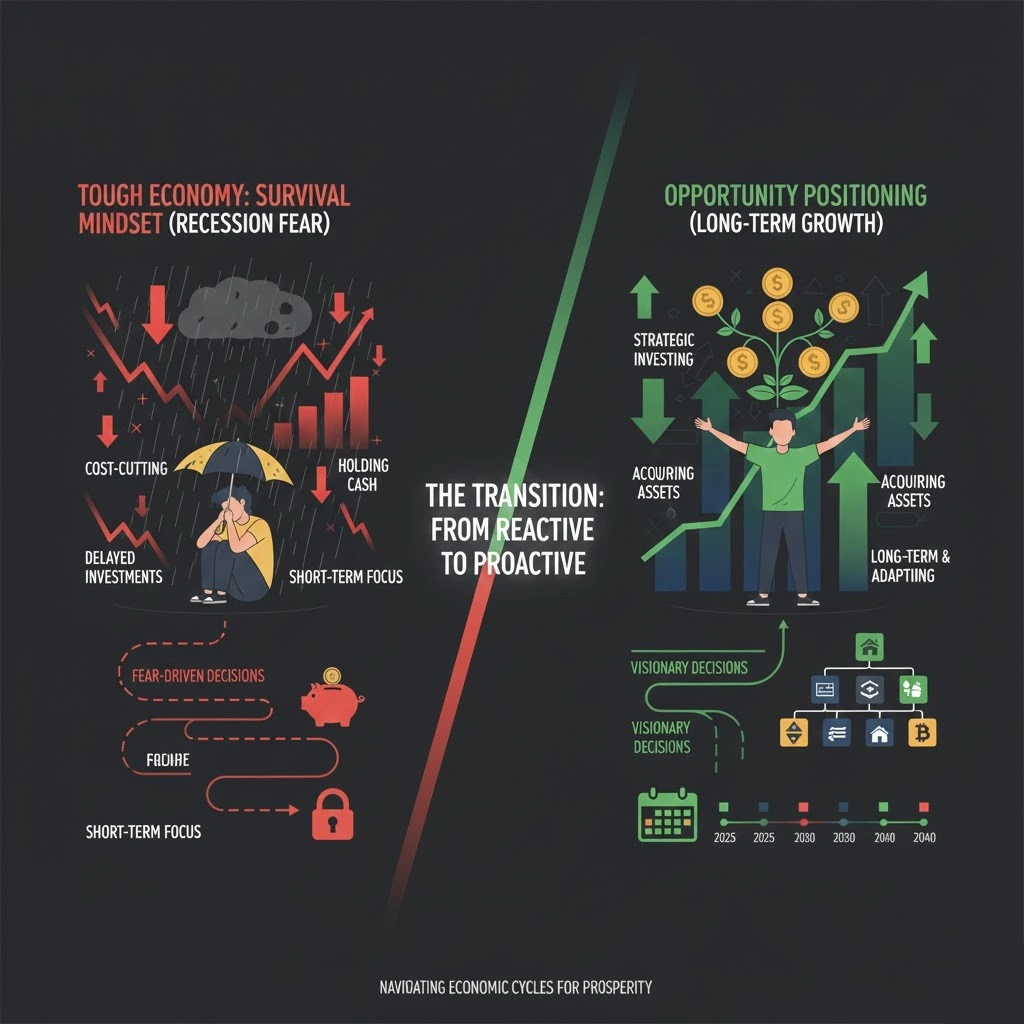
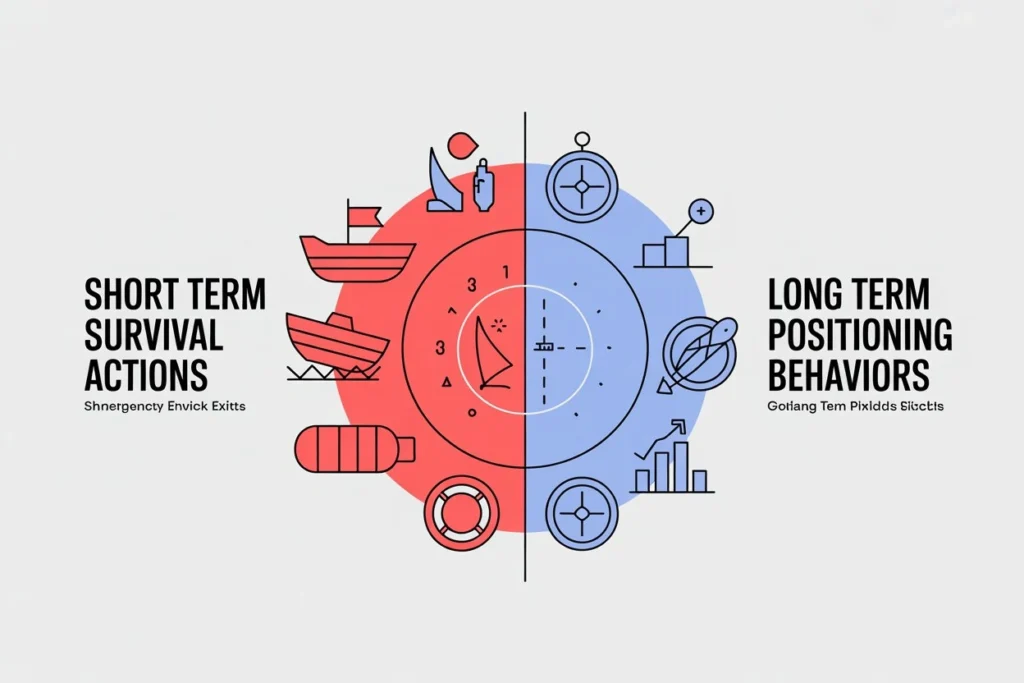
The mindset shift in tough economy does not mean ignoring reality or pretending risks do not exist. It means changing the core question from “How do I avoid losing?” to “How do I place myself to benefit when conditions improve?” This shift is subtle but powerful.
Positioning thinking accepts uncertainty as normal rather than exceptional. Instead of waiting for perfect conditions, it focuses on preparation. Investors might continue learning markets, professionals might upgrade skills, and entrepreneurs might refine systems even if expansion is paused.
This mindset is supported by economic history. Periods of difficulty often precede innovation and structural change. Research shared by the OECD shows that productivity gains and new business models frequently emerge during downturns, not booms. Those who prepare during hard times are often the first to benefit when momentum returns.
Positioning does not require large capital. It requires clarity, patience, and intentional decisions. The goal is not fast results but future optionality, meaning having choices when others feel trapped.
How Fear Alters Financial Decision Making
Fear changes how people interact with money. In tough economies, many individuals make decisions based on immediate emotional relief rather than long term benefit. This can include selling investments at market lows, refusing to invest in education, or holding excessive cash while inflation erodes purchasing power.
Central banks such as the Federal Reserve often raise interest rates to fight inflation. Higher rates slow economic activity, which can increase anxiety. However, fear driven decisions during these periods often lock in losses or missed opportunities. Investopedia explains that emotional investing is one of the main reasons individuals underperform market averages over time.
Positioning thinking encourages separating emotions from strategy. It does not eliminate caution, but it aligns actions with long term goals rather than short term fear. This shift often begins with awareness, recognizing when decisions are driven by headlines instead of fundamentals.
Table 1: Survival Thinking vs Positioning Thinking
| Aspect | Survival Mode | Positioning Mode |
|---|---|---|
| Focus | Avoid loss | Build future options |
| Time horizon | Short term | Medium to long term |
| Learning | Paused | Continuous |
| Risk approach | Avoid all risk | Selective, calculated risk |
Career and Skill Positioning During Downturns
Economic slowdowns often lead to hiring freezes and layoffs. In survival mode, individuals focus solely on keeping their current job. While this is understandable, it can prevent skill development that increases long term security.
Positioning thinking reframes career stability. Instead of relying on a single role or employer, it focuses on adaptability. This might include learning digital skills, improving communication abilities, or gaining industry specific knowledge that remains valuable regardless of economic cycles.
Universities and research institutions consistently show that individuals who invest in skills during downturns experience stronger career recovery. A study referenced by the World Economic Forum highlights that reskilling during economic stress significantly improves employability when conditions improve.

Business and Entrepreneurial Opportunity in Difficult Times
Many successful businesses were founded during recessions. When markets are booming, competition is intense and costs are high. During downturns, weaker competitors exit, customer needs shift, and inefficiencies become visible.
The mindset shift in tough economy allows entrepreneurs to observe problems more clearly. Instead of chasing rapid growth, they focus on solving real pain points efficiently. This often leads to more sustainable business models.
Small businesses that survived past crises often did so by simplifying operations, improving cash flow discipline, and deepening customer relationships. Harvard Business School research has shown that companies investing selectively during recessions often outperform peers during recoveries.
Table 2: Business Focus Comparison
| Area | Survival Focus | Positioning Focus |
|---|---|---|
| Costs | Cut everywhere | Cut waste, invest selectively |
| Customers | Retain only | Retain and deepen value |
| Innovation | Paused | Targeted improvements |
| Strategy | Defensive | Adaptive |
Investing with a Positioning Mindset
Investing during tough economic periods is emotionally challenging. Prices are volatile, sentiment is negative, and uncertainty dominates. Survival thinking leads to waiting for certainty, which rarely arrives at market bottoms.
Positioning investors accept that perfect timing is impossible. Instead, they focus on valuation, diversification, and gradual entry. This approach aligns with long term investing principles promoted by institutions like Morningstar, which emphasize consistency over prediction.
Positioning does not mean aggressive risk taking. It means understanding that downturns often reset valuations and future returns. Investors who remain engaged, continue learning, and deploy capital thoughtfully are often rewarded over full cycles.
Table 3: Risk vs Reward Perspective
| Strategy | Short Term Comfort | Long Term Potential |
|---|---|---|
| Hold only cash | High | Low due to inflation |
| Panic selling | Temporary relief | Long term loss |
| Gradual investing | Moderate | Higher over cycles |
| Education focus | High | Indirect but strong |
Psychological Resilience and Long Term Thinking
A key part of positioning is emotional resilience. Tough economies test patience and confidence. Building routines that support mental clarity is as important as financial strategy.
This includes limiting news consumption, focusing on controllable actions, and maintaining perspective. Economic cycles are normal, not personal failures. History shows repeated patterns of contraction and expansion. The ability to stay rational during stress is a competitive advantage.
Psychologists note that individuals who frame adversity as temporary and manageable perform better over time. This mindset supports better financial, career, and life decisions.
Conclusion
Economic hardship naturally pushes people into survival mode. This instinct protects against immediate danger but can quietly block long term progress if left unchecked. The mindset shift in tough economy is about recognizing when survival thinking has done its job and when it is time to reposition.
Positioning for opportunity does not mean reckless optimism. It means realistic preparation. It involves continuing to learn, strengthening skills, managing money thoughtfully, and observing where future value may emerge. History, research, and real world examples all show that periods of difficulty often plant the seeds of future growth.
By shifting focus from fear to preparation, individuals and businesses can create optionality. This allows them to respond rather than react when conditions improve. The economy will always move in cycles. Those who understand this and align their mindset accordingly are better equipped to navigate uncertainty with confidence and clarity.
Frequently Asked Questions
What does mindset shift in tough economy really mean
It means moving from fear based decisions toward long term preparation while still managing risk responsibly.
Is positioning thinking risky during economic uncertainty
It involves calculated risk, not blind optimism. The focus is on preparation rather than aggressive action.
How can employees apply this mindset
By investing in skills, building professional networks, and staying adaptable rather than relying on one role.
Can investors benefit from tough economies
Yes, downturns often create better valuations and learning opportunities for long term investors.
How long does it take to see results
Positioning is gradual. Benefits often appear when economic conditions stabilize or improve.
If this article helped you rethink how you approach uncertainty, tell us in the comments if you find value in this article. Share how you are positioning yourself for future opportunities, and feel free to join the discussion with your perspective.