
In today’s dynamic financial landscape, many investors seek avenues to generate consistent income, and monthly options for income have emerged as a compelling strategy. This guide is designed for beginners looking to understand how to leverage options contracts to create a steady stream of revenue. We will delve into the core concepts of options trading, explore various strategies tailored for monthly income generation, and discuss the associated risks and benefits. By the end of this article, you will have a clear understanding of how to approach monthly options strategies, enabling you to make informed decisions and potentially enhance your financial portfolio. This comprehensive overview will cover everything from foundational knowledge to practical application, ensuring you are well-equipped to explore this exciting investment opportunity.
Table of Contents
Understanding Monthly Options
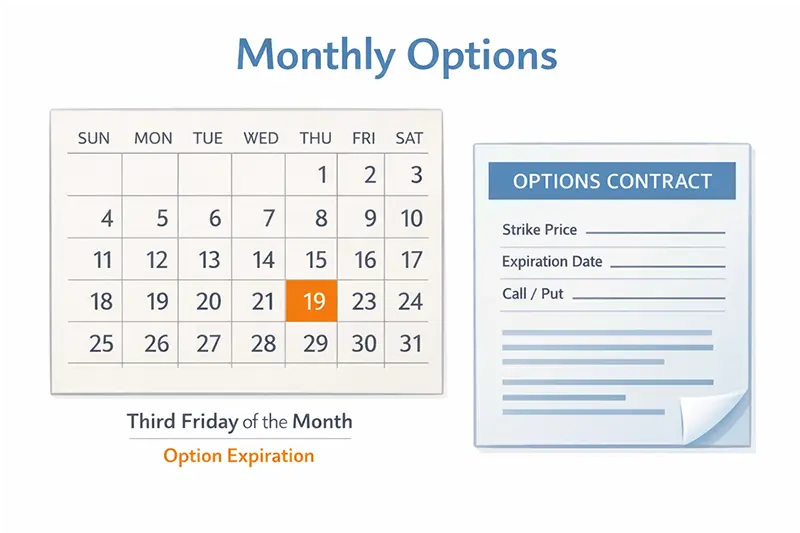
Monthly options are a type of options contract that typically expires on the third Friday of each month. Unlike weekly options, which have a shorter lifespan, monthly options offer a more extended timeframe, providing traders with greater flexibility and often more predictable price movements. This extended duration can be particularly beneficial for income-focused strategies, as it allows for more time for a trade to play out and reduces the impact of short-term market volatility. Understanding the nuances of monthly options is crucial for anyone looking to generate consistent income through these financial instruments. They are essentially agreements that give the buyer the right, but not the obligation, to buy or sell an underlying asset at a predetermined price (strike price) on or before a specific date (expiration date). The seller of the option, in turn, receives a premium for taking on the obligation. This premium is the core component of income generation in options trading. The longer expiration period of monthly options compared to their weekly counterparts often translates to higher premiums, making them attractive for strategies aimed at consistent cash flow. Furthermore, the predictable monthly expiration cycle allows for easier planning and management of recurring income strategies.
Popular Monthly Options Strategies for Income
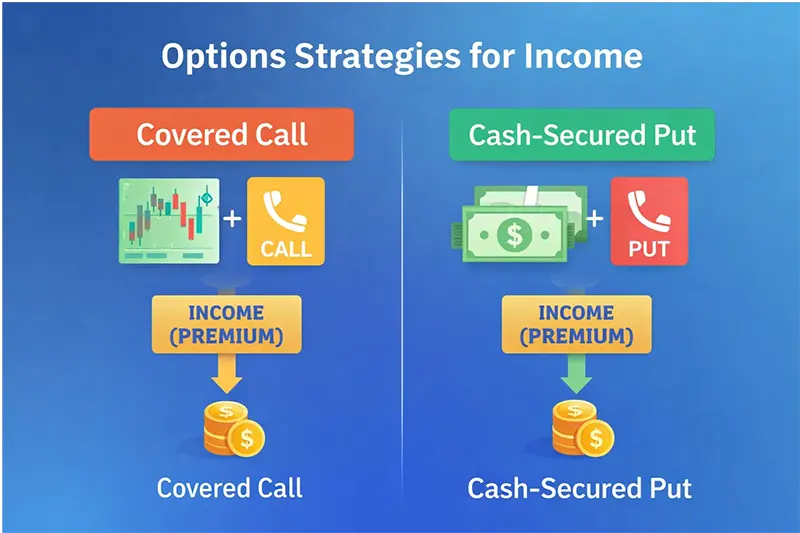
Several options trading strategies are particularly well-suited for generating monthly income. These strategies are designed to provide a consistent stream of revenue by leveraging the premiums from selling options contracts. For beginners, it is essential to start with strategies that have a defined risk profile and are relatively easy to understand and implement. Two of the most popular and beginner-friendly strategies are the covered call and the cash-secured put. A covered call involves selling a call option against a stock that you already own (at least 100 shares). By doing so, you collect the premium from the call option, which provides immediate income. If the stock price stays below the strike price of the call option at expiration, you keep the premium and your shares. If the stock price rises above the strike price, your shares may be sold at the strike price, but you still keep the premium. This strategy is an excellent way to generate income from your existing stock holdings. On the other hand, a cash-secured put involves selling a put option on a stock you are willing to own at a specific price. You set aside enough cash to buy the stock at the strike price if the option is exercised. You collect the premium from selling the put option, and if the stock price stays above the strike price at expiration, you keep the premium. If the stock price falls below the strike price, you may be obligated to buy the stock at the strike price, but you get to do so at a discount to the current market price, and you still keep the premium. This strategy is often used to acquire stocks at a desired price while generating income in the process.
Risks and Benefits of Monthly Options Trading
While monthly options strategies offer attractive income generation potential, it is crucial for beginners to understand both the benefits and inherent risks involved. A balanced perspective is essential for making informed trading decisions and managing expectations effectively.
Benefits:
- Consistent Income Stream: The primary appeal of monthly options is their ability to generate regular income through premium collection. This can supplement other investment returns or provide a steady cash flow.
- Flexibility: Monthly options provide a longer time horizon compared to weekly options, allowing for more strategic planning and less susceptibility to short-term market noise. This extended duration can be advantageous for income-focused traders who prefer a less active management style.
- Defined Risk (for certain strategies): Strategies like covered calls and cash-secured puts have a defined maximum loss, which can be appealing to risk-averse investors. Understanding these limits helps in managing potential downsides.
- Capital Efficiency: Options allow investors to control a larger amount of underlying assets with a relatively smaller capital outlay compared to directly buying shares, thereby enhancing potential returns on invested capital.
- Diversification: Incorporating monthly options strategies can diversify a portfolio, potentially reducing overall risk by adding a different source of return that may not be directly correlated with traditional stock market movements.
Risks:
- Complexity: Options trading can be complex, especially for beginners. A thorough understanding of various strategies, Greeks (delta, gamma, theta, vega), and market dynamics is necessary to succeed.
- Loss of Capital: While some strategies have defined risks, others, like naked calls or puts, can expose traders to unlimited losses. Even with defined-risk strategies, significant capital loss can occur if the market moves unfavorably.
- Time Decay (Theta): While time decay works in favor of option sellers, it can also lead to losses if the underlying asset moves against the position, and the option’s value erodes faster than anticipated.
- Liquidity Risk: Some options contracts, especially on less popular stocks or with far out-of-the-money strike prices, may have low liquidity, making it difficult to enter or exit positions at desired prices.
- Assignment Risk: For option sellers, there is always the risk of assignment, where the buyer exercises their right. This can lead to unexpected stock purchases (for puts) or sales (for calls), potentially disrupting a trader’s portfolio plan.
It is imperative for anyone considering monthly options for income to conduct thorough research, understand the mechanics of each strategy, and ideally, practice with a paper trading account before committing real capital. [1]
| Strategy | Description | Max Profit | Max Loss | Risk Profile |
|---|---|---|---|---|
| Covered Call | Selling a call option against 100 shares of owned stock. | Premium received + (Strike Price – Cost Basis) | (Cost Basis – Strike Price) – Premium Received | Limited profit, limited loss (if stock owned) |
| Cash-Secured Put | Selling a put option, with cash set aside to buy the stock if assigned. | Premium received | Strike Price – Premium Received | Limited profit, limited loss (if stock bought) |
| Iron Condor | Combines a bear call spread and a bull put spread. | Net premium received | Difference between strikes – Net Premium | Limited profit, limited loss |
| The Wheel | Iterative strategy of selling cash-secured puts, then covered calls. | Variable (premiums + stock appreciation) | Variable (stock depreciation) | Moderate profit, moderate loss |
Conclusion

Monthly options strategies offer a compelling avenue for investors seeking to generate consistent income in the financial markets. By understanding the mechanics of contracts like covered calls and cash-secured puts, individuals can strategically leverage option premiums to enhance their portfolio returns. These strategies, while offering the potential for regular cash flow and defined risk profiles in many cases, are not without their complexities and inherent risks. The extended time horizon of monthly options provides a more stable environment for income generation compared to shorter-dated contracts, allowing for more thoughtful decision-making and reduced exposure to immediate market fluctuations. However, success in this domain demands a thorough understanding of market dynamics, diligent risk management, and continuous learning. It is crucial for beginners to approach monthly options trading with a well-researched plan, starting with simpler strategies and gradually expanding their knowledge and expertise. The journey to mastering monthly options for income involves not just theoretical knowledge but also practical experience, often gained through paper trading before committing real capital. By embracing a disciplined approach and focusing on continuous education, investors can effectively integrate monthly options into their financial strategy, working towards a more robust and income-generating portfolio. Remember, the goal is not just to generate income, but to do so sustainably and in alignment with your overall financial objectives and risk tolerance. [2]
FAQ Section
What are monthly options?
Monthly options are standardized options contracts that typically expire on the third Friday of each month. They offer a longer time horizon compared to weekly options, which can be beneficial for income-generating strategies.
How do monthly options differ from weekly options?
The primary difference lies in their expiration cycles. Monthly options expire once a month, usually on the third Friday, providing a longer duration. Weekly options, conversely, expire every week, offering shorter-term trading opportunities but also increased sensitivity to market movements.
What is a covered call strategy?
A covered call strategy involves selling call options against shares of stock you already own. This allows you to collect premiums, generating income, while limiting your risk since your potential obligation to sell is covered by your existing stock holdings.
What is a cash-secured put strategy?
A cash-secured put strategy involves selling put options and simultaneously setting aside enough cash to buy the underlying stock if it reaches the strike price. This strategy allows you to collect premiums and potentially acquire a stock at a lower price if it falls.
What are the main risks of trading monthly options for income?
Key risks include potential capital loss if the market moves unfavorably, the complexity of understanding various strategies and their associated ‘Greeks’ (e.g., delta, theta), and liquidity risks for less popular options. While some strategies limit losses, others can expose traders to significant or even unlimited risk.
Ready to explore the world of monthly options for income? Start by educating yourself further and consider practicing with a paper trading account. Share your thoughts and experiences in the comments below, or subscribe to our newsletter for more insights into income-generating investment strategies.