Introduction: Why “Semi-Passive” Online Businesses Matter
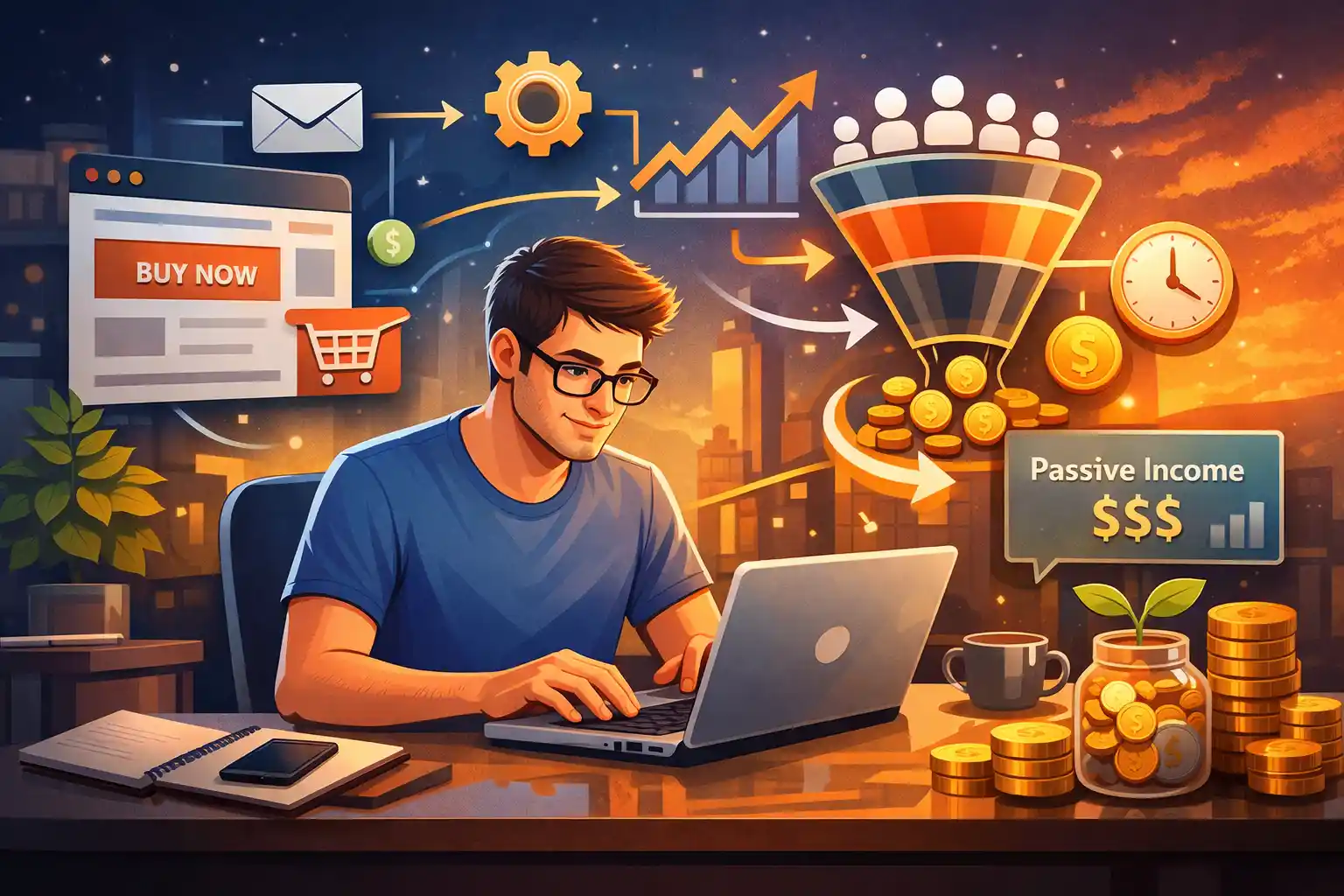
Building an online business that becomes passive is less about “money for nothing” and more about designing systems that separate your time from your income. Over time, content, software, or digital infrastructure can function like financial assets that continue to produce cash flow with limited ongoing input.
Several major trends make these models particularly relevant now:
- Low-cost global infrastructure (cloud hosting, no-code tools, payment processors).
- Large platforms that aggregate demand (Amazon, Etsy, YouTube, app stores).
- Consumers’ comfort with digital products and subscriptions.
What follows is an in-depth look at online business models that can become passive over time, how they work economically, where they fit in a portfolio of income streams, and how to avoid the most common mistakes.
Table of Contents
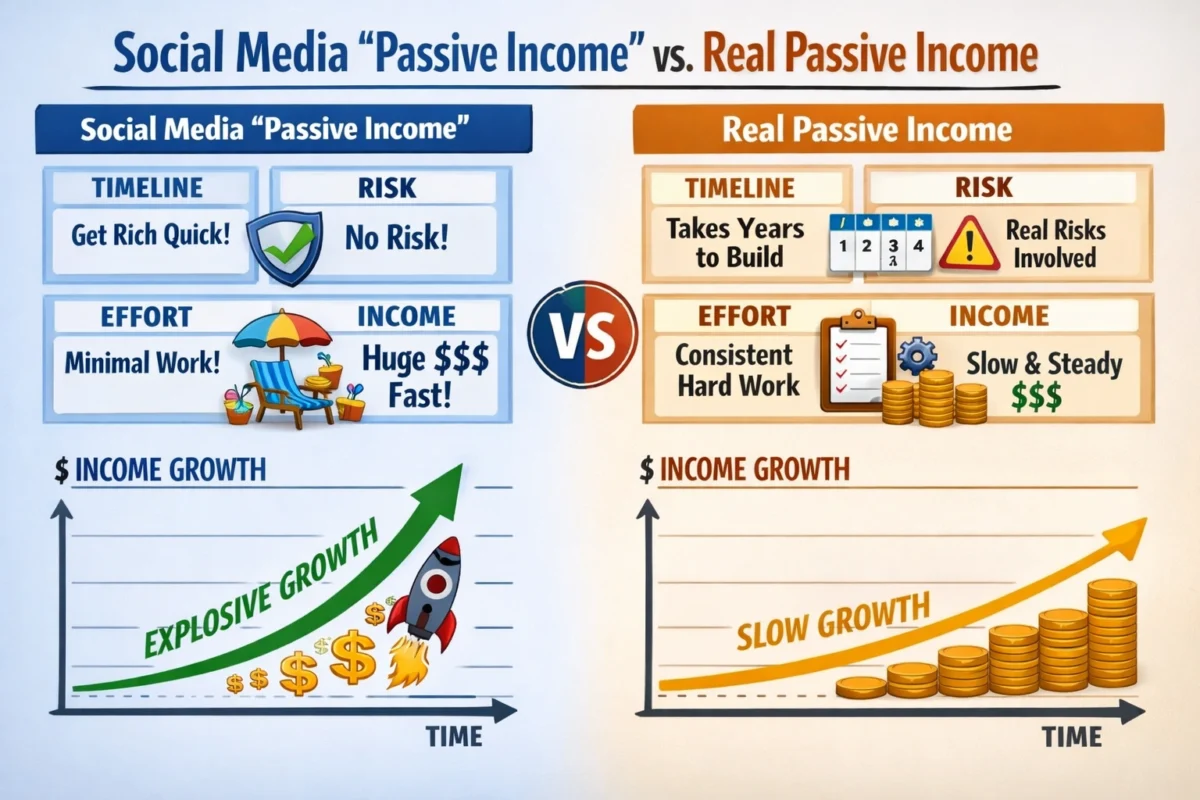
What “Passive” Really Means in Online Business
Active vs. Passive vs. Systematized
In personal finance, passive income often refers to cash flow from assets like dividend stocks or real estate. In online business, “passive” typically means:
- Heavy effort and/or capital upfront.
- Systems and automation handling the bulk of daily operations later.
- Residual income that can continue even if you reduce your hours significantly.
A more accurate term is systematized income: you are building processes and assets (content, code, brand, email list) that reduce marginal effort per dollar earned.
Key Features of Models That Can Become Passive
Most online business models that become passive share these traits:
- Scalability: Revenue can grow without costs rising proportionally.
- Asset-like components: content libraries, software, templates, lists, communities.
- Automation: email sequences, ad campaigns, delivery pipelines, customer onboarding.
- Platform leverage: search traffic, marketplaces, app stores, or social algorithms.
The challenge is front-loading the work and resisting the temptation to cash out too early before systems are robust enough.
Content-Based Models: Blogs, Niche Sites, and YouTube
Content-driven assets are among the most popular online business models that can become passive over time because they compound with time and search algorithms.
Authority Blogs and Niche Sites
A well-structured blog in a focused niche can generate revenue from ads, affiliate marketing, and digital products long after the original articles are written and optimized.
Core monetization levers:
- Display ads (e.g., programmatic networks).
- Affiliate marketing (commissions from recommending products).
- Sponsored posts and brand partnerships.
- Own digital products, such as ebooks or courses.
On many established blogs, the bulk of monthly sessions and revenue come from articles written years earlier, updated periodically for search and relevance. Search-engine-optimized content can function like an asset: once a page ranks well, it can deliver ongoing traffic and earnings with minor maintenance.
What makes it potentially passive over time:
- Content archives: After reaching a critical mass (for example, 50–100 high-quality articles in a tight niche), each additional post adds incremental reach without requiring a linear increase in your workload.
- Evergreen topics: Articles on “how-to” and “best X for Y” topics can remain relevant for years with occasional refreshes.
- Automation:
- Email opt-ins and drip sequences to promote offers.
- Templates for new posts and repeatable SEO processes.
- Programmatic ad placements that scale with traffic.
YouTube Channels and Video Libraries
YouTube is another content-based business model that becomes more passive as your library grows. Monetization can include:
- Ad revenue sharing.
- Affiliate links in descriptions.
- Sponsorships and brand deals.
- Selling your own products or services.
Older videos, especially evergreen tutorials, can continue generating views and income years later. Creators often report that a small percentage of videos account for most of their long-term revenue.
Passive characteristics:
- Discovery engine: YouTube’s recommendation algorithm continues surfacing relevant videos, even if the creator reduces publishing frequency.
- Library effect: A 100+ video library lets viewers binge content and funnel themselves into subscriptions, email lists, or product funnels.
- Repurposing: Clips can be turned into shorts, blog posts, or social media content, further extending the life of each asset.
Affiliate Marketing: Leveraging Other People’s Products
Affiliate marketing is one of the purest online business models that can become passive over time because you do not have to handle product creation, inventory, or fulfillment.
How Affiliate Marketing Works
At its core, affiliate marketing means recommending products or services in exchange for a commission on resulting sales or leads. Common formats:
- Product review sites and comparison pages.
- “Best of” lists in specific niches.
- Email newsletters that curate tools and deals.
- YouTube reviews and tutorials with affiliate links.
Commission structures vary: some pay one-time percentages, others pay recurring revenue on subscriptions, particularly in software-as-a-service (SaaS) niches.
What Makes It Semi-Passive
Affiliate marketing can become passive when combined with evergreen content and automated traffic sources:
- Search traffic from optimized articles or videos.
- An email list where evergreen sequences send product recommendations automatically.
- Product-specific funnels, such as “start here” pages that route users to top picks.
Once the content is created and ranking, and the funnels are configured, ongoing maintenance can be reduced to periodic content updates, link checks, and relationship management with affiliate partners.
Risks and limitations:
- Platform and program risk: merchants can change commission rates or rules.
- SEO dependence: algorithm changes can materially impact traffic.
- Regulatory compliance: proper disclosures and adherence to advertising guidelines are essential.
Digital Products: Courses, Ebooks, Templates, and Memberships
Digital products are highly scalable because the marginal cost to deliver one more unit is close to zero once the product is built.
One-Off Digital Products: Ebooks, Templates, and Tools
Examples include:
- Ebooks or specialized guides.
- Downloadable planners, spreadsheets, or Notion templates.
- Design assets (fonts, icons, presets).
- Niche software tools or calculators.
In many cases, creators build a portfolio of digital products and sell them via marketplaces (like template platforms or digital product stores) and their own websites.
Passive features:
- Automated checkout and delivery.
- Bundling and upsells that increase average order value without extra work.
- Evergreen marketing: search-optimized landing pages, automated email campaigns, and pre-recorded webinars.
Online Courses and Evergreen Education
Courses can start out as time-intensive (live cohorts, high-touch support) and then shift into pre-recorded, evergreen offerings with limited intervention.
Common steps in the lifecycle:
- Live cohort to validate content and pricing.
- Transition to a polished, pre-recorded course.
- Add an evergreen marketing funnel (webinars, email sequences).
- Reduce direct support by adding FAQs, community forums, or office hours.
While courses often require more customer support than other digital products, many creators structure tiers so that the most “passive” version is self-paced with minimal human involvement.
Memberships and Subscription Models
Memberships (e.g., communities, newsletters, resource libraries) are less passive than one-time products but can still become more systematized over time.
Levers that help:
- Content calendars and repeatable formats (weekly roundup, monthly deep dive).
- Community moderators or hired support.
- Archive access as the main value proposition, rather than real-time interaction.
Because subscriptions compound—new members stack on top of existing ones—this model can behave like a recurring-revenue asset if churn is controlled.
E-Commerce Models: Dropshipping, Print-on-Demand, and Amazon FBA
Physical product businesses generally require more logistics than purely digital ones, but several e-commerce models are structured to minimize hands-on operations.
Dropshipping: Selling Without Holding Inventory
Dropshipping businesses list products on online storefronts and forward orders to suppliers who handle shipping. The business owner focuses on:
- Product selection and positioning.
- Website optimization and brand.
- Traffic generation (ads, influencers, SEO, social).
Over time, dropshipping can become more passive if:
- Winning products and suppliers are locked in.
- Advertising and email flows are optimized and mostly automated.
- Customer service is delegated or outsourced.
However, this model is sensitive to supplier reliability, shipping times, and changing acquisition costs, so it usually requires more active oversight than digital-only businesses.
Print-on-Demand: Designs as Digital Assets
Print-on-demand (POD) pairs digital designs with third-party manufacturing and fulfillment. Common products:
- T-shirts, hoodies, mugs, posters.
- Phone cases, notebooks, home décor.
Creators upload designs to a POD platform or integrate it with their own store. When a customer orders, the platform prints and ships the item.
Passive characteristics:
- Design library: each design is an asset that can sell repeatedly without new work.
- Platform traffic: marketplaces can bring organic buyers if listings are optimized.
- Automation: everything from order routing to shipping is handled by third parties.
Amazon FBA and Marketplace Models
Fulfillment by Amazon (FBA) allows online sellers to send bulk inventory to Amazon’s warehouses. Amazon then handles storage, packing, shipping, and customer service.
Over time, FBA businesses can become more passive if:
- A small number of consistently profitable products are identified.
- Supply chains and logistics are stable.
- Advertising and listing optimizations are dialed in.
However, capital requirements are higher, and risks (platform policy changes, competition, fees) are significant. This model behaves more like a hybrid between an operating business and an investment in inventory.
Software and Automation: SaaS, Apps, and “Micro-Tools”
Software is one of the most scalable online business models that can become passive over time, but it typically requires technical expertise or capital to build.
SaaS and Web Applications
Software-as-a-service (SaaS) offers recurring revenue in exchange for ongoing access to a tool or platform. Examples:
- Niche B2B tools (e.g., scheduling, analytics, reporting).
- Consumer-facing apps (budgeting tools, habit trackers).
- Industry-specific platforms (booking systems, job boards).
Where SaaS can become semi-passive:
- Self-service onboarding: users can sign up, pay, and start using the product without human intervention.
- Product-led growth: the product itself drives referrals and upgrades.
- Minimal custom work: one codebase serving many customers.
Even “micro-SaaS” products targeting very specific needs can generate meaningful recurring revenue once built and promoted.
Mobile Apps and Simple Tools
Indie apps and small tools can be monetized through:
- Paid downloads.
- In-app purchases.
- Subscription upgrades.
- Advertising.
After development and initial marketing, maintenance might be limited to updates and occasional feature improvements, especially for simple, well-defined tools.
Realistic Timelines, Economics, and Risk
Time Horizons: When Can It Feel Passive?
The time it takes for an online business model to feel partially passive depends on:
- Niche competitiveness.
- Skill level and resources.
- Execution quality.
A realistic range for many people:
- 0–6 months: setup, learning curve, early content or product creation.
- 6–18 months: systems building, traffic growth, iterating offers, early monetization.
- 18–36+ months: compounding, delegation, and gradual transition from “founder-operator” to “asset owner.”
These are averages; some outliers succeed faster, many take longer, and some projects never gain traction.
Risk, Diversification, and Platform Dependence
All online business models that can become passive over time share one common risk: platform dependence. Traffic or revenue may rely on:
- Search engines.
- Social platforms and algorithms.
- Marketplaces or app stores.
- Specific payment processors or ad networks.
Mitigation strategies include:
- Building an email list as your own distribution channel.
- Expanding to multiple platforms once the core is stable.
- Owning your domain, content, and core customer relationships.
- Treating online businesses as one part of a broader financial plan, alongside diversified investments.
Example Table: Online Business Models That Can Become Passive
Below is a conceptual table illustrating how different online business models compare on key dimensions such as passivity, startup effort, and scalability.
| Business model | Upfront effort (time) | Capital needed (relative) | Long-term passivity potential | Typical monetization |
|---|---|---|---|---|
| Niche blog / site | High | Low to moderate | High | Ads, affiliate, digital products |
| YouTube channel | High | Low to moderate | High | Ads, affiliate, sponsorships |
| Affiliate niche site | High | Low to moderate | High | Affiliate commissions |
| Digital products (ebooks, templates) | Medium to high | Low | High | One-time sales, bundles, upsells |
| Online course (evergreen) | High | Low to moderate | Medium to high | Course sales, payment plans |
| Membership / community | High | Low to moderate | Medium | Recurring subscriptions |
| Print-on-demand | Medium | Low | Medium | Product margins, bundles |
| Dropshipping store | Medium to high | Moderate | Medium | Product margins, upsells |
| Amazon FBA | High | Moderate to high | Medium | Product margins, private label |
| SaaS / web app | High | Low to high (dev costs) | High | Subscriptions, usage-based pricing |
| Mobile apps / micro-tools | High (initial dev) | Low to moderate | Medium to high | Paid apps, in-app purchases, ads |
How to Choose the Right Model for You
Align With Skills, Capital, and Risk Tolerance
When selecting among online business models that can become passive over time, consider:
- Skills and interests: writing, video, coding, design, community-building.
- Available time: evenings, weekends, or full-time commitment.
- Capital: willingness and ability to invest in tools, ads, or inventory.
- Risk tolerance: comfort with volatility and platform dependence.
For example:
- Strong writers with limited capital may do well with blogs, newsletters, and info products.
- Technically inclined founders may gravitate toward SaaS, apps, or tools.
- Those comfortable with logistics and inventory may prefer FBA or brand-focused e-commerce.
Stacking Models for Diversified Online Income
A powerful approach is to stack complementary models over time:
- Build a content hub (blog or channel).
- Add affiliate monetization.
- Launch digital products to capture more value per visitor.
- Eventually extend into memberships, apps, or even physical products.
Each layer increases revenue potential and reduces dependence on a single stream, turning your online presence into a diversified asset.
Actionable Steps to Make an Online Business More Passive
1. Systematize and Document
Treat your online business like a small company:
- Create checklists for content creation, publishing, and promotion.
- Standardize customer support responses and FAQ libraries.
- Document workflows so tasks can be delegated later.
2. Invest Heavily in Automation
Use tools and workflows that reduce manual work:
- Email marketing with segmenting and automated sequences.
- Scheduling tools for content and social distribution.
- No-code integrations to connect platforms (e.g., store, CRM, analytics).
The goal is to build a machine where your primary job becomes designing and improving systems, not executing every task yourself.
3. Plan for Delegation Early
Even modest revenue can justify hiring:
- Freelance writers or editors for content.
- Virtual assistants for operations and customer support.
- Developers or designers on a project basis.
Delegation is often the tipping point where an online business transitions from a demanding side hustle into something closer to a passive asset.
4. Focus on Evergreen, High-ROI Activities
Prioritize:
- Evergreen content and offers that stay relevant for years.
- Timeless skills and problems with persistent demand.
- Assets that can be reused or repurposed across platforms.
Avoid building your entire strategy around short-lived trends or platforms where reach depends purely on constant posting.
Conclusion: Turning Effort Into Long-Term Online Assets
Online business models that can become passive over time are not shortcuts; they are structured ways to convert concentrated effort today into digital assets that keep working tomorrow. Whether through content, software, or systematized e-commerce, long-term success depends on:
- Choosing a model aligned with your skills and resources.
- Building durable assets (content libraries, products, tools, audiences).
- Implementing automation and delegation to reduce your ongoing involvement.
- Treating the business like part of a broader financial strategy, not a lottery ticket.
Start with a single model that fits your strengths, commit to a realistic multi-year horizon, and think like an investor: every article, video, template, or feature is a small asset that, over time, can compound into meaningful, semi-passive income.
Sources:
- https://www.bankrate.com/investing/passive-income-ideas/
- https://www.reddit.com/r/Blogging/comments/1oukbqa/im_an_investment_advisor_and_im_thinking_about/
- https://www.shopify.com/blog/passive-income-ideas
- https://www.personalfinancelab.com/articles/
- https://www.youtube.com/watch?v=YyKx-0BIIlU
- https://theshiftproject.org/app/uploads/2025/01/Rapport-ClimatSup-Finance_-Anglais.pdf
- https://www.reddit.com/r/passive_income/comments/1kvo0q2/what_are_some_of_your_top_passive_income_ideas/
- https://thedocs.worldbank.org/en/doc/400139d320ead96a0ec624d3608d9b56-0310012025/original/India-Country-Economic-Memorandum-2024-0227c.pdf
- https://www.navyfederal.org/makingcents/investing/15-passive-income-idea-to-generate-cash-flow.html
- https://app.engxam.com/writing/c1-advanced-cae-writing-example-essays-reviews-letters-reports-ianisbiciusca/