Introduction
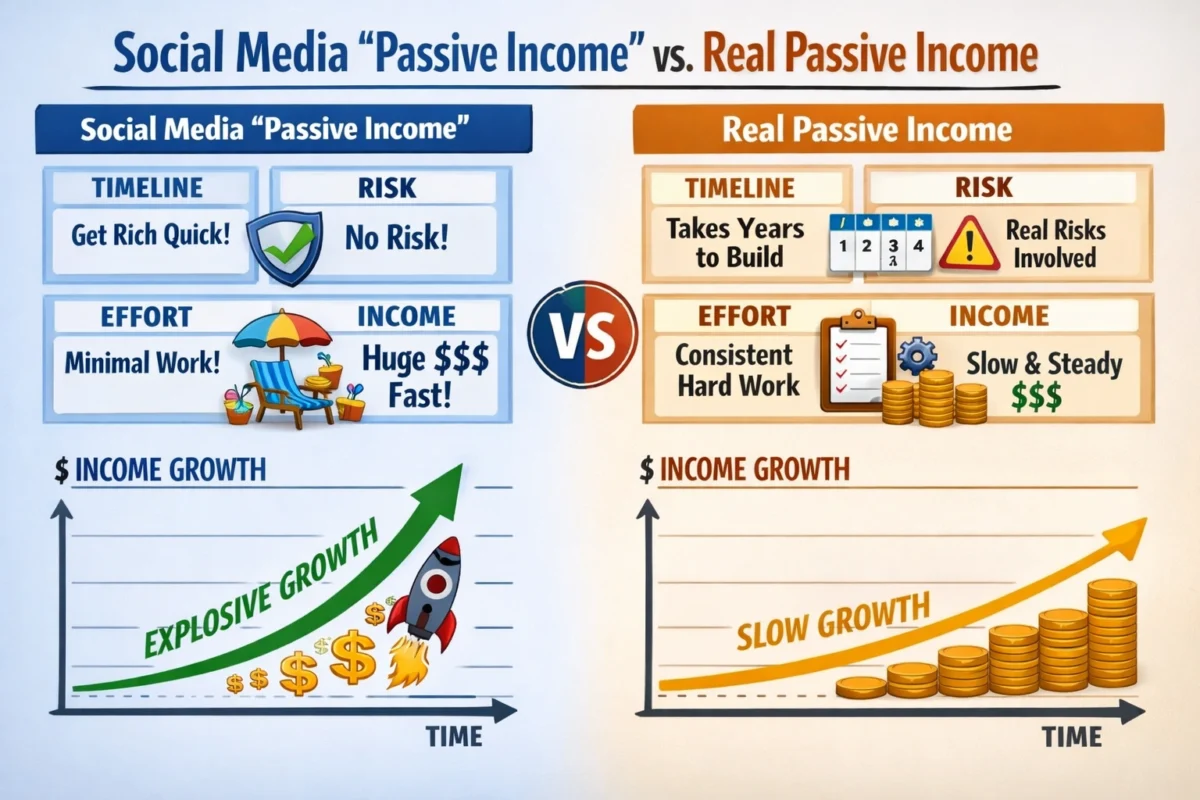
Scroll through social media for five minutes and you will almost certainly see someone promising effortless wealth through “passive income.” Screenshots of earnings, luxury lifestyles, and phrases like “money while you sleep” dominate timelines. What rarely appears, however, is the full story. This gap between reality and online hype is why understanding passive income myths debunked is more important today than ever before.
In a world facing higher inflation, economic uncertainty, and rising living costs, people are understandably searching for financial stability beyond a single paycheck. Passive income sounds like the perfect solution. The idea that you can set something up once and enjoy ongoing cash flow forever is deeply appealing, especially to younger generations navigating unstable job markets.
But passive income is not magic, and it is rarely effortless. Many popular narratives oversimplify how these income streams work, hide the risks involved, and ignore the time, capital, or expertise required to make them sustainable. This article aims to cut through the noise.
By the end, you will understand which passive income beliefs are misleading, why they persist on social media, and what realistic expectations actually look like. More importantly, you will learn how to approach passive income thoughtfully, with clear eyes and long-term financial logic instead of viral promises.
Table of Contents
The Illusion of “Set It and Forget It” Income
One of the most persistent misconceptions about passive income is the idea that once you build something, it runs forever without effort. Social media often presents passive income as a switch you flip, followed by endless cash flow. In reality, almost no income stream is truly maintenance-free.
Even classic examples like dividend-paying stocks require monitoring. Companies change, dividends get cut, and economic cycles affect returns. Rental properties require repairs, tenant management, legal compliance, and periodic vacancies. Digital products need updates, marketing, and customer support to remain relevant.
The reason this myth spreads so easily is psychological. People are drawn to simplicity, especially when financial topics feel intimidating. “Set it and forget it” removes responsibility and complexity, which makes the idea attractive but misleading.
Common areas where this myth appears:
- Dividend investing portrayed as guaranteed monthly income
- Online courses marketed as permanent revenue machines
- Affiliate websites sold as self-running cash systems
| Income Source | Initial Setup | Ongoing Effort Required | Reality Check |
|---|---|---|---|
| Dividend stocks | Medium | Regular review | Dividends can change |
| Rental property | High | High | Active management needed |
| Digital products | High | Medium | Marketing never stops |
Why “Anyone Can Do It” Is Rarely True
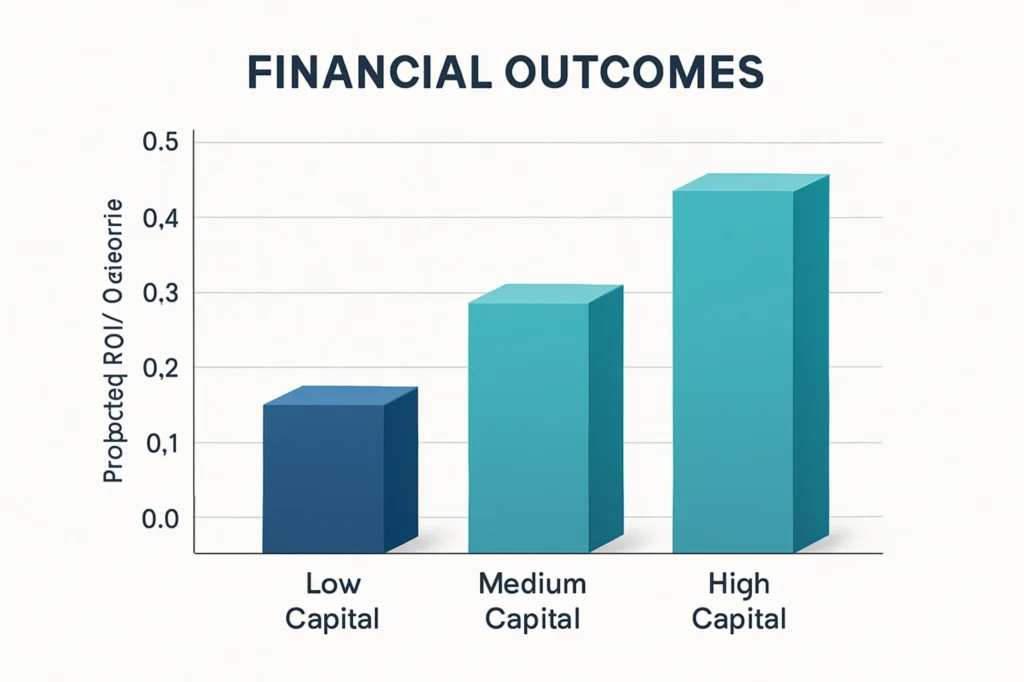
Another major theme in passive income marketing is accessibility. Influencers often claim that anyone can generate passive income regardless of background, capital, or skills. While it is true that many opportunities are open to the public, outcomes are not evenly distributed.
Capital matters. Someone investing $50,000 will experience very different results than someone starting with $500. Skills matter too. A person with technical, marketing, or financial literacy advantages can execute ideas more effectively. Time availability also plays a role, which is often ignored in promotional content.
This does not mean passive income is only for the wealthy, but it does mean expectations should match personal circumstances. According to research summarized by the World Bank, income inequality is often amplified by unequal access to capital and education, not eliminated by side income alone.
Understanding passive income myths debunked requires acknowledging that equal opportunity does not guarantee equal results.
The Myth of Fast Passive Income
Speed is a powerful selling point. Many social media posts imply that passive income can be built in weeks or even days. While fast wins occasionally happen, they are exceptions, not the rule.
Historically, sustainable income streams grow slowly. Dividend portfolios require years of reinvestment. Content-based income like blogs or YouTube channels often takes 12 to 24 months before becoming meaningful. Real estate investors frequently operate at breakeven for extended periods before seeing net profit.
The Federal Reserve has repeatedly highlighted the importance of long-term compounding as a wealth-building principle rather than short-term speculation. Passive income aligns more closely with patience than speed.
| Time Frame | Expectation | Reality |
|---|---|---|
| 1–3 months | Consistent income | Learning phase |
| 6–12 months | Breakthrough profits | Early traction |
| 2–5 years | Stability | Sustainable income |
Passive Income Often Requires Active Risk
Social media discussions rarely emphasize risk. Passive income is frequently presented as safer than traditional employment, which is misleading. In truth, passive income shifts risk rather than eliminates it.
Investment income exposes you to market volatility. Rental income depends on property markets, interest rates, and tenant reliability. Digital income relies on platforms that can change algorithms overnight. Even dividend stocks can decline sharply during recessions, as seen during the 2008 financial crisis, documented by the IMF.
Understanding risk does not mean avoiding passive income, but it does mean evaluating trade-offs honestly.
| Income Type | Risk Level | Main Risk Factor |
|---|---|---|
| Dividends | Medium | Market downturns |
| Real estate | High | Leverage and vacancies |
| Online businesses | High | Platform dependency |
The Overlooked Role of Active Work Upfront
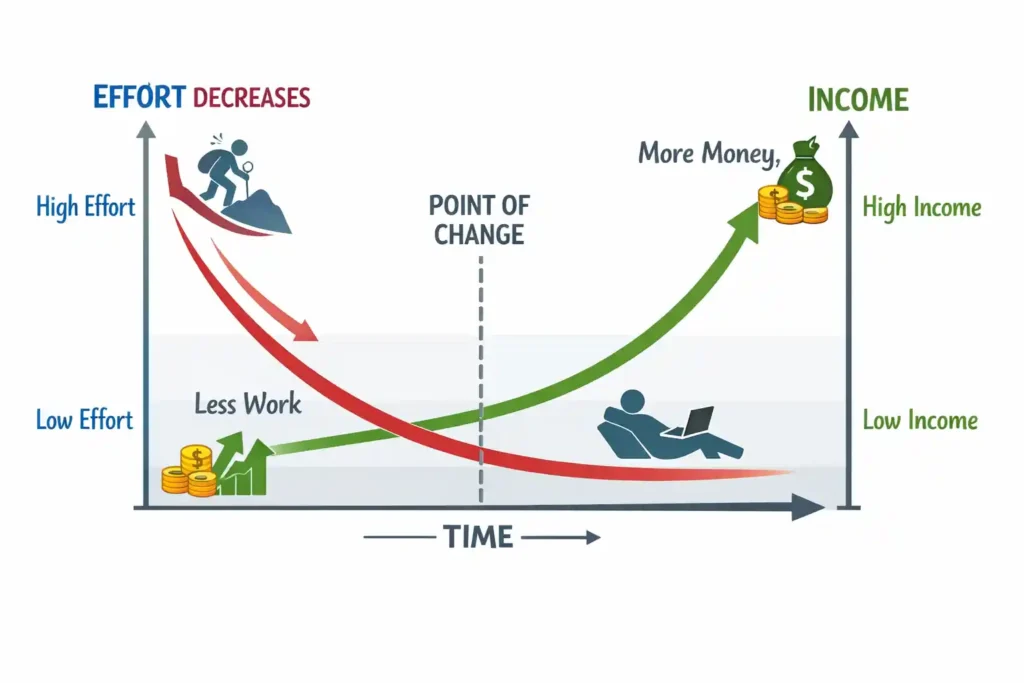
One of the least discussed truths is that most passive income is front-loaded with significant effort. The work happens before the income feels passive. This reality rarely fits into short videos or viral posts.
Writing an ebook requires research, writing, editing, and promotion. Building an affiliate site involves SEO knowledge, content creation, and analytics. Even automated investing strategies require education and discipline before execution.
This does not negate the value of passive income, but it reframes it as delayed compensation rather than free money. As Investopedia explains, passive income is better described as income that requires minimal daily involvement after significant setup.
Why Social Media Incentives Distort Reality
Understanding why these myths exist helps explain their persistence. Social media rewards simplicity, speed, and emotional appeal. Platforms favor content that promises transformation, not nuance.
Creators often monetize views, not accuracy. Courses, affiliate links, and sponsorships benefit from exaggeration. This does not mean all creators are dishonest, but it does mean incentives are misaligned with full transparency.
According to research from the OECD, financial misinformation spreads faster when it promises certainty in uncertain environments. Passive income myths thrive under these conditions.
What Passive Income Really Looks Like in Practice
After stripping away the myths, a more realistic picture emerges. Passive income is best viewed as a long-term financial supplement, not a replacement for work overnight. It rewards consistency, learning, and risk management.
Realistic characteristics of sustainable passive income:
- Gradual growth over years
- Periodic maintenance and review
- Exposure to economic cycles
- Alignment with personal skills and resources
| Myth | Reality |
|---|---|
| No effort required | Effort shifts over time |
| Guaranteed income | Income fluctuates |
| Anyone gets same results | Outcomes vary widely |
How to Approach Passive Income Wisely
A smarter approach begins with education and honest self-assessment. Start small, test assumptions, and reinvest returns. Diversification matters just as much here as in traditional investing, a principle emphasized by Morningstar research.
Avoid strategies you do not understand. Focus on transparency rather than hype. Most importantly, align passive income goals with long-term financial planning instead of short-term lifestyle fantasies.
Conclusion
Passive income remains a powerful financial concept, but only when grounded in reality. Social media often presents a polished version that hides effort, risk, and time. By exploring passive income myths debunked, we uncover a more useful truth.
Passive income is not about escaping work instantly. It is about building systems that reduce dependence on a single income source over time. It rewards patience, learning, and disciplined decision-making rather than shortcuts.
When approached thoughtfully, passive income can strengthen financial resilience, provide flexibility, and support long-term goals. When approached blindly, it can lead to disappointment, losses, and misplaced expectations.
The difference lies not in the strategy itself, but in understanding what it truly requires. Those who succeed are rarely the ones chasing viral promises. They are the ones quietly building, adjusting, and compounding over years.
Frequently Asked Questions
Is passive income really passive?
Not entirely. Most passive income requires upfront work and occasional maintenance, even if daily involvement is low.
How long does it take to build passive income?
In most cases, meaningful passive income takes one to five years depending on the method and resources involved.
Are dividends a reliable passive income source?
They can be, but dividends are not guaranteed and depend on company performance and market conditions.
Why do social media creators exaggerate passive income?
Platform algorithms reward simplicity and emotional appeal, which encourages oversimplified narratives.
Can beginners realistically earn passive income?
Yes, but expectations should be realistic. Beginners benefit most from starting small and learning gradually.
If this article helped clarify reality from hype, feel free to share your thoughts or experiences in the comments. Subscribe for more grounded insights on building long-term financial stability without the noise.