Introduction
Economic downturns tend to arrive quietly, then suddenly affect almost every household. Rising prices, job uncertainty, shrinking business revenues, and tighter credit conditions often appear at the same time. During these periods, many people instinctively cut spending and wait for stability to return. However, history shows that downturns also create unique opportunities for individuals who adapt early. This is where side hustles in economic downturn become especially relevant and powerful.
When traditional income feels uncertain, side hustles offer flexibility, diversification, and a sense of control. They allow people to respond to changing consumer needs rather than relying on a single employer or market. In recessions, demand does not disappear, it shifts. Consumers prioritize essentials, cost savings, repairs, and value-driven services. Businesses look for efficiency, outsourcing, and temporary help instead of full-time hires. These shifts create fertile ground for specific types of side hustles.
In this article, you will learn why some side hustles actually perform better during recessions, which economic forces drive that demand, and how to evaluate opportunities realistically. We will explore practical examples, explain financial concepts in plain language, and compare risk versus reward clearly. By the end, you will understand how to think strategically about income generation during difficult economic periods and how to position yourself calmly and intelligently rather than reacting out of fear.
Table of Contents
Why Economic Downturns Create Side Hustle Opportunities
Economic downturns reduce overall spending, but they also reshape priorities across households and businesses. When incomes feel uncertain, consumers focus on survival, efficiency, and value. This behavioral shift is well documented in economic research from institutions like the International Monetary Fund and the World Bank, which study consumption patterns during recessions. Spending moves away from luxury and convenience and toward essentials, repairs, and cost-saving solutions.
At the same time, businesses respond to tighter profit margins by reducing fixed costs. Hiring full-time staff becomes risky, so companies outsource tasks, rely on freelancers, or seek short-term project-based help. This structural change opens doors for individuals offering flexible services. According to research summarized by the OECD, labor markets during downturns tend to favor contract and gig-based work over permanent employment.
Another important factor is underutilized skills. During layoffs or reduced working hours, many people discover they have time, knowledge, or practical abilities that can generate income. Side hustles thrive in these conditions because they require lower commitment than starting a full business while still offering meaningful returns.
What makes downturn-friendly side hustles unique is resilience. They address needs that persist regardless of economic cycles, such as food, maintenance, education, and financial guidance. Understanding these forces helps you choose opportunities based on demand, not hype.
Essential Service Side Hustles That Stay in Demand
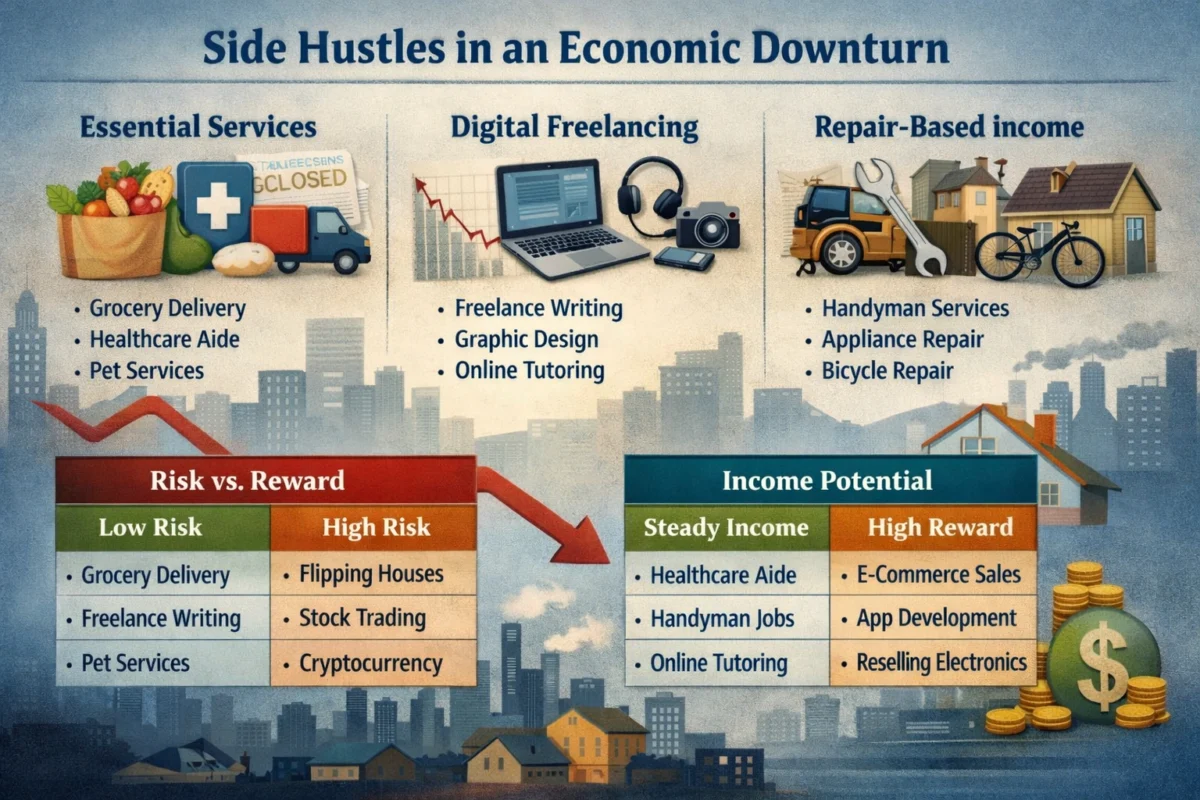
One of the most reliable categories of side hustles in economic downturn is essential services. These are services people cannot easily eliminate from their budgets, even when money is tight. While consumers may delay upgrades or luxury purchases, they still need functioning homes, transportation, and basic daily support.
Examples include home repairs, appliance maintenance, plumbing, electrical fixes, and basic car servicing. During downturns, people often repair instead of replace, which increases demand for skilled labor. Similarly, cleaning services, childcare assistance, and elder care remain critical because they support daily life and work responsibilities.
What makes essential service side hustles attractive is predictable demand and relatively low marketing costs. Word-of-mouth referrals become powerful when people seek trusted, affordable help. Many of these services can be offered locally, reducing competition and logistical complexity.
However, these side hustles may require physical effort or certifications depending on the service. The trade-off is stability rather than rapid scaling. For individuals seeking dependable income during uncertain times, essential services provide a strong foundation.
| Service Type | Demand Stability | Skill Requirement | Startup Cost |
|---|---|---|---|
| Home repairs | Very high | Medium to high | Low to medium |
| Cleaning services | High | Low | Low |
| Car maintenance | High | Medium | Medium |
| Childcare support | High | Medium | Low |
Cost-Saving and Repair-Based Side Hustles
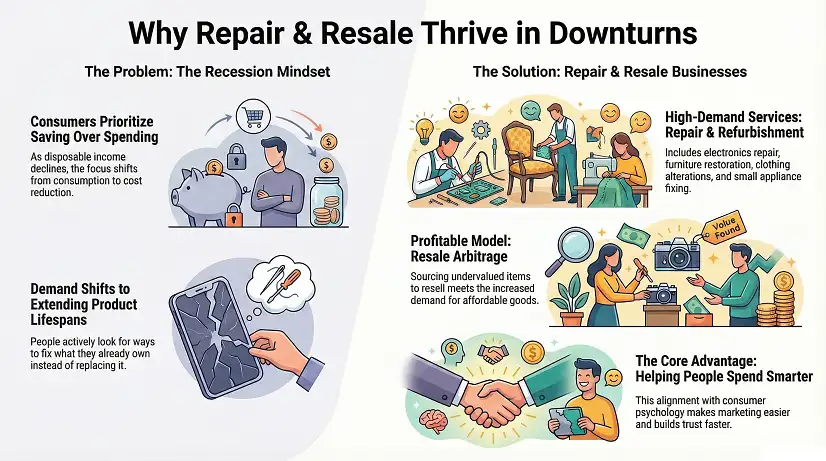
During recessions, saving money becomes a priority mindset. This creates strong demand for side hustles that help others reduce expenses rather than increase consumption. Repair, refurbishment, and resale services fit perfectly into this category.
Electronics repair, furniture restoration, clothing alterations, and small appliance fixing all benefit from this behavioral shift. Instead of buying new items, consumers look for ways to extend the life of what they already own. According to data referenced by Investopedia, repair and reuse markets often grow during economic contractions as disposable income declines.

Another example is resale arbitrage. Individuals who source undervalued items from thrift stores, liquidation sales, or online marketplaces can resell them at competitive prices. This side hustle benefits from both increased supply, as people sell unused items for cash, and increased demand, as buyers seek affordable alternatives.
The key advantage of cost-saving side hustles is alignment with consumer psychology. You are not asking people to spend more, but helping them spend smarter. This makes marketing easier and trust faster to build. The risk lies mainly in inventory management and time investment, which can be controlled with careful planning.
Digital and Freelance Side Hustles in Economic Downturns
Digital side hustles often perform well during downturns because they reduce costs for businesses while maintaining productivity. Companies still need marketing, accounting, content, and technical support, but they prefer flexible arrangements. This is why freelancing platforms tend to see increased activity during recessions.
Common examples include freelance writing, graphic design, bookkeeping, virtual assistance, and basic web maintenance. These roles replace or supplement in-house staff at a fraction of the cost. Educational platforms like Coursera and research from universities such as MIT highlight how digital skills provide income resilience in volatile labor markets.
Another advantage is scalability. Digital side hustles can serve clients globally, reducing dependence on local economic conditions. Startup costs are typically low, often limited to a computer and internet connection. However, competition can be intense, making specialization and clear value positioning essential.
| Digital Side Hustle | Client Type | Income Stability | Competition Level |
|---|---|---|---|
| Freelance writing | Businesses, media | Medium | High |
| Virtual assistant | Small businesses | High | Medium |
| Online bookkeeping | SMEs | High | Medium |
| Graphic design | Startups, brands | Medium | High |
Education and Skill-Based Side Hustles
Education-related side hustles often gain traction during downturns because people invest in skills to improve future earning potential. When job security declines, workers look for ways to reskill, upskill, or prepare for new roles. This creates demand for tutoring, exam preparation, language teaching, and practical skill coaching.
Online tutoring platforms, private lesson arrangements, and recorded courses all benefit from this trend. According to the World Bank, human capital investment often increases during recessions as individuals seek long-term stability. Even informal education, such as teaching basic digital literacy or software tools, can generate steady side income.
These side hustles tend to require subject expertise and strong communication skills, but they offer high trust and repeat engagement. Once credibility is established, client retention improves significantly. The main risk is time commitment, especially for one-on-one teaching, which can be managed by group sessions or digital products.
Risk Versus Reward Analysis of Side Hustles in Economic Downturn
Not all side hustles offer the same balance between effort, risk, and income stability. Understanding this balance helps avoid burnout and unrealistic expectations. Risk refers to income volatility, upfront investment, and demand uncertainty. Reward includes income potential, scalability, and long-term usefulness.
| Side Hustle Type | Risk Level | Reward Potential | Best For |
|---|---|---|---|
| Essential services | Low | Medium | Stability seekers |
| Repair and resale | Medium | Medium | Practical skill holders |
| Digital freelancing | Medium | High | Skill-based workers |
| Education services | Low to medium | Medium to high | Knowledge experts |
Choosing the right side hustle depends on your personal financial buffer, available time, and tolerance for uncertainty. During downturns, lower-risk options often outperform high-risk ventures because survival and consistency matter more than rapid growth.
Long-Term Benefits of Starting a Side Hustle During a Downturn
Starting a side hustle in difficult economic conditions can create advantages that extend far beyond the recession itself. Skills developed under pressure tend to be more practical, efficient, and market-tested. Many successful businesses trace their origins to downturn periods when founders learned to operate lean and customer-focused.
Side hustles also diversify income streams, reducing reliance on a single employer. This diversification principle is widely emphasized in financial education resources like Morningstar. Over time, what begins as a temporary income supplement can evolve into a sustainable business or career pivot.
Psychologically, side hustles restore a sense of agency. Instead of feeling trapped by macroeconomic forces, individuals actively respond to change. This mindset shift often leads to better financial decisions, stronger confidence, and improved long-term planning.
Conclusion
Economic downturns challenge financial security, but they also reward adaptability and thoughtful action. Understanding how demand shifts during recessions allows individuals to position themselves where value is still needed. Side hustles in economic downturn are not about chasing trends or overnight success. They are about meeting real needs with practical solutions.
Essential services provide stability when consumers prioritize basics. Repair and cost-saving hustles align with frugal mindsets. Digital freelancing supports businesses seeking flexibility. Education-based side hustles tap into the universal desire for long-term improvement. Each category carries different risks and rewards, but all share one common feature: relevance during uncertainty.
The most important takeaway is intentionality. Rather than reacting emotionally to economic stress, successful side hustlers analyze demand, assess personal strengths, and choose paths that fit their risk tolerance. Starting small, testing demand, and building trust gradually often outperform aggressive expansion during volatile periods.
Over time, these efforts compound. Skills sharpen, networks grow, and income streams stabilize. Whether the economy recovers quickly or slowly, the experience gained from navigating a downturn with purpose becomes a lasting asset. Thoughtful side hustles are not just financial tools. They are resilience strategies for an unpredictable world.
Frequently Asked Questions
What are the best side hustles in economic downturn for beginners?
Beginner-friendly options include cleaning services, basic freelancing, tutoring in familiar subjects, and resale of used goods. These require low startup costs and benefit from steady demand.
Are side hustles in economic downturn risky?
Risk varies by type. Essential services and education tend to be lower risk, while resale and freelancing may have more income variability. Proper planning reduces most risks.
How much can side hustles realistically earn during a recession?
Earnings depend on time, skill, and demand. Some generate a few hundred dollars monthly, while others can replace a significant portion of full-time income.
Do digital side hustles perform well during recessions?
Yes, many businesses prefer freelancers over full-time hires during downturns, increasing demand for digital skills.
Should I start a side hustle if I already feel financially stressed?
If chosen carefully and started gradually, side hustles can reduce stress by improving cash flow. Avoid high upfront investments when finances are tight.
If you found value in this article, tell us in the comments which side hustle you believe fits your situation best. You can also subscribe to receive future insights on building income resilience during changing economic conditions.