Introduction
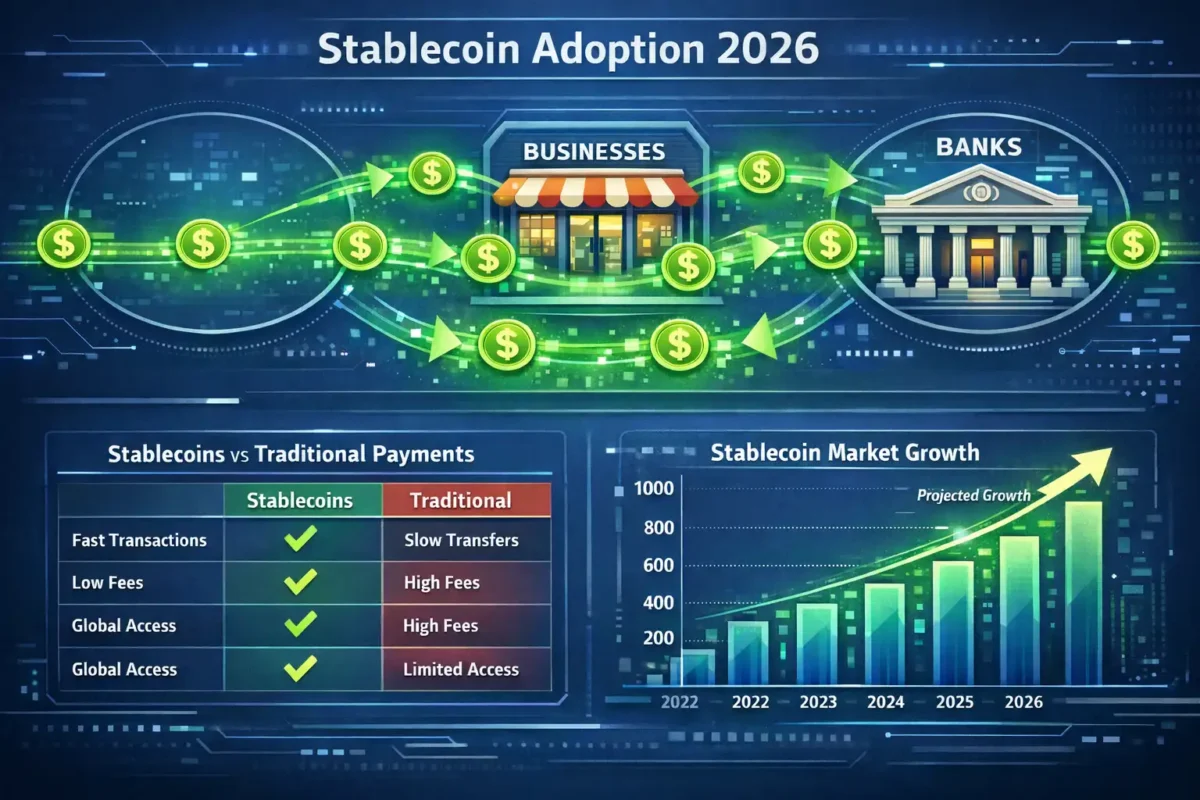
For decades, the global financial system has revolved around traditional banks, national currencies, and slow cross-border payment rails that most people simply learned to tolerate. That tolerance is now wearing thin. In 2026, individuals, businesses, and even governments are actively searching for faster, cheaper, and more transparent ways to move money. At the center of this shift is stablecoin adoption 2026, a trend that is quietly reshaping how value flows across the global economy.
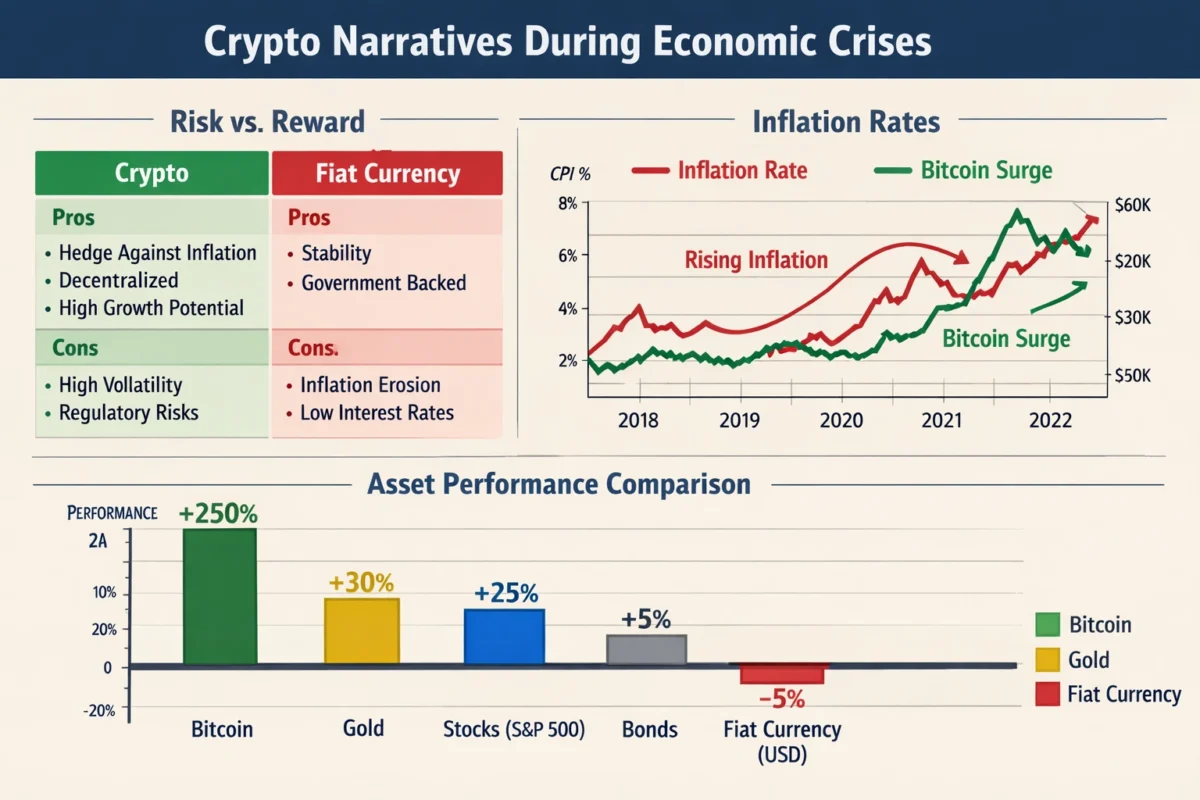
Stablecoins are digital currencies designed to maintain a stable value, usually pegged to the US dollar or another major fiat currency. Unlike volatile cryptocurrencies such as Bitcoin, stablecoins aim to behave like digital cash while operating on blockchain infrastructure. This combination of price stability and technological efficiency explains why they are increasingly viewed as practical financial tools rather than speculative assets.
This topic matters today because stablecoins are no longer experimental. They are being used for salaries, international trade settlement, remittances, decentralized finance, and corporate treasury management. Central banks, regulators, and financial institutions are responding quickly, signaling that this shift is not a temporary trend.
In this article, you will learn what stablecoins are, why stablecoin adoption 2026 is accelerating, how they compare to traditional banking, the risks involved, and what this transformation means for individuals and the global financial system over the next decade.
Table of Contents
What Are Stablecoins and Why They Matter Now
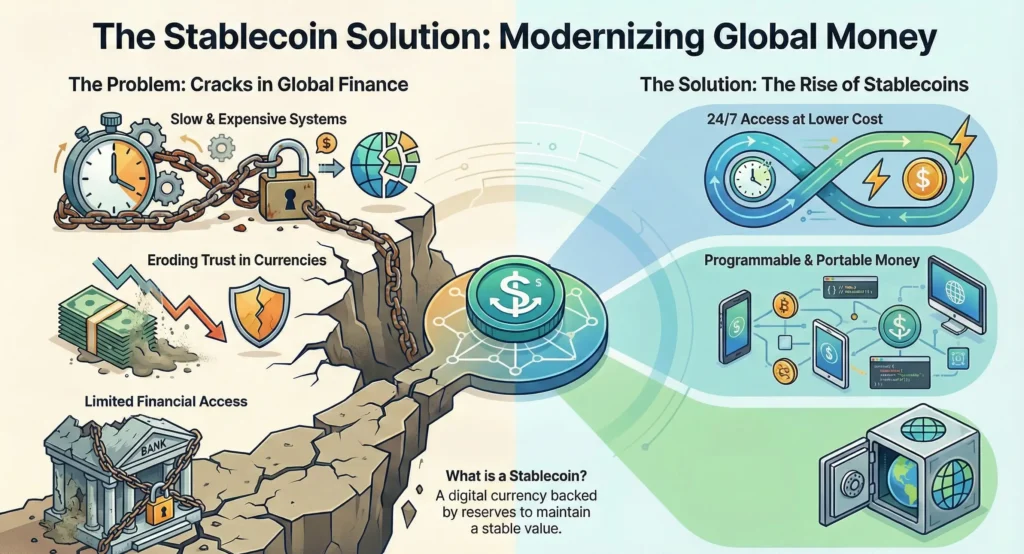
Stablecoins are blockchain-based digital currencies designed to hold a steady value by being linked to a reference asset, most commonly the US dollar. For every stablecoin in circulation, there is usually an equivalent reserve held in cash, short-term government securities, or similar low-risk assets. This structure aims to provide confidence that one digital token can reliably be redeemed for one unit of fiat currency.
What makes stablecoins particularly important in 2026 is timing. Global payment systems are under pressure. International transfers remain slow and expensive, inflation has eroded trust in some local currencies, and millions of people still lack access to reliable banking services. Stablecoins offer an alternative that operates continuously, without weekends or banking hours, and often at a fraction of the cost.
Major financial institutions are paying close attention. According to research published by the Bank for International Settlements, stablecoins have grown from niche crypto tools into systemically relevant payment instruments in some regions. Meanwhile, platforms like Investopedia explain how stablecoins reduce volatility while preserving the efficiency of blockchain transactions.
Stablecoins matter now because they solve real problems rather than hypothetical ones. They make money programmable, portable, and globally accessible, which challenges the traditional role of banks as intermediaries.
The Forces Driving Stablecoin Adoption 2026
The acceleration of stablecoin adoption 2026 is not happening by accident. It is driven by a combination of economic pressure, technological maturity, and changing user expectations. Consumers today expect instant digital services in nearly every aspect of life, and finance is no exception.
One major driver is cost efficiency. Traditional cross-border payments can involve multiple intermediaries, each taking fees and adding delays. Stablecoins move across blockchains directly, often settling in minutes. This efficiency is especially attractive to businesses operating internationally.
Another driver is accessibility. Stablecoins can be stored and transferred using a smartphone wallet, without requiring a traditional bank account. The World Bank estimates that over one billion adults remain unbanked globally, creating a massive addressable market for digital alternatives.
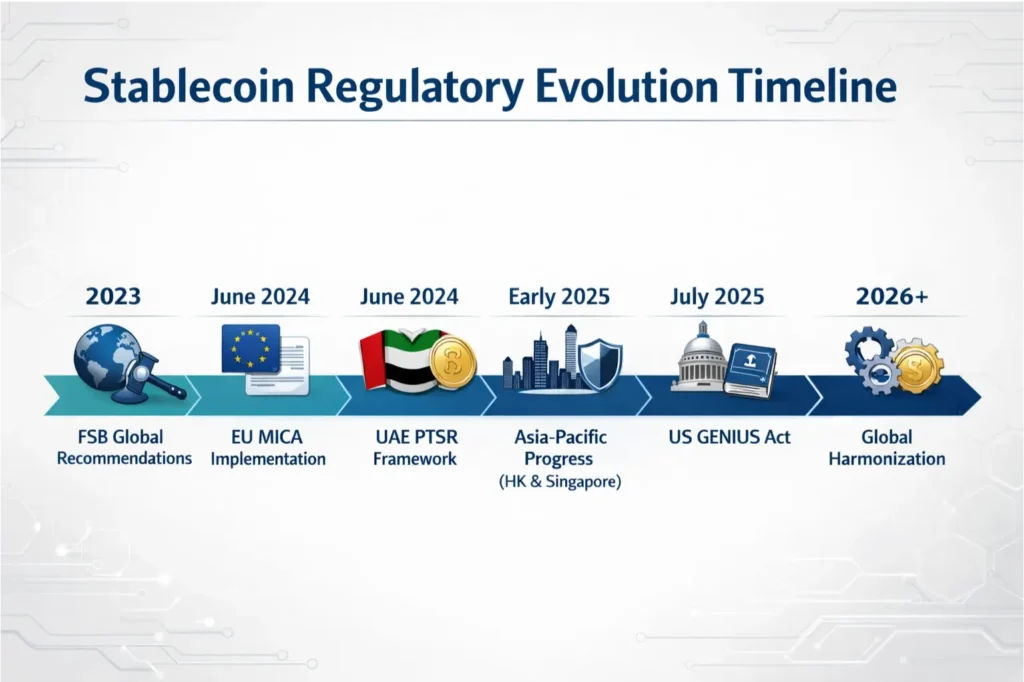
Regulatory clarity has also improved. In the United States and Europe, regulators have begun outlining frameworks for reserve transparency, auditing standards, and consumer protections. The European Central Bank and the Federal Reserve have both published research acknowledging stablecoins as influential components of future payment systems.
Key forces behind stablecoin growth include:
- Rising demand for faster global payments
- Inflation concerns in emerging economies
- Growth of online and gig-based work
- Increasing trust in regulated digital financial products
Stablecoins vs Traditional Banking Systems
Traditional banking systems were designed for a world of paper records, physical branches, and national borders. While banks have digitized many services, their core infrastructure remains layered and complex. Stablecoins, by contrast, are built from the ground up for a digital and global environment.
Banks rely on centralized ledgers, batch processing, and interbank settlement networks. Stablecoins operate on distributed ledgers that update in near real time. This difference leads to noticeable contrasts in speed, cost, and transparency.
The comparison below highlights how these systems differ in practice.
| Feature | Traditional Banking | Stablecoin Systems |
|---|---|---|
| Settlement speed | Hours to days | Minutes |
| Operating hours | Business hours | 24/7 |
| Cross-border fees | High and variable | Low and predictable |
| Accessibility | Requires bank account | Smartphone and wallet |
| Transparency | Limited to institutions | Public blockchain records |
Despite these advantages, banks still play critical roles in credit creation, regulatory compliance, and consumer protection. The rise of stablecoins does not eliminate banks but forces them to adapt.
How Businesses Are Using Stablecoins in 2026
Businesses are among the fastest adopters of stablecoins because efficiency directly affects profitability. In 2026, companies across industries are integrating stablecoins into payment, payroll, and treasury operations.
Multinational firms use stablecoins to settle invoices with overseas suppliers. Instead of waiting days for international wire transfers, payments arrive almost instantly, improving cash flow management. Freelancers and remote workers increasingly request payment in stablecoins to avoid currency conversion losses and delays.
Corporate treasury teams also see stablecoins as short-term cash management tools. Some stablecoins offer yield through regulated reserve structures, providing modest returns while maintaining liquidity. Morningstar has noted that institutional interest in tokenized cash equivalents is rising steadily.
Common business use cases include:
- Cross-border supplier payments
- International payroll distribution
- Treasury liquidity management
- On-chain accounting and auditing
This adoption reflects a broader shift toward programmable finance, where payments, compliance checks, and reporting can occur automatically.
Stablecoins and Financial Inclusion
One of the most profound impacts of stablecoin adoption 2026 is its effect on financial inclusion. In many parts of the world, traditional banking services are expensive, unreliable, or simply unavailable. Stablecoins offer a practical alternative.
Individuals in countries with volatile currencies often turn to dollar-pegged stablecoins as a store of value. Instead of holding cash that loses purchasing power rapidly, they can preserve savings digitally. The International Monetary Fund has documented increased stablecoin usage in regions facing high inflation and currency controls.
Stablecoins also lower barriers to participation in the global economy. A small business owner can receive international payments without opening foreign bank accounts. Migrant workers can send remittances home without paying excessive fees.
However, digital literacy and internet access remain prerequisites. Financial inclusion through stablecoins must be paired with education and infrastructure investment to be sustainable.
Risks and Challenges Behind the Stablecoin Boom
Despite their advantages, stablecoins are not risk-free. Understanding these risks is essential for individuals and institutions considering adoption.
One major concern is reserve transparency. Stablecoins depend on trust that reserves truly exist and are managed prudently. Regulators now require regular audits and disclosures, but enforcement varies by jurisdiction.
Another risk involves regulatory shifts. Governments may impose restrictions to protect monetary sovereignty or prevent illicit activity. Sudden regulatory changes can affect accessibility or liquidity.
Technology risk also exists. Smart contract vulnerabilities, wallet security issues, and blockchain congestion can disrupt transactions. While these risks are decreasing as technology matures, they cannot be ignored.
| Risk Type | Description | Mitigation |
|---|---|---|
| Reserve risk | Inadequate backing | Audits and regulation |
| Regulatory risk | Policy changes | Jurisdictional compliance |
| Technical risk | Software failures | Security testing |
| Market risk | Loss of confidence | Transparency |
Recognizing these challenges helps users make informed decisions rather than assuming stablecoins are flawless replacements for banks.
The Role of Governments and Central Banks
Governments and central banks are deeply involved in shaping the future of stablecoins. While some see them as threats to monetary control, others view them as opportunities for innovation.
Central banks are exploring central bank digital currencies, or CBDCs, which share similarities with stablecoins but are issued directly by governments. The Federal Reserve and the European Central Bank have both emphasized the importance of coexistence between private stablecoins and public digital currencies.
Regulatory frameworks introduced in recent years aim to balance innovation with stability. Requirements around reserve quality, consumer protection, and anti-money laundering are becoming standard.
This regulatory engagement suggests that stablecoins are being integrated into the financial system rather than pushed to its margins.
Long-Term Implications for the Global Financial System
The long-term implications of stablecoin adoption 2026 extend far beyond payments. Stablecoins could reshape how credit, savings, and monetary policy function in a digital economy.
If stablecoins continue to grow, banks may focus more on value-added services such as lending and advisory, rather than payment processing. Competition could drive better services and lower costs for consumers.
At a macroeconomic level, widespread stablecoin use may influence capital flows and exchange rate dynamics. International institutions like the OECD are actively studying these effects to anticipate systemic risks.
Ultimately, stablecoins represent a step toward a more interconnected and programmable financial system, where money moves as freely as information.
Conclusion
Stablecoins are no longer a speculative concept on the fringes of finance. In 2026, they are practical tools reshaping how money is stored, transferred, and managed. The rise of stablecoin adoption 2026 reflects deeper shifts in technology, trust, and global economic structure.
This transformation matters because it challenges long-standing assumptions about banking. Stablecoins offer speed, accessibility, and transparency that traditional systems struggle to match, especially in a digital-first world. At the same time, they introduce new risks that require thoughtful regulation and informed usage.
For individuals, stablecoins can provide faster payments and protection against currency instability. For businesses, they unlock efficiency and global reach. For policymakers, they present both opportunities and responsibilities.
The future of finance will likely be hybrid, combining traditional institutions with digital innovations. Understanding stablecoins today helps prepare for a financial system that is more open, interconnected, and adaptable.
Frequently Asked Questions
What is stablecoin adoption 2026?
Stablecoin adoption 2026 refers to the rapid increase in the use of stablecoins by individuals, businesses, and institutions during this period, driven by efficiency and regulatory clarity.
Are stablecoins safer than traditional bank deposits?
Stablecoins carry different risks. While some are well regulated and fully backed, they do not always offer the same legal protections as bank deposits.
Can stablecoins replace banks entirely?
Stablecoins are unlikely to replace banks completely. Instead, they are changing how banks operate and compete.
How do stablecoins affect inflation?
Stablecoins themselves do not create inflation but can influence currency demand, especially in countries with unstable monetary systems.
Are stablecoins legal worldwide?
Legality varies by country. Many governments allow regulated stablecoins, while others impose restrictions.
If you found this article useful, consider sharing it with someone exploring the future of finance. Tell us in the comments if you found value in this article or subscribe to stay updated on global financial trends.