Introduction
The story of Steve Jobs—from building computers in a garage to leading one of the world’s most valuable companies—is more than a Silicon Valley legend. For investors, entrepreneurs, and personal finance readers, it offers timeless lessons about capital allocation, innovation-driven growth, brand economics, and long-term value creation.
This article explores Steve Jobs’ life journey, the rise of Apple Inc., and—most importantly—what the story means for investing, financial markets, and wealth building. You will learn how visionary leadership translates into shareholder value, why patience matters in investing, and how intangible assets like brand and ecosystem can outperform traditional financial metrics.
As Jobs himself famously said,
“Innovation distinguishes between a leader and a follower.”
Table of Contents
From a Garage Startup to a Market Giant
Humble Beginnings: Apple’s Garage Origins
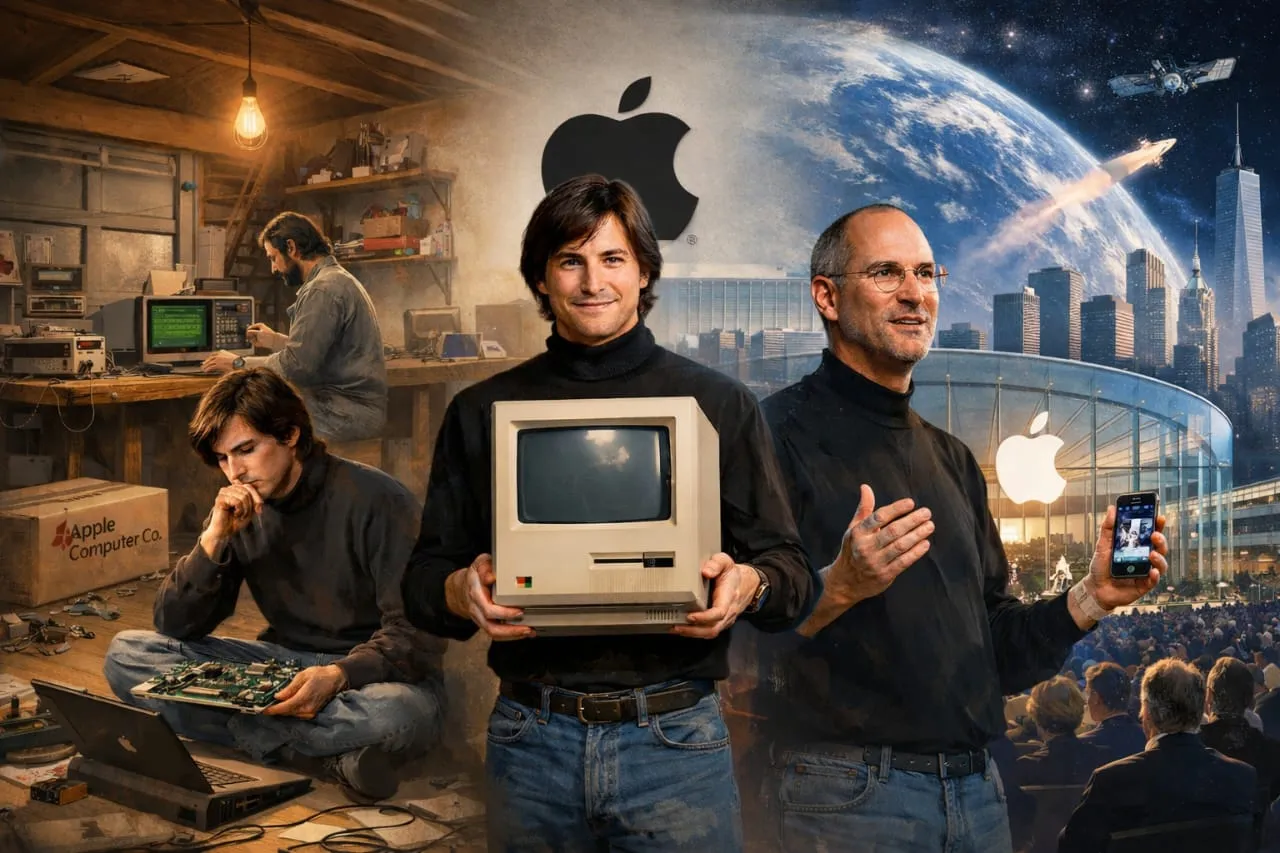
In 1976, Steve Jobs, Steve Wozniak, and Ronald Wayne founded Apple in a Los Altos, California garage. The initial product, the Apple I, was a hand-built computer sold to hobbyists.
From a finance perspective, Apple began as a bootstrapped startup, funded through:
- The sale of Jobs’ Volkswagen van
- Wozniak’s Hewlett-Packard calculator
This early phase highlights a key entrepreneurial finance lesson: capital constraints often force clarity and focus.
“I’m convinced that about half of what separates successful entrepreneurs from the non-successful ones is pure perseverance.” — Steve Jobs
Early Growth and the First Major Breakthrough
The release of the Apple II in 1977 marked Apple’s first scalable success. It became one of the first mass-market personal computers, generating strong cash flows and enabling rapid expansion.
By 1980:
- Apple went public (IPO)
- The IPO created over 300 millionaires overnight
- Apple’s valuation exceeded $1 billion, a rare achievement at the time
For investors, this demonstrates how early-stage innovation can translate into exponential equity returns.
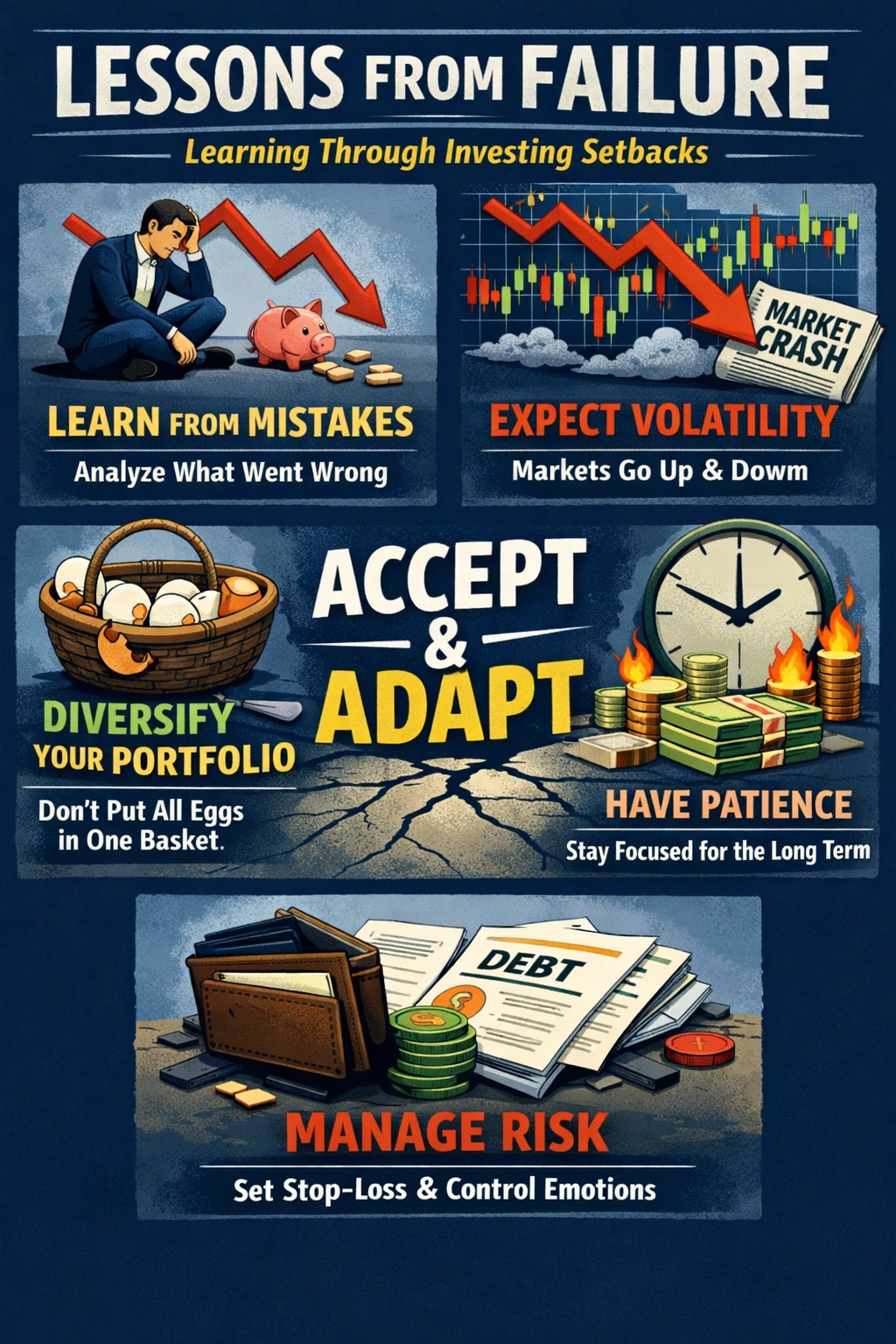
Setbacks, Failure, and Financial Resilience
Being Fired from Apple
In 1985, internal power struggles led to Jobs being removed from Apple, the very company he co-founded. From a market standpoint, Apple entered a long period of stagnation without its visionary leader.
Jobs later reflected:
“Getting fired from Apple was the best thing that could have ever happened to me.”
This phase underscores an important investing principle: management quality matters. Leadership decisions can materially impact a company’s long-term valuation.
NeXT and Pixar: Strategic Investments Pay Off
After leaving Apple, Jobs founded NeXT, a computer company focused on advanced workstations, and acquired Pixar Animation Studios.
Although NeXT struggled commercially, its operating system became strategically invaluable. Apple acquired NeXT in 1997, bringing Jobs back as CEO.
Pixar, meanwhile, became a financial triumph:
- Released blockbuster films like Toy Story
- Went public in 1995
- Was later acquired by Disney in a multi-billion-dollar deal
For investors, this period illustrates optionality—even apparent failures can become high-value assets over time.
Apple’s Transformation into a Trillion-Dollar Company
Product Ecosystem and Revenue Flywheel
Under Jobs’ renewed leadership, Apple launched:
- iMac
- iPod
- iPhone
- iPad
Each product reinforced the others, creating a closed ecosystem that increased customer lifetime value.
A simplified view of Apple’s value creation model:
| Element | Financial Impact |
|---|---|
| Hardware | High margins, premium pricing |
| Software | Ecosystem lock-in |
| Services | Recurring, predictable revenue |
| Brand | Pricing power |
This model is now studied by institutional investors as a benchmark for sustainable competitive advantage, often referred to as an economic moat.
Long-Term Returns for Investors
Apple stock became one of the most successful long-term investments in history.
Key data points:
- Apple’s market capitalization grew from near bankruptcy in the late 1990s to trillions of dollars
- The company initiated dividends and massive share buybacks
- Apple became a core holding in many index funds and pension portfolios
This reinforces a critical personal finance lesson: owning great businesses for the long term often outperforms short-term trading strategies.
Financial Lessons from Steve Jobs’ Life
1. Vision Drives Valuation
Markets reward companies that:
- Solve real problems
- Create emotional customer loyalty
- Continuously innovate
Jobs understood that brand equity is a financial asset, even if it doesn’t appear directly on balance sheets.
2. Focus Beats Diversification (At the Company Level)
Apple cut dozens of underperforming products to focus on a few category-defining ones.
For individual investors, the parallel lesson is:
- Avoid overcomplicating portfolios
- Invest in businesses you understand deeply
3. Patience Compounds Wealth
Jobs’ story shows that success is rarely linear. Major breakthroughs often come years after initial effort, aligning with the core principle of long-term investing and compounding returns.
As Jobs put it:
“You have to trust that the dots will somehow connect in your future.”
Relevance for Modern Investors and Passive Income Seekers
For today’s readers interested in financial independence and passive income, Apple’s journey offers practical insight:
- Invest in innovation-driven companies
- Reinvest dividends for compounding
- Look beyond quarterly noise and focus on structural growth
Index investors who held Apple through broad market funds benefited enormously—without needing to pick individual stocks.
Conclusion: Key Takeaways and Practical Actions
Steve Jobs’ life—from a garage startup to building one of the most valuable companies in history—offers more than inspiration. It provides a masterclass in value creation, leadership, and long-term investing.
Key takeaways:
- Vision and innovation can create extraordinary shareholder value
- Temporary failure does not define long-term success
- Patience and conviction are essential in investing
Practical actions for readers:
- Study companies with strong brands and ecosystems
- Think long-term when investing in equities
- Focus on quality, not hype
The story of Steve Jobs is ultimately a reminder that great businesses are built, not traded.