The quest for financial independence often leads investors down the path of passive income. For decades, the bedrock of this strategy has been the reliable dividend stock, a classic approach where companies share a portion of their profits with shareholders. However, as the financial landscape evolves at a breakneck pace, driven by technological innovation and new market structures, the opportunities for generating the best passive income 2026 are shifting dramatically. This is not to say that dividend stocks are obsolete, but rather that a new, more dynamic generation of income streams has emerged, offering diversification, higher potential yields, and access to previously inaccessible asset classes.
The core reason this topic matters today is the dual pressure of low interest rates in traditional savings and the increasing volatility of the public markets. Investors are actively seeking alternatives that can provide a consistent, non-correlated return on capital. The five streams we will explore—ranging from fractionalized real estate to AI-driven assets and private credit—represent a profound democratization of finance. They allow the average investor to participate in sophisticated markets that were once the exclusive domain of institutional players and high-net-worth individuals. By the end of this article, you will have a clear understanding of these five powerful, non-traditional passive income streams, their mechanics, their risks, and how you can strategically integrate them into your portfolio for a more robust financial future.
Table of Contents
1. Tokenized Real Estate: Fractional Ownership in the Digital Age
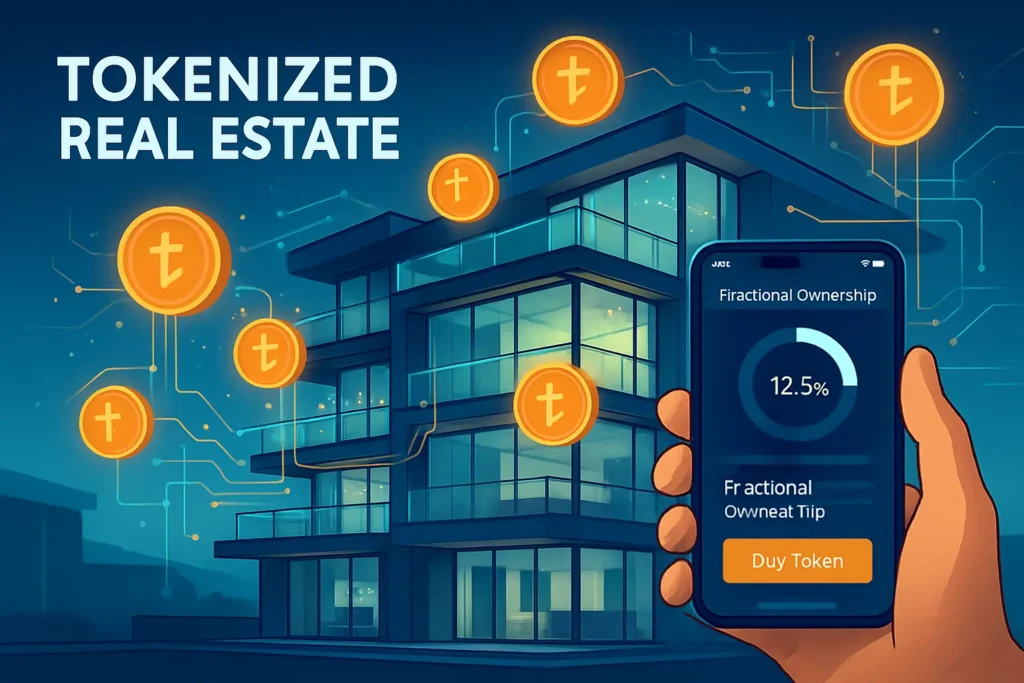
Tokenized real estate is perhaps the most tangible example of how blockchain technology is democratizing wealth creation. At its heart, it is the process of issuing digital tokens on a blockchain that represent fractional ownership in a physical property, such as a commercial building, a luxury apartment, or a development project. This concept matters because it solves the two biggest problems with traditional real estate investment: the massive capital requirement and the lack of liquidity. Instead of needing hundreds of thousands of dollars to buy a property outright, an investor can purchase a token for a fraction of the cost, effectively owning a small piece of the asset.
This mechanism transforms a historically illiquid asset into a highly liquid one. The tokens can be traded 24/7 on secondary markets, allowing investors to enter and exit positions with speed and ease, much like trading a stock. The passive income is generated from the underlying property’s rental income, which is automatically distributed to token holders via smart contracts, ensuring transparency and reducing administrative overhead. For example, a token representing a share in a high-value Manhattan office building might distribute quarterly rental payments directly to your digital wallet. This model is particularly appealing in 2026 as regulatory frameworks mature, providing greater investor protection and institutional confidence in the underlying technology [1]. The shift is profound: real estate, once the domain of the patient and wealthy, is now accessible to anyone with a digital wallet, fundamentally changing the landscape for those seeking the best passive income 2026.
| Feature | Tokenized Real Estate | Traditional Rental Property |
|---|---|---|
| Minimum Investment | Low (often $100 – $1,000) | High (tens of thousands for down payment) |
| Liquidity | High (tokens can be traded 24/7) | Low (selling takes months) |
| Management | Zero (handled by the platform/smart contract) | High (tenant screening, maintenance, repairs) |
| Diversification | Easy (can own fractions of multiple properties globally) | Difficult (capital is tied up in one or two assets) |
| Passive Income Source | Automated rental income distribution via smart contract | Manual rent collection and expense management |
2. AI-Driven Digital Assets: Automating Content and Services
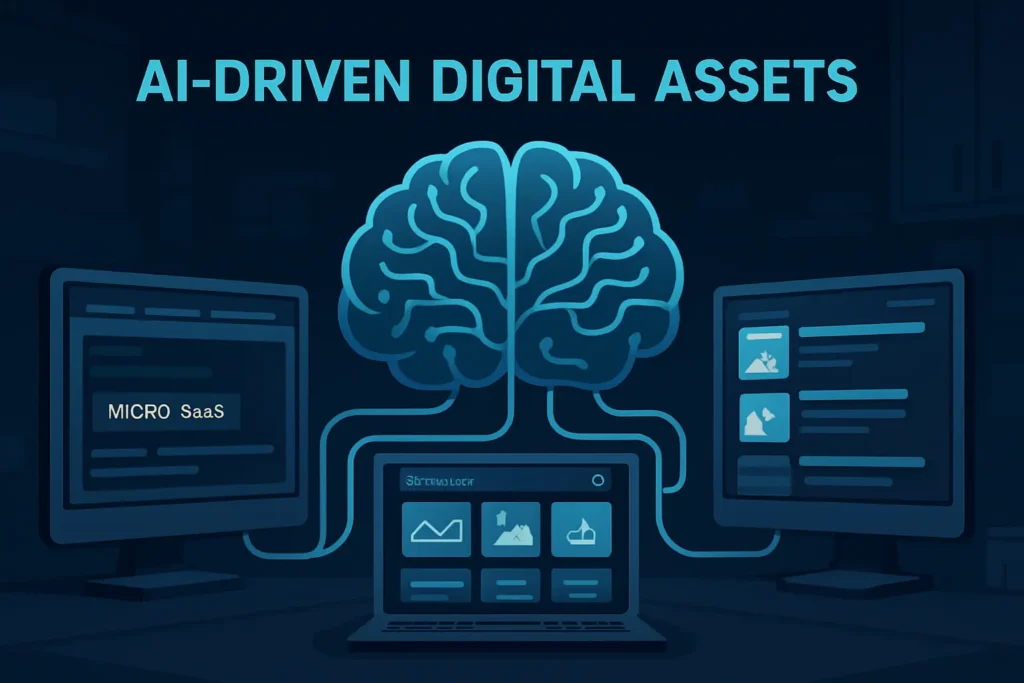
The explosion of generative Artificial Intelligence (AI) has created a new frontier for passive income, centered on the automation of digital asset creation and service delivery. This stream involves building a digital product or service—such as a specialized micro-SaaS application, a library of AI-generated content (e.g., stock images, music loops, or specialized e-books), or an automated customer service bot—and then using AI tools to manage, update, and scale it with minimal human intervention. The value proposition here is leverage: you create the initial framework, and the AI handles the repetitive, time-consuming tasks that would normally require an active business owner.
A prime example is an AI-powered micro-SaaS tool that solves a niche business problem, such as generating optimized social media captions for small businesses. Once the core code is written, an AI model can handle customer support, content generation for marketing, and even basic code maintenance and bug fixes. The income is generated through subscription fees, and the “passive” element comes from the AI’s ability to operate the business 24/7. This is a high-growth area, but it requires an initial investment in development and a keen eye for market gaps. The returns can be exponential, as the cost of scaling an AI-managed digital asset is near zero, making it a contender for the best passive income 2026 for those with a technical or creative background [2].
- Pros of AI-Driven Assets:
- Scalability: Can serve thousands of customers with minimal overhead.
- Low Operating Costs: AI automates customer service and maintenance.
- High-Margin: Digital products have no cost of goods sold.
- Cons of AI-Driven Assets:
- High Initial Effort: Requires significant time or capital for initial development.
- Rapid Obsolescence: Technology and market trends change quickly.
- Competition: Low barrier to entry for simple AI-generated content.
3. Private Credit Funds: Becoming the Bank for Businesses

Private credit, or direct lending, involves providing loans directly to companies, typically middle-market businesses, rather than purchasing publicly traded bonds. Historically, this asset class was only available to large institutional investors like pension funds and endowments. However, in 2026, the rise of Business Development Companies (BDCs) and specialized private credit funds structured for retail investors has opened this high-yield stream to the public. The appeal is simple: private credit offers significantly higher yields than traditional corporate bonds because it compensates investors for the illiquidity and complexity of the loans.
The passive income is generated from the interest payments on these loans. Unlike public debt markets, private credit deals are negotiated directly, often including protective covenants that safeguard the lender’s capital. The shift towards private credit is driven by banks pulling back from corporate lending due to stricter post-2008 regulations, creating a massive funding gap that private funds are filling. For the individual investor, this means becoming a fractional “bank” to stable, growing businesses. While the returns are attractive, it is crucial to understand that these investments are illiquid—capital may be locked up for several years—and carry the risk of borrower default. Due diligence on the fund manager’s track record is paramount [3].
| Risk Factor | Private Credit Funds | Investment-Grade Corporate Bonds |
|---|---|---|
| Liquidity Risk | High (Capital is typically locked up for 3-7 years) | Low (Traded daily on public exchanges) |
| Default Risk | Moderate to High (Lending to non-public, mid-market firms) | Low to Moderate (Lending to established, rated corporations) |
| Interest Rate Risk | Lower (Often floating-rate loans, adjusting with market rates) | Higher (Fixed-rate bonds lose value when rates rise) |
| Yield Potential | High (Typically 8% – 12%+) | Low (Typically 3% – 5%) |
| Accessibility | Increasing (Via BDCs and specialized funds) | High (Easily accessible via any brokerage account) |
4. DeFi Yield Farming and Staking: The Decentralized Interest Account
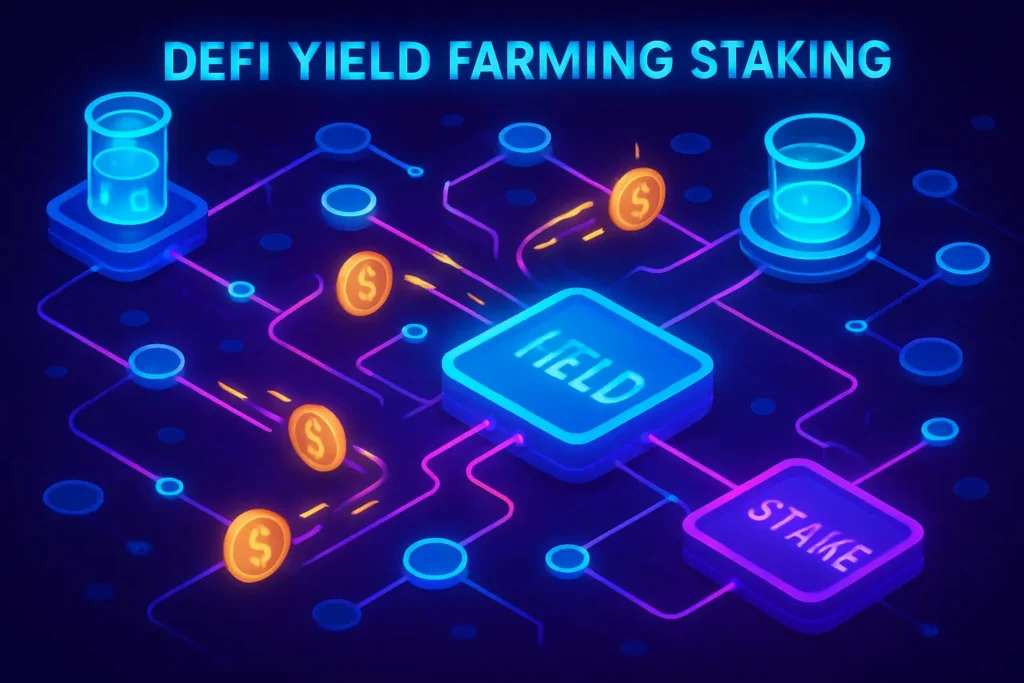
Decentralized Finance (DeFi) offers a suite of tools for generating passive income from cryptocurrency holdings, with yield farming and staking being the most prominent in 2026. This stream is essentially a digital version of a high-yield savings account, but with significantly higher potential returns and risks. Staking involves locking up a cryptocurrency to support the security and operations of a blockchain network (Proof-of-Stake). In return for this service, the staker receives newly minted coins as a reward, similar to earning interest.
Yield farming, a more complex and higher-risk strategy, involves providing liquidity to decentralized exchanges (DEXs) or lending protocols. By depositing two different crypto assets into a liquidity pool, you enable trading between those assets and earn a share of the trading fees. This can be further amplified by “farming” governance tokens from the protocol, which can then be sold for profit. The income is generated from transaction fees and protocol rewards. While the Annual Percentage Yields (APYs) can be eye-watering—sometimes exceeding 50%—the risks are substantial, including “impermanent loss” (where the value of your deposited assets changes relative to simply holding them) and smart contract vulnerabilities. This is a high-octane strategy for those seeking the best passive income 2026 who are comfortable with the volatility of the crypto market [4].
- Staking vs. Yield Farming: A Comparison
- Staking: Lower risk, lower return, supports network security, capital is locked up.
- Yield Farming: Higher risk, higher return, provides market liquidity, capital is subject to impermanent loss.
5. Voluntary Carbon Credits: Investing in Environmental Impact
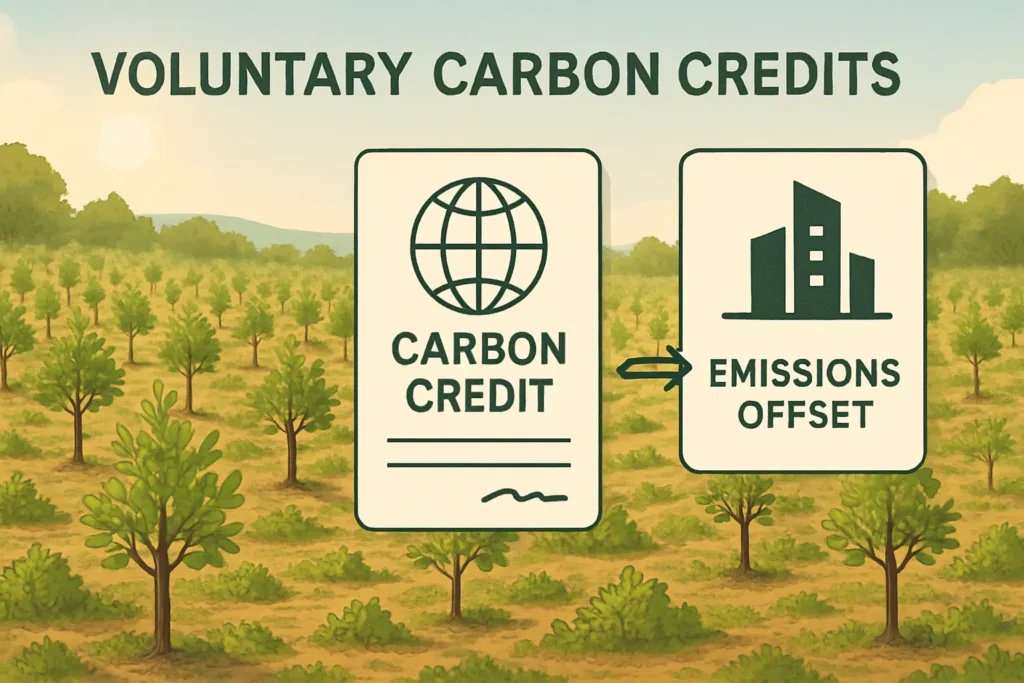
The voluntary carbon market (VCM) has matured significantly, moving from a niche environmental concern to a recognized financial asset class. A carbon credit represents the reduction or removal of one metric ton of carbon dioxide equivalent from the atmosphere. The passive income stream is generated by investing in projects that create these credits—such as reforestation, renewable energy, or carbon capture technologies—and then selling the credits to corporations seeking to offset their own emissions.
This is a unique passive income stream because its value is tied not just to financial markets but also to global climate policy and corporate Environmental, Social, and Governance (ESG) commitments. As more companies pledge to reach net-zero emissions, the demand for high-quality, verifiable carbon credits is projected to soar, driving up their price. Individual investors can gain exposure through specialized funds, exchange-traded funds (ETFs) that track carbon futures, or platforms that allow direct investment in certified projects. The income is passive once the initial investment is made, as the fund or platform handles the project management and credit trading. This stream offers a compelling blend of financial return and positive environmental impact, appealing to the modern, conscious investor [5].
- The Carbon Credit Lifecycle (Simplified)
- Project Development: A company starts a project (e.g., planting a forest).
- Verification: A third-party auditor verifies the project’s carbon reduction.
- Credit Issuance: The project is issued a number of carbon credits.
- Investor Purchase: An investor buys the credits (the passive investment).
- Corporate Offset: A corporation buys the credits from the investor to offset emissions.
- Passive Income: The investor profits from the price appreciation and sale of the credit.
Conclusion: Strategically Diversifying for the Future
The search for the best passive income 2026 is fundamentally a search for diversification and resilience. The five streams explored here—Tokenized Real Estate, AI-Driven Digital Assets, Private Credit Funds, DeFi Yield Farming and Staking, and Voluntary Carbon Credits—all share a common thread: they offer returns that are increasingly decoupled from the traditional 60/40 stock-and-bond portfolio. They represent the leading edge of financial innovation, providing access to private markets, technological leverage, and impact investing.
To translate this knowledge into practical, realistic action, an investor should first assess their own risk tolerance and time horizon. The high-yield, high-volatility nature of DeFi and AI-driven assets makes them suitable for a smaller, more aggressive portion of a portfolio. Conversely, Private Credit and Tokenized Real Estate offer a more stable, income-focused alternative to traditional fixed income, ideal for the core of a passive income strategy. Voluntary Carbon Credits provide a unique hedge against climate-related risks while tapping into a secular growth trend. The key is not to chase the highest yield but to build a balanced portfolio of these new streams, ensuring that the failure of one does not compromise the entire structure. The future of passive income is not about finding a single golden goose, but about constructing a resilient, multi-faceted ecosystem of automated wealth generation.
Frequently Asked Questions (FAQ)
Is the best passive income 2026 still just dividend stocks?
While dividend stocks remain a reliable, low-volatility source of income, they are no longer the best in terms of potential yield and diversification. The new streams, such as Private Credit and Tokenized Real Estate, offer higher yields by accessing private markets, while AI-driven assets and DeFi provide exponential scalability and returns, albeit with higher risk. The “best” strategy in 2026 is a diversified one that includes these new, non-traditional assets.
How much capital do I need to start investing in these new streams?
One of the major advantages of these new streams is the low barrier to entry. Tokenized Real Estate platforms often allow investments starting from $100 to $1,000. DeFi staking can be started with any amount of crypto. AI-driven assets require more time or a few thousand dollars for initial development. Private Credit funds, via BDCs, are accessible through standard brokerage accounts, though some specialized funds may still require accredited investor status.
What is the biggest risk with DeFi Yield Farming?
The biggest risk is Impermanent Loss (IL). This occurs when the price of the two assets you deposit into a liquidity pool changes significantly relative to each other. When you withdraw your assets, the dollar value may be less than if you had simply held the two assets in your wallet. Additionally, smart contract risk (the possibility of a bug or hack in the code) is a constant threat.
Are Private Credit Funds liquid?
No, Private Credit Funds are generally illiquid. They invest in loans that are held until maturity, typically 3 to 7 years. While some BDCs are publicly traded, the underlying assets are not easily sold. Investors should only commit capital they do not need access to for the long term. This illiquidity is precisely why they offer a higher yield than liquid public bonds.
How can I ensure the carbon credits I buy are legitimate?
To ensure legitimacy, you must only invest in credits verified by major, reputable third-party standards, such as Verra (Verified Carbon Standard) or the Gold Standard. These organizations ensure the projects are real, measurable, permanent, and additional (meaning the carbon reduction would not have happened without the credit sale). Investing through a reputable fund or ETF that screens for these standards is the safest approach.
We hope this deep dive into the five most promising passive income streams for 2026 has provided you with valuable, actionable insights. Tell us in the comments if you find a value in this article, and share which of these non-traditional streams you are most excited to explore. Your experience and questions help the entire community navigate this evolving financial landscape.
References
[1] Emerging Real Estate Tokenization Trends 2026 (Source: blockchainx.tech)
[2] 3 AI Passive Income Ideas To Make $1000+ a Month in 2026 (Source: Forbes)
[3] Private Credit 2026 Outlook (Source: Morgan Stanley)
[4] 5 ways to earn passive income from crypto in 2026 (Source: Cointracker)
[5] What’s Next For Carbon Markets? 4 Expert Predictions for 2026 (Source: Sylvera)