Introduction: Why Budgeting Still Matters in a High-Cost World
With rising living costs, fluctuating interest rates, and increasing financial uncertainty, learning how to create a budget is no longer optional—it’s a core life skill. A budget is not about restriction; it’s about control, clarity, and confidence.
As financial author Dave Ramsey famously said:
“A budget is telling your money where to go instead of wondering where it went.”
In this article, you’ll learn how to create a simple budget that actually works in real life, not just on paper. We’ll break down budgeting into practical, beginner-friendly steps while also offering deeper insights for experienced readers interested in investing, personal finance optimization, and long-term wealth building.
Table of Contents
What Is a Budget—and Why Most People Fail at It
The True Definition of a Budget
A budget is a forward-looking financial plan that allocates your income across:
- Essential expenses
- Lifestyle spending
- Savings and investments
It is not a record of past mistakes—it’s a strategy for future decisions.
Why Traditional Budgets Often Don’t Work
Many budgets fail because they are:
- Too complex to maintain
- Unrealistic about spending habits
- Disconnected from financial goals
As economist Richard Thaler explains through behavioral finance:
“People are not perfectly rational, especially when money is involved.”
A budget must work with human behavior, not against it.
Step 1: Understand Your Cash Flow (Income vs. Expenses)
Before deciding how to create a budget, you must understand where your money comes from and where it goes.
Calculate Your Monthly Net Income
Include:
- Salary after tax
- Side hustles or freelance income
- Passive income (dividends, interest, rentals)
Categorize Your Expenses
Fixed expenses
- Rent or mortgage
- Utilities
- Insurance
- Transportation
Variable expenses
- Food
- Entertainment
- Shopping
- Subscriptions
“What gets measured gets managed.” — Peter Drucker
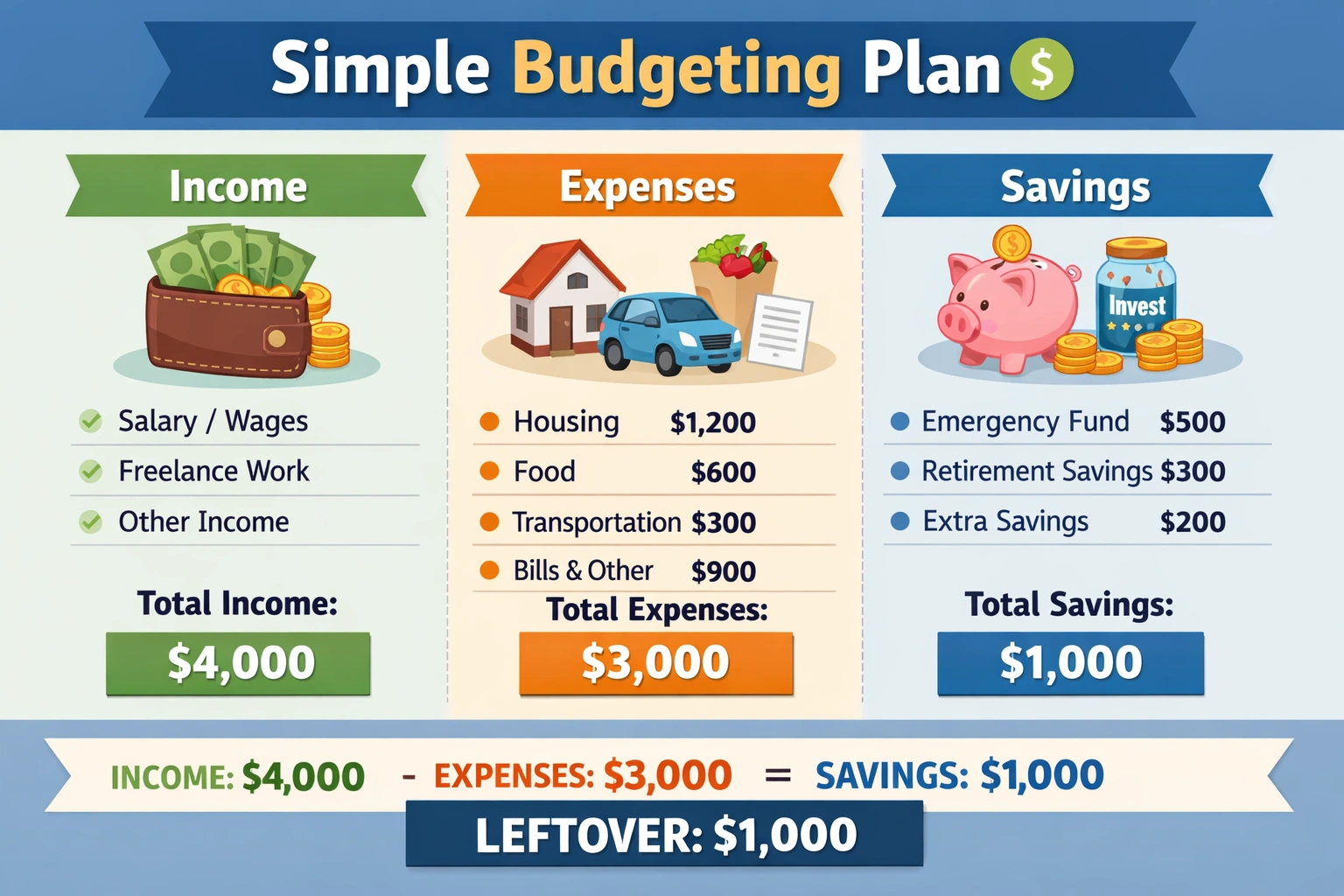
A simple table can help:
| Category | Monthly Amount |
|---|---|
| Net Income | $2,500 |
| Fixed Expenses | $1,300 |
| Variable Expenses | $800 |
| Remaining | $400 |
Step 2: Choose a Budgeting Method That Fits Your Life
There is no universal formula. The best budget is the one you can stick to.
The 50/30/20 Budget (Beginner-Friendly)
- 50% Needs (housing, food, transport)
- 30% Wants (lifestyle, entertainment)
- 20% Savings & Investing
This method works well for stable incomes and is often recommended by personal finance experts.
Zero-Based Budget (Maximum Control)
Every dollar has a job:
- Income – Expenses – Savings = $0
Ideal for:
- Debt repayment
- Tight financial situations
Pay-Yourself-First Budget (Wealth-Focused)
Savings and investments come before spending.
- Automate investments
- Build long-term passive income
As Warren Buffett famously said:
“Do not save what is left after spending, but spend what is left after saving.”
Step 3: Set Clear Financial Goals
A budget without goals is just accounting.
Short-Term Goals (0–12 months)
- Emergency fund
- Paying off credit cards
- Vacation savings
Long-Term Goals (5–20 years)
- Investing in index funds
- Buying property
- Financial independence
Aligning your budget with goals transforms it from a chore into a wealth-building tool.
Step 4: Automate and Simplify Your Budget
Use Automation to Stay Consistent
- Automatic bill payments
- Scheduled savings transfers
- Investment auto-contributions
Automation reduces emotional decision-making, a key concept in modern financial planning.
Keep It Simple
A budget should take:
- Minutes to review weekly
- One deep review per month
If it feels exhausting, it won’t last.
Step 5: Adjust Your Budget as Life Changes
Budgets are not static.
Review monthly:
- Income changes
- Inflation impact
- Lifestyle shifts
Markets move, expenses rise, and priorities evolve. A flexible budget adapts without breaking.
“Financial planning is not about predicting the future, but preparing for it.”
How Budgeting Supports Investing and Passive Income
A working budget creates:
- Capital for investing
- Stability during market volatility
- Consistency in long-term wealth accumulation
Without a budget:
- Investing becomes emotional
- Savings remain inconsistent
- Financial stress increases
A simple budget is the foundation of every successful investor.
Common Budgeting Mistakes to Avoid
- Underestimating variable expenses
- Ignoring irregular costs (annual fees, repairs)
- Being too restrictive
- Not budgeting for fun
A budget that removes joy will fail.
Conclusion: Key Takeaways and Practical Actions
Learning how to create a budget doesn’t require complex spreadsheets or extreme discipline. It requires:
- Awareness of cash flow
- A realistic budgeting method
- Clear financial goals
- Consistent review and adjustment
Practical Actions You Can Take Today
- Track one month of expenses
- Choose one budgeting method
- Automate savings
- Review your budget monthly
A simple budget, applied consistently, is one of the most powerful tools in personal finance.