Introduction
For many people, money feels like something you earn, spend, and hope is enough when you need it. Investing changes that relationship. Instead of money sitting still, it starts working for you over time. That is why investing for beginners has become one of the most important financial topics today. Rising living costs, longer life expectancy, and uncertain job markets mean that saving alone is often not enough anymore.
If you have ever felt that investing is only for experts, rich people, or Wall Street professionals, you are not alone. The truth is that investing is far more accessible than it appears. You do not need complex math, insider knowledge, or large sums of money to get started. What you do need is a clear understanding of the basics, realistic expectations, and a long-term mindset.
In this guide, you will learn what investing really is, why it matters in everyday life, and how beginners can start safely and confidently. We will explain key financial terms in plain English, walk through common investment options, discuss risks honestly, and show how time can be your greatest advantage. By the end, you will understand how to build a simple investment approach that fits your goals, income, and comfort level, without feeling overwhelmed or rushed.
Table of Contents
What Investing Really Means and Why It Matters
At its core, investing means putting your money into assets with the expectation that they will grow in value or generate income over time. An asset can be something like a company share, a bond, or a piece of real estate. Unlike saving, where money is kept safe but mostly static, investing accepts some level of risk in exchange for the potential of higher returns.
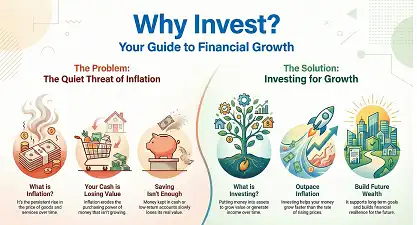
The reason investing matters is inflation. Inflation simply means that prices tend to rise over time, which reduces the purchasing power of your money. According to data from the International Monetary Fund (IMF), inflation has been a persistent global challenge, especially in recent years. When money sits in cash earning little or no return, it slowly loses value in real terms. Investing helps counteract this effect by aiming for growth that exceeds inflation.
For beginners, investing is less about quick profits and more about long-term progress. Historically, diversified stock markets have delivered positive returns over long periods, despite short-term ups and downs. This is supported by long-term research shared by institutions like the Federal Reserve and educational platforms such as Investopedia. Investing matters because it helps build financial resilience, supports future goals, and reduces dependence on a single income source.
Investing vs Saving: Understanding the Difference
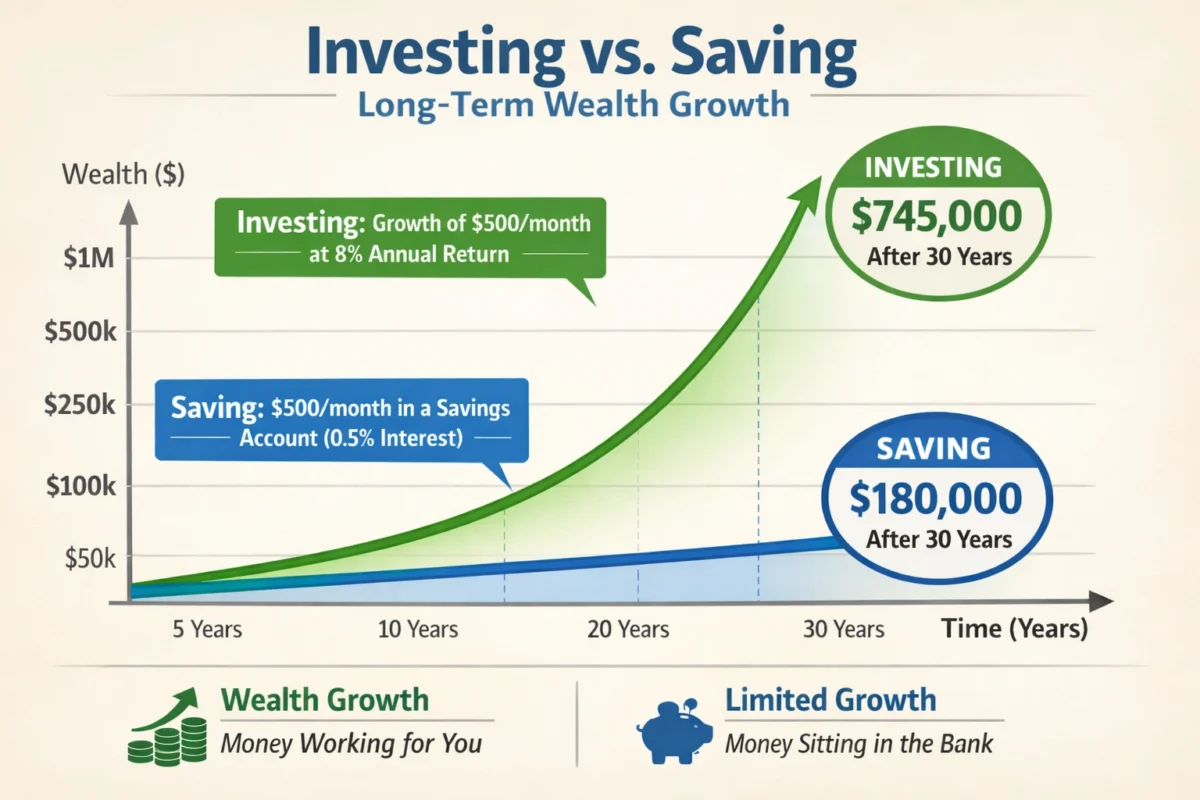
Saving and investing often get confused, but they serve different purposes. Saving is about protecting money for short-term needs and emergencies. Investing is about growing money for long-term goals. Both are essential, and one should not fully replace the other.
When you save, you typically use tools like bank accounts or money market funds. These are low risk, but they usually offer low returns. Investing involves assets that can fluctuate in value, such as stocks or bonds, but historically offer higher long-term returns. Understanding this difference helps beginners avoid common mistakes, such as investing money that may be needed soon.
A good financial foundation usually starts with an emergency fund, often covering three to six months of expenses. Once that safety net exists, investing becomes more appropriate. Many central banks, including the Federal Reserve, emphasize this balance between liquidity and long-term growth in their financial education materials.
| Aspect | Saving | Investing |
|---|---|---|
| Risk level | Very low | Low to high |
| Time horizon | Short term | Long term |
| Typical return | Low | Higher over time |
| Purpose | Safety and liquidity | Growth and income |
Common Investment Options Explained Simply
Beginners often feel overwhelmed by the number of investment choices. The key is understanding the main categories rather than every product. Each option has its own risk level, return potential, and role in a portfolio.
Stocks represent ownership in a company. When the company grows and earns profits, shareholders may benefit through rising share prices or dividends, which are cash payments to shareholders. Bonds are loans you give to governments or companies. In return, you receive interest payments and your original money back at maturity. Bonds are generally less risky than stocks but offer lower returns.
Funds, such as mutual funds and exchange traded funds (ETFs), pool money from many investors to buy a diversified mix of assets. This diversification reduces risk compared to buying individual stocks. Real estate investing involves property ownership or real estate funds, offering income and potential appreciation but often requiring more capital.
| Investment Type | Risk Level | Potential Return | Beginner Friendly |
|---|---|---|---|
| Stocks | Medium to high | High long term | Medium |
| Bonds | Low to medium | Low to moderate | High |
| ETFs and funds | Low to medium | Moderate | Very high |
| Real estate | Medium | Moderate to high | Medium |
Risk, Volatility, and Why They Are Not the Same
Risk and volatility are often used interchangeably, but they mean different things. Volatility refers to how much an investment’s price moves up and down in the short term. Risk is the possibility of losing money permanently. For beginners, understanding this distinction is critical.
Stock markets can be volatile. Prices may drop sharply during economic crises or global events. However, long-term data from organizations like Morningstar shows that diversified markets tend to recover over time. The real risk for beginners often comes from emotional decisions, such as panic selling during downturns or chasing hype during market booms.
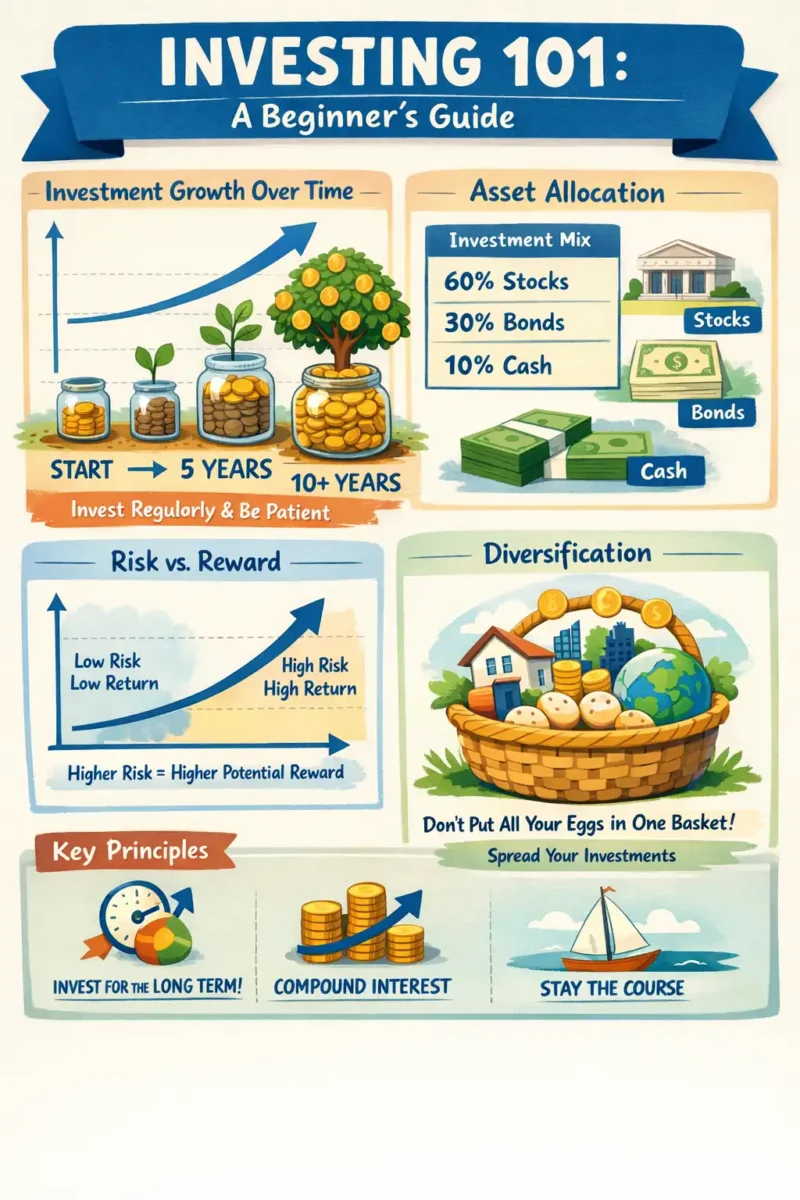
Managing risk does not mean avoiding it entirely. It means choosing investments that match your time horizon and tolerance. A young investor saving for retirement decades away can usually handle more volatility than someone investing for a goal in two years. Diversification, spreading money across different assets, is one of the most effective ways to reduce risk.
The Power of Time and Compounding for Beginners
Compounding is one of the most powerful concepts in investing. It means earning returns on both your original investment and the returns it has already generated. Over time, this creates exponential growth. Albert Einstein reportedly called compounding the eighth wonder of the world, and while the quote is debated, the principle is undeniably powerful.
For beginners, time matters more than timing. Trying to predict market highs and lows is extremely difficult, even for professionals. Research from institutions like Vanguard shows that staying invested over long periods generally outperforms frequent trading. Starting early allows compounding to work longer, even if the initial amounts are small.
Consider two investors. One starts investing a small amount early and stays consistent. The other starts later but invests more aggressively. Often, the early starter ends up with similar or better results due to compounding. This is why investing for beginners should focus on consistency, patience, and long-term commitment rather than quick wins.
| Years Invested | Monthly Investment | Estimated Growth Impact |
|---|---|---|
| 10 years | Small | Limited compounding |
| 20 years | Small | Strong compounding |
| 30 years | Small | Very powerful compounding |
How to Build a Simple Beginner Investment Strategy
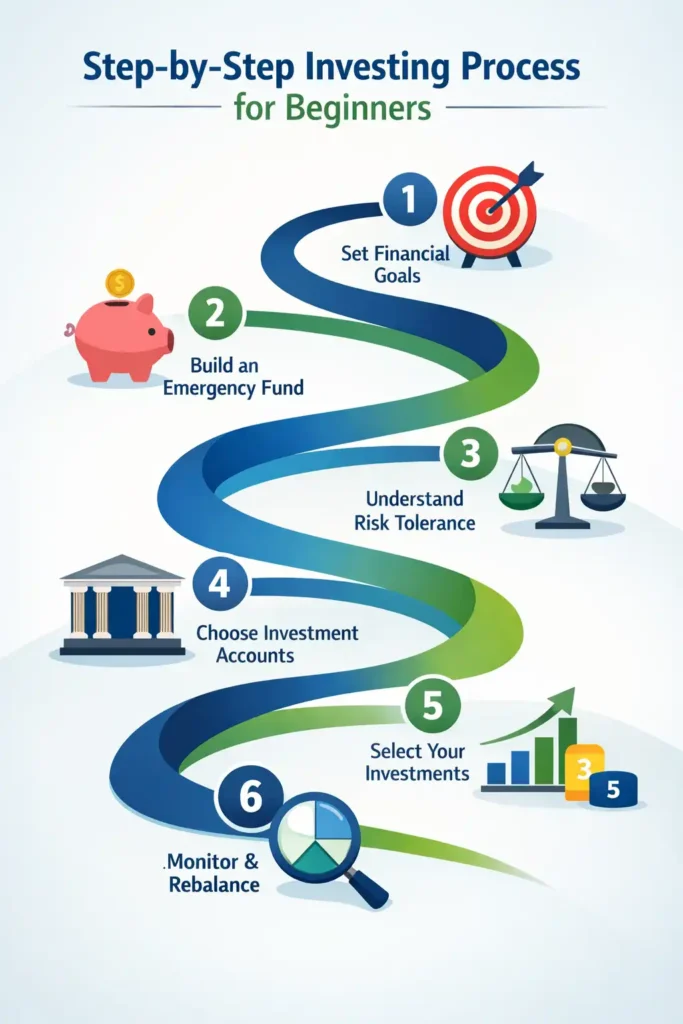
A beginner investment strategy does not need to be complex. Simplicity often leads to better results because it reduces emotional mistakes. The first step is defining your goal. Are you investing for retirement, a home, or long-term wealth? The goal determines the time horizon and appropriate risk level.
Next comes asset allocation, which means deciding how much to invest in different asset types. A common beginner approach is using diversified funds that automatically spread risk across many companies and sectors. Many financial educators, including those referenced by the OECD, recommend low-cost index funds for beginners because of their simplicity and transparency.
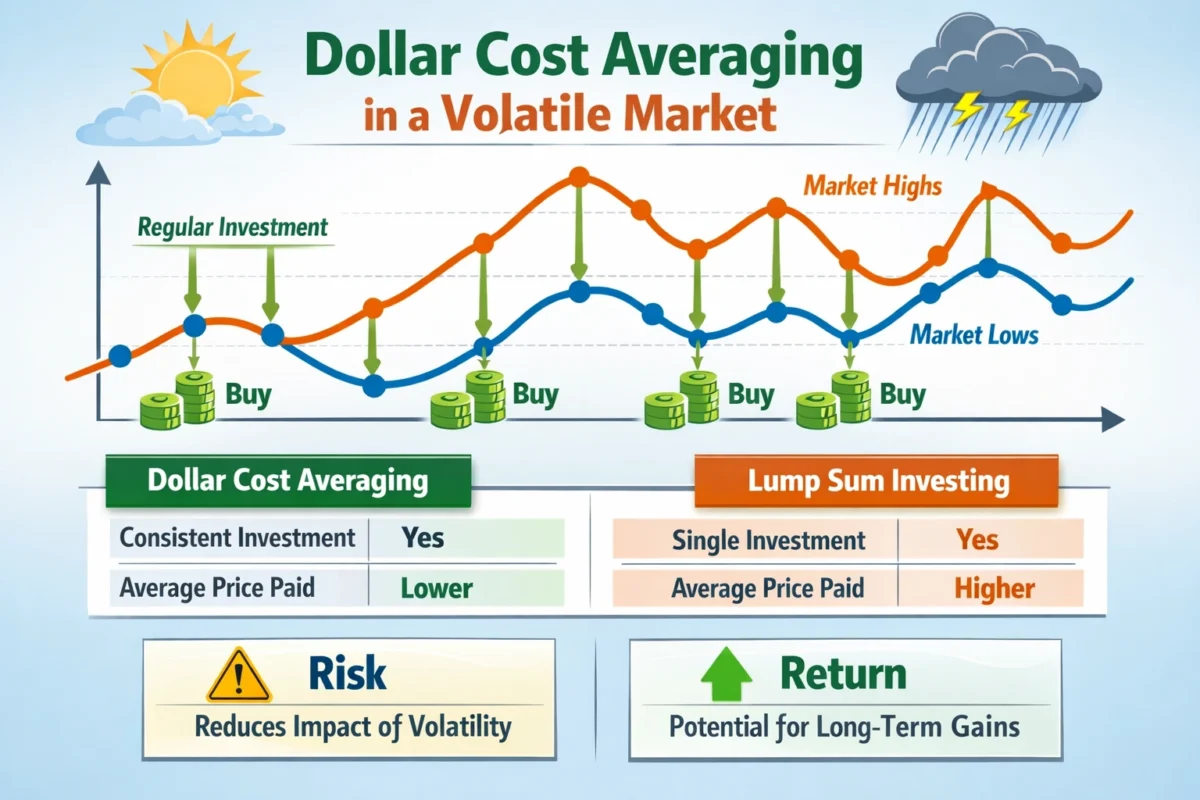
Regular contributions are another key element. Investing a fixed amount consistently, sometimes called dollar cost averaging, reduces the impact of market timing. Finally, review your strategy periodically, not daily. Long-term investing benefits from patience and discipline more than constant adjustments.
Common Beginner Mistakes and How to Avoid Them
Most investing mistakes are behavioral, not technical. Beginners often expect quick results and feel discouraged by normal market fluctuations. Another common mistake is overconfidence after short-term success, which can lead to excessive risk-taking.
Chasing trends is also dangerous. When an investment becomes popular, prices often already reflect high expectations. Buying at that stage increases the risk of disappointment. Reliable sources like Investopedia regularly highlight how emotional investing harms long-term returns.
Avoiding these mistakes starts with education and realistic expectations. Investing is a long journey, not a sprint. Having a written plan, sticking to diversification, and limiting how often you check your portfolio can significantly improve outcomes.
| Mistake | Why It Hurts | Better Approach |
|---|---|---|
| Panic selling | Locks in losses | Stay invested |
| Trend chasing | Buying high | Focus on fundamentals |
| Overtrading | Higher costs | Keep it simple |
| Ignoring fees | Reduces returns | Use low-cost funds |
Long-Term Implications of Investing for Beginners
Investing has implications beyond personal wealth. On an individual level, it supports financial independence, flexibility, and peace of mind. On a broader scale, investing channels capital into businesses, innovation, and economic growth. This is why institutions like the World Bank emphasize capital markets as drivers of development.
For beginners, the long-term impact of investing is often underestimated. Small, consistent actions compound into meaningful outcomes. Over decades, investing can help offset inflation, supplement retirement income, and provide financial security for families.
However, investing also requires responsibility. Understanding risks, avoiding excessive leverage, and staying informed are essential. Long-term success is not about predicting the future but about preparing for it thoughtfully.
Conclusion
Investing does not have to be intimidating, complex, or reserved for experts. At its heart, it is a practical tool for building a more secure financial future. This guide to investing for beginners has shown that the fundamentals are approachable, logical, and grounded in long-term thinking rather than short-term speculation.
The most important takeaway is that investing is a process, not a one-time decision. It starts with understanding why investing matters, especially in a world shaped by inflation and economic uncertainty. It continues with learning the difference between saving and investing, choosing appropriate assets, and respecting the role of risk and volatility. Over time, the power of compounding rewards patience and consistency more than clever predictions.
For beginners, the best next step is often the simplest one. Build an emergency fund, choose a diversified investment option, start with an amount you are comfortable with, and commit to learning gradually. Reliable sources such as central banks, the IMF, and respected financial education platforms provide ongoing guidance and data to support informed decisions.
Investing is not about being perfect. It is about being prepared, disciplined, and realistic. When approached thoughtfully, it becomes less about fear and more about confidence. Over the long run, that confidence can translate into financial stability, independence, and the freedom to focus on what truly matters in life.
Frequently Asked Questions
Is investing for beginners risky?
All investing involves some risk, but beginners can manage it through diversification, long-term planning, and choosing appropriate assets. Risk becomes more manageable when investments match your goals and time horizon.
How much money do I need to start investing?
Many platforms allow beginners to start with small amounts. What matters more than the initial sum is consistency and time in the market.
Should beginners invest during market downturns?
Market downturns can feel scary, but they are a normal part of investing. For long-term investors, downturns may offer opportunities, especially when contributions remain consistent.
How often should beginners check their investments?
Checking too often can increase stress and lead to emotional decisions. Periodic reviews, such as quarterly or annually, are usually sufficient.
Can investing for beginners replace saving?
No. Saving and investing serve different purposes. A healthy financial plan includes both short-term savings and long-term investments.
If you found this guide helpful, consider subscribing for more clear and practical insights on personal finance and investing. Feel free to share your thoughts or questions in the comments and tell us if this article added value to your understanding.