
The world of digital finance is on the cusp of a monumental transformation, and at its heart lies the future of stablecoins. Once a niche asset class for crypto-native users, stablecoins are rapidly maturing into a cornerstone of the global payments system. The year 2026 is set to be a watershed moment, as landmark regulations in the United States and the European Union come into full effect, fundamentally reshaping how these digital dollars are issued, managed, and used. For anyone with digital savings, understanding the nuances of stablecoin regulation 2026 is no longer optional—it is essential for navigating the future of money. This article will explore the key regulatory frameworks being implemented, analyze their direct impact on the safety and utility of your digital assets, and provide a clear-eyed view of what to expect in this new era of regulated digital currency.
Table of Contents
The New Rules of the Game: A Global Regulatory Awakening
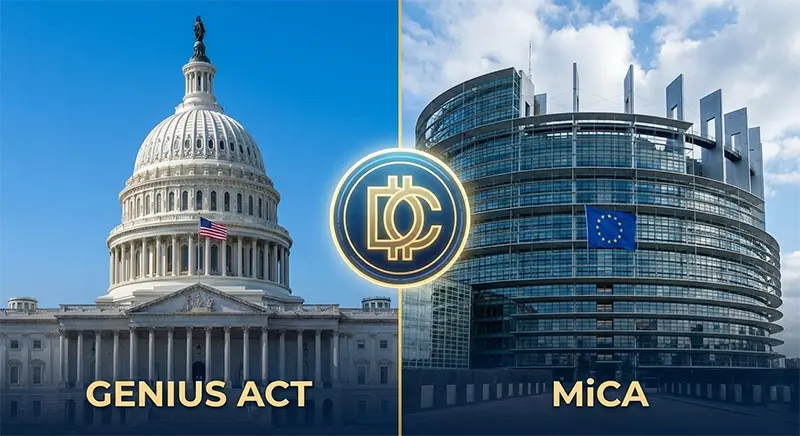
The era of regulatory ambiguity for stablecoins is officially over. In a coordinated, albeit distinct, push for oversight, the world’s leading economic blocs have laid down the law. In the United States, the Guiding and Establishing National Innovation for US Stablecoins (GENIUS) Act, enacted in July 2025, provides a comprehensive federal framework for payment stablecoins [1]. This legislation mandates that all USD-backed stablecoins be fully collateralized by high-quality, liquid assets such as fiat currency and short-term US Treasuries. It imposes strict capital and liquidity requirements on issuers, bringing them under a prudential regulatory regime akin to traditional financial institutions. A critical provision of the GENIUS Act is the prohibition on paying interest on stablecoin holdings, a measure designed to prevent a mass exodus of deposits from the traditional banking system, thereby safeguarding its crucial role in credit creation. This regulatory clarity is a double-edged sword; while it fortifies the stability and credibility of compliant stablecoins, it also fundamentally alters their risk and reward profile for savers.
Across the Atlantic, the European Union’s Markets in Crypto-Assets (MiCA) Regulation began its enforcement in early 2025, creating a harmonized framework across its 27 member states [2]. MiCA establishes a clear taxonomy for crypto-assets, with stringent rules for stablecoin issuers, known as e-money token (EMT) issuers. The regulation has created a binary market; only MiCA-compliant stablecoins can be offered to EU citizens, leading to the delisting of non-compliant assets from major exchanges. This has propelled compliant tokens like Circle’s EURC to market dominance, capturing over 40% of the euro stablecoin market share. For European savers, this means a safer, more standardized market, but also a more concentrated one. The convergence of these major regulatory frameworks signals a global consensus: stablecoins are too significant to remain in the regulatory shadows. The changes they bring in 2026 will directly influence the security, utility, and growth potential of digital savings worldwide.
| Regulatory Framework | Key Jurisdiction | Primary Focus | Impact on Savers |
|---|---|---|---|
| GENIUS Act | United States | Full backing with USD reserves, no interest payments | Enhanced security, no yield generation, potential for increased systemic interest rate risk. |
| MiCA Regulation | European Union | Harmonized rules for issuers, consumer protection | Increased safety and standardization, reduced choice due to delisting of non-compliant assets. |
Your Digital Savings in 2026: What Changes and What Stays the Same

The practical implications of stablecoin regulation 2026 on your digital savings are profound, touching everything from asset safety to growth potential. The most significant change is the dramatic enhancement of security and trust. With regulations like the GENIUS Act and MiCA mandating full, high-quality reserves and subjecting issuers to rigorous oversight, the risk of a Terra/Luna-style collapse of a major regulated stablecoin is significantly diminished. Your digital dollars will be backed by more than just a promise; they will be supported by audited, liquid assets. This newfound stability is expected to unlock a wave of institutional adoption, with projections suggesting the stablecoin market could surpass $3 trillion by 2030 [1]. However, this security comes at the cost of yield. The prohibition of interest payments on stablecoins in the US means that simply holding them will no longer generate passive income as it once did in the decentralized finance (DeFi) world. Savers will need to actively deploy their stablecoins in regulated lending protocols or other financial products to generate returns.
Furthermore, the distinction between regulated and unregulated stablecoins will become starker than ever. While regulated stablecoins will offer security and integration with the traditional financial system, a parallel ecosystem of unregulated, perhaps algorithmically-backed, stablecoins may continue to exist in the wilder corners of DeFi, offering higher risk and potentially higher rewards. For the average saver, the choice will be clearer: the regulated path offers safety and legitimacy, while the unregulated path carries significant, well-disclosed risks. The increased interoperability between stablecoins and traditional payment rails will also be a major benefit. Expect to see more seamless integration of stablecoins into everyday financial applications, from cross-border payments to e-commerce, making your digital savings more liquid and useful than ever before. The core value proposition of a stable, digital dollar remains, but the environment in which it operates will be far more structured, secure, and integrated into the global financial fabric.
| Feature | Pre-Regulation Era | Post-Regulation (2026) | Impact on Digital Savings |
|---|---|---|---|
| Security | High variability, issuer-dependent | High, mandated by law | Lower risk of asset de-pegging and loss of funds. |
| Yield | Possible via DeFi protocols and some issuers | Prohibited for US issuers, requires active deployment | Savers must seek yield through regulated financial products. |
| Utility | Primarily within crypto ecosystem | Integrated with traditional finance | Increased liquidity and real-world use cases for payments. |
| Choice | Wide range of regulated and unregulated options | Clear distinction, regulated options favored | Safer choices, but potentially lower returns and less diversity. |
Conclusion: A More Mature and Secure Future for Digital Assets
The dawn of comprehensive stablecoin regulation 2026 marks the end of the beginning for digital currencies. The wild west era is giving way to a more mature, structured, and ultimately safer financial landscape. For individuals holding digital savings, this transition brings a wealth of benefits, primarily in the form of enhanced security and reduced counterparty risk. The knowledge that your stablecoins are backed by audited, liquid reserves provides a level of confidence that was previously lacking. This regulatory clarity will not only protect consumers but also pave the way for broader institutional adoption, further legitimizing stablecoins as a core component of the modern financial system. The integration with traditional payment rails will make digital assets more practical for everyday use, transforming them from a speculative instrument into a viable medium of exchange and store of value.
However, this new era also requires a shift in mindset. The days of earning high, passive yields simply by holding stablecoins are likely numbered, especially in jurisdictions like the United States. Savers will need to become more active and sophisticated in how they manage their digital assets, seeking out regulated and compliant avenues for generating returns. The financial landscape will be more complex, with a clear dividing line between the regulated and unregulated crypto worlds. The most prudent path forward is one of education and careful decision-making. By understanding the new rules of the game, embracing the enhanced security they provide, and thoughtfully exploring the new opportunities for growth, you can position your digital savings to thrive in this exciting and transformative period for global finance.
FAQ
Will the government be able to freeze my stablecoins?
Under the new regulatory frameworks, stablecoin issuers will be subject to the same legal and regulatory obligations as traditional financial institutions. This means they will be required to comply with court orders and law enforcement requests, which could include freezing assets linked to illicit activities. For the vast majority of law-abiding citizens, this is unlikely to be a direct concern.
Can I still earn interest on my stablecoins in 2026?
The GENIUS Act in the United States prohibits stablecoin issuers from paying interest. To earn a yield on your stablecoins, you will likely need to lend them out through regulated financial platforms or use them in other compliant financial products. The rules may differ in other jurisdictions, but the trend is towards separating the functions of money issuance and credit intermediation.
Are my digital savings safer now?
Yes. The new regulations in both the US and EU are specifically designed to increase the safety and stability of stablecoins. By mandating full backing with high-quality reserves and imposing strict oversight on issuers, the risk of a major regulated stablecoin collapsing is significantly reduced. However, it is important to remember that no asset is entirely without risk.
What is the difference between a CBDC and a regulated stablecoin?
A Central Bank Digital Currency (CBDC) is a direct liability of the central bank, making it the digital equivalent of cash. A regulated stablecoin, while subject to strict government oversight, is a liability of the private entity that issues it. This means that even with regulation, stablecoin holders are still exposed to issuer bankruptcy risk, a risk that does not exist with a CBDC.
Will these regulations stifle innovation in the crypto space?
This is a key debate. Regulators argue that clear rules of the road will foster innovation by providing certainty and attracting institutional capital. Critics worry that overly restrictive rules could stifle the permissionless innovation that has characterized the crypto space. The long-term impact will depend on how these regulations are implemented and whether they can strike a balance between managing risk and fostering growth.
We hope this article has provided you with a clear understanding of the upcoming changes in stablecoin regulation. We encourage you to subscribe to our newsletter for ongoing insights into the evolving world of digital finance. Have questions or comments? Join the discussion below!
References
[1] State Street. (2025, July). The stablecoin moment. https://www.statestreet.com/us/en/insights/stablecoin-moment
[2] Utila. (2025, December 17). Euro Stablecoin Landscape: Trends and Insights for 2026. https://utila.io/blog/euro-stablecoin-report-what-mica-means-for-fintechs/
[3] American Bankers Association. (2026, January 6). CBC Stablecoin Letter. https://www.aba.com/about-us/press-room/press-releases/cbc-stablecoin-letter
[4] World Economic Forum. (2026, January 7). Stablecoins: how interoperability will define global finance. https://www.weforum.org/stories/2026/01/stablecoins-bridge-not-a-threat-why-interoperability-will-define-future-global-finance/
[5] Tax Notes. (2026, January 2). Tax Professionals Hope for New Stablecoin Stance in 2026. https://www.taxnotes.com/featured-news/tax-professionals-hope-new-stablecoin-stance-2026/2026/01/02/7tf46