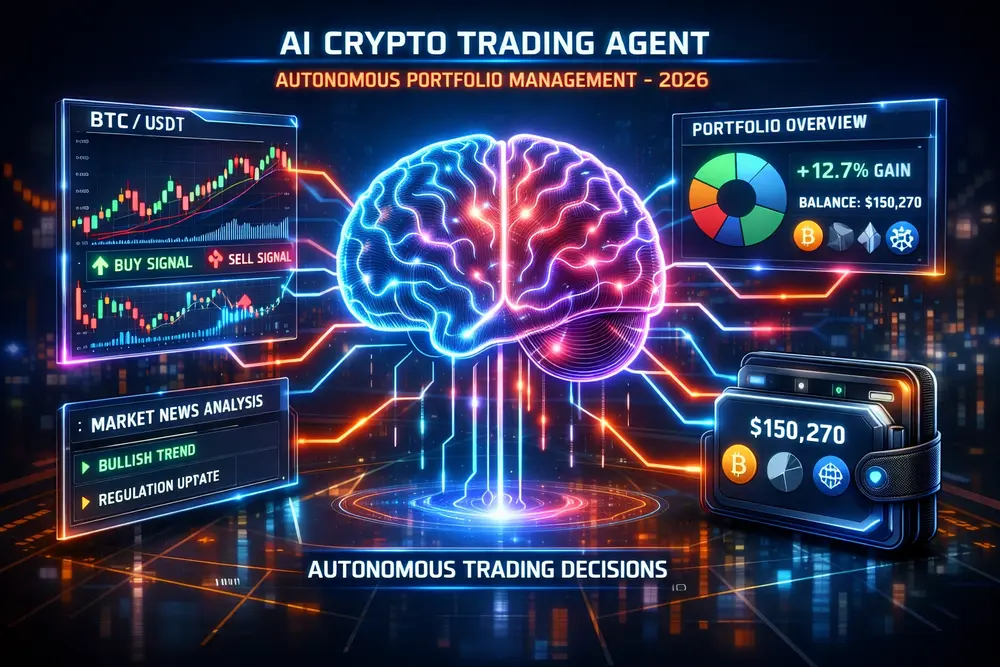
The world of finance is no stranger to technological disruption, but the current wave of artificial intelligence is fundamentally different. It is not just about faster calculations or more efficient data processing; it is about the creation of autonomous, self-improving entities capable of making complex, real-time decisions. This is the era of the AI crypto trading agents, and by 2026, they are poised to become the dominant force in digital asset markets. The shift from simple, rule-based trading bots to sophisticated, agentic AI systems marks a profound turning point for investors, promising unprecedented levels of portfolio automation and efficiency. This article will explore why this technology matters today, how these agents function, the strategies they employ, and the essential risks every modern investor must understand to navigate the markets of tomorrow.
Table of Contents
From Simple Bots to Autonomous AI Agents: Understanding the Evolution
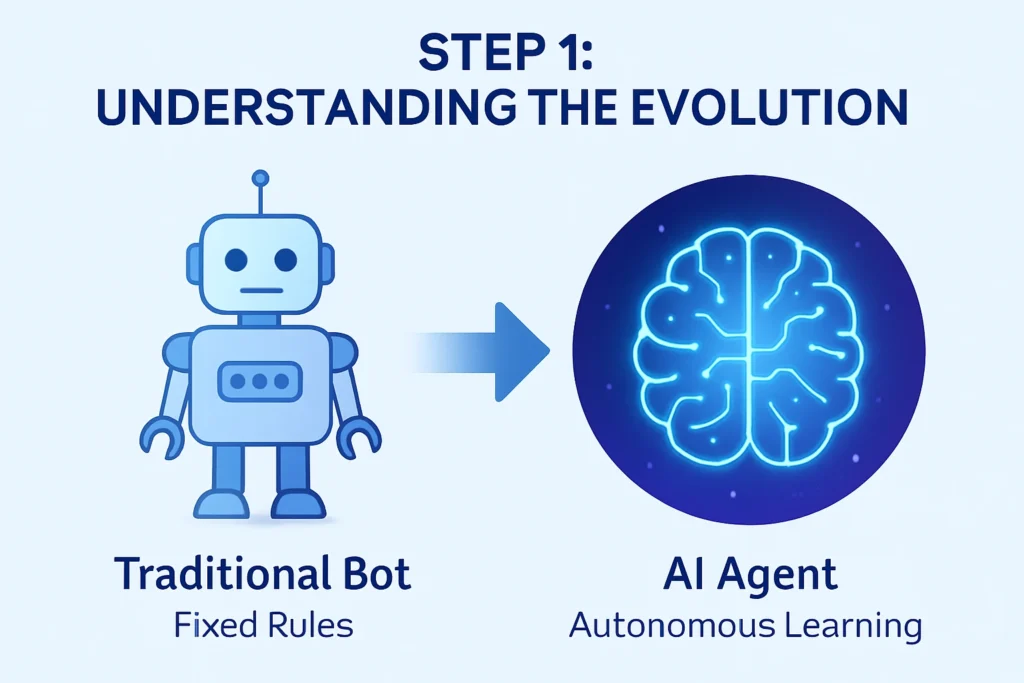
For years, automated trading in the crypto space was dominated by simple algorithmic bots. These systems operated on a rigid, conditional logic: “If the Relative Strength Index (RSI) drops below 30, then buy.” They were fast, they were emotionless, but they were ultimately predictable and brittle. They could not adapt to sudden market regime shifts, interpret nuanced global news, or learn from their own mistakes. This is precisely why the emergence of AI crypto trading agents represents a generational leap in financial technology.
The new generation of AI agents are built on large language models (LLMs) and advanced machine learning frameworks, granting them the ability to observe, interpret, and act autonomously [1]. Unlike their predecessors, these agents can process unstructured data, such as news sentiment from social media platforms or complex on-chain transaction patterns, to form a holistic view of the market. They are not just executing pre-programmed instructions; they are engaging in a continuous cycle of learning and adaptation. When an agent makes a trade, the outcome is immediately fed back into its model as training data, allowing it to refine its strategy in real-time. This self-training capability means that while a traditional bot repeats the same fixed strategy until it fails, an AI agent evolves, constantly seeking an edge in an ever-changing market. This fundamental difference is what makes them so disruptive, transforming the trading landscape from a human-versus-human competition into a human-versus-machine, or more accurately, a machine-versus-machine environment. The investor’s role shifts from active trader to strategic overseer, defining the agent’s high-level goals and risk parameters rather than micromanaging every trade.
| Feature | Traditional Trading Bot | AI Crypto Trading Agent |
|---|---|---|
| Core Logic | Fixed, rule-based (IF/THEN) | Adaptive, machine learning models (LLMs, Neural Networks) |
| Data Input | Price, volume, technical indicators | Price, volume, on-chain data, news sentiment, social media |
| Adaptability | Low; requires manual reprogramming for new conditions | High; self-trains and adapts to new market regimes in real-time |
| Decision-Making | Mechanical, predictable execution | Autonomous, probabilistic, and complex decision-making |
| Goal | Execute a specific, pre-defined strategy | Optimize portfolio performance based on high-level goals and risk tolerance |
Why Crypto is the Perfect Laboratory for AI Agents
The cryptocurrency market possesses a unique set of characteristics that make it an ideal environment for the rapid development and deployment of AI crypto trading agents. Traditional financial markets, while increasingly digitized, still operate within constraints that limit the full potential of autonomous AI. These include limited trading hours, slow settlement times, and a fragmented data landscape. Crypto, however, is the antithesis of this structure, offering a fertile ground where AI can truly thrive.
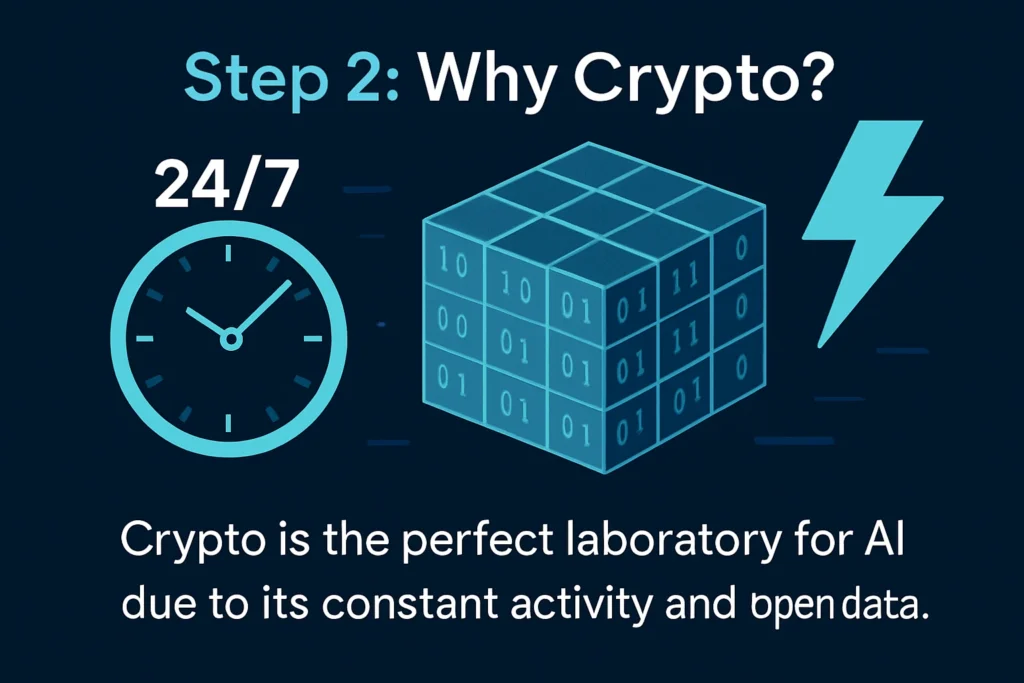
The most significant advantage is the 24/7 nature of the market. Crypto never sleeps, and neither do the AI agents. While human traders are limited by time zones and the need for rest, an autonomous agent can monitor, analyze, and execute trades around the clock, capturing opportunities that arise at any moment. Furthermore, the public, open, and real-time nature of blockchain data provides an unparalleled training ground. Every transaction, every liquidity pool movement, and every smart contract interaction is recorded on a public ledger, offering a massive, transparent, and constantly updating stream of information. This on-chain data is the lifeblood of an AI agent, allowing it to detect “whale” movements, track liquidity rotations, and predict potential market shifts with a level of granularity impossible in traditional markets. Finally, the composable infrastructure of decentralized finance (DeFi) allows AI agents to interact directly with protocols, exchanges, and lending platforms without intermediaries. They can execute cross-chain arbitrage, manage yield farming strategies, and rebalance portfolios across multiple decentralized exchanges (DEXs) with unparalleled speed and gas efficiency, making the crypto space not just suitable for AI trading, but its ultimate proving ground [2].
- 24/7 Global Access: AI agents can trade continuously, eliminating human latency and time zone limitations.
- Transparent On-Chain Data: Public ledgers provide a rich, real-time data source for training and analysis.
- Permissionless Execution: Agents can interact directly with smart contracts and DeFi protocols without gatekeepers.
- High Volatility: The rapid price movements in crypto reward the speed and non-emotional decision-making of AI systems.
The Mechanics of an AI Crypto Trading Agent
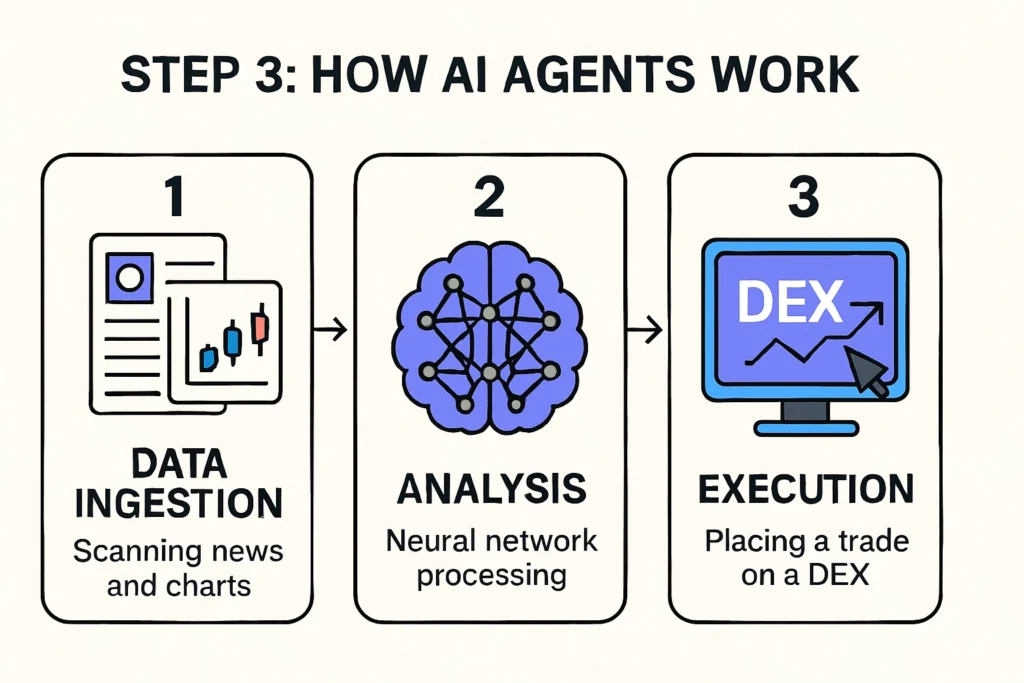
To truly understand the power of these systems, one must look beneath the hood at the sophisticated mechanisms that drive them. An AI crypto trading agent is not a single piece of software but a complex, multi-layered system designed to mimic and exceed the capabilities of a human analyst, portfolio manager, and execution trader combined. The process can be broken down into two critical phases: data ingestion and analysis, and autonomous execution and learning.
Data Ingestion and Analysis
The first and most crucial step for any AI agent is to gather and interpret data. This goes far beyond simple price feeds. The agent is constantly ingesting three primary types of information: market data, on-chain data, and sentiment data. Market data includes the standard price, volume, and order book information, but on-chain data is where the agent gains its true edge. It monitors blockchain explorers for large, unusual transactions (often called “whale” movements), tracks the flow of stablecoins into and out of exchanges, and analyzes the total value locked (TVL) in various DeFi protocols. This allows the agent to anticipate shifts in market liquidity and sentiment before they are reflected in the price [3]. Simultaneously, the agent uses natural language processing (NLP) models to scan news feeds, social media platforms like X (formerly Twitter), and even developer forums like GitHub for changes in sentiment. A sudden surge in negative mentions of a project, or a critical bug fix being committed to a repository, can be instantly flagged and factored into the agent’s risk model. This comprehensive, multi-modal data analysis is what allows the agent to form a high-conviction trading thesis.
Autonomous Execution and Learning
Once a trading thesis is formed, the agent moves to the execution phase. This is where the “agentic” nature truly shines. The system is designed to execute trades not just quickly, but intelligently, often employing strategies to minimize market impact, a process known as smart order routing. For instance, instead of executing a single large trade on one exchange, the agent might split the order across multiple decentralized exchanges (DEXs) and liquidity pools to get the best possible price and reduce slippage. Crucially, the agent is not static. After every trade, the outcome is evaluated against the agent’s initial prediction. If the trade was profitable, the underlying model is reinforced; if it resulted in a loss, the model is penalized and adjusted. This is the core of the machine learning loop, where the agent is constantly self-training and adapting its parameters. In the most advanced setups, multiple specialized agents—such as an Analyst Agent, a Risk Agent, and an Execution Agent—work together in a multi-agent system, communicating and voting on the optimal course of action, creating a level of strategic depth no single human trader can match.
Automating Your Portfolio: Strategies for the AI Era
The rise of AI crypto trading agents is fundamentally changing the nature of portfolio management, moving it from a hands-on, emotionally charged activity to a strategic, automated process. For the modern investor, this means access to sophisticated strategies that were once the exclusive domain of institutional hedge funds. The automation provided by these agents allows for the continuous optimization of capital, ensuring that funds are always deployed where they can generate the highest risk-adjusted returns.
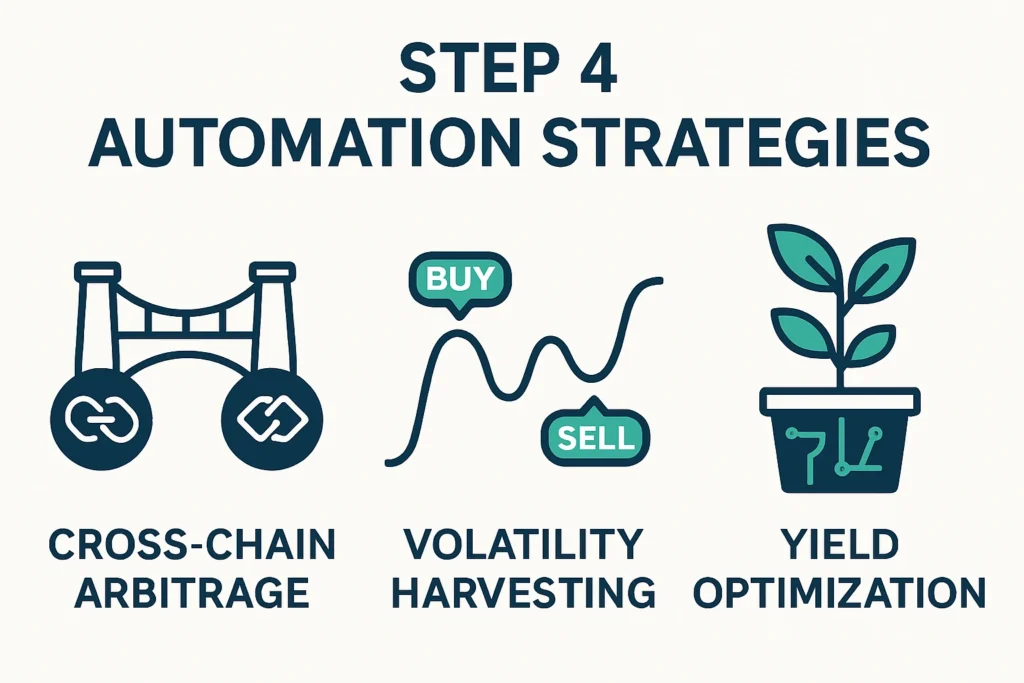
One of the most powerful applications is cross-chain arbitrage. Due to the fragmented nature of the crypto market, price discrepancies for the same asset can momentarily exist across different exchanges or blockchains. A human trader might take minutes to spot and execute such a trade, but an AI agent can identify and complete the entire transaction—including bridging assets between chains and paying gas fees—in a matter of seconds, making the arbitrage opportunity virtually risk-free and highly profitable. Another key strategy is volatility harvesting. While high volatility can be terrifying for human traders, AI agents are programmed to thrive in it. They can use complex options and derivatives strategies to profit from both upward and downward price swings, automatically adjusting their positions to maintain a neutral or directional bias based on their predictive models. Furthermore, agents excel at dynamic yield optimization in DeFi. They can constantly scan hundreds of lending protocols and liquidity pools, automatically moving an investor’s capital to the pool offering the highest sustainable yield, all while managing the associated smart contract risks. This level of continuous, high-frequency optimization is the essence of automated portfolio management in the AI era.
| Strategy | Description | Key Benefit for Automation |
|---|---|---|
| Cross-Chain Arbitrage | Exploiting momentary price differences for the same asset across different exchanges or blockchains. | Near-instant execution to capture fleeting opportunities. |
| Volatility Harvesting | Using derivatives (options, futures) to profit from price fluctuations in both directions. | Emotionless, high-frequency trading in volatile markets. |
| Dynamic Yield Optimization | Automatically moving capital between DeFi protocols to secure the highest available yield. | Continuous, 24/7 optimization of capital efficiency. |
| Whale Shadowing | Analyzing large on-chain transactions to anticipate market moves and position accordingly. | Predictive edge based on transparent blockchain data. |
The Unseen Risks: What Happens When AI Agents Compete?
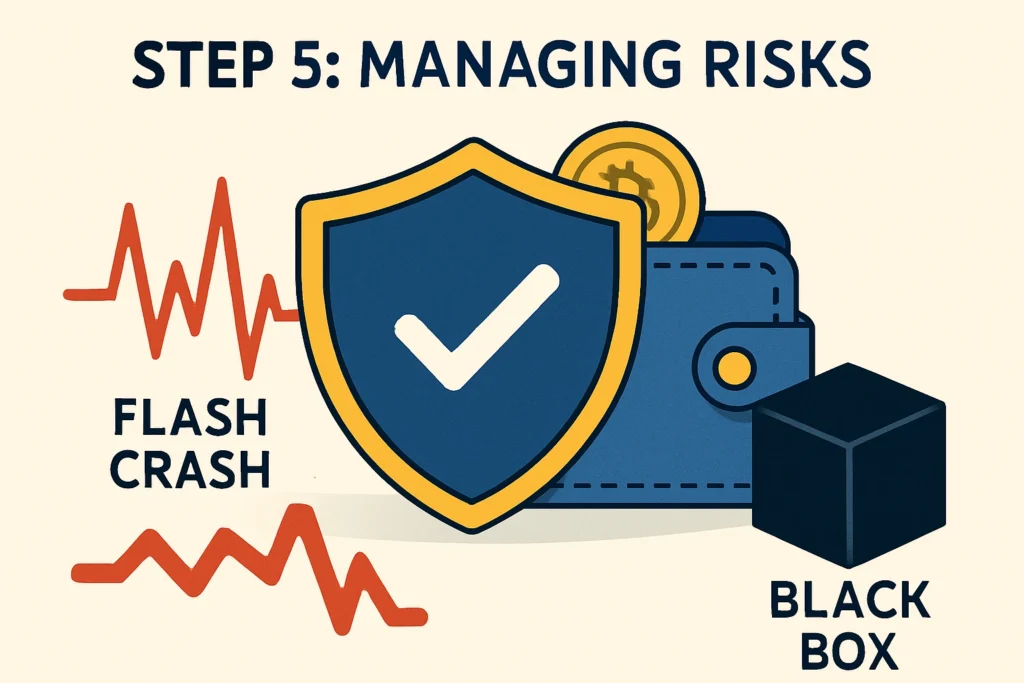
While the benefits of portfolio automation through AI crypto trading agents are clear, a senior economic analyst must also highlight the significant, systemic risks that accompany this technological shift. The primary concern is the potential for flash-crash-like events. When a large number of highly reactive, autonomous agents are all trained on similar data and programmed to respond to the same market signals, their collective, instantaneous reaction to a sudden event can create a dangerous feedback loop. A single, unexpected piece of news or a large, erroneous trade could trigger a cascade of sell orders from thousands of agents simultaneously, causing a rapid, severe, and temporary market collapse.
Another major risk is the “black-box” problem. The most advanced AI agents use deep learning models, where the decision-making process is so complex that even the developers cannot fully explain why the agent chose a particular trade. This lack of transparency makes it incredibly difficult to audit the agent’s behavior, diagnose errors, or predict its response in unprecedented market conditions. Investors are essentially trusting their capital to a system whose reasoning is opaque. Furthermore, as more agents enter the market, the risk of AI agents fighting each other increases. Strategy collisions, where one agent’s optimal move is another’s trigger for a counter-move, could lead to short-term chaos and increased market noise. Finally, the regulatory landscape is struggling to keep pace. As the International Monetary Fund (IMF) has noted, the rapid digitalization of finance, including the use of AI, presents new challenges for oversight and stability [4]. Governments and financial regulators will inevitably intervene, and sudden, unexpected regulatory changes could severely impact the profitability and legality of certain agent-driven strategies.
Preparing for 2026: A Roadmap for the Modern Crypto Investor
The shift toward autonomous markets is not a future possibility; it is a present reality that will accelerate dramatically by 2026. For the modern crypto investor, the key to success is not to fight the machines, but to understand and leverage them. The most important realization is that you are no longer competing with other human traders; you are competing with other people’s AI crypto trading agents. This necessitates a fundamental change in your investment approach.
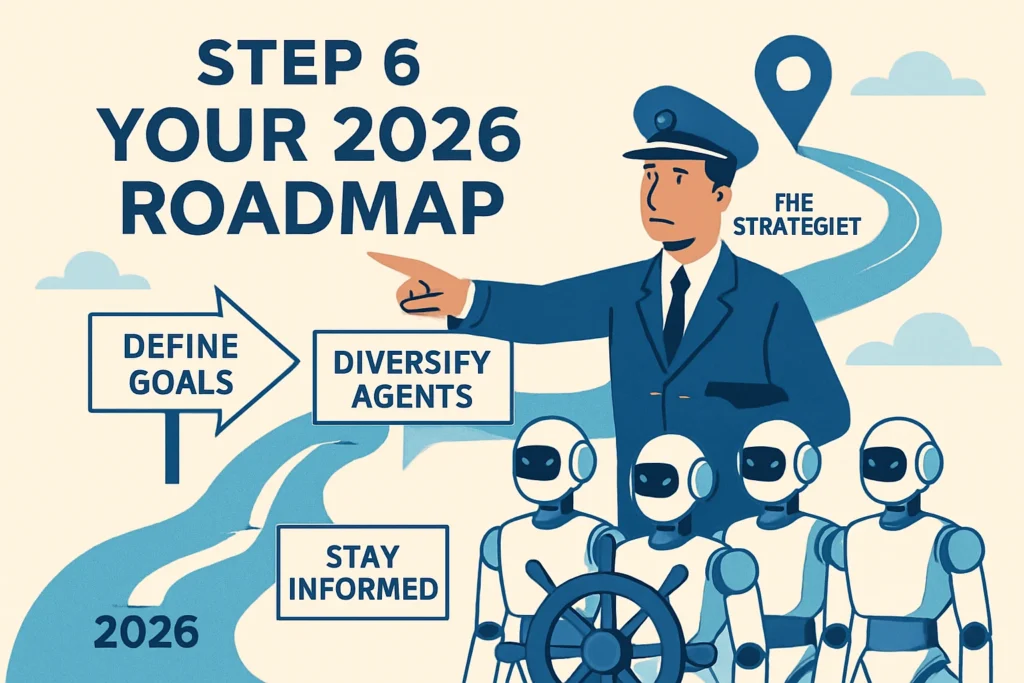
First, focus on strategic oversight, not tactical execution. Your time is better spent defining the high-level goals, risk tolerance, and ethical boundaries for your agent, rather than trying to beat it on a minute-by-minute basis. Second, prioritize agent diversity and robustness. Just as you would diversify your portfolio across different assets, you should consider diversifying your automation strategy across different agents or models. This mitigates the risk of a single black-box failure or a strategy collision. Third, stay informed about the underlying technology and regulatory developments. Understanding the limitations of LLMs, the nuances of on-chain data analysis, and the latest pronouncements from bodies like the Federal Reserve or the World Bank regarding digital assets will give you the context needed to manage your agents effectively [5]. The future of crypto trading is not about eliminating the human element, but about elevating it. The human investor becomes the strategist, the risk manager, and the ethical governor, while the AI agent handles the relentless, high-speed execution. This partnership is the roadmap to success in the automated markets of 2026.
Conclusion
The year 2026 is shaping up to be the definitive turning point for the crypto market, marked by the widespread adoption and maturation of AI crypto trading agents. We are witnessing a fundamental shift from simple, reactive trading bots to autonomous, self-learning systems that can process the entire internet and the entire blockchain in real-time. This evolution promises to democratize sophisticated financial strategies, offering retail investors the ability to automate their portfolios with a level of efficiency and speed previously reserved for elite hedge funds.
We have explored the mechanics of these agents, from their multi-modal data ingestion—combining on-chain flows with global sentiment—to their continuous self-training loop. We’ve also highlighted the powerful strategies they enable, such as cross-chain arbitrage and dynamic yield optimization, which ensure capital is always working at peak efficiency. However, this progress is not without its perils. The systemic risks of flash crashes, the opaqueness of black-box models, and the inevitable regulatory response demand a cautious and informed approach. The markets of 2026 will be faster, smarter, and more complex than ever before. The key takeaway for every investor is simple: the market will no longer wait for human emotion or human speed. To thrive, you must embrace the role of the strategic overseer, leveraging the power of AI crypto trading agents to execute your vision. The time to prepare is now, by educating yourself, defining your risk parameters, and choosing your autonomous partners wisely. The future of finance is automated, and those who adapt will be the ones who lead.
Frequently Asked Questions (FAQ)
What is the difference between a traditional trading bot and an AI crypto trading agent?
A traditional trading bot operates on fixed, pre-programmed rules (e.g., “buy when price hits X”). An AI crypto trading agent, in contrast, uses advanced machine learning and large language models to learn, adapt, and make autonomous, complex decisions based on a wide array of data, including on-chain metrics and news sentiment. The agent is self-improving, while the bot is static.
Are AI crypto trading agents safe to use with my entire portfolio?
While AI agents offer high efficiency, they are not without risk. The “black-box” nature of their decision-making and the potential for systemic flash crashes mean that investors should approach them with caution. It is generally recommended to start by allocating only a small, manageable portion of your portfolio to any new automated strategy and to ensure the agent’s risk parameters are strictly defined.
How do AI agents use on-chain data to gain an edge?
On-chain data, which is publicly available on the blockchain, allows AI crypto trading agents to track the movement of large amounts of capital (whales), monitor liquidity in decentralized exchanges, and detect early signs of protocol activity. This transparency provides a predictive advantage, allowing the agent to anticipate market moves before they are reflected in the asset’s price.
Will AI agents eventually eliminate the need for human traders?
No, AI agents will not eliminate human traders, but they will fundamentally change their role. The human element will shift from tactical execution to strategic oversight, risk management, and model governance. The most successful investors will be those who can effectively partner with and manage their AI agents, setting the long-term vision while the machine handles the high-speed, 24/7 execution.
What are the main risks of using AI crypto trading agents?
The main risks include the potential for flash crashes caused by collective, instantaneous agent reactions, the black-box problem where the agent’s reasoning is opaque, and regulatory uncertainty as governments attempt to catch up with the technology.
The landscape of crypto trading is evolving at an unprecedented pace. If you found value in this deep-dive analysis of AI crypto trading agents and their impact on portfolio automation, we invite you to join the conversation. Tell us in the comments below: What is your biggest concern or your greatest hope for the future of AI in finance? Your insights help us all navigate this new era together.
References
[1]: Maria Korneeva. “Why AI-Powered Trading Agents Will Redefine Crypto Markets in 2026.” Coinmonks, Medium.
[2]: SVB. “Future of crypto: 5 crypto predictions for 2026.” SVB Industry Insights.
[3]: Investopedia. “How AI Trading Bots Could Be Secretly Colluding, Raising Investment Costs.” Investopedia.
[4]: Cerutti, E. “The Global Impact of AI: Mind the Gap.” IMF Working Paper, International Monetary Fund.
[5]: Fenwick. “The Rise (and Risks) of AI Agents in Crypto.” Fenwick Insights.