Introduction: Why Emergency Funds Matter More Than Ever
An emergency fund is one of the most basic — yet most misunderstood — pillars of personal finance. In a world of rising living costs, economic uncertainty, and volatile financial markets, having cash set aside for unexpected events is no longer optional. It is financial self-defense.
This article provides a complete emergency fund explained guide for beginners and experienced investors alike. You will learn what an emergency fund really is, how much money you actually need, where to keep it, and how it fits into broader investing, passive income, and long-term wealth strategies.
As financial author Suze Orman famously said:
“An emergency fund is absolutely essential for your financial well-being.”
Table of Contents
What Is an Emergency Fund?
Emergency Fund Explained in Simple Terms
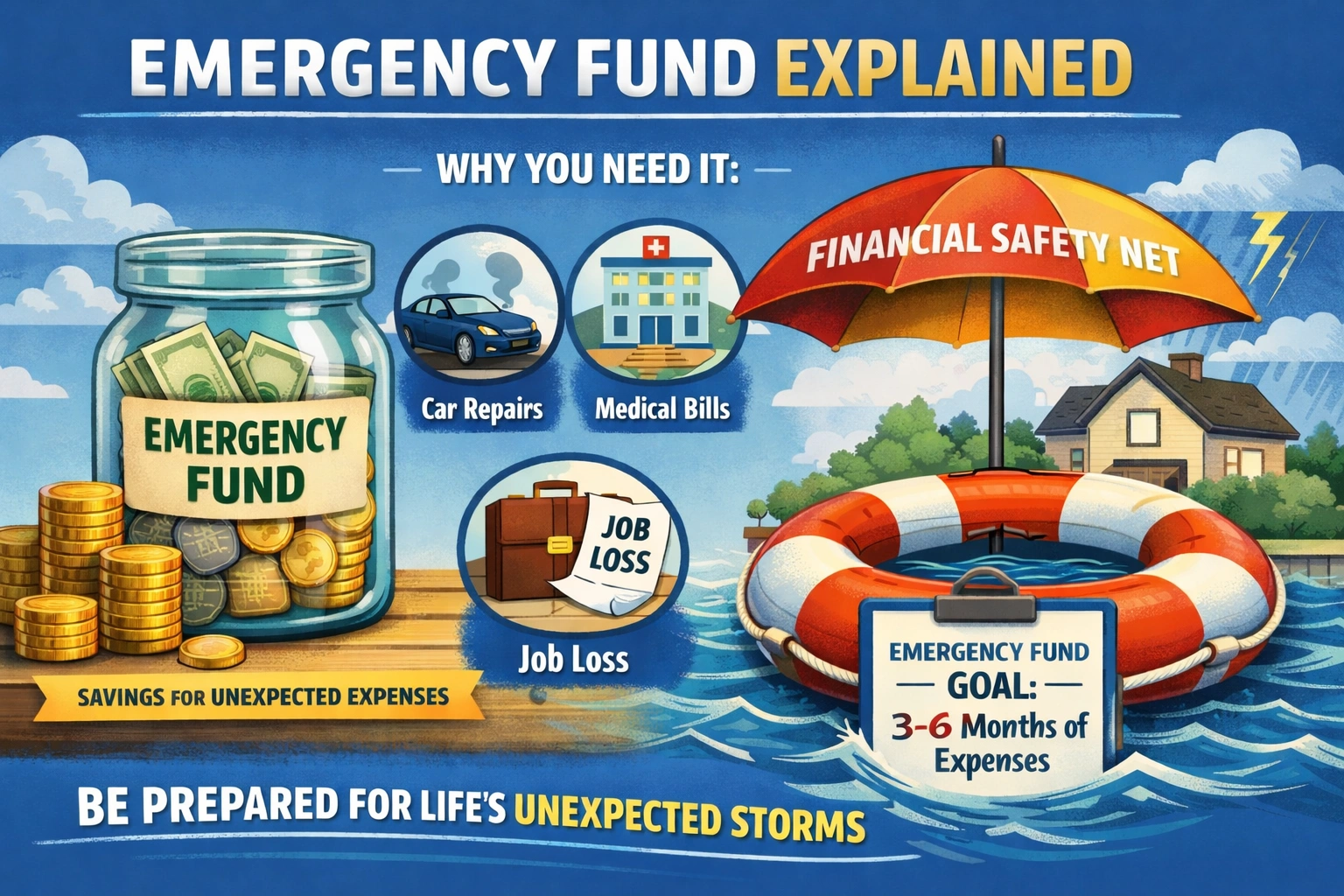
An emergency fund is cash reserved exclusively for unexpected, necessary expenses. It is not an investment, not a savings goal for vacations, and not money meant to generate returns.
Its purpose is simple: to protect you from financial shocks.
Examples of true emergencies include:
- Job loss or sudden income reduction
- Medical expenses not fully covered by insurance
- Urgent home or car repairs
- Family emergencies requiring immediate cash
What an Emergency Fund Is Not
- ❌ Money for investing in stocks or crypto
- ❌ Funds for planned expenses (holidays, gadgets, weddings)
- ❌ Capital for starting a business
Warren Buffett summarized the principle well:
“You don’t find out who’s swimming naked until the tide goes out.”
An emergency fund ensures you are never exposed when the financial tide pulls back.
How Much Emergency Fund Do You Really Need?
The Standard Rule: 3 to 6 Months of Expenses
Most financial planners recommend saving three to six months of essential living expenses, not income.
Essential expenses typically include:
- Housing (rent or mortgage)
- Utilities
- Food
- Transportation
- Insurance
- Minimum debt payments
Example:
If your monthly essential expenses are $2,000:
- 3 months = $6,000
- 6 months = $12,000
This range forms the foundation of the emergency fund explained rule.
Adjusting the Emergency Fund to Your Life Situation
When 3 Months May Be Enough
- Stable, salaried employment
- Dual-income household
- Strong job market in your field
- Minimal debt
When 6–12 Months Is Smarter
- Self-employed or freelance income
- Single-income household
- High medical or family obligations
- Volatile industries or economic downturns
As economist John Maynard Keynes once noted:
“The market can remain irrational longer than you can remain solvent.”
A larger emergency fund buys you time — and time equals financial power.
Emergency Funds vs Investing: A Common Misconception
Why You Shouldn’t Invest Your Emergency Fund
Stocks, bonds, and even real estate fluctuate in value. An emergency fund must be:
During market downturns, investors often face a double hit:
- Asset values fall
- Emergencies rise (job losses, reduced income)
Selling investments at a loss to cover emergencies destroys long-term wealth.
Visual Comparison (Described Table)
Table: Emergency Fund vs Investments
| Feature | Emergency Fund | Investments |
|---|---|---|
| Risk | Very Low | Medium to High |
| Liquidity | Immediate | Variable |
| Purpose | Protection | Growth |
| Market Exposure | None | Yes |
Where Should You Keep Your Emergency Fund?
Best Places to Store Emergency Cash
- High-yield savings accounts
- Money market accounts
- Short-term government treasury funds
Key characteristics:
- FDIC or government-backed protection
- No lock-up periods
- Minimal volatility
Avoid placing emergency funds in:
- Stocks or ETFs
- Cryptocurrencies
- Long-term fixed deposits with penalties
Emergency Funds and Passive Income Strategies
Can Passive Income Replace an Emergency Fund?
Passive income — dividends, rental income, royalties — reduces risk but does not eliminate it.
Even passive income can:
- Decline during recessions
- Be delayed or interrupted
- Require maintenance or reinvestment
A strong financial structure follows this order:
- Emergency fund
- Debt management
- Investing
- Passive income scaling
As the saying goes:
“Cash is not trash when it keeps you out of debt.”
How to Build an Emergency Fund Faster
Step-by-Step Strategy
- Start with a mini-goal: $500–$1,000
- Automate monthly transfers
- Direct bonuses or tax refunds into the fund
- Cut non-essential expenses temporarily
- Increase contributions after raises
Consistency matters more than speed.
Emergency Funds During Inflation and High Interest Rates
Does Inflation Change the Emergency Fund Rule?
Inflation reduces purchasing power, but it does not remove the need for liquidity.
Adjustments to consider:
- Review your fund annually
- Increase target amount as expenses rise
- Use high-yield accounts to partially offset inflation
Central banks raise interest rates to fight inflation, which can actually benefit emergency savings by increasing yields on safe accounts.
Common Emergency Fund Mistakes
- Saving income instead of expenses
- Investing emergency funds for “better returns”
- Underestimating personal risk
- Using emergency money for non-emergencies
- Never adjusting the fund over time
Financial stability is built on discipline, not optimism.
Conclusion: Key Takeaways and Practical Actions
An emergency fund is the foundation of every successful financial plan. Before chasing returns in financial markets or building passive income streams, you must protect yourself from financial shocks.
Key Takeaways:
- An emergency fund explained simply: protection first, growth second
- Save 3–6 months of essential expenses (more if income is unstable)
- Keep it liquid, safe, and accessible
- Never invest emergency money
- Review and adjust regularly
Practical Action:
Calculate your monthly essential expenses today and set a clear emergency fund target. Your future self will thank you.