There’s something deeply reassuring about watching a tree grow. You plant a seed, water it regularly, and give it time. Years later, you have shade, beauty, and perhaps fruit to harvest. Long-term investing works much the same way. The difference is that instead of planting seeds in soil, you’re planting money in carefully chosen investments, nurturing them through changing seasons, and watching them grow into something that can fundamentally change your financial future.
I’ve spent years analyzing markets, studying investor behavior, and observing what separates those who build lasting wealth from those who perpetually struggle. The truth is simpler than most people think, yet harder than most people expect. Building wealth through long-term investing isn’t about finding secret strategies or timing the perfect market entry. It’s about understanding fundamental principles and having the discipline to stick with them when everything in your brain is screaming at you to do otherwise.
Let me walk you through the strategies that actually work—not the get-rich-quick schemes that dominate social media, but the time-tested approaches that have created genuine wealth for millions of everyday investors.
Table of Contents
Understanding What Long-Term Really Means
Before we dive into specific strategies, we need to align on what “long-term” actually means. In investing terms, we’re typically talking about holding periods of five years or more, with the sweet spot often being 10 to 30 years. This isn’t because there’s magic in these specific timeframes. Rather, it’s because historical data shows us that longer holding periods dramatically increase your probability of positive returns while smoothing out the inevitable bumps along the way.
Think about the stock market over the past century. If you picked a random day to invest and held for just one year, you’d have roughly a 75% chance of making money. Not bad, but not exactly comforting either—that means one in four years, you’d lose money. Now extend that holding period to 10 years. Historically, your probability of positive returns jumps to over 90%. Hold for 20 years, and you’ve never had a losing period in modern market history, regardless of when you started.
This is the power we’re harnessing with long-term strategies. We’re not trying to outsmart the market on a daily basis. We’re letting time do the heavy lifting.
The Foundation: Index Fund Investing
If I could give just one piece of advice to someone starting their investment journey, it would be this: master index fund investing before you do anything else. Index funds are the foundation upon which almost every successful long-term strategy is built, and for good reason.
An index fund is simply a fund that tracks a specific market index—like the S&P 500, which represents 500 of the largest U.S. companies. Instead of trying to pick individual winning stocks, you’re buying a tiny piece of hundreds or thousands of companies all at once. When you invest in an S&P 500 index fund, you’re simultaneously becoming a partial owner of Apple, Microsoft, Amazon, Coca-Cola, and hundreds of other companies.
The beauty of this approach is multifaceted. First, you get instant diversification. If one company struggles or even goes bankrupt, it barely dents your overall portfolio because you own so many others. Second, index funds are incredibly low-cost. Because they’re not paying teams of analysts to pick stocks, their expense ratios are typically a fraction of actively managed funds—often 0.03% to 0.10% annually compared to 1% or more for active funds. That difference might seem small, but over decades, it compounds into hundreds of thousands of dollars.
Third, and perhaps most importantly, index funds consistently outperform the vast majority of professional money managers over long periods. This isn’t my opinion—it’s documented fact. According to research from S&P Dow Jones Indices, over 90% of actively managed funds fail to beat their benchmark index over 15-year periods. You’re literally better off doing less—buying the whole market and holding—than trying to outsmart it.
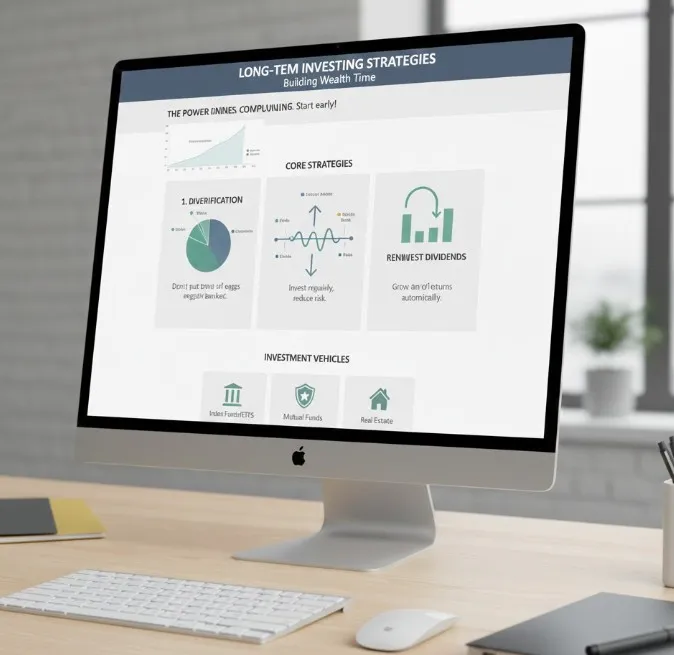
For most people, a simple three-fund portfolio is all you need: a U.S. total stock market index fund, an international stock index fund, and a bond index fund. Adjust the percentages based on your age and risk tolerance, and you have a complete investment strategy that will likely outperform the majority of complex portfolios managed by expensive advisors.
The Dollar-Cost Averaging Strategy
Here’s a scenario that keeps many would-be investors on the sidelines: they have money to invest, but they’re terrified of putting it all in right before a market crash. This fear is completely understandable but often leads to paralysis. People wait for the “right time,” which never seems to come, and meanwhile their money sits in a savings account earning virtually nothing while inflation steadily erodes its purchasing power.
Dollar-cost averaging solves this problem elegantly. Instead of investing a lump sum all at once, you spread your investments over time—typically investing a fixed amount at regular intervals, regardless of what the market is doing. Many people do this automatically through their workplace retirement accounts without even thinking about it.
Let’s say you have $12,000 to invest. Instead of putting it all in today, you might invest $1,000 per month for a year. Some months, the market will be up and your $1,000 will buy fewer shares. Other months, the market will be down and your $1,000 will buy more shares. Over time, this means you’re automatically buying more shares when prices are low and fewer when prices are high—the exact opposite of what most emotional investors do.
The psychological benefit is just as important as the mathematical one. Dollar-cost averaging removes the pressure of timing the market perfectly. You’re not trying to catch the bottom or avoid the top. You’re simply showing up consistently, month after month, regardless of headlines or market sentiment. This consistent behavior is what separates wealth builders from perpetual market timers.
Here’s the crucial part that many people miss: once you start, you keep going. Market down 20%? Keep investing. Market up 30%? Keep investing. This is when most people fail—they stop buying when markets crash because it feels like throwing money into a fire. But those are often the exact moments when you’re getting the best prices, planting seeds that will grow into your most profitable investments.
The Power of Tax-Advantaged Accounts
One of the biggest enemies of long-term wealth building isn’t market volatility—it’s taxes. Every time you make money in a regular investment account and sell, Uncle Sam wants his cut. Capital gains taxes, dividend taxes, and ordinary income taxes can eat into your returns significantly over time.
This is where tax-advantaged accounts become game-changers. Accounts like 401(k)s, IRAs, Roth IRAs, and Health Savings Accounts (HSAs) offer special tax treatment that can supercharge your long-term returns.
Traditional 401(k)s and IRAs give you a tax deduction today. You contribute pre-tax money, reducing your current tax bill, and the money grows tax-deferred until retirement. When you withdraw in retirement, you pay taxes then—ideally when you’re in a lower tax bracket than during your working years.
Roth accounts work in reverse. You contribute after-tax money (no deduction today), but then the money grows completely tax-free forever. Every dollar of growth, every dividend, every capital gain—all tax-free when you withdraw in retirement. For young investors especially, Roth accounts can be extraordinarily powerful because you’re locking in today’s tax rates on a small contribution that could grow to become a much larger sum.
Let me illustrate the impact. Imagine two investors, both starting with $6,000 annual contributions at age 25. One invests in a taxable account, the other in a Roth IRA. Assuming 8% annual returns and a 22% tax rate on the taxable account’s gains, by age 65, the Roth investor would have roughly $400,000 more—all from the same contributions, just with different tax treatment.
The strategy here is clear: maximize contributions to tax-advantaged accounts before investing in taxable accounts. If your employer offers a 401(k) match, contribute at least enough to get the full match—that’s free money with an immediate 100% return. Then consider maxing out an IRA or Roth IRA. If you still have money to invest, then move to taxable accounts.
Asset Allocation and Rebalancing
Here’s a truth that might surprise you: your specific investment picks matter far less than how you divide your money between different asset classes. Studies have shown that asset allocation—how you split between stocks, bonds, real estate, and other investments—explains the vast majority of your portfolio’s returns over time.
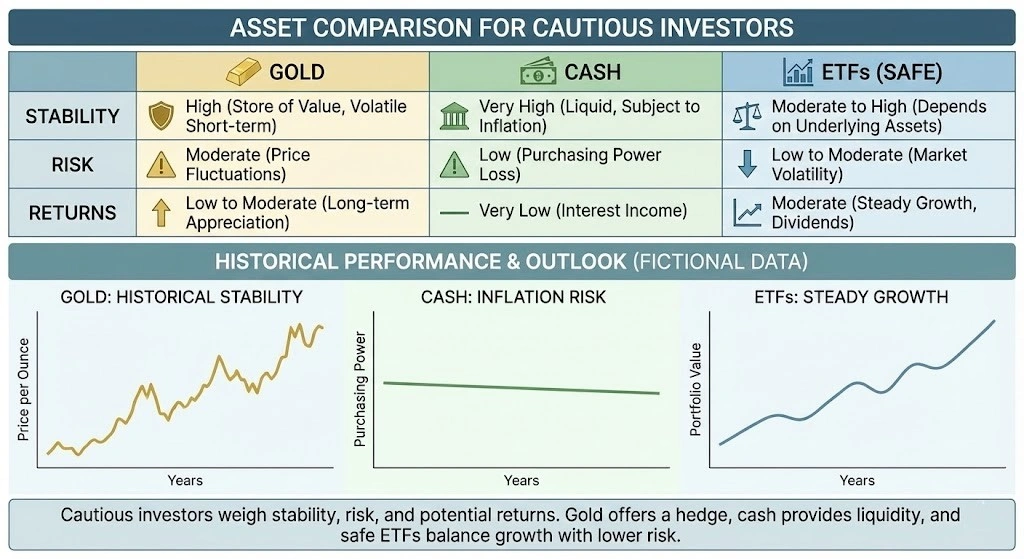
The basic principle is simple: different asset classes behave differently. Stocks typically offer higher long-term returns but with more volatility. Bonds are generally more stable but with lower returns. Real estate, commodities, and international investments add further diversification. By combining these different assets thoughtfully, you can potentially achieve better risk-adjusted returns than putting everything in a single asset class.
Your ideal allocation depends primarily on your timeline and risk tolerance. A 25-year-old investing for retirement 40 years away can typically handle a more aggressive allocation—perhaps 90% stocks and 10% bonds—because they have decades to recover from market downturns. A 60-year-old nearing retirement might shift to 60% stocks and 40% bonds, reducing volatility as they approach the time when they’ll need to start withdrawing money.
But here’s where it gets interesting: once you set your target allocation, you need to maintain it through rebalancing. Let’s say you start with a 80/20 stocks-to-bonds allocation. After a great year in the stock market, you might find yourself at 87/13. Your stocks have grown so much they’ve thrown your allocation off balance. Rebalancing means selling some stocks and buying more bonds to get back to 80/20.
This feels completely counterintuitive. You’re selling your winners and buying your losers. But this is exactly why it works. You’re systematically selling high and buying low, the core principle of successful investing, without trying to time the market or predict the future. You’re simply maintaining your strategy with discipline.
Most investors should rebalance once or twice per year. More frequent rebalancing creates unnecessary transaction costs and tax implications. Less frequent rebalancing allows your portfolio to drift too far from your target risk level.
Dividend Growth Investing
While index funds should form the core of most portfolios, dividend growth investing offers a compelling complementary strategy that can provide both growing income and long-term capital appreciation.
The strategy focuses on companies with strong track records of not just paying dividends, but increasing them year after year. We’re talking about companies like Johnson & Johnson, which has increased its dividend for over 60 consecutive years, or Procter & Gamble, with a similar streak. These “dividend aristocrats” demonstrate financial strength, consistent profitability, and shareholder-friendly management.
The magic happens through the combination of dividend growth and reinvestment. Let’s say you buy a stock yielding 3% today. If that company increases its dividend by 7% annually—a reasonable rate for quality dividend growers—in 10 years, you’ll be earning roughly 6% on your original investment. In 20 years, nearly 12%. Your income keeps growing while you do nothing except hold the stock.
When you reinvest those dividends to buy more shares—and those shares generate their own dividends, which you reinvest again—you create a powerful compounding effect. This is how investors build serious wealth over decades. The dividends might seem small at first, but they snowball over time.
The psychological benefit is significant too. During market downturns, when your portfolio value might be down, those dividend checks keep arriving. They provide tangible evidence that your investments are working even when market prices suggest otherwise. This helps many investors stay the course when emotions might otherwise drive them to sell at the worst possible time.
That said, dividend investing shouldn’t completely replace broad index investing for most people. Rather, it works best as part of a diversified strategy. Perhaps you keep your retirement accounts in low-cost index funds for simplicity and tax efficiency, while building a dividend growth portfolio in taxable accounts where the favorable tax treatment of qualified dividends provides an additional benefit.
The Mental Game: Staying the Course
I’ve outlined several powerful strategies, but here’s the uncomfortable truth: the hardest part of long-term investing has nothing to do with picking strategies or choosing funds. The hardest part is the mental game—maintaining discipline and perspective when everything around you is chaotic.
Markets will crash. They always do. Since 1929, the U.S. stock market has experienced a 20% or greater decline roughly once every six years. If you invest for 30 years, you’ll likely live through five or more significant market crashes. Add in smaller corrections of 10-15%, and you’re looking at significant volatility multiple times per decade.
During these periods, the financial media will scream that this time is different, that the fundamentals have changed, that we’re entering a new paradigm. Friends and family will ask if you’re worried about your investments. Everything in your gut will tell you to sell before things get worse.
This is when successful long-term investors do the opposite of what feels natural. They keep investing. They might even increase their contributions, recognizing that market crashes are basically sales on future wealth. They understand that market downturns aren’t departures from the path to wealth—they’re part of the path itself.
Consider this: if you had invested 10,000 in an S&P 500 index fund at the peak of the market in October 2007, right before the financial crisis, you would have watched it drop to around 5,000 by March 2009—a gut-wrenching 50% loss. But if you simply held and reinvested dividends, that investment would have grown to over $50,000 by 2025. The crisis wasn’t the end of wealth building; it was a chapter in a longer story.
The key is perspective. When you’re invested for 20, 30, or 40 years, a two-year bear market is barely a blip. But when you’re living through it day by day, watching your account balance drop month after month, it feels endless. This is why successful long-term investors often stop looking at their portfolios frequently. They set up automatic contributions, check in once or twice per year to rebalance, and otherwise live their lives.
Putting It All Together: A Framework for Action
So how do you actually implement these strategies? Here’s a practical framework that works for most investors:
Start with your foundation. Open tax-advantaged accounts—at minimum, contribute enough to your workplace 401(k) to get the full employer match. If you don’t have access to a 401(k), open an IRA or Roth IRA on your own.
Choose simple, low-cost index funds. For most investors, a total U.S. stock market fund, a total international stock fund, and a total bond market fund provide all the diversification you need. Major providers like Vanguard, Fidelity, and Schwab all offer excellent options with expense ratios under 0.1%.
Set your allocation based on your timeline. A common rule of thumb is to hold your age in bonds, with the rest in stocks. So a 30-year-old might be 30% bonds and 70% stocks, while a 60-year-old might be 60% bonds and 40% stocks. This is just a starting point—adjust based on your personal risk tolerance and circumstances.
Automate your contributions. Set up automatic transfers from your paycheck or bank account to your investment accounts. This removes the decision-making burden and ensures you invest consistently regardless of market conditions.
Rebalance annually. Once per year, check if your allocation has drifted more than five percentage points from your target. If so, sell from overweight positions and buy underweight ones to restore your target allocation.
Increase contributions over time. Whenever you get a raise, increase your investment contributions by at least half of the raise amount. This allows your lifestyle to improve gradually while accelerating your wealth building.
Ignore the noise. Turn off financial news. Stop checking your portfolio daily. Markets will have dramatic days, weeks, and even years. None of it matters if you’re investing for decades.
The Long View
Building wealth through long-term investing isn’t glamorous. There are no shortcuts, no secret strategies known only to the wealthy elite. It’s the financial equivalent of getting in shape—everyone knows the basics (eat well, exercise regularly), but few people maintain the consistency required to see dramatic results.
The investors who build real wealth aren’t the ones making headlines with spectacular short-term gains. They’re the ones who show up year after year, contribute regularly, maintain reasonable diversification, and ignore the siren song of the next hot stock or market-timing strategy.
What I find most beautiful about these strategies is their accessibility. You don’t need a large starting sum. You don’t need specialized knowledge or expensive advisors. You don’t need to spend hours each week researching investments. What you need is consistency, patience, and the discipline to stay invested when others are panicking.
Start today, wherever you are with whatever you have. Your future self—the one who will benefit from decades of compound growth—will thank you for it. The best time to plant a tree was twenty years ago. The second-best time is today.