Introduction
The landscape of wealth creation is undergoing a seismic transformation, driven by the unprecedented convergence of artificial intelligence, decentralized finance, and quantum computing. For decades, the path to financial independence was a relatively linear one: save diligently, invest in established assets, and climb the corporate ladder. This traditional approach, while once reliable, is rapidly becoming obsolete. The exponential pace of technological change means that the strategies that worked yesterday will not work tomorrow. The year 2026 marks a critical inflection point where the old rules of money are being rewritten, making the adoption of a new, adaptive financial philosophy not just beneficial, but essential for survival and success. The core challenge is no longer accumulating capital, but adapting one’s cognitive framework to leverage these new tools. This is why understanding the millionaire mindset 2026 is the single most important investment you can make today. Within the first 100 words, we establish that the traditional “millionaire mindset” focused on linear growth is obsolete, and that 2026 is a critical year for adapting to exponential shifts. This article will break down the four core pillars of this new, adaptive mindset, providing a blueprint for thriving in the hyper-digital economy.
Table of Contents
Main Sections
The New Economic Landscape: Why the Millionaire Mindset 2026 is Different
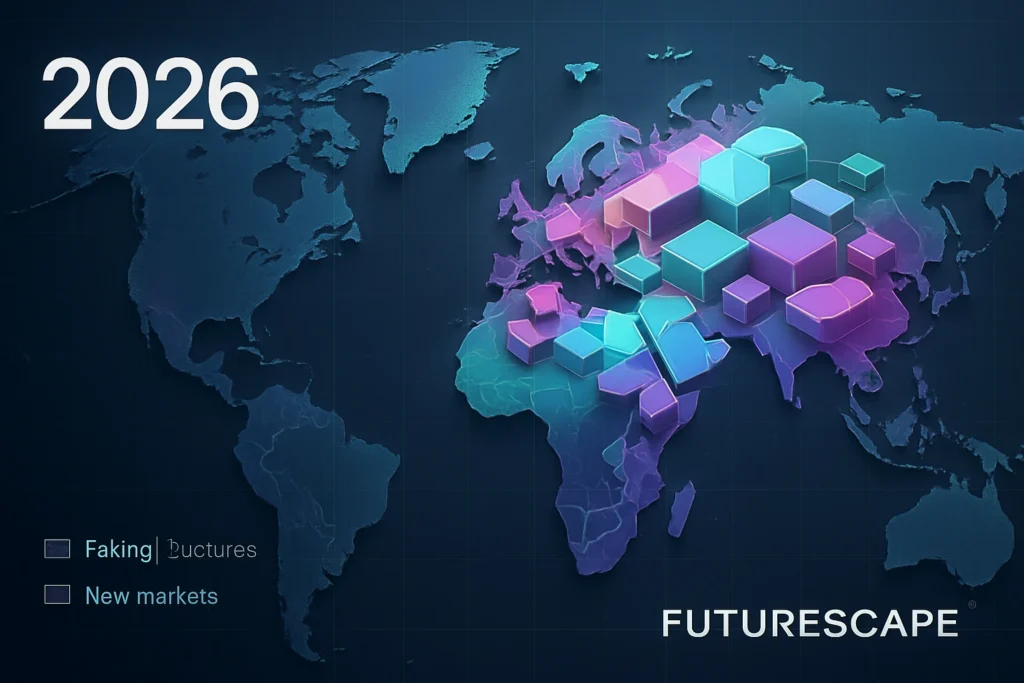
The most profound shift in the economic landscape is the unceremonious formation of the “converged internet,” a self-coordinating infrastructure where intelligence, verification, and value exchange operate as a single, seamless system [1]. This convergence means that market cycles are compressed, and the window of opportunity for capitalizing on new technologies is shorter than ever before. The value of non-digital, repetitive skills is rapidly approaching zero, while the value of leverage—the ability to control massive output with minimal input—is skyrocketing. In this environment, wealth is not created by working harder, but by building systems that think, verify, and pay automatically. The traditional, trust-based financial system, which relies on human intermediaries, is being replaced by a proof-based system secured by mathematics and code. This shift from trust to proof is what fundamentally redefines the millionaire mindset 2026. The new millionaire understands that their greatest competitive advantage is the ability to integrate these converging technologies into their business and investment strategies, turning technological disruption into a source of exponential growth.
From Scarcity to Abundance: The Role of AI in Wealth Creation
Artificial intelligence is not merely a tool for automation; it is the ultimate leverage multiplier. It shifts the focus of wealth creation from labor to idea generation and system design. Where previous generations focused on optimizing their time, the 2026 millionaire focuses on optimizing their AI agents. The scarcity mindset, which views wealth as a fixed pie to be divided, is giving way to an abundance mindset, where new markets and value are created through intelligent systems. This means that the most valuable assets are no longer physical property or large cash reserves, but proprietary data, unique algorithms, and the ability to deploy AI to solve high-value problems at scale.
The Geopolitical and Regulatory Context
While technology drives opportunity, global policy and regulation introduce new layers of risk and complexity. The rise of digital assets and cross-border payment systems has prompted governments to re-evaluate monetary control and taxation. The adaptive millionaire must not only understand the technology but also anticipate the regulatory environment. This includes monitoring the tokenization of real-world assets (RWA) and the institutional adoption of digital currencies, which are creating new, regulated pathways for wealth transfer and investment. Ignoring the regulatory context is no longer a viable strategy; it is a critical component of risk management.
| Feature | Traditional Millionaire Mindset | 2026 Millionaire Mindset |
|---|---|---|
| Core Focus | Stability and Capital Preservation | Adaptability and Exponential Leverage |
| Primary Asset | Real Estate, Blue-Chip Stocks | Proprietary Data, AI Models, Digital Assets |
| Risk Tolerance | Avoidance of Volatility | Calculated Exposure to Systemic Change |
| Time Horizon | Linear Growth (5-10 years) | Exponential Growth (1-3 years) |
| Trust Mechanism | Human Intermediaries (Banks, Lawyers) | Cryptographic Proof (Blockchain, ZK-Proofs) |
Hyper-Adaptability and Continuous Learning

In an era defined by rapid technological obsolescence, the most valuable skill is not what you know, but how quickly you can learn, unlearn, and relearn. Hyper-adaptability is the cognitive engine of the millionaire mindset 2026. This goes far beyond simple professional development; it is a commitment to continuous cognitive restructuring. The speed of information processing and the ability to synthesize complex, cross-disciplinary data points are the new measures of intellectual capital. The greatest risk to long-term wealth is not a market crash, but the failure to adapt to AI-driven automation, which can render entire skill sets irrelevant overnight. Therefore, the adaptive millionaire dedicates significant time and resources to mastering new tools and understanding foundational principles across diverse fields, from neuroscience to computer science.
The Skill Stack of the Future: Curation, Synthesis, and Application
The future skill stack is less about deep specialization in a single field and more about the ability to curate and synthesize information from disparate sources. The millionaire of 2026 is a master curator, capable of filtering the signal from the noise in a world saturated with data. They are systems thinkers who can see how different technologies intersect—for example, how AI agents can interact with smart contracts to automate complex financial transactions. This synthesis allows them to identify and exploit arbitrage opportunities that exist at the intersection of emerging fields. The focus shifts from being a producer of labor to being a designer of intelligent systems.
Embracing the “Portfolio Career” Model
The traditional single-source income model is inherently fragile in a volatile, fast-moving economy. The millionaire mindset 2026 embraces the “portfolio career” model, where wealth is built through multiple, non-linear income streams and projects [2]. This is not merely about having a side hustle; it is a strategic diversification of intellectual capital. By simultaneously engaging in consulting, investing in digital assets, and building a scalable, automated product, the adaptive millionaire mitigates risk and maximizes leverage. This model ensures that if one stream is disrupted by technology, others are already in place, often benefiting from the very same disruption.
| Non-Technical Skill | Description | Application in 2026 |
|---|---|---|
| Cognitive Flexibility | The ability to switch between different concepts and adapt behavior to new, unexpected rules. | Rapidly pivoting business models in response to AI advancements. |
| Systems Thinking | Understanding how individual components interact within a larger, complex system. | Designing automated financial or business workflows that integrate multiple technologies (AI, DeFi). |
| Emotional Intelligence | The capacity to manage one’s own emotions and understand the emotions of others. | Leading remote, globally distributed teams and navigating complex human-AI collaboration. |
| Information Curation | The skill of filtering vast amounts of data to identify high-signal, actionable insights. | Making timely investment decisions based on proprietary data feeds and trend analysis. |
| Ethical Oversight | The moral framework for deploying powerful, leveraged technologies responsibly. | Ensuring AI models and business practices are transparent and socially beneficial. |
Strategic Investment in the Digital Frontier
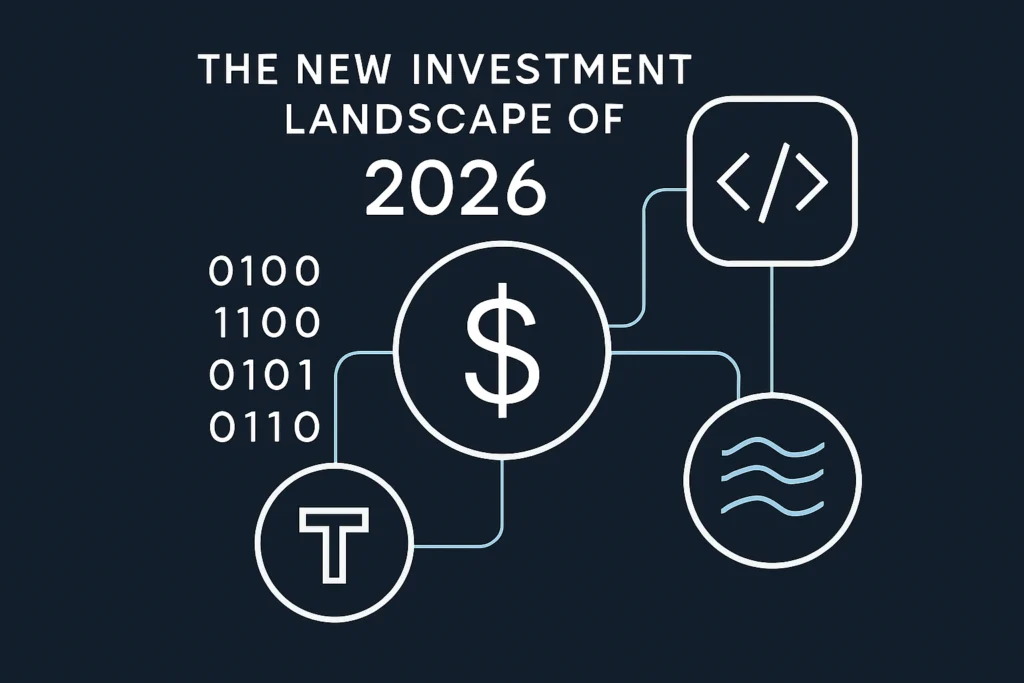
The most significant shift in investment strategy is the move from tangible to intangible assets. While real estate and commodities remain important for stability, the exponential returns are found in the digital frontier. The new millionaire understands that the value of data, intellectual property, and network effects far outstrips the value of physical assets in a world where information is the primary driver of economic growth. This strategic focus on the digital frontier is a key differentiator of the millionaire mindset 2026. The investment portfolio is structured to capture the value created by the convergence of AI and blockchain technologies, prioritizing assets that are inherently scalable and globally accessible [3].
Decentralized Finance (DeFi) and the New Banking Paradigm
Decentralized Finance (DeFi) represents a new banking paradigm that offers unparalleled access to leverage and yield. The adaptive millionaire uses DeFi not as a speculative gamble, but as a sophisticated tool for financial engineering. This includes utilizing stablecoins for instant, low-cost cross-border payments, participating in liquidity pools to generate passive yield, and using decentralized lending protocols to manage capital efficiently. The key is to move beyond the simple buy-and-hold strategy of the past and actively engage with protocols that offer transparent, auditable, and automated financial services.
Investing in “Future-Proof” Infrastructure
The infrastructure that powers the new economy—AI models, data centers, specialized hardware (e.g., GPU farms), and blockchain protocols—is where the smart money is flowing. These are the “picks and shovels” of the digital gold rush. Investing in future-proof infrastructure means prioritizing assets that will be essential regardless of which specific application or consumer trend wins out. Furthermore, the tokenization of real-world assets (RWA) is creating new, fractionalized investment opportunities in traditionally illiquid markets, democratizing access to institutional-grade assets and further blurring the lines between the digital and physical worlds [4]. This focus on foundational technology ensures that the portfolio is positioned to benefit from the entire technological wave, not just a single crest.
The Ethical and Social Responsibility of Wealth

In a hyper-connected world, reputation and social capital are not soft metrics; they are critical, non-financial assets. The millionaire mindset 2026 recognizes that wealth is not sustainable if it is not a net positive for the broader ecosystem. The long-term implications of deploying powerful, leveraged technologies like AI and DeFi demand a strong ethical framework. Wealth accumulated through opaque or exploitative means is increasingly fragile, as social media and decentralized audit trails can expose malfeasance instantly. The new millionaire understands that transparency and a commitment to positive social impact are the ultimate forms of risk mitigation.
The Power of Transparent Value Creation
The old-school business model relied on information asymmetry and opaque operations. The new model demands transparent value creation. This means building products and services where the value proposition is clear, the data usage is auditable, and the business practices are ethical. By utilizing technologies like zero-knowledge proofs, businesses can prove compliance and ethical behavior without revealing proprietary data, building a layer of trust that is mathematically guaranteed. This transparency builds social capital, which translates directly into customer loyalty, talent acquisition, and long-term brand equity.
Mitigating Systemic Risk
The concentration of wealth and power, particularly through leveraged technologies, introduces systemic risk to society. The adaptive millionaire actively diversifies their capital beyond financial assets into social and environmental capital. This involves investing in sustainable technologies, supporting educational initiatives focused on digital literacy, and engaging in philanthropic efforts that address the negative externalities of rapid technological change. This proactive approach to mitigating systemic risk is not altruism; it is a form of enlightened self-interest that ensures the stability of the very system from which their wealth is derived.
Conclusion
The millionaire mindset 2026 is a philosophy built on three core tenets: speed, leverage, and responsibility. It is a departure from the linear, scarcity-driven thinking of the past and an embrace of the exponential, abundance-driven future. The convergence of AI, blockchain, and payments has created a new economic operating system, and those who master the cognitive framework to navigate it will capture the lion’s share of the coming wealth transfer. The new millionaire is not defined by the size of their bank account, but by their capacity for hyper-adaptability, their strategic focus on digital infrastructure, and their commitment to ethical, transparent value creation.
To translate this knowledge into practical, realistic actions, consider the following:
- Dedicate 1 hour a day to learning a new AI tool or concept. This is your daily cognitive maintenance. Focus on tools that automate high-leverage tasks, such as data analysis or content generation.
- Audit your investment portfolio for technological obsolescence. Identify any assets that rely solely on pre-2020 business models and reallocate a portion of that capital into future-proof infrastructure, such as decentralized finance protocols or AI-enabling hardware.
- Identify a problem you can solve with a system, not with your time. The goal is to build a digital asset—a piece of code, a unique dataset, or an automated service—that generates value while you sleep. This is the essence of non-linear wealth creation.
- Engage in transparent value creation. If you run a business, clearly articulate how your product benefits the customer and the community. Build social capital by being auditable and ethical.
The future of wealth is not a fixed destination; it is a dynamic system requiring constant, iterative review and ethical oversight. By adopting the millionaire mindset 2026, you are not just preparing for the future; you are actively designing it.
FAQ
Is the traditional path to wealth (e.g., real estate) still viable in 2026?
The traditional path remains a stable foundation, but it must be augmented with digital leverage to keep pace with the exponential growth of the new millionaire mindset 2026. Real estate, for example, is best viewed through the lens of tokenization (RWA) and smart contract management, integrating it into the digital frontier rather than treating it as a purely physical asset.
How can I start building a portfolio career without quitting my current job?
Focus on low-risk, high-leverage side projects that build digital assets. Start by automating a small, repeatable task in your current job using an AI tool, then productize that solution for a niche market. The goal is to create a small, scalable system that generates value, which is the first step toward a diversified portfolio career.
What is the single biggest risk to wealth in the next five years?
The single biggest risk is technological obsolescence—the failure to adapt to AI-driven automation. As AI agents become capable of performing complex, high-value tasks, any human role that is purely repetitive or non-creative will face severe devaluation. The risk is not losing your job, but having your core skills become irrelevant.
What is the most important trait for a young entrepreneur today?
Cognitive flexibility is paramount. The ability to synthesize information from disparate fields and rapidly pivot a business model based on new technological realities is more valuable than deep, narrow expertise. The market rewards those who can connect the dots between AI, finance, and human behavior.
How often should I review my core assumptions about money and business?
Continuously. The millionaire mindset 2026 is a state of constant, iterative review, not a fixed belief system. Given the speed of technological change, a quarterly review of your core assumptions about market dynamics, asset valuation, and personal skill relevance is the minimum required to maintain an adaptive edge.
What are your thoughts on the future of wealth? Which of the four pillars do you find most challenging to implement? Share your insights and strategies in the comments below, and subscribe to our newsletter for weekly updates on the technological shifts shaping the next generation of millionaires.
References
[1] Entrepreneur: Why 2026 Is the Turning Point for AI, Crypto and Global Payments (https://www.entrepreneur.com/leadership/why-2026-is-the-turning-point-for-ai-crypto-and-global/500864)
[2] Forbes: 10 AI Predictions For 2026 (https://www.forbes.com/sites/robtoews/2025/12/22/10-ai-predictions-for-2026/)
[3] J.P. Morgan: Outlook 2026 (https://www.jpmorgan.com/content/dam/jpmorgan/documents/wealth-management/outlook-2026.pdf)
[4] Grayscale: 2026 Digital Asset Outlook: Dawn of the Institutional Era (https://research.grayscale.com/reports/2026-digital-asset-outlook-dawn-of-the-institutional-era)