As a senior economic analyst, I spend my days dissecting global trends, from shifts in central bank policy to the complex dynamics of international trade. These macro forces, often feeling distant and abstract, inevitably cascade down to impact the most personal of domains: your household finances. We are currently navigating a period defined by persistent economic uncertainty, marked by sticky inflation, geopolitical instability, and volatile asset markets. This environment can breed anxiety, leading to rash, emotional decisions that undermine years of careful planning. The most common mistake I observe is paralysis, a deer-in-headlights response where individuals stop making decisions altogether, allowing the current to simply carry them away.
The antidote to this uncertainty is not a sudden, dramatic overhaul of your portfolio, but rather the establishment of a calm, consistent, and disciplined routine. It is about controlling the controllable. This is why I advocate for a structured, non-negotiable weekly personal finance checklist. This simple, ten-minute ritual transforms overwhelming complexity into manageable tasks, grounding your financial life in a rhythm of accountability and clarity. By the end of this comprehensive article, you will understand the economic forces at play, learn the precise steps for your weekly check-in, and gain the behavioral insights necessary to maintain your financial resilience, no matter how turbulent the economic waters become.
Table of Contents
The Macroeconomic Headwinds: Why Discipline is Your Best Hedge
To manage your money effectively, you must first understand the landscape in which you operate. The current economic climate is characterized by a confluence of factors that amplify uncertainty. We are seeing a structural shift from a decades-long era of low inflation and predictable monetary policy to one where price stability is constantly challenged.
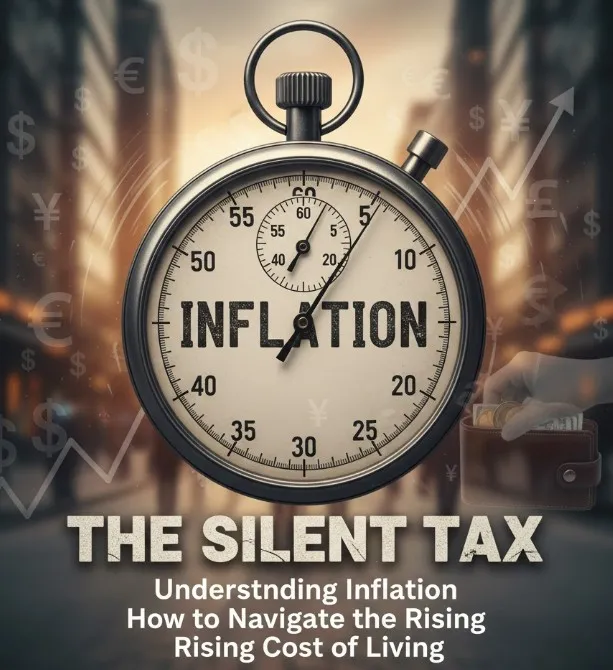
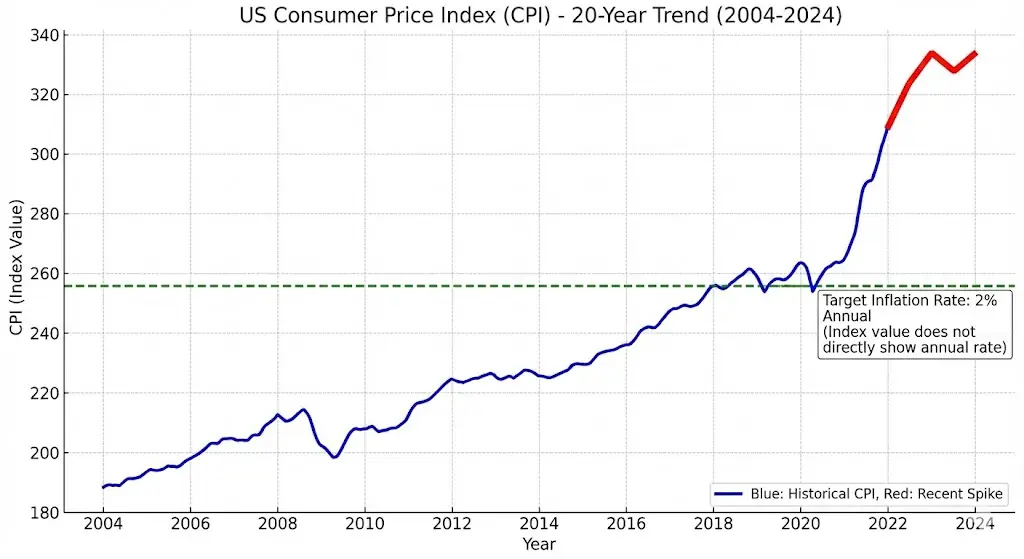
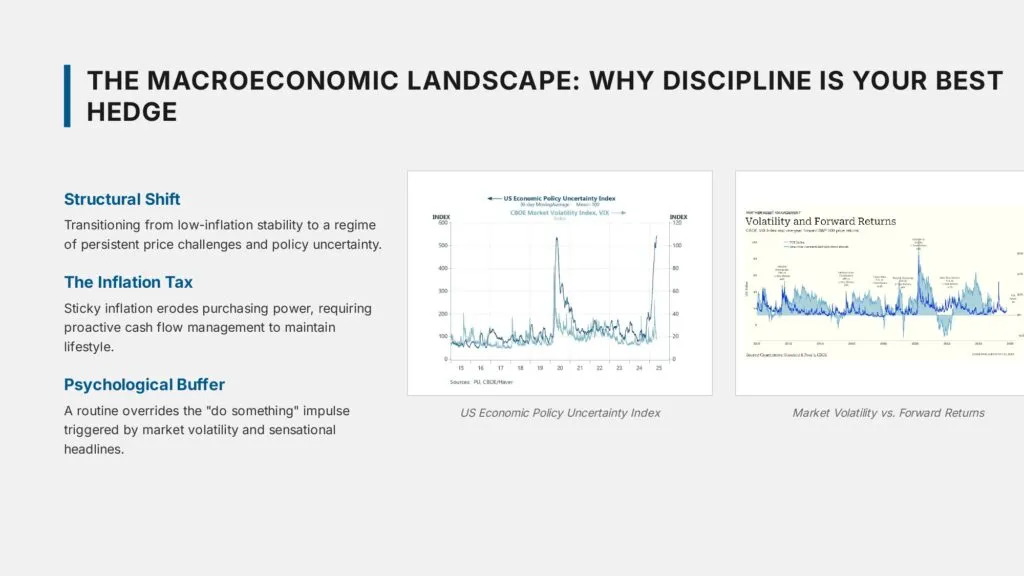
The primary driver of this uncertainty is the persistence of inflation, which acts as a hidden tax on every household. While central banks like the Federal Reserve are actively engaged in combating this through interest rate adjustments, the lag effect of these policies means that volatility remains high. Furthermore, the rise of economic policy uncertainty, driven by unpredictable trade relations and shifting regulatory environments, creates a chilling effect on corporate investment and hiring [1]. This directly translates to increased job insecurity and slower wage growth for the average worker. When markets are volatile, the temptation to “do something”—to sell low or chase high-risk assets—is immense. This is where the discipline of a routine becomes your most valuable asset, acting as a psychological barrier against emotional decision-making. The weekly check-in forces you to look at the numbers with a cool head, rather than reacting to the sensationalized headlines of the moment.
The Foundation of Resilience: Your Weekly Personal Finance Checklist
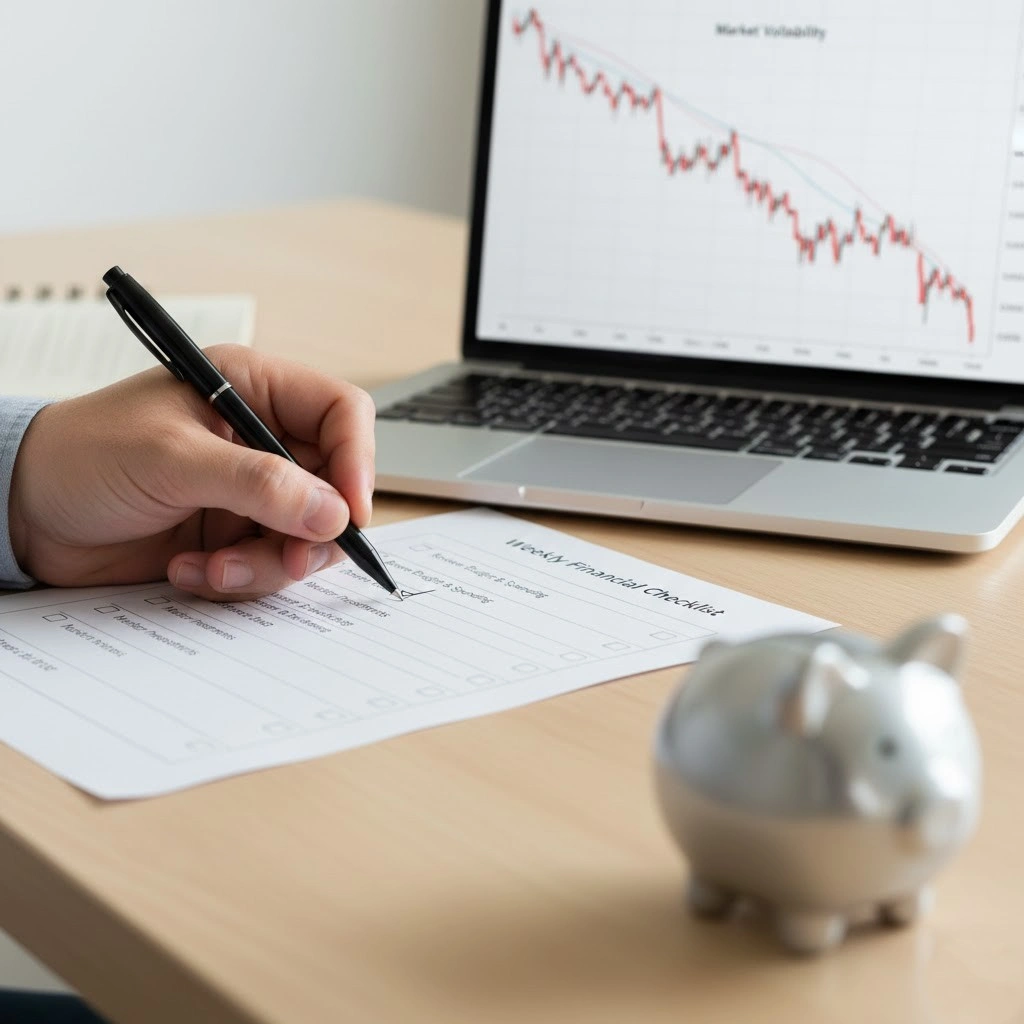
The goal of the weekly personal finance checklist is not to make you rich overnight, but to ensure you are financially fit enough to weather any storm. This routine should take no more than 10 to 15 minutes and should be scheduled like any other important meeting—perhaps every Sunday evening or Friday morning.
Task 1: The 10-Minute Net Worth Checkup
Your net worth, the total value of your assets minus your liabilities, is the single most important metric of your financial health. Tracking it weekly provides a clear, objective measure of your progress, removing the emotional bias that often clouds judgment.
Start by logging into your preferred financial aggregation tool, such as Empower or a personal spreadsheet. The purpose here is not to panic over short-term market fluctuations, but to observe the trend. Is your net worth moving in the right direction over the long term? A weekly check ensures that all your accounts are correctly linked and that there are no fraudulent or erroneous transactions. If you see a dip, your first thought should be analytical: Was it a planned expense, or a market correction? If it was a market correction, the correct response is almost always to do nothing, provided your long-term investment strategy remains sound. This task grounds you in reality and reinforces the long-term perspective that is essential for surviving economic uncertainty.
Task 2: Proactive Debt Management and Credit Health
In an uncertain economy, the cost of debt rises dramatically due to higher interest rates. Therefore, managing your liabilities proactively is paramount. This weekly task focuses on two critical areas: credit card utilization and payment timing.
I strongly recommend making credit card payments weekly, rather than waiting for the monthly due date. This strategy has two powerful benefits. First, it ensures you never miss a payment, protecting your credit score—a vital asset in times of economic stress. Second, and more importantly, it keeps your credit utilization ratio low. This ratio, which is the amount of credit you are using compared to your total available credit, is a major factor in your credit score calculation. By paying down your balance weekly, you ensure that the reported balance to the credit bureaus is minimal, which can significantly boost your score. A higher credit score translates directly into lower borrowing costs should you need to take out a loan during a downturn.
| Feature | Weekly Payment Strategy | Monthly Payment Strategy |
|---|---|---|
| Credit Utilization | Consistently low, as balances are paid down frequently. | High, as the full balance accumulates before the due date. |
| Credit Score Impact | Positive, due to low utilization and perfect payment history. | Variable, high utilization can temporarily depress the score. |
| Interest Paid | Minimal, as the average daily balance is significantly lower. | Higher, as interest accrues on the full balance for longer. |
| Behavioral Benefit | Increased awareness of spending; less chance of overspending. | Less frequent check-in; higher risk of “bill shock.” |
Task 3: The Budgetary Tweak and Transaction Review
A budget is not a static document; it is a living, breathing financial map that requires constant recalibration, especially when inflation is eroding purchasing power. Your weekly review should involve a quick scan of all transactions from the past seven days.
The goal is to identify “budgetary leakage”—small, non-essential expenses that accumulate rapidly. Did you sign up for a new subscription? Did you overspend on dining out? In an uncertain economy, every dollar saved is a dollar buffered against future shocks. If you find you are consistently overspending in one category, this is the time to make a minor adjustment, not a major one. For example, if you spent an extra $50 on groceries this week due to higher prices, you might decide to reduce your entertainment budget by $50 for the remaining weeks of the month. This small, weekly correction prevents a massive, stressful deficit at the end of the month. This task is about being proactive, not punitive. It allows you to maintain control and adapt to the reality of rising costs without feeling deprived.
Behavioral Economics and the Power of Routine
As an analyst, I know that markets are driven by fundamentals, but investor behavior is driven by psychology. During periods of high uncertainty, the principles of behavioral economics—the study of how psychological factors influence financial decisions—become critically important. Two biases, in particular, threaten your financial health: loss aversion and herding behavior.
Loss aversion is the psychological phenomenon where the pain of a loss is twice as powerful as the pleasure of an equivalent gain. When the market drops, this bias screams at you to sell, to stop the pain. Herding behavior is the tendency to follow the crowd, leading to panic selling during downturns or chasing bubbles during upturns. The weekly personal finance checklist is the perfect countermeasure to these destructive impulses. By establishing a routine, you create a system that overrides emotion. The act of checking your net worth and transactions becomes a mechanical, non-emotional process, reinforcing the long-term strategy you set when you were calm.
The Investor’s Discipline: Review, Don’t React
For the investment portion of your weekly check-in, the mantra must be: Review, Don’t React.
The weekly check-in should be a moment of intellectual curiosity, not emotional distress. Look at your portfolio’s performance, but focus on your asset allocation. Are you still diversified according to your risk tolerance? If you are a long-term investor, market dips are not a signal to sell; they are, mathematically, opportunities to buy more shares at a lower price through dollar-cost averaging. The senior economic analyst’s perspective is clear: market volatility is normal, and attempting to time the market is a fool’s errand. The weekly review serves as a reminder of your long-term horizon, helping you distinguish between market noise and genuine, fundamental shifts that might warrant a rebalancing.
| Investment Approach | Emotional Investor (Reacting) | Disciplined Investor (Reviewing) |
|---|---|---|
| Focus | Short-term market movements and daily headlines. | Long-term financial goals and asset allocation. |
| Action During Dip | Panic sells to “cut losses” (realizing paper losses). | Continues scheduled contributions (dollar-cost averaging). |
| Action During Peak | Chases “hot stocks” or over-concentrates portfolio. | Rebalances portfolio to maintain target risk levels. |
| Outcome | Buys high, sells low; often underperforms the market. | Stays the course; benefits from compounding and long-term growth. |
Beyond the Week: Integrating Long-Term Strategy
While the weekly routine focuses on tactical execution, it must be firmly integrated into your long-term strategic plan. The most critical long-term goals in an uncertain economy are building a robust emergency fund and ensuring consistent retirement savings.
The Emergency Fund: Your Economic Shock Absorber
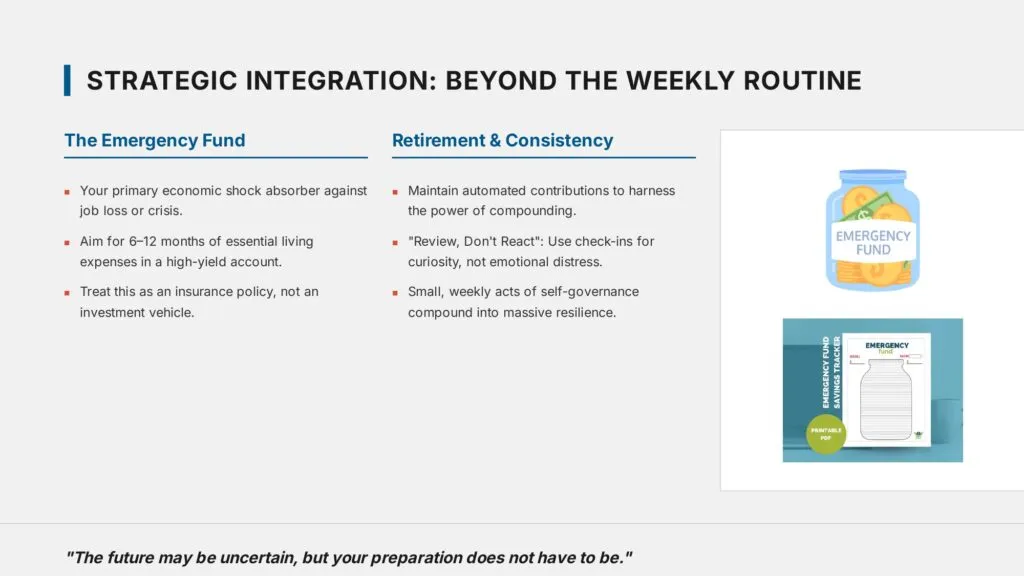
The emergency fund is your first line of defense against economic uncertainty, whether it manifests as a job loss, a medical crisis, or an unexpected home repair. As an analyst, I recommend a minimum of six months of essential living expenses, and in a highly uncertain environment, nine to twelve months is prudent.
Your weekly personal finance checklist should include a line item to check your emergency fund balance. If it is not fully funded, the weekly budget review (Task 3) should prioritize allocating any surplus funds directly to this account. This fund should be held in a high-yield savings account, offering liquidity and a modest return that helps offset inflation, without the risk of market volatility. This is not an investment; it is an insurance policy.
Retirement Contributions: The Unstoppable Force
One of the most damaging long-term consequences of economic uncertainty is the temptation to pause retirement contributions. This is a mistake that can cost hundreds of thousands of dollars over a lifetime due to lost compounding.
The weekly check-in should confirm that your automated retirement contributions (401(k), IRA, etc.) are running smoothly. If your employer offers a matching contribution, ensuring you contribute enough to capture the full match is the single best guaranteed return you can get. This is “free money” that you cannot afford to leave on the table, especially when every percentage point of return matters. The power of compounding, the process by which your earnings generate their own earnings, is the most powerful force in finance, and consistency, even during a downturn, is the key to harnessing it.
| Financial Goal | Weekly Action Point | Long-Term Strategic Benefit |
|---|---|---|
| Emergency Fund | Check balance; transfer surplus from budget review. | Provides a non-market-dependent buffer against job loss or crisis. |
| Debt Reduction | Make weekly credit card payments; review high-interest loans. | Reduces interest expense; frees up cash flow for savings and investment. |
| Retirement Savings | Confirm automated contributions are active. | Maximizes compounding; ensures tax-advantaged growth for future security. |
| Insurance Review | (Monthly/Quarterly) Check for policy lapses or coverage gaps. | Mitigates catastrophic financial risk from health, property, or liability events. |
Conclusion: The Quiet Power of Consistency
The current economic environment is indeed complex, characterized by global policy shifts, inflationary pressures, and market volatility. However, as a senior economic analyst, I can assure you that the greatest risks to your personal financial health are not external, but internal—the risks of panic, paralysis, and inconsistency.
The solution is elegantly simple: a disciplined, non-negotiable weekly personal finance checklist. This routine is more than just a set of tasks; it is a commitment to financial self-governance. It transforms the overwhelming fear of the unknown into the quiet confidence of the prepared. By dedicating just ten to fifteen minutes each week, you are not just checking balances; you are reinforcing your long-term strategy, managing your debt proactively, and building a psychological defense against the emotional traps of the market. You are ensuring that your financial plan is a living document, constantly adapting to the reality of the economy without succumbing to its noise.
I urge you to set a specific time and day for your weekly check-in. Make it a ritual. This small act of consistency will compound into significant financial resilience over time, allowing you to navigate the uncertain economy not as a victim of circumstance, but as a thoughtful, disciplined steward of your own wealth. The future may be uncertain, but your preparation does not have to be.
Frequently Asked Questions (FAQ)
Q1: How long should my weekly personal finance checklist take?
Ideally, your weekly personal finance checklist should take no more than 10 to 15 minutes. The goal is a quick, high-level review, not a deep dive. If you are spending more than 20 minutes, you are likely over-analyzing or your system is too complicated. Use financial aggregation tools to streamline the process.
Q2: Should I adjust my investments every week based on the checklist?
Absolutely not. The purpose of reviewing your investments weekly is to confirm your asset allocation and ensure your automated contributions are running. Making weekly adjustments based on market performance is a form of market timing, which is highly discouraged by senior economic analysts. Stick to your long-term plan and only rebalance when your allocation drifts significantly from your target, typically quarterly or semi-annually.
Q3: What is the single most important item on the weekly personal finance checklist?
The most critical item is the transaction review and budget tweak. In an inflationary environment, this task ensures you are aware of where your money is going and allows you to make small, immediate corrections to prevent overspending. This proactive management of cash flow is the foundation of all other financial success.
Q4: How can I find the time to do this every week?
Treat your financial check-in like a doctor’s appointment or a mandatory work meeting. Schedule it in your calendar for a time when you are mentally fresh, such as Sunday evening or Monday morning. Consistency is more important than the specific time. A small, consistent effort is far more effective than a massive, infrequent one.
Q5: Is a weekly check-in too frequent? Wouldn’t monthly be enough?
While a monthly check-in is better than none, a weekly check-in provides a crucial psychological advantage. It keeps your spending habits top-of-mind, allows for immediate course correction on your budget, and ensures that credit card utilization remains low. In an uncertain economy, the increased frequency provides a higher degree of control and reduces financial anxiety.
If this article has helped you gain clarity on navigating economic uncertainty, I invite you to share your thoughts. Tell us in the comments below what day and time you plan to implement your new weekly personal finance checklist. Let’s build a community of disciplined, resilient investors.
References
[1] Deloitte Insights. (2025). US Economic Forecast Q4 2025. https://www.deloitte.com/us/en/insights/topics/economy/us-economic-forecast/united-states-outlook-analysis.html
[2] Investopedia. (2025). Don’t Panic: Making Financial Plans During the Worst of Economic Uncertainty. https://www.investopedia.com/financial-planning-economic-uncertainty-11721857
[3] Michael Saves. (2024). Financial Checklist: How to Create a Weekly Money Routine. https://michaelsaves.com/save-money/weekly-financial-checklist/
[4] KPMG. (2025). Navigating uncertainty amidst an erosion of trust. https://kpmg.com/us/en/articles/2025/march-2025-economic-compass.html
[5] Advisor Perspectives. (2025). How Behavioral Finance Can Help You Navigate Market Volatility. https://www.advisorperspectives.com/commentaries/2025/08/27/how-behavioral-finance-help-navigate-market-volatility