Introduction
Many people believe that earning more money is the ultimate solution to financial stress. While income certainly matters, decades of research, real-world data, and everyday examples consistently point to a more powerful factor: financial discipline.
Financial discipline is the ability to manage money intentionally—saving, investing, and spending with long-term goals in mind. It explains why some high-income earners live paycheck to paycheck, while others build wealth on modest salaries.
In this article, you will learn:
- What financial discipline really means and why it matters more than income
- How disciplined habits shape investing success and passive income
- Practical strategies to build discipline regardless of your current earnings
- How disciplined investors behave in financial markets during uncertainty
Whether you are a beginner just starting your financial journey or an experienced investor refining your strategy, this guide will give you actionable insights grounded in real-world finance.
Table of Contents
What Is Financial Discipline?
Defining Financial Discipline
Financial discipline is the consistent practice of making smart money decisions over time, even when emotions, temptations, or market noise push you to do otherwise.
As the saying goes:
“It’s not how much you make, it’s how much you keep—and how wisely you grow it.”
At its core, financial discipline includes:
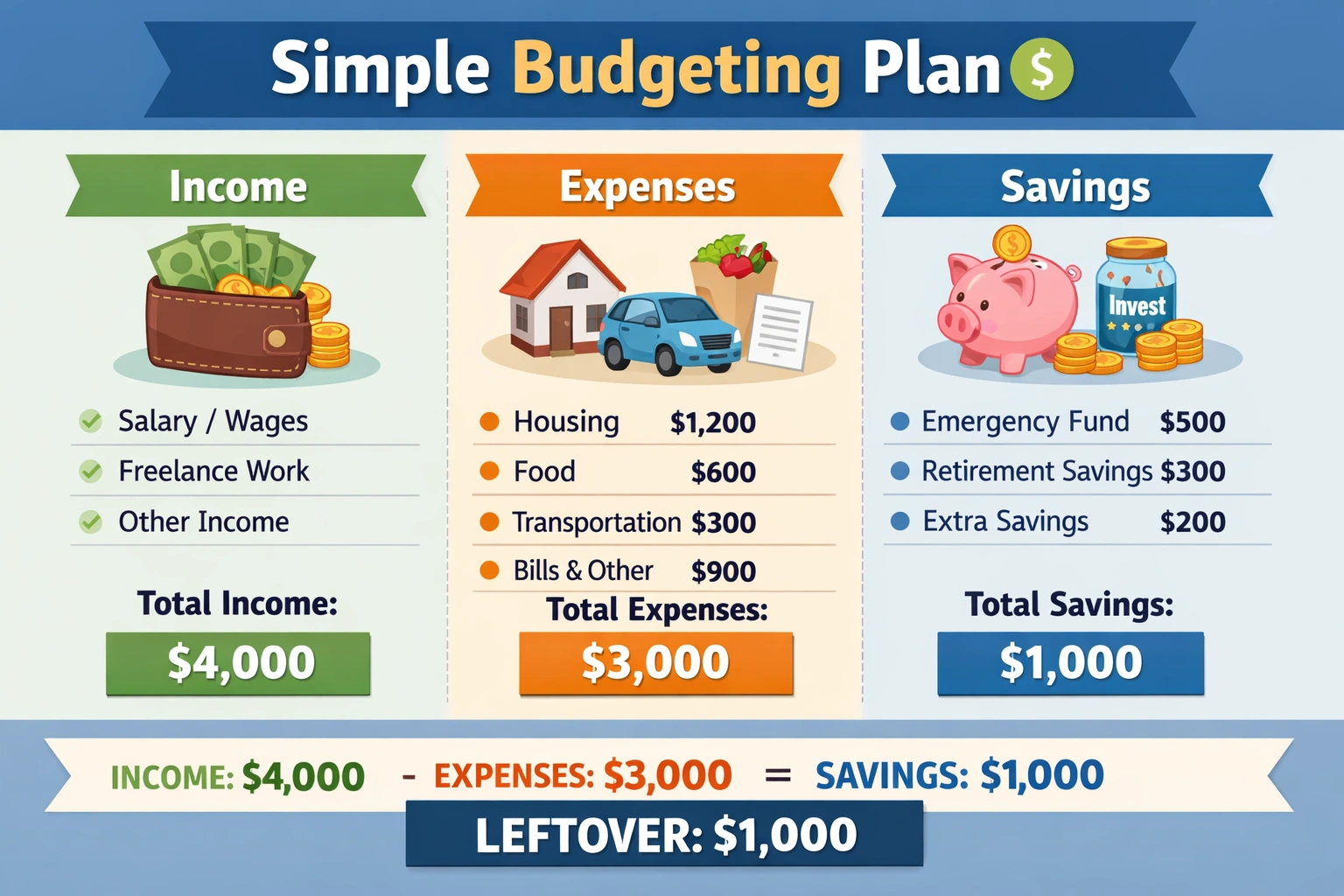
- Spending less than you earn
- Saving regularly before spending
- Investing with a long-term plan
- Avoiding emotional financial decisions
Discipline vs. Income: A Simple Comparison
Consider two individuals:
| Person | Monthly Income | Savings Rate | Net Worth After 10 Years |
|---|---|---|---|
| A | $8,000 | 5% | Low |
| B | $3,500 | 25% | High |
Despite earning less, Person B builds more wealth through disciplined saving and investing. This pattern is widely observed across personal finance studies and retirement data.
Why Financial Discipline Matters More Than Income
Income Is Temporary, Discipline Is Permanent
Income can change due to:
- Job loss
- Economic downturns
- Health issues
- Industry disruption
Financial discipline, however, is a portable skill. Once developed, it applies at every income level and in every economic environment.
“Wealth is built by habits, not windfalls.”
Lifestyle Inflation: The Silent Wealth Killer
As income rises, expenses often rise even faster—a phenomenon known as lifestyle inflation.
Examples include:
- Upgrading cars too frequently
- Expanding housing costs unnecessarily
- Increasing discretionary spending without increasing savings
Without financial discipline, higher income often leads to higher stress, not higher wealth.
Financial Discipline and Investing Success
Consistency Beats Timing
Disciplined investors focus on consistent investing, not market timing.
Key disciplined investing behaviors:
- Investing monthly regardless of market conditions
- Rebalancing portfolios periodically
- Avoiding panic selling during market downturns
Historically, investors who stayed invested through major crises—such as the 2008 financial crisis or the 2020 pandemic shock—outperformed those who reacted emotionally.
The Power of Compounding
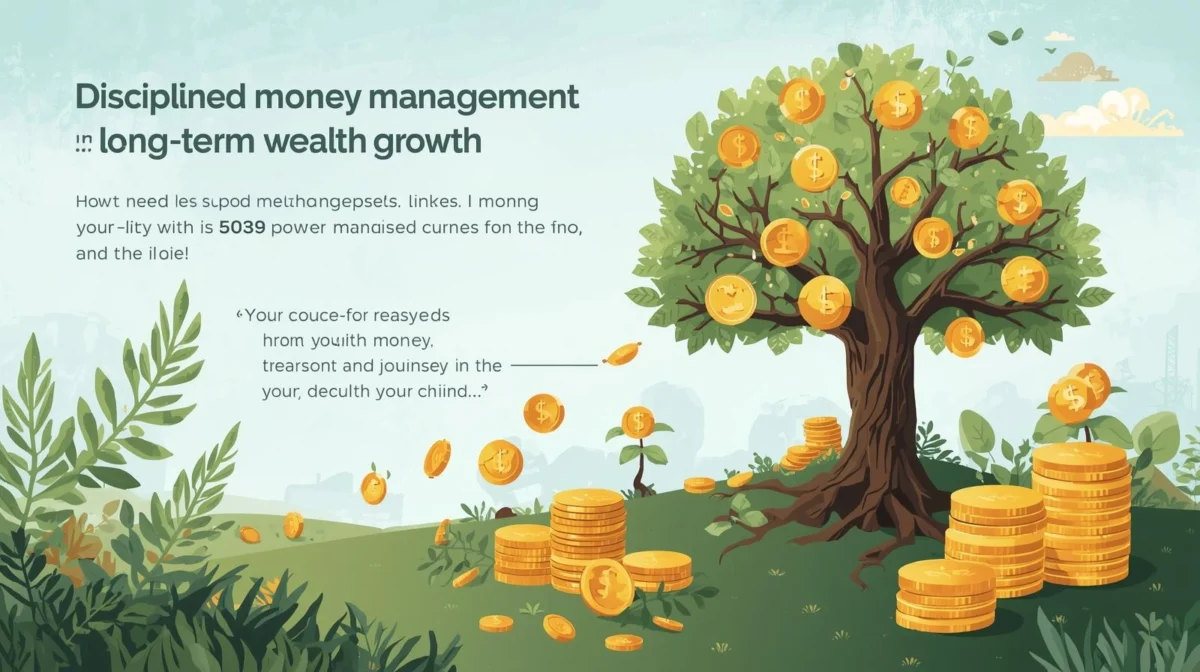
Compounding rewards discipline more than intelligence or income.
Example:
- Investing $300 per month at a 7% annual return
- Over 30 years → approximately $340,000
The secret is not the amount—it is the consistency over time.
“Compound interest is the eighth wonder of the world.” — often attributed to Albert Einstein
Financial Discipline and Passive Income
Passive Income Requires Active Discipline
Passive income is often misunderstood as “easy money.” In reality, it requires strong financial discipline upfront.
Common passive income assets include:
- Dividend-paying stocks
- Index funds and ETFs
- Rental properties
- Digital products and online businesses
Each requires:
- Initial capital allocation
- Reinvestment of returns
- Patience during slow growth phases
Reinvesting Instead of Spending
Disciplined individuals reinvest passive income rather than consuming it immediately.
For example:
- Reinvesting dividends instead of spending them
- Using rental cash flow to reduce debt or acquire more assets
This creates a snowball effect, accelerating long-term wealth.
Financial Discipline in Financial Markets
Emotional Control During Market Volatility
Financial markets are driven by cycles of fear and greed. Disciplined investors recognize this and act rationally.
During market downturns, disciplined investors:
- Stick to their asset allocation
- View declines as potential opportunities
- Avoid constant checking of prices
During market booms, they:
- Avoid overconfidence
- Rebalance portfolios
- Maintain realistic return expectations
“The investor’s chief problem—and even his worst enemy—is likely to be himself.” — Benjamin Graham
Risk Management as a Form of Discipline
Financial discipline is not about avoiding risk entirely, but about managing risk intentionally.
Disciplined risk management includes:
- Diversification across asset classes
- Position sizing to avoid catastrophic losses
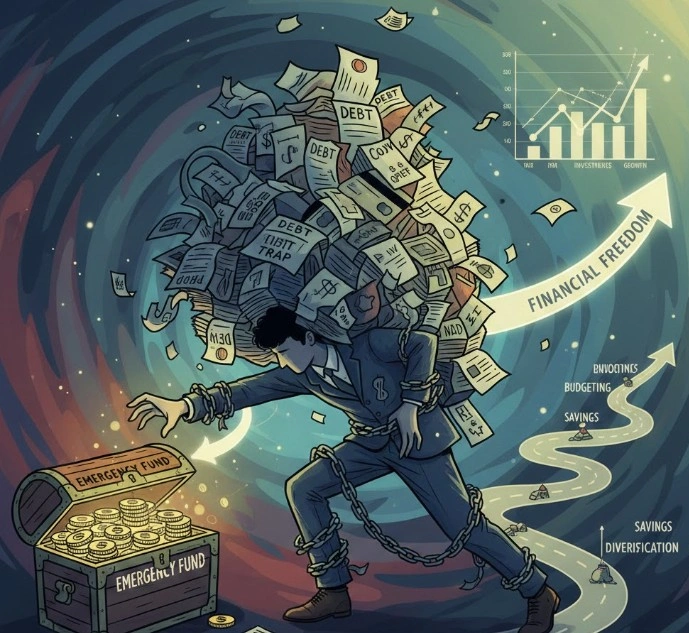
- Maintaining an emergency fund
How to Build Financial Discipline (Actionable Steps)
1. Automate Good Decisions
Automation removes emotion from money management:
- Automatic savings transfers
- Automatic investment contributions
- Automatic bill payments
2. Track What Matters
You don’t need complex spreadsheets, but you do need awareness:
- Monthly cash flow
- Savings rate
- Net worth over time
What gets measured gets improved.
3. Set Clear Financial Rules
Examples of disciplined financial rules:
- “I save at least 20% of every paycheck.”
- “I never invest money I need within 5 years.”
- “I don’t make financial decisions during emotional stress.”
4. Think in Decades, Not Days
Financial discipline thrives on long-term thinking. Short-term market movements matter far less than long-term behavior.
Conclusion: Discipline Is the Real Wealth Multiplier
Financial discipline is the foundation of sustainable wealth. Income can accelerate progress, but without discipline, it often disappears just as quickly.
Key takeaways:
- Financial discipline consistently outperforms high income over time
- Disciplined investing benefits from compounding and consistency
- Passive income grows fastest when reinvested
- Emotional control is essential in financial markets
Practical actions to start today:
- Automate savings and investments
- Define personal financial rules
- Focus on long-term goals, not short-term noise
In the end, financial freedom is less about how much you earn—and more about how disciplined you are with what you already have.