Introduction
One of the most common personal finance questions is simple yet powerful: Should I save my money or invest it?
The debate around investing vs saving is not about choosing one over the other—it’s about understanding when, why, and how each strategy works to build long-term wealth.
In an era of rising inflation, volatile financial markets, and increasing interest in passive income, making the right decision can significantly impact your financial future. As Warren Buffett famously said, “Do not save what is left after spending; spend what is left after saving.” The same logic applies to investing—strategy matters.
In this article, you’ll learn:
- The fundamental differences between saving and investing
- When saving is the smarter choice
- When investing becomes essential for wealth building
- How financial markets, inflation, and risk affect both strategies
- Practical frameworks to balance saving, investing, and passive income
Whether you’re a beginner or an experienced investor, this guide will help you make smarter, more confident financial decisions.
Table of Contents
Understanding the Core Difference: Investing vs Saving
What Is Saving?
Saving is the act of setting aside money in low-risk, easily accessible accounts. Common saving tools include:
- Savings accounts
- High-yield savings accounts
- Money market accounts
- Short-term certificates of deposit (CDs)
The primary goals of saving are:
- Capital preservation
- Liquidity
- Short-term financial security
As financial planners often say, “Savings is about protection, not growth.”
What Is Investing?
Investing involves putting money into assets that have the potential to grow in value over time, such as:
- Stocks
- Bonds
- Mutual funds and ETFs
- Real estate
- Businesses and alternative assets
Unlike saving, investing exposes your money to market risk—but also to significantly higher long-term returns.
Historically, global stock markets have delivered average annual returns of around 7–10% after inflation, while traditional savings accounts often struggle to keep up with inflation.
Saving: When Safety Matters More Than Growth
The Advantages of Saving
Saving plays a critical role in any personal finance strategy:
- Low risk: Your principal is generally protected
- High liquidity: Immediate access to cash
- Stability: Ideal during economic uncertainty
When Saving Is the Right Choice
Saving should be prioritized when:
- Building an emergency fund (3–6 months of expenses)
- Preparing for short-term goals (less than 3 years)
- Managing upcoming expenses like tuition, rent, or medical costs
A common rule of thumb is:
“If you’ll need the money soon, don’t risk it in the market.”
The Hidden Cost of Saving: Inflation
Inflation quietly erodes purchasing power. For example:
- If inflation averages 4% annually
- And your savings earn 1–2%
- Your real return becomes negative
This is why saving alone rarely builds long-term wealth.
Investing: The Engine of Wealth Creation
Why Investing Builds Wealth Over Time
Investing benefits from:
- Compound growth
- Economic expansion
- Reinvested earnings and dividends
Albert Einstein reportedly called compound interest “the eighth wonder of the world.” Whether or not the quote is authentic, the math certainly supports the idea.
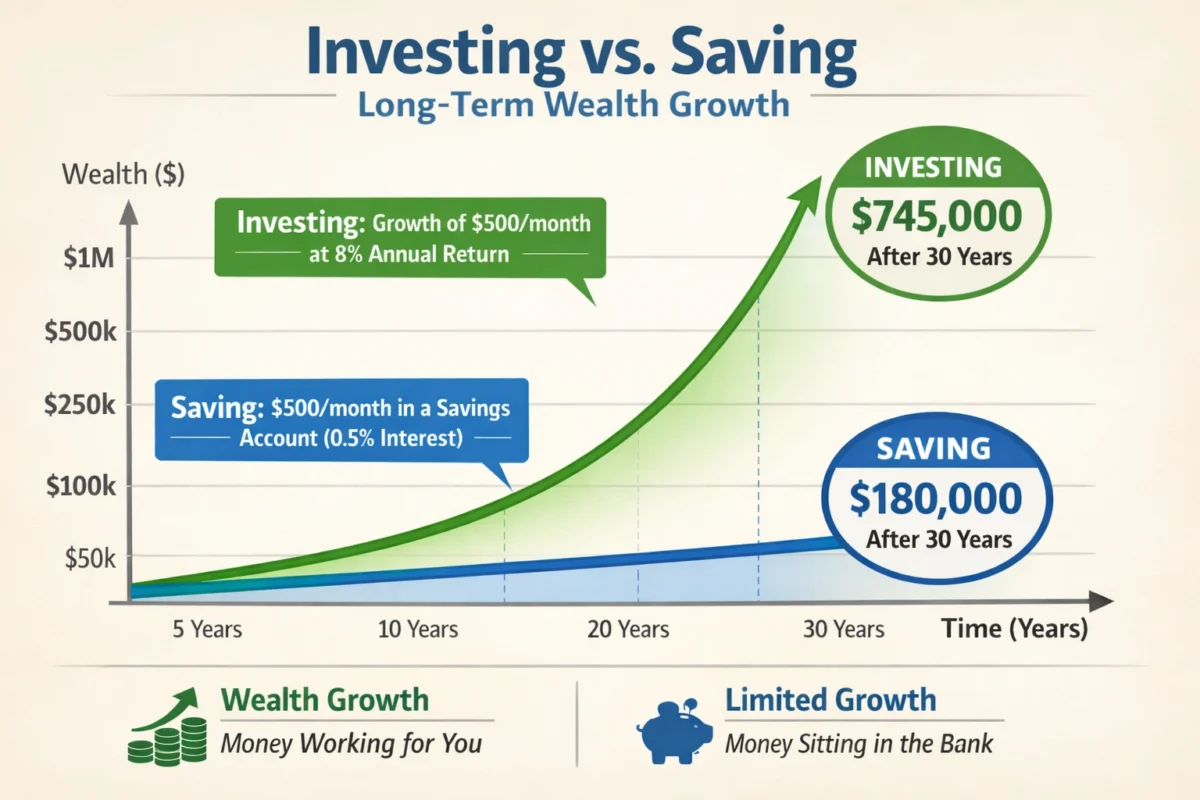
Example: Saving vs Investing Over 20 Years
Imagine two individuals:
- Person A saves $5,000 per year at 2%
- Person B invests $5,000 per year at 8%
After 20 years:
- The saver accumulates roughly $123,000
- The investor accumulates over $228,000
The difference is not effort—it’s strategy.
Risk and Volatility Explained Simply
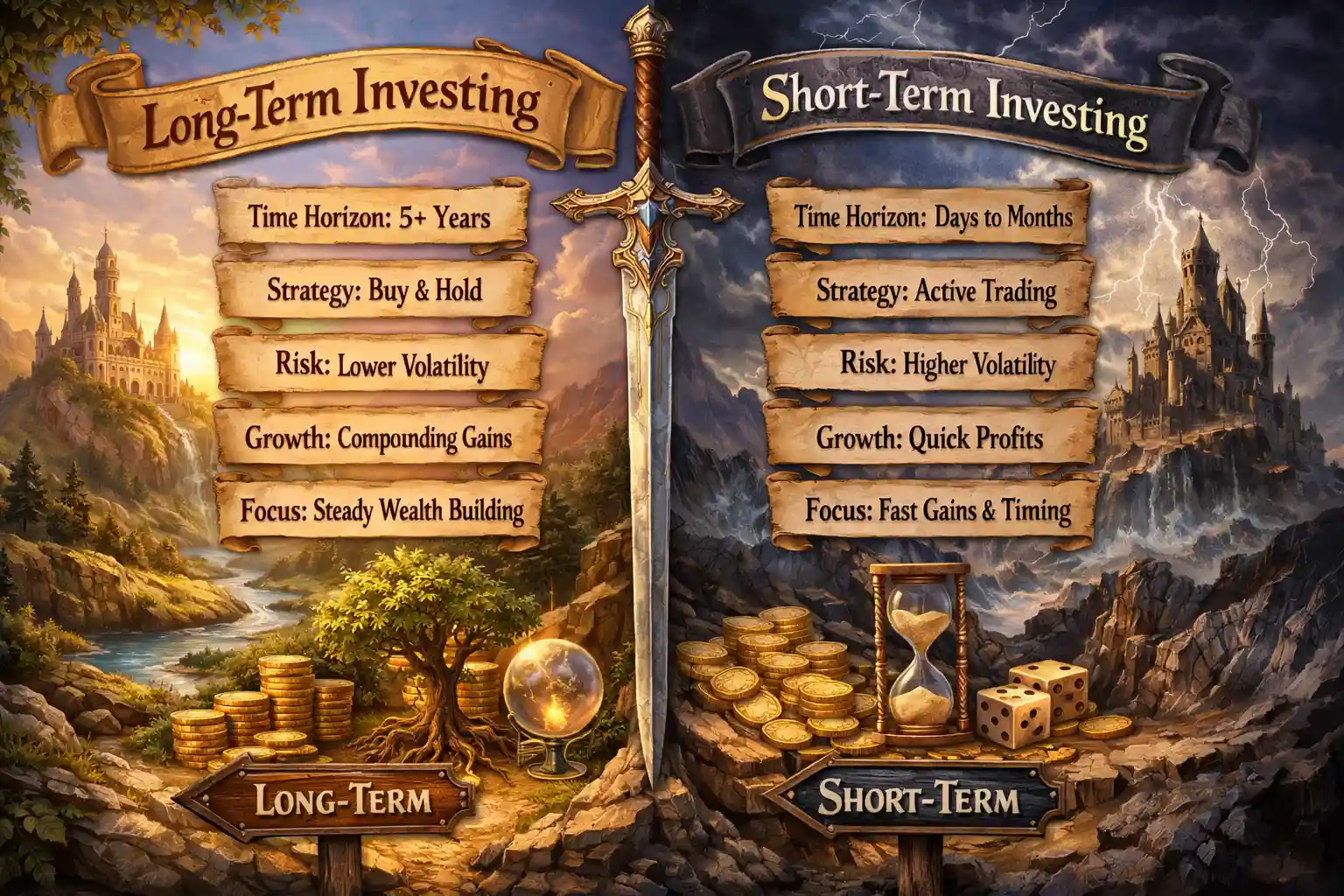
Market fluctuations are normal. In the short term, prices move unpredictably. In the long term, markets tend to reward patience.
As John C. Bogle said, “Time is your friend; impulse is your enemy.”
Investing vs Saving Across Life Stages
Early Career (20s–30s)
Best focus:
- Build emergency savings
- Start investing early
- Embrace long-term growth
Why it works:
- Longer time horizon reduces risk
- Compounding has decades to work
Mid-Career (40s–50s)
Best focus:
- Balance investing and saving
- Diversify across asset classes
- Increase contributions to retirement accounts
At this stage, risk management becomes as important as growth.
Pre-Retirement & Retirement
Best focus:
- Capital preservation
- Income-generating investments
- Higher allocation to bonds and cash
Here, saving regains importance for stability and predictable cash flow.
Passive Income: Where Investing and Saving Intersect
Passive income strategies often rely on investing rather than saving. Common examples include:
- Dividend-paying stocks
- Rental real estate
- Bond interest
- Index fund distributions
Unlike savings interest, passive income can:
- Grow over time
- Adjust with inflation
- Provide long-term financial independence
As many investors say, “Active work pays the bills; passive income builds freedom.”
How Financial Markets Influence the Decision
Interest Rates and Saving
When central banks raise interest rates:
- Savings accounts become more attractive
- Short-term cash strategies improve
However, higher rates can also slow economic growth.
Market Cycles and Investing
Financial markets move in cycles:
- Bull markets reward risk-taking
- Bear markets reward discipline and long-term thinking
Investing consistently—rather than trying to time the market—has proven more effective for most investors.
A Practical Framework: How to Balance Investing vs Saving
A simple, effective approach:
- Emergency fund first (savings)
- Eliminate high-interest debt
- Invest for long-term goals
- Save for short-term needs
- Rebalance as life changes
This framework allows you to benefit from both stability and growth.
Conclusion: The Smart Answer to Investing vs Saving
The question “investing vs saving” does not have a one-size-fits-all answer. Saving protects your financial foundation. Investing builds wealth and long-term security.
Key takeaways:
- Saving is essential for safety and short-term goals
- Investing is critical for beating inflation and building wealth
- Time horizon and risk tolerance determine the right balance
- Passive income strategies rely primarily on investing
The most successful financial plans use both—strategically and intentionally. Start where you are, stay consistent, and let time work in your favor.