Author: Expert 01
Date: January 16, 2026
Introduction: Shifting from Speculation to Strategic Investment
Investing in the cryptocurrency market is often portrayed as a high-stakes gamble, a volatile arena where fortunes are made and lost in the blink of an eye. While the market is undeniably characterized by dramatic price swings, this perception is largely fueled by the actions of short-term traders and speculators. For the strategic, long-term investor, the approach is fundamentally different. It is a philosophy that replaces the emotional rollercoaster of daily trading with the steady, disciplined pursuit of wealth accumulation based on fundamental value and technological adoption [1].
The core premise of long-term cryptocurrency investing—often referred to as “HODLing” (Hold On for Dear Life)—is that the underlying technology, primarily blockchain, represents a paradigm shift in finance, data, and governance. Therefore, investing is not about timing the market’s minute-to-minute fluctuations, but about acquiring and holding assets that are positioned to benefit from this multi-decade technological revolution. This mindset is crucial for mitigating the psychological traps that ensnare most new investors: the Fear of Missing Out (FOMO) when prices surge, and the Fear, Uncertainty, and Doubt (FUD) that leads to panic selling during inevitable market corrections [2].
A long-term investor buys with a clear investment thesis: a reasoned belief in the project’s technology, its team, its community, and its real-world utility. This thesis is built on three core pillars: Technological Superiority, Community Strength, and Sustainable Use Case. They view short-term volatility as noise, not a signal, and understand that time is their most powerful ally. By focusing on the long game, investors can reduce stress, make more rational decisions, and steadily grow their portfolio as the underlying technology matures and gains wider adoption. This comprehensive guide will detail the strategic pillars of this approach, with a specific focus on the importance of quality, diversification, and leveraging passive growth opportunities within the top echelons of the crypto market.
Table of Contents
The Three Pillars of a Long-Term Crypto Investment Thesis
To “buy with a plan,” an investor must move beyond hype and analyze the fundamental value proposition of a cryptocurrency.
- Technological Superiority and Innovation: The project must solve a real-world problem more efficiently or effectively than existing solutions, both within and outside the crypto space. This involves assessing the quality of the code, the security of the network (e.g., consensus mechanism), and the roadmap for future development. For instance, a Layer 1 blockchain should demonstrate a clear path to scalability (e.g., sharding, rollups) without compromising decentralization or security (the “blockchain trilemma”). A project that stagnates technologically is unlikely to survive multiple market cycles.
- Community Strength and Decentralization: A truly decentralized project is resilient because its future is not dependent on a single founder or company. Community strength is measured by the number of active developers, the engagement of token holders in governance, and the organic growth of users. A strong community acts as a powerful defense mechanism against regulatory pressure and technical failures, ensuring the project can adapt and endure.
- Sustainable Use Case and Adoption: The project must have a clear, addressable market and demonstrable adoption. Is the token merely a speculative asset, or is it required to use a service, pay for computation, or secure the network? Real-world use cases—such as facilitating cross-border payments (XRP), powering decentralized applications (ETH, SOL), or providing decentralized storage—are the ultimate drivers of long-term value.
I. The Imperative of Quality: Why the Top 50 Matter

The cryptocurrency universe is vast, comprising thousands of digital assets. While the allure of finding the next “100x” micro-cap coin is strong, the reality is that the vast majority of these projects will fail or fade into obscurity. For the long-term investor, the primary goal is capital preservation and sustainable growth, which necessitates a focus on quality. This is why concentrating investments within the Top 50 cryptocurrencies by market capitalization is a cornerstone of a prudent long-term strategy [3].
The market capitalization ranking is not merely an arbitrary list; it is a dynamic, real-time measure of the market’s collective valuation of a project’s network effect, liquidity, and perceived future value. Investing in the Top 50 offers several distinct advantages that significantly de-risk a portfolio:
A. Enhanced Liquidity and Stability
The higher a coin ranks, the greater its liquidity. Liquidity refers to the ease with which an asset can be bought or sold without significantly impacting its price. Top-tier assets like Bitcoin (BTC) and Ethereum (ETH) are traded on virtually every major exchange, ensuring that an investor can enter or exit a position quickly and efficiently. This is a critical factor for long-term investors who may need to rebalance their portfolio or liquidate a portion of their holdings without incurring high slippage or transaction costs.
Furthermore, while all cryptocurrencies are volatile, the largest assets tend to exhibit a relative degree of stability compared to smaller-cap tokens. They have deeper market support, are held by institutional investors, and have survived multiple bear market cycles, demonstrating resilience that smaller, newer projects cannot guarantee [4]. This resilience is a key indicator of long-term viability, as it proves the project can withstand severe economic and psychological stress.
B. Proven Track Record and Real Adoption
The projects that consistently maintain a position in the Top 50 have generally demonstrated a proven track record of development, community engagement, and, most importantly, real-world adoption. These are the protocols that are actively being used for payments, decentralized finance (DeFi), smart contracts, and decentralized applications (dApps).
For example, Ethereum (ETH) is the foundational layer for the majority of the DeFi and NFT ecosystems. Solana (SOL) and Avalanche (AVAX) are established Layer-1 competitors that have proven their ability to handle high transaction throughput. Chainlink (LINK) is the dominant decentralized oracle network, providing essential data feeds to the entire blockchain industry. These are not speculative concepts; they are functioning, mission-critical pieces of the new digital economy.
C. Categorization of the Top 50 Landscape (January 2026)
The current composition of the Top 50 reflects the major narratives and technological advancements driving the market in 2026. A long-term investor should understand these categories to build a diversified portfolio.
| Rank (Sample) | Cryptocurrency (Ticker) | Primary Category | Long-Term Investment Thesis |
|---|---|---|---|
| 1 | Bitcoin (BTC) | Store of Value (SoV) | Digital Gold; ultimate hedge against inflation and monetary debasement. |
| 2 | Ethereum (ETH) | Programmable Money/L1 | The foundational layer for the decentralized internet (Web3); high utility through smart contracts and staking. |
| 6 | Solana (SOL) | High-Throughput L1 | Scalable, fast, and low-cost platform for mass-market dApps and consumer adoption. |
| 11 | Chainlink (LINK) | Decentralized Oracle | Essential middleware connecting real-world data to smart contracts; a foundational utility layer. |
| 31 | Bittensor (TAO) | AI/Decentralized Compute | A leading project in the convergence of AI and crypto, incentivizing decentralized machine learning. |
| 3, 7, 26 | Stablecoins (USDT, USDC, PYUSD) | Stable Value/Utility | Essential for market liquidity, cross-border payments, and DeFi participation. |
| 38, 41 | Real-World Assets (XAUt, PAXG) | Tokenized Assets (RWA) | Digital representation of physical assets (e.g., gold), bridging traditional finance with blockchain. |
| 22, 34 | Memecoins (SHIB, PEPE) | Community/Culture | High-risk, high-reward assets driven by strong community and cultural relevance. |
Note: Data based on market capitalization as of January 16, 2026 [5].
The inclusion of assets like Bittensor (TAO) and the rise of multiple stablecoins and Real-World Asset (RWA) tokens (XAUt, PAXG, USD1, USDG, RLUSD) in the Top 50 underscores the market’s evolution beyond simple digital currencies into a complex, multi-faceted financial ecosystem.
D. The Resilience of the Top 50: A Case Study in Survival
The Top 50 list is not static, but the core assets demonstrate a remarkable ability to survive and thrive. A long-term investor is primarily concerned with the longevity of an asset. The history of the crypto market is littered with projects that briefly entered the Top 10 only to vanish during the next bear market. The current Top 50, particularly the top 10, have proven their ability to:
- Adapt to Technological Change: Ethereum’s successful transition to Proof-of-Stake (The Merge) is a prime example of a top asset executing a massive, high-stakes technological upgrade.
- Weather Regulatory Uncertainty: Major assets like Bitcoin and Ethereum have been the focus of regulatory discussions globally, and their continued dominance suggests a path toward compliance and integration into the global financial system.
- Maintain Developer Mindshare: The most important metric for a Layer 1 is the number of active developers building on the platform. The Top 50 Layer 1s consistently attract the most talent, ensuring a continuous cycle of innovation and utility creation.
By focusing on this proven cohort, the long-term investor dramatically reduces the risk of total capital loss associated with investing in unproven, low-liquidity projects. This is the essence of quality-focused investing in a high-risk asset class.
II. Strategic Diversification Across Crypto Sectors
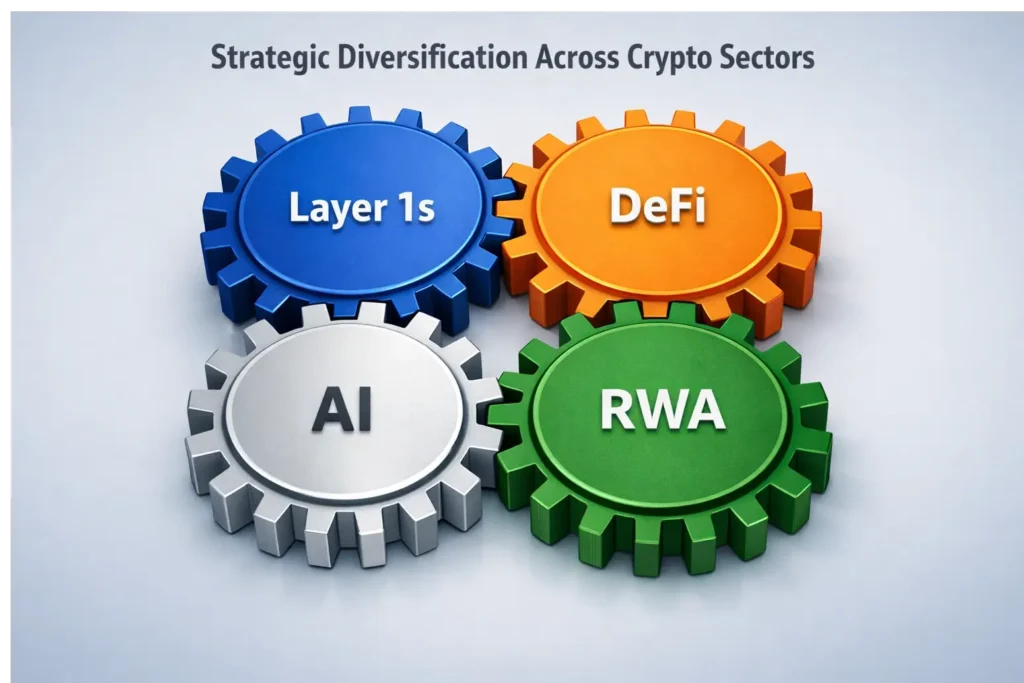
The adage “Don’t put all your eggs in one basket” is particularly relevant in the volatile crypto market. However, true diversification in crypto is more nuanced than simply owning a handful of different coins. It requires spreading risk across different sectors and use cases to ensure that the portfolio is resilient to shifts in market narratives and technological obsolescence.
A. Diversification by Sector
A well-diversified long-term portfolio should include exposure to the following key sectors, which represent the foundational layers and emerging trends of the decentralized web:
- Base Layer Protocols (Layer 1s): These are the core blockchains that settle transactions. This category should be the foundation of any portfolio.
- The Majors: Bitcoin (BTC) and Ethereum (ETH) should form the largest allocation due to their unparalleled network effects and security.
- The Competitors: Exposure to high-throughput alternatives like Solana (SOL), Avalanche (AVAX), and Aptos (APT) hedges against potential scaling issues or shifts in developer preference away from Ethereum.
- The Ecosystems: Projects like Polkadot (DOT) and Cosmos (ATOM) focus on interoperability, allowing the portfolio to benefit from the growth of multiple connected chains.
- Decentralized Finance (DeFi) and Utility: These protocols provide financial services or essential infrastructure.
- DeFi Blue Chips: Assets like Uniswap (UNI) (decentralized exchange) and Aave (AAVE) (lending/borrowing) are integral to the DeFi ecosystem.
- Oracles and Data: Chainlink (LINK) is a must-have for its critical role in providing reliable data to smart contracts.
- Emerging Narratives (AI, RWA, Gaming): These are the high-growth sectors driven by 2026 trends.
- AI & Compute: Bittensor (TAO) represents the intersection of AI and blockchain, a major growth area.
- Real-World Assets (RWA): Tokenized assets like Tether Gold (XAUt) and PAX Gold (PAXG) offer a stable, tangible asset class within the crypto portfolio, bridging traditional finance with blockchain.
- Stablecoins and Privacy: These assets serve as essential portfolio tools.
- Stablecoins: Holding a portion of the portfolio in stablecoins (USDC, PYUSD, DAI) provides a safe haven during market downturns and allows for quick deployment of capital during buying opportunities.
- Privacy Coins: Monero (XMR) and Zcash (ZEC) offer exposure to the fundamental use case of financial privacy, which remains a core tenet of the crypto movement.
B. Allocation Based on Risk Profile
The optimal allocation depends heavily on the investor’s risk tolerance and time horizon. The following table illustrates three common long-term portfolio models:
| Category | Conservative Investor | Moderate Investor | Aggressive Investor |
|---|---|---|---|
| Tier 1 (BTC & ETH) | 60% (40% BTC, 20% ETH) | 50% (30% BTC, 20% ETH) | 40% (25% BTC, 15% ETH) |
| Tier 2 (L1 Competitors) | 20% (SOL, AVAX, APT) | 30% (SOL, AVAX, APT, NEAR) | 35% (SOL, AVAX, APT, NEAR, SUI) |
| Tier 3 (DeFi & Utility) | 10% (LINK, AAVE, UNI) | 10% (LINK, AAVE, UNI, DOT) | 15% (LINK, AAVE, UNI, DOT, MNT) |
| Tier 4 (Emerging Trends) | 5% (RWA, AI) | 5% (RWA, AI, Gaming) | 5% (RWA, AI, Gaming, Memecoins) |
| Stablecoins/Cash | 5% | 5% | 5% |
| Total | 100% | 100% | 100% |
The conservative approach prioritizes the established network effects of Bitcoin and Ethereum, while the aggressive model allocates more capital to high-growth Layer 1s and emerging narratives. The common thread is that all models maintain a significant foundation in the most liquid and battle-tested assets.
III. Generating Passive Income: Staking and Yield

A critical advantage of long-term crypto investing, particularly with assets in the Top 50, is the ability to generate passive income through mechanisms like staking and yield farming. This transforms a static holding into a productive asset, allowing the investor to compound their returns over time without actively trading.
A. The Power of Staking (Proof-of-Stake)
Staking is the process of locking up cryptocurrency to support the operations of a Proof-of-Stake (PoS) blockchain network. In return for securing the network and validating transactions, stakers earn rewards, typically in the form of newly minted coins or transaction fees. This is analogous to earning interest in a traditional savings account, but often with significantly higher yields.
For the long-term investor, staking offers three major benefits:
- Compounding Returns: The rewards earned from staking can be immediately re-staked, leading to exponential growth over years. This compounding effect is a powerful driver of long-term wealth, often significantly outpacing traditional financial instruments. For example, a 5% annual staking reward, compounded daily, can add substantial value to a long-term position, especially when the underlying asset’s price appreciates. This strategy effectively turns the investor into a passive participant in the network’s economic security, earning a share of the transaction fees and block rewards.
- Inflation Hedge: By earning new coins, staking helps offset the inflationary pressure of the token’s supply schedule, maintaining the investor’s proportional ownership of the network. In many PoS systems, the staking yield is designed to be slightly higher than the network’s inflation rate, ensuring that stakers are rewarded for their commitment and that non-stakers are gradually diluted. This mechanism is crucial for maintaining the long-term value proposition of the asset.
- Network Participation and Security: Staking aligns the investor’s financial incentives with the long-term health and security of the network they are invested in. By locking up capital, stakers have a vested interest in the network’s success and are penalized (slashed) for malicious behavior. This mechanism is the core security model of PoS blockchains.
Many of the top Layer 1 and Layer 2 protocols are PoS-based and offer staking options. Ethereum (ETH), following its transition to PoS, is the largest staking asset globally. Other notable Top 50 staking assets include Solana (SOL), Cardano (ADA), Polkadot (DOT), NEAR Protocol (NEAR), and Aptos (APT). The availability of staking for these blue-chip assets makes them particularly attractive for a long-term, passive strategy [6]. When selecting a staking asset, the investor should consider the unbonding period (the time required to withdraw staked assets), the Annual Percentage Yield (APY), and the security of the staking mechanism (e.g., solo staking vs. liquid staking protocols).
B. Advanced Yield Strategies (With Caution)
Beyond simple staking, the decentralized finance (DeFi) ecosystem offers more complex yield-generating opportunities, though these come with increased risk:
- Lending and Borrowing: Platforms like Aave (AAVE) allow investors to lend their crypto holdings (e.g., stablecoins, ETH) to borrowers and earn interest. This is generally considered a lower-risk DeFi activity, provided the platform’s smart contracts are secure. The yield is derived from the demand for borrowing, which can fluctuate significantly.
- Liquidity Provision (LP): Investors can deposit two different tokens into a decentralized exchange (DEX) liquidity pool (e.g., on Uniswap (UNI)) to facilitate trading. They earn a share of the trading fees, but this strategy carries the risk of Impermanent Loss, where the value of the deposited assets changes relative to each other, potentially resulting in a loss compared to simply holding the tokens. Impermanent loss is the single greatest risk in LP and requires a deep understanding of market dynamics and the specific pool’s token pair.
- Yield Aggregators: Protocols that automatically move assets between different DeFi platforms to find the highest yield. While convenient, they introduce additional smart contract risk. The investor is trusting the aggregator’s code and strategy, adding another layer of potential failure.
The long-term investor should approach these advanced strategies with caution, prioritizing security and auditing over the highest possible yield. Sticking to staking on the most established Top 50 protocols is often the most prudent path for passive, low-maintenance growth. The primary goal is to enhance the long-term holding, not to engage in complex, high-risk trading strategies.
IV. Mastering the Market Cycle: Discipline and Dollar-Cost Averaging
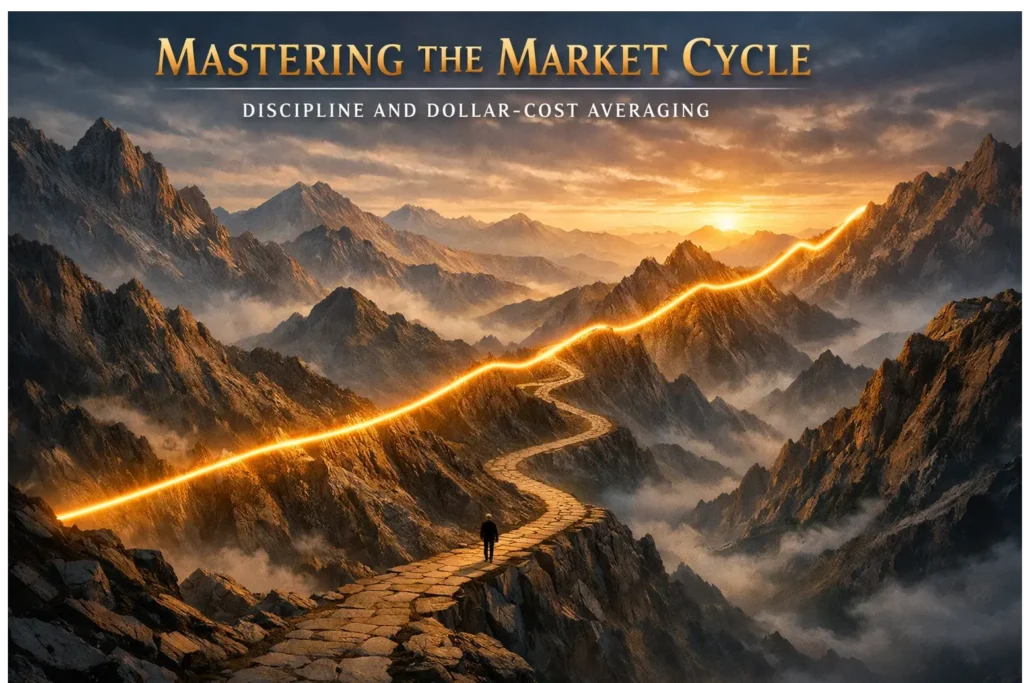
The crypto market is notoriously cyclical, characterized by explosive bull runs followed by deep, protracted bear markets. The long-term investor does not attempt to predict the exact peaks and troughs but instead embraces the cyclical nature of the market through discipline and strategic buying.
A. The Four-Year Cycle and Its Evolution
Historically, the crypto market has been heavily influenced by the roughly four-year cycle of the Bitcoin Halving. This event, which cuts the supply of new Bitcoin entering the market by half, has traditionally preceded the most significant bull runs. Understanding this historical pattern provides a framework for long-term planning, even if the cycle is becoming less predictable.
The research for 2026 suggests that Bitcoin may be “breaking the four-year cycle and setting new all-time highs” outside of the traditional halving window [7]. This potential shift is likely due to the massive influx of institutional capital and the launch of spot Bitcoin ETFs, which introduce a new, non-cyclical demand source. Regardless of the exact timing, the principle remains: market dips are inevitable, and they represent opportunities, not reasons for panic.
The evolution of the cycle means that investors must look beyond the simple Halving narrative. Factors such as global macroeconomic conditions, interest rate policies, and regulatory developments now play an increasingly significant role. The long-term investor must be a macro-investor, understanding that crypto is now deeply integrated into the global financial system.
B. The Power of Dollar-Cost Averaging (DCA)
The most effective tool for navigating market cycles is Dollar-Cost Averaging (DCA). DCA involves investing a fixed amount of money at regular intervals (e.g., weekly or monthly), regardless of the asset’s price.
How DCA Works for Long-Term Crypto Investing:
- Removes Emotion: By automating the investment process, DCA eliminates the emotional impulse to buy high (FOMO) or sell low (FUD). It enforces a disciplined, systematic approach that removes the single greatest enemy of the long-term investor: their own psychology.
- Averages the Cost: Over time, the investor buys more shares when the price is low and fewer when the price is high, resulting in a lower average cost per coin than if they had tried to time the market. This strategy is mathematically proven to outperform lump-sum investing in volatile markets over long periods.
- Strategic Use of Dips: When a significant market correction occurs (a 20-50% drop), the long-term investor can strategically deploy a portion of their stablecoin reserves (their “dry powder”) to buy more aggressively, a process known as “averaging down.” This lowers the overall cost basis and maximizes potential returns when the market inevitably recovers. This is the only time a long-term investor should deviate from their fixed DCA schedule, and only with a pre-determined, non-emotional allocation.
The long-term investor views a 50% drop in the price of a fundamentally sound Top 50 asset as a 50% discount on a valuable technology, not a failure of the investment thesis. They understand that the true value of their investment is in the underlying technology and its adoption curve, which is rarely reflected accurately in short-term price action.
V. The 2026 Investment Landscape: Key Trends and Narratives
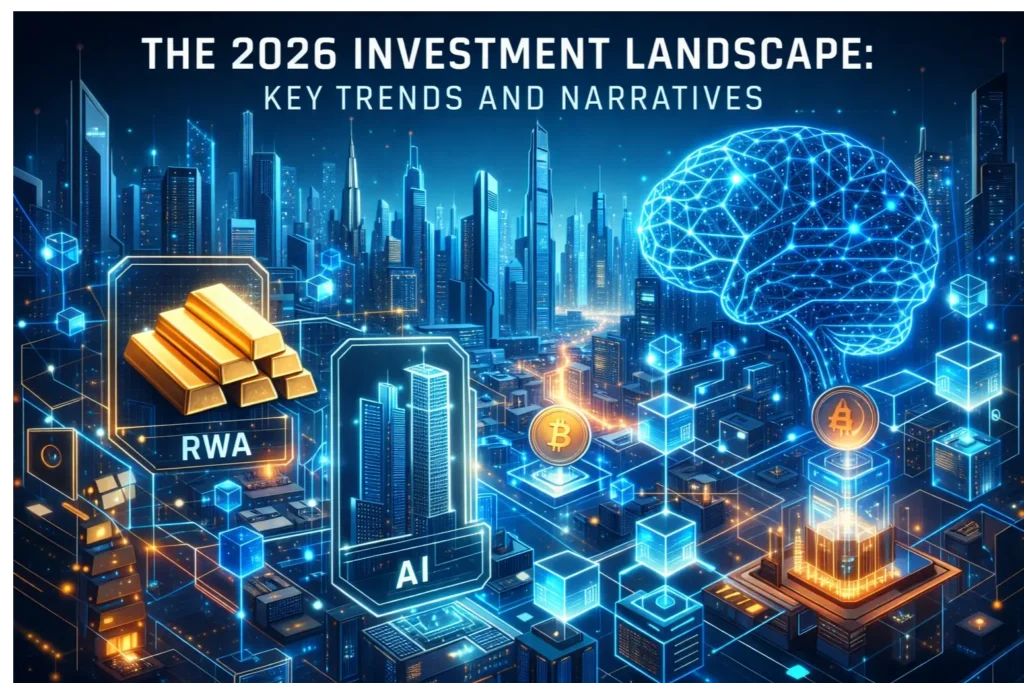
The research conducted for this article highlights several key trends that are shaping the long-term investment landscape in 2026. A forward-thinking portfolio must have exposure to these emerging narratives to capture the next wave of growth.
A. The Rise of Real-World Asset (RWA) Tokenization
Asset tokenization, the process of issuing a blockchain-based token that represents a claim on a tangible or intangible real-world asset, is a leading trend in 2026 [8]. This movement is the ultimate bridge between traditional finance (TradFi) and decentralized finance (DeFi).
- Investment Implication: RWA tokens offer investors exposure to traditionally illiquid assets (like real estate, commodities, or fine art) with the transparency, speed, and fractional ownership benefits of blockchain. This dramatically expands the total addressable market for blockchain technology beyond native digital assets.
- Top 50 Examples: The presence of Tether Gold (XAUt) and PAX Gold (PAXG) in the Top 50 demonstrates the market’s demand for tokenized commodities. These assets allow investors to hold a digital representation of physical gold, offering a stable, non-correlated asset within their crypto portfolio. Furthermore, the emergence of stablecoins backed by traditional assets (e.g., USD1, USDG, RLUSD) indicates a growing institutional comfort with blockchain-based financial instruments.
B. The Convergence of AI and Crypto
The synergy between Artificial Intelligence (AI) and blockchain technology is creating a powerful new sector. Blockchain provides the decentralized, transparent, and incentive-aligned infrastructure necessary for AI development and data sharing.
- Investment Implication: Projects that decentralize AI computation, data markets, or machine learning models are poised for significant growth. The long-term thesis here is that AI models, like data, should not be controlled by a few centralized entities. Decentralized AI projects aim to democratize access to computing power and reward contributors fairly.
- Top 50 Example: Bittensor (TAO) is a prime example, operating as a decentralized machine learning network that incentivizes the creation and sharing of AI models. Its high valuation in the Top 50 reflects the market’s belief that “AI and Crypto trades will mirror each other” [9]. Investing in such projects is a bet on the future of decentralized intelligence, where the value of the network is directly proportional to the quality of the AI models it hosts.
C. Institutional Adoption and Market Maturation
The continued influx of institutional capital is perhaps the most significant long-term driver of market maturation. The approval of spot ETFs in major jurisdictions has opened the floodgates for pension funds, endowments, and wealth managers to gain exposure to Bitcoin and, eventually, other blue-chip assets like Ethereum.
- Investment Implication: Institutional involvement brings stability, regulatory clarity, and massive capital inflows, validating the long-term investment thesis. It also suggests that the market’s volatility may decrease over time as institutional holders tend to be long-term, buy-and-hold investors, reducing the impact of retail-driven speculation. This maturation process is essential for crypto to transition from a niche asset class to a globally recognized store of value and medium of exchange.
D. The Stablecoin Ecosystem and Utility
Stablecoins, digital assets pegged to a stable value like the US Dollar, are no longer a monolithic category. The Top 50 now features a diverse array of stablecoins, including centralized (USDT, USDC), decentralized (DAI), and institutionally-backed (PYUSD, USD1, USDG, RLUSD) options.
- Investment Implication: The diversification of stablecoins is a sign of a healthy, maturing ecosystem. For the long-term investor, stablecoins are essential for:
- Portfolio De-risking: Converting profits into stablecoins during periods of extreme market euphoria without exiting the crypto ecosystem entirely.
- Capital Deployment: Maintaining readily available funds to buy dips without having to wait for bank transfers.
- DeFi Participation: Earning yield through lending protocols. The long-term investor should prioritize stablecoins with the highest regulatory compliance and transparency, such as USDC and PYUSD, to mitigate counterparty risk.
VI. Staying Informed, Not Obsessed: The Investor’s Mindset

The final, and perhaps most challenging, aspect of long-term crypto investing is managing the investor’s own psychology. The 24/7 nature of the crypto market can lead to obsessive price checking and emotional decision-making.
The long-term investor must cultivate a mindset that prioritizes information over noise:
- Focus on Fundamentals: Track technology developments, major protocol upgrades (e.g., Ethereum’s roadmap), new partnerships, and adoption metrics (e.g., Total Value Locked in DeFi, active user addresses). These are the true indicators of a project’s long-term health. A weekly or monthly review of these metrics is far more valuable than a minute-by-minute check of the price ticker.
- Ignore Short-Term Price Action: Daily or even weekly price fluctuations are irrelevant to a multi-year investment horizon. Set a schedule to review your portfolio quarterly, not hourly. The emotional toll of constant price monitoring can lead to poor decisions, violating the core principle of long-term discipline.
- Seek Reputable Sources: Rely on established crypto news outlets, academic research, and official project documentation. Be wary of social media hype and anonymous “insider” information. The signal-to-noise ratio in crypto media is low, and the long-term investor must become adept at filtering out speculation and focusing on verifiable facts and technological progress.
- Rebalance Periodically: Use market movements to your advantage by rebalancing your portfolio back to your target allocations (e.g., selling a portion of an asset that has grown too large and buying more of an underperforming asset). This is a disciplined way to “sell high and buy low” without attempting to time the market. Rebalancing ensures that the portfolio’s risk profile remains consistent with the investor’s long-term goals.
- The “Sleep Test”: A simple psychological check is the “sleep test.” If the volatility of your portfolio is causing you to lose sleep, your allocation to high-risk assets is too high. The long-term strategy is designed to be low-stress, allowing the investor to focus on their life and career while their capital works for them.
Conclusion: The Marathon, Not the Sprint
Long-term investing in the Top 50 cryptocurrencies is a strategy built on discipline, quality, and a fundamental belief in the transformative power of blockchain technology. It is a deliberate rejection of the speculative, short-term trading mentality.
The crypto market is no longer a wild west of unproven concepts; it is a maturing financial ecosystem with established blue-chip assets and clear emerging trends. The long-term investor’s advantage lies in their ability to filter out the noise and focus on the enduring value propositions.
By adhering to the principles outlined—focusing on the liquidity and proven utility of the Top 50, diversifying across key sectors like Layer 1s, DeFi, AI, and RWA, leveraging passive income through staking, and mastering the market cycle with Dollar-Cost Averaging—the investor builds a robust, resilient portfolio. This approach transforms the volatile nature of crypto into a powerful engine for compounding wealth.
The journey of crypto investment is a marathon, not a sprint. The investor who remains patient, informed, and disciplined, allowing the powerful forces of technological adoption and compounding returns to work over years, is the one most likely to cross the finish line successfully. The future of finance is decentralized, and the long-term investor is positioned to be a primary beneficiary of this revolution.
Frequently Asked Questions (FAQ)
What is the core difference between long-term crypto investing and short-term trading?
The core difference lies in the investment horizon and philosophy. Long-term investing (often called “HODLing”) is a strategy focused on acquiring and holding assets for several years (3-5+ years) based on a belief in the project’s fundamental value and the long-term adoption of its underlying technology. It views short-term price volatility as noise. Short-term trading is focused on profiting from daily or weekly price fluctuations, often relying on technical analysis and market sentiment [1].
Why does the article recommend focusing on the Top 50 cryptocurrencies by market capitalization?
Focusing on the Top 50 is a strategy for quality and risk mitigation. These assets generally offer significantly higher liquidity, meaning they can be bought and sold easily without impacting the price. They also have a more proven track record of development, community support, and real-world adoption, having survived multiple market cycles. This focus reduces the risk of total capital loss associated with low-cap, unproven projects [3] [4].
What are the three key pillars of a strong long-term crypto investment thesis?
A strong investment thesis is built on:
Technological Superiority and Innovation: The project must solve a real-world problem more efficiently than existing solutions.
Community Strength and Decentralization: The project must have an active developer community and decentralized governance to ensure resilience.
Sustainable Use Case and Adoption: The token must have a clear utility and demonstrable adoption in a real-world market [1].
How should a long-term investor diversify their crypto portfolio?
Diversification should be across different sectors and use cases, not just different coins. The article recommends exposure to:
Base Layer Protocols (Layer 1s): Bitcoin, Ethereum, and high-throughput competitors (e.g., Solana, Avalanche).
Decentralized Finance (DeFi) and Utility: Protocols for lending, borrowing, and data provision (e.g., Aave, Chainlink).
Emerging Narratives: High-growth areas like Real-World Assets (RWA) and AI-crypto convergence (e.g., Bittensor).
Stablecoins: For portfolio de-risking and quick capital deployment [3].
What is staking, and how does it benefit the long-term investor?
Staking is the process of locking up cryptocurrency to secure a Proof-of-Stake (PoS) network in exchange for rewards. It benefits the long-term investor by:
Compounding Returns: Staking rewards can be re-staked, leading to exponential growth.
Inflation Hedge: It helps offset the inflationary pressure of the token’s supply schedule.
Passive Income: It transforms a static holding into a productive, yield-generating asset [6].
How can Dollar-Cost Averaging (DCA) help an investor master the market cycle?
Dollar-Cost Averaging (DCA) involves investing a fixed amount of money at regular intervals, regardless of the asset’s price. This strategy:
Removes Emotion: It eliminates the impulse to buy high or sell low.
Averages the Cost: It results in a lower average cost per coin over time.
Provides Discipline: It ensures the investor continues to accumulate assets even during bear markets, viewing price dips as buying opportunities [7].
What are Real-World Assets (RWA) and AI-Crypto Convergence, and why are they important trends for 2026?
Real-World Assets (RWA) are tangible or intangible assets (like real estate or gold) tokenized on a blockchain. This trend is important because it bridges traditional finance with DeFi, expanding the total addressable market for blockchain technology. AI-Crypto Convergence involves using blockchain to provide decentralized, transparent, and incentive-aligned infrastructure for AI development and data sharing. Both are significant trends because they represent the next phase of utility and institutional adoption beyond simple digital currencies [8] [9].
References
[1] Investopedia. Long-Term Investing vs. Short-Term Trading. https://www.investopedia.com/articles/investing/082714/longterm-investing-vs-shortterm-trading.asp
[2] The Wall Street Journal. The Psychology of Crypto Trading: FOMO and FUD. https://www.wsj.com/articles/the-psychology-of-crypto-trading-fomo-and-fud-11636569600
[3] CoinMarketCap. Top 50 Cryptocurrencies by Market Capitalization. https://coinmarketcap.com/
[4] Forbes. Why Market Cap Matters in Cryptocurrency Investing. https://www.forbes.com/sites/digital-assets/2026/01/01/why-market-cap-matters-in-cryptocurrency-investing/
[5] CoinDesk. Crypto Market Data and Price Indexes. https://www.coindesk.com/price
[6] Ethereum Foundation. Staking on Ethereum. https://ethereum.org/en/staking/
[7] Bitwise Investments. The Year Ahead: 10 Crypto Predictions for 2026. https://bitwiseinvestments.com/crypto-market-insights/the-year-ahead-10-crypto-predictions-for-2026
[8] World Economic Forum. Digital Economy Inflection Point: What to Expect for Digital Assets in 2026. https://www.weforum.org/stories/2026/01/digital-economy-inflection-point-what-to-expect-for-digital-assets-in-2026/
[9] Forbes. 3 Crypto Trends Set To Dominate 2026. https://www.forbes.com/sites/digital-assets/2026/01/01/3-crypto-trends-set-to-dominate-2026/