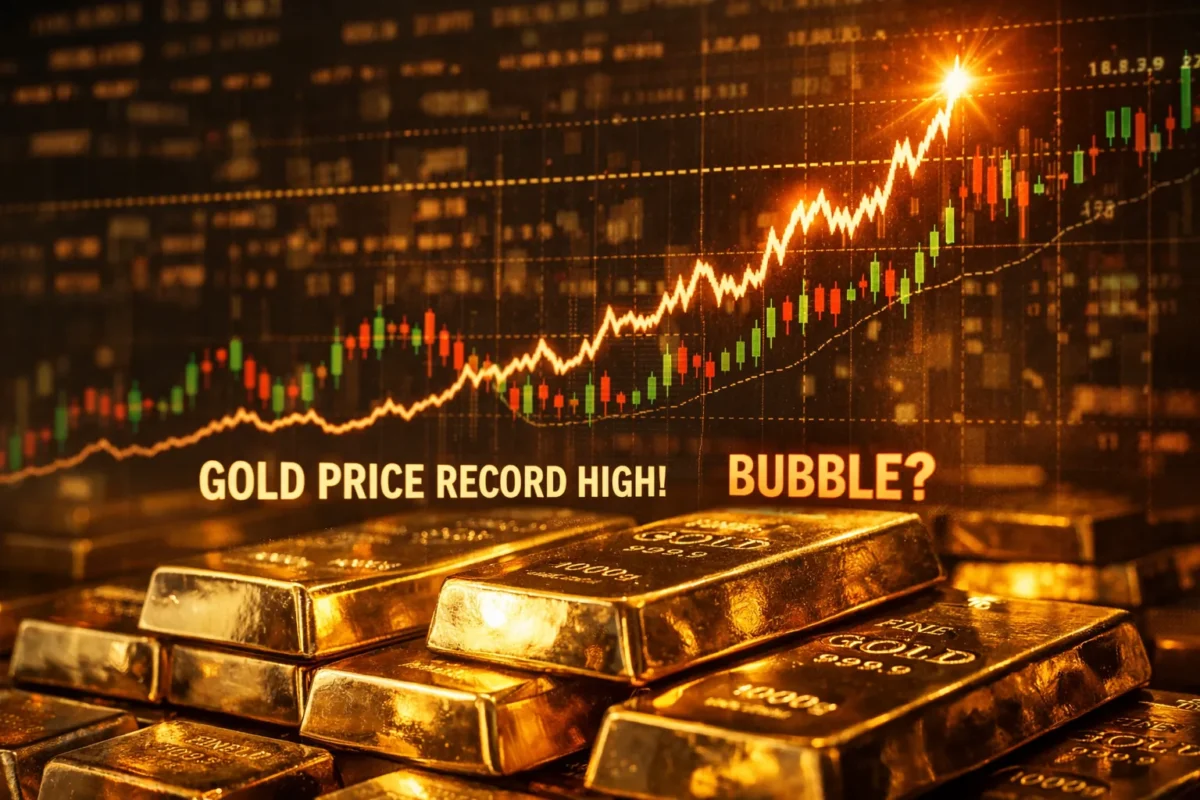
The recent surge in the price of gold has captivated global financial markets, with the precious metal repeatedly hitting new all-time highs. This dramatic ascent has naturally led to a single, pressing question dominating investor discussions: the gold price today is it bubble or not? For many, the sheer velocity of the price increase—an 84% jump over the past year alone—bears all the hallmarks of an unsustainable asset bubble, poised for a painful correction. Yet, a deeper analysis reveals that the current rally is fundamentally different from speculative manias of the past. It is not merely driven by retail fear or irrational exuberance, but by profound, structural shifts in the global economic and geopolitical landscape. Understanding this distinction is crucial for any investor seeking to navigate the current market. This comprehensive article will delve into the core drivers of gold’s record price, examine the arguments for and against the bubble thesis, and ultimately provide a framework for thoughtful, long-term decision-making regarding this ancient, yet ever-relevant, monetary asset. We will explore the unprecedented demand from central banks, the impact of de-globalization, and the metal’s enduring role as a hedge against currency debasement, providing the necessary context to move beyond the simple “bubble” label and grasp the true nature of gold’s revaluation.
Table of Contents
The New Normal: Analyzing Gold’s Record-Breaking Surge
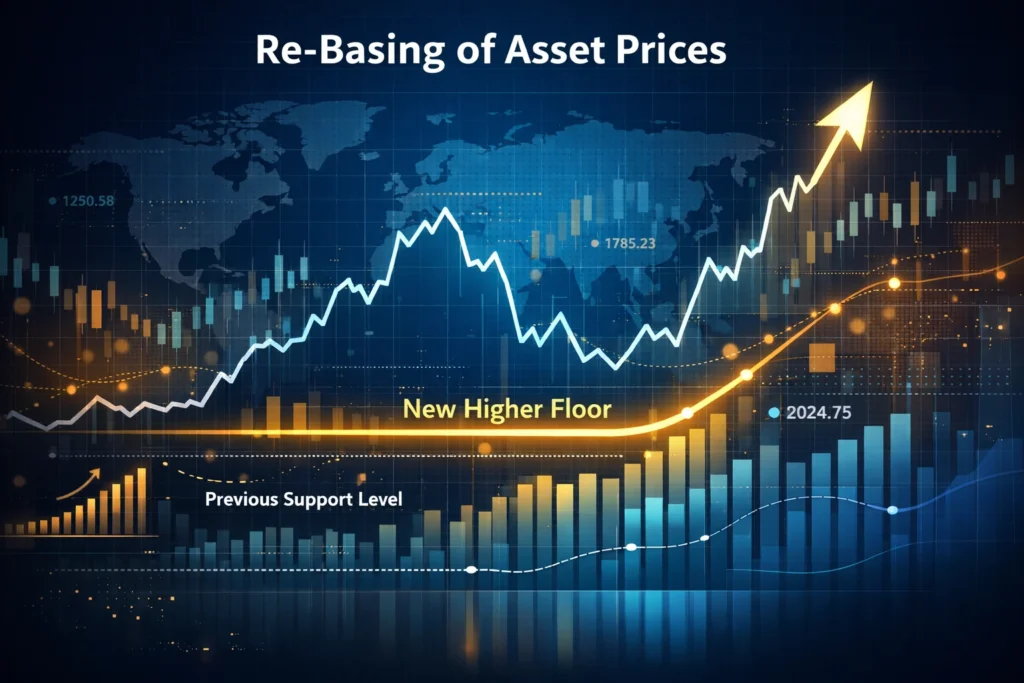
The price action in the gold market over the last two years has been nothing short of historic. After decades of being viewed by some as a relic of a bygone era, gold has roared back into the financial mainstream, shattering previous records and establishing a new, elevated price floor. As of late January 2026, the price per troy ounce has consistently hovered above the $5,000 mark, a level that was considered wildly optimistic just a few years prior [1]. This rapid revaluation is the first piece of evidence cited by those who believe the market is in a bubble. However, a closer look at the forecasts from major financial institutions suggests that this is not a temporary spike, but a fundamental re-basing of the metal’s value in a new economic regime.
For instance, major investment banks have revised their price targets upwards, signaling confidence in the sustainability of the current trend. J.P. Morgan Global Research, a key voice in the commodities space, projects that prices will average around $5,055 per ounce by the final quarter of 2026, with a potential push toward $5,400 per ounce by the end of 2027 [1]. Similarly, Goldman Sachs has raised its own end-of-2026 forecast to $5,400 per ounce, citing robust private-sector and emerging market demand [3]. These forecasts are not based on a belief in irrational speculation, but on quantifiable, structural demand shifts. The World Gold Council, a leading market development organization, also suggests that gold could rise by a further 5% to 15% in 2026, depending on the severity of global economic uncertainty [5].
To understand the magnitude of this shift, it is helpful to contextualize the current price against the backdrop of historical valuations. Gold’s price has traditionally been viewed in relation to the U.S. dollar, but the more meaningful context today is its value relative to the massive expansion of global money supply and debt. Since the U.S. dollar was decoupled from gold in 1971, the price of a troy ounce has increased by over 115-fold in U.S. dollar terms [4]. This is not a sign of gold inflating, but rather a reflection of the dollar’s steady debasement. The current rally is simply accelerating this long-term trend, driven by a confluence of factors that have fundamentally altered the risk-reward calculation for holding the metal. The key takeaway from the current price surge is that the market is pricing in a future characterized by higher inflation, greater geopolitical instability, and a continued loss of faith in traditional fiat currencies. This is the “new normal” that analysts are forecasting, and it is a powerful argument against the idea that the price is purely speculative.
| Institution | Forecast for End of 2026 | Rationale |
|---|---|---|
| J.P. Morgan | ~$5,055/oz (Q4 Average) | Structural central bank and investor diversification. |
| Goldman Sachs | $5,400/oz | Strong private-sector and emerging market demand. |
| World Gold Council | +5% to +15% from current levels | Dependent on economic uncertainty and interest rate environment. |
The consensus among high-authority sources is that the factors driving this revaluation are not exhausted. The trend is not expected to be linear, meaning volatility will persist, but the long-term trajectory remains firmly upward. This bullish outlook is predicated on the strength of two primary, non-speculative pillars of demand: the institutional buying power of central banks and the sustained, long-term investment demand from both retail and professional investors seeking a true store of value. The next section will explore the most powerful of these drivers, the structural shift in central bank policy that is quietly underpinning the entire market.
The Structural Drivers: Central Banks and Geopolitical De-risking

The single most important factor distinguishing the current gold rally from previous speculative peaks is the unprecedented, sustained demand from global central banks. This is not a short-term trade; it is a structural, strategic shift in how nations manage their foreign reserves. Central banks have been net buyers of gold for over a decade, but the volume of purchases in recent years has reached historic levels, consistently exceeding 1,000 tonnes annually [1]. While J.P. Morgan forecasts a slight mechanical reduction to around 755 tonnes in 2026, this figure remains significantly elevated compared to the pre-2022 average of 400–500 tonnes, indicating that the appetite for gold as a reserve asset is far from satiated [1].
The motivation behind this institutional buying spree is twofold: diversification and de-risking.
Diversification Away from the U.S. Dollar
For decades, the U.S. dollar has reigned supreme as the world’s primary reserve currency. However, a combination of factors—including the weaponization of the dollar through sanctions, massive U.S. debt accumulation, and persistent high inflation—has prompted many nations to seek alternatives. Gold, with its millennia-long history as a neutral, universally accepted store of value, is the natural beneficiary of this shift. Central banks are actively working to increase the share of gold in their total reserve holdings. According to IMF data, gold holdings now account for nearly 20% of official reserves globally, up from around 15% at the end of 2023 [1].
The potential for further buying is staggering. Many central banks, particularly in emerging markets (EM), still hold a relatively small percentage of their reserves in gold. If central banks with less than 10% gold exposure were to simply raise their allocation to that level, it would require a notional shift of hundreds of billions of dollars into gold, translating to thousands of tonnes of purchasing [1]. This structural demand acts as a powerful, non-speculative floor under the gold price. It is a long-term trend driven by sovereign policy, not by the short-term whims of the futures market.
Geopolitical Uncertainty and the BRICS Narrative
The second major driver is the accelerating trend of de-globalization and geopolitical fragmentation. The rise of the BRICS nations (Brazil, Russia, India, China, and South Africa, plus new members) and their efforts to establish alternative financial and trade systems are directly contributing to gold’s appeal. For these nations, gold represents a way to transact and hold wealth outside the direct control of Western financial systems. This is often referred to as the de-dollarization narrative.
The geopolitical transition, where nations are increasingly seeking independence and reducing their reliance on the U.S. dollar, makes the case for holding gold stronger than ever [4]. Central banks are buying gold not for yield, but for security and independence. They are hedging against the risk of a fragmented world where financial assets can be frozen or sanctioned. This is a fundamental regime change—a shift toward an inflationary, high-volatility, and de-globalized world—which inherently favors hard assets like gold over paper currencies and debt instruments. This strategic, policy-driven demand from the world’s most powerful financial institutions provides a robust foundation that is completely absent in typical asset bubbles.
The Bubble Thesis: Examining the Arguments for Overvaluation
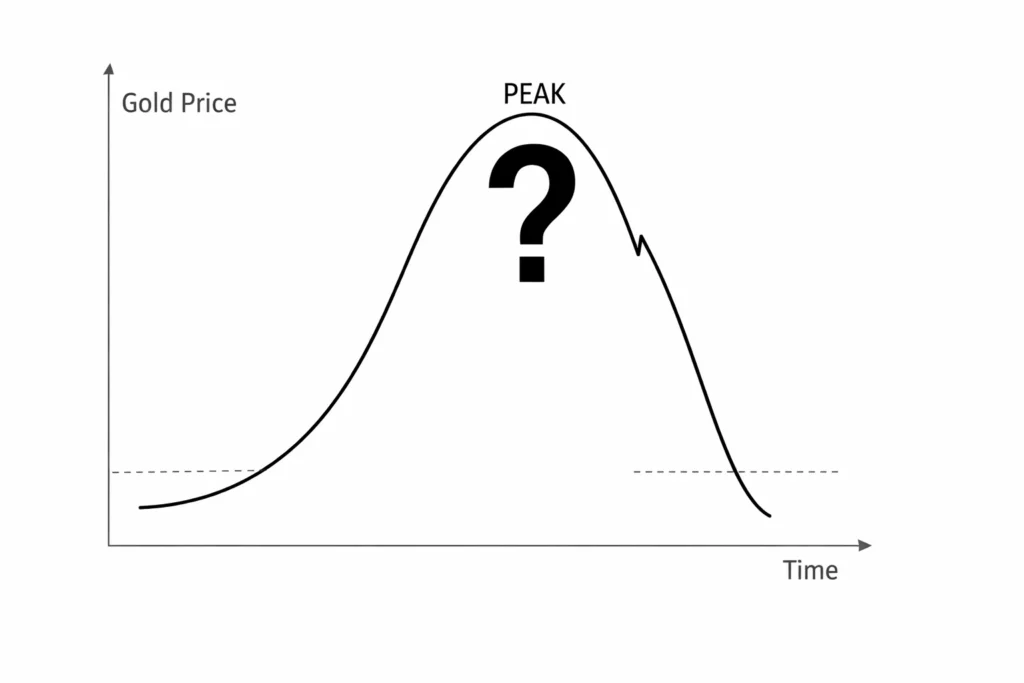
To provide a balanced perspective, it is essential to rigorously examine the arguments put forth by those who believe the gold market is indeed in a bubble. The core of the bubble thesis rests on two primary observations: the speed of the price increase and the perceived lack of fundamental yield.
Speed and Velocity of the Price Increase
The most compelling visual evidence for a bubble is the steep, near-vertical trajectory of the gold price chart. Asset bubbles are characterized by a rapid, self-fulfilling cycle where rising prices attract new investors, whose buying further inflates the price, attracting even more investors, until the market runs out of “greater fools.” The 84% year-over-year gain certainly fits the visual profile of the “mania” phase of a classic bubble [2].
However, this argument often fails to account for the starting point. The price of gold was artificially suppressed for decades, first by the Bretton Woods system and later by a period of relative geopolitical calm and low inflation following the Cold War. The current surge can be viewed not as an overshooting of value, but as a rapid correction to a more appropriate, higher valuation that reflects the true risk and monetary environment of the 2020s. As one expert noted, the current situation might be a “rational bubble,” where the price is high, but the underlying reasons—the regime change toward high inflation and de-globalization—make the high price a logical, albeit volatile, outcome [4].
The Lack of Yield and Opportunity Cost
A second, more traditional argument against gold is its status as a non-yielding asset. In a high-interest-rate environment, the opportunity cost of holding gold—the return foregone by not investing in interest-bearing assets like Treasury bonds—should theoretically depress its price. In a normal economic cycle, this is a valid point.
However, the current environment is far from normal. Investors are not just comparing gold to T-bills; they are comparing it to the long-term, systemic risk of holding fiat currency. When real interest rates (the nominal rate minus inflation) are low or negative, the opportunity cost of holding gold effectively disappears. Furthermore, the primary function of gold for central banks and sophisticated investors is not to generate yield, but to act as a risk-off hedge and a monetary insurance policy. The lack of yield is precisely what makes it a superior hedge against the risk of financial repression, where governments inflate away debt by keeping interest rates below the rate of inflation. In this context, gold’s zero yield is a feature, not a bug, as it is free from the counterparty risk inherent in all debt-based assets.
The table below summarizes the key arguments in the bubble debate:
| Feature | Bubble Argument | Anti-Bubble Argument |
|---|---|---|
| Price Velocity | Rapid, near-vertical rise (84% YoY) suggests mania. | A “re-basing” or rapid correction from decades of undervaluation. |
| Yield | Non-yielding asset; high opportunity cost in high-rate environment. | Zero counterparty risk; superior hedge against financial repression and fiat debasement. |
| Demand Source | Driven by retail fear and speculative futures trading. | Driven by structural, strategic central bank and institutional buying. |
| Underlying Cause | Irrational exuberance and herd mentality. | Fundamental regime change: high inflation, de-globalization, and currency risk. |
Ultimately, the bubble thesis fails to account for the depth and institutional nature of the current demand. A true bubble is a temporary phenomenon divorced from fundamentals. The current gold rally, while rapid, is deeply rooted in the most powerful fundamentals of all: sovereign policy and the structural need for a neutral, non-sovereign reserve asset in a world of increasing financial and geopolitical risk.
Gold as a Monetary Asset: Why the Bubble Analogy Fails

To truly understand why the “bubble” analogy is insufficient for gold, one must return to its foundational role as a monetary asset, not merely a commodity or a financial security. Gold is unique because it is simultaneously a physical commodity, a financial instrument (via ETFs and futures), and a non-sovereign currency. This triple identity gives it a resilience that other assets lack.
The Scarcity Principle and Enduring Value
Gold’s value is underpinned by its extreme scarcity. Unlike fiat currency, which can be printed in infinite quantities, the global supply of gold is finite and grows at a predictable, slow rate (the “mine supply” or “above-ground stock” grows by about 1.5% to 2% per year). This scarcity is the ultimate defense against debasement. Every ounce of gold ever mined still exists, and its value is preserved across generations and political regimes.
This characteristic makes gold the ultimate form of hard money. In times of crisis, when trust in institutions and paper assets collapses, gold is the asset of last resort. This is the “age-old wisdom” that drives demand in countries like India, where gold is often viewed as a store of value and a generational gift, regardless of short-term price fluctuations [4]. For these buyers, rising prices do not deter demand; they often increase it, a phenomenon economists sometimes refer to as a “Giffen good” effect in the poorest economic rungs, where there is no substitute for gold that is easily accessible and tradable for safety [4].
The Role of Gold in a Diversified Portfolio
For the modern investor, gold serves a critical function that cannot be replicated by stocks, bonds, or even other commodities. It is a negative correlation asset, meaning its price tends to rise when other financial assets—especially equities and real estate—are falling. This makes it an invaluable portfolio diversifier and a hedge against systemic risk.
In the current environment, gold is hedging against three specific, high-impact risks:
- Inflation Risk: As central banks continue to expand their balance sheets, the purchasing power of fiat currency erodes. Gold is the classic hedge against this loss.
- Geopolitical Risk: Wars, trade disputes, and political instability drive investors to seek safe haven assets. Gold’s neutrality makes it the preferred choice.
- Systemic Financial Risk: The risk of a major financial crisis, bank failure, or sovereign debt default. Gold carries no counterparty risk, making it the only truly safe asset outside of physical cash.
A thoughtful investor does not view gold as a growth asset to “get rich quick,” but as a permanent, stabilizing component of a well-balanced portfolio. Its purpose is to preserve wealth and reduce volatility, not to maximize short-term returns. This long-term, risk-management perspective is the antithesis of the speculative, short-term mindset that defines an asset bubble. The gold price today is a reflection of the market’s collective assessment of global risk, and that risk is demonstrably high.
Practical Steps for Navigating the Gold Market
The conclusion that gold is undergoing a structural revaluation rather than a speculative bubble does not mean that investors should blindly chase the price. Thoughtful decision-making requires a disciplined approach that aligns with gold’s role as a long-term store of value.
1. Focus on Allocation, Not Timing
Attempting to time the gold market is a fool’s errand. The price is highly volatile and reactive to daily news events, making short-term trading extremely difficult. Instead, investors should focus on establishing a strategic allocation that reflects their personal risk tolerance and their assessment of the global economic regime. Most financial advisors recommend an allocation of 5% to 15% of a total portfolio to gold, depending on the investor’s outlook on inflation and geopolitical stability. This allocation should be viewed as permanent insurance, not a tactical trade.
2. Choose the Right Vehicle
Investors have multiple ways to gain exposure to gold, each with its own benefits and drawbacks:
| Investment Vehicle | Pros | Cons |
|---|---|---|
| Physical Gold (Bars/Coins) | Zero counterparty risk, ultimate safe haven. | Storage costs, insurance, lower liquidity, high transaction costs. |
| Gold ETFs (Exchange-Traded Funds) | High liquidity, low transaction costs, easy to trade. | Subject to counterparty risk (the fund issuer), not physical ownership. |
| Gold Mining Stocks | Potential for high leverage to the gold price. | Subject to company-specific risks (management, operations, debt). |
| Gold Futures/Options | High leverage, low capital outlay. | Extremely high risk, requires specialized knowledge, not suitable for long-term investors. |
For the average long-term investor, a combination of physical gold (for ultimate security) and a low-cost, physically-backed ETF (for liquidity) offers the best balance.
3. Understand the Long-Term Horizon
Gold is not a “get rich quick” asset; it is a “stay rich” asset. Its performance should be measured over decades, not quarters. Its primary function is to preserve purchasing power during periods of systemic stress. The current high price should be viewed as a confirmation of its utility in the current high-risk environment. The long-term, thoughtful decision is to maintain a consistent allocation, rebalancing only when the gold portion significantly exceeds the target percentage.
Conclusion
The question of whether the gold price today is it bubble or not is a natural one, given the metal’s dramatic and historic ascent. However, the evidence overwhelmingly suggests that the current rally is not a speculative bubble driven by irrational retail frenzy, but a profound, structural revaluation of gold’s role in the global financial system. The price is being underpinned by two non-negotiable forces: the strategic, long-term buying of central banks seeking to de-risk their reserves, and the persistent, foundational demand from investors seeking a neutral hedge against currency debasement and geopolitical fragmentation.
The world has entered a new economic regime characterized by high debt, persistent inflation, and increasing geopolitical instability. In this environment, the traditional safe haven of gold is simply being priced to reflect its true value as the ultimate non-sovereign monetary asset. While volatility will remain a constant feature of the market, the long-term trend is supported by fundamentals that are unlikely to reverse in the near future. The thoughtful investor will recognize this shift, establish a disciplined, long-term allocation, and view gold not as a speculative play, but as an essential insurance policy for preserving wealth in an increasingly uncertain world.
FAQ Section
Why are central banks buying so much gold right now?
Central banks are buying gold primarily for diversification and de-risking. They are reducing their reliance on the U.S. dollar as the primary reserve asset due to concerns over U.S. debt levels, inflation, and the risk of sanctions. Gold is a neutral, universally accepted asset that carries no counterparty risk, making it the ideal choice for sovereign reserve management in a fragmented geopolitical landscape.
How does gold perform during periods of high interest rates?
Historically, high real interest rates (rates above inflation) can be a headwind for gold because they increase the opportunity cost of holding a non-yielding asset. However, in the current environment, the market is more focused on negative real interest rates and the risk of currency debasement. When inflation is high and central banks are perceived as being behind the curve, gold tends to perform well as a hedge against the loss of purchasing power, overriding the traditional drag from nominal interest rates.
Is it too late to buy gold at these record high prices?
Whether it is “too late” depends entirely on your investment horizon and goal. If you are seeking a short-term trading profit, the risk is high. If you are seeking a long-term wealth preservation tool and portfolio hedge, then the current price is simply the cost of insurance in the current high-risk environment. Experts believe the structural drivers supporting the price are not exhausted, suggesting the price floor has been permanently raised. Focus on a strategic allocation rather than trying to time the market.
What is the difference between a “bubble” and a “revaluation” in the gold market?
A bubble is a temporary, speculative phenomenon where the price of an asset becomes completely detached from its underlying fundamentals, driven purely by herd mentality and the expectation of selling to a “greater fool.” A revaluation (or re-basing) is a permanent or long-term shift in price driven by a fundamental change in the asset’s utility or the economic regime. The current gold rally is considered a revaluation because it is driven by structural, policy-driven demand from central banks and a global shift toward de-globalization and high inflation, which fundamentally increases gold’s utility as a safe-haven asset.
Should I buy physical gold or a gold ETF?
Both have merits. Physical gold (bars, coins) offers the highest level of security and zero counterparty risk, making it the ultimate safe haven. However, it involves storage costs and is less liquid. Gold ETFs (Exchange-Traded Funds) are highly liquid and easy to trade, but they introduce counterparty risk (the risk that the fund issuer fails). For most investors, a small, secure holding of physical gold combined with a larger, liquid position in a physically-backed ETF provides the best balance of security and accessibility.
We encourage you to continue this vital discussion on the future of hard assets. Share your thoughts and questions in the comments below, do you believe the gold price today is a rational revaluation or a classic bubble? Subscribe to our newsletter for more in-depth analysis on commodities, geopolitics, and wealth preservation strategies.