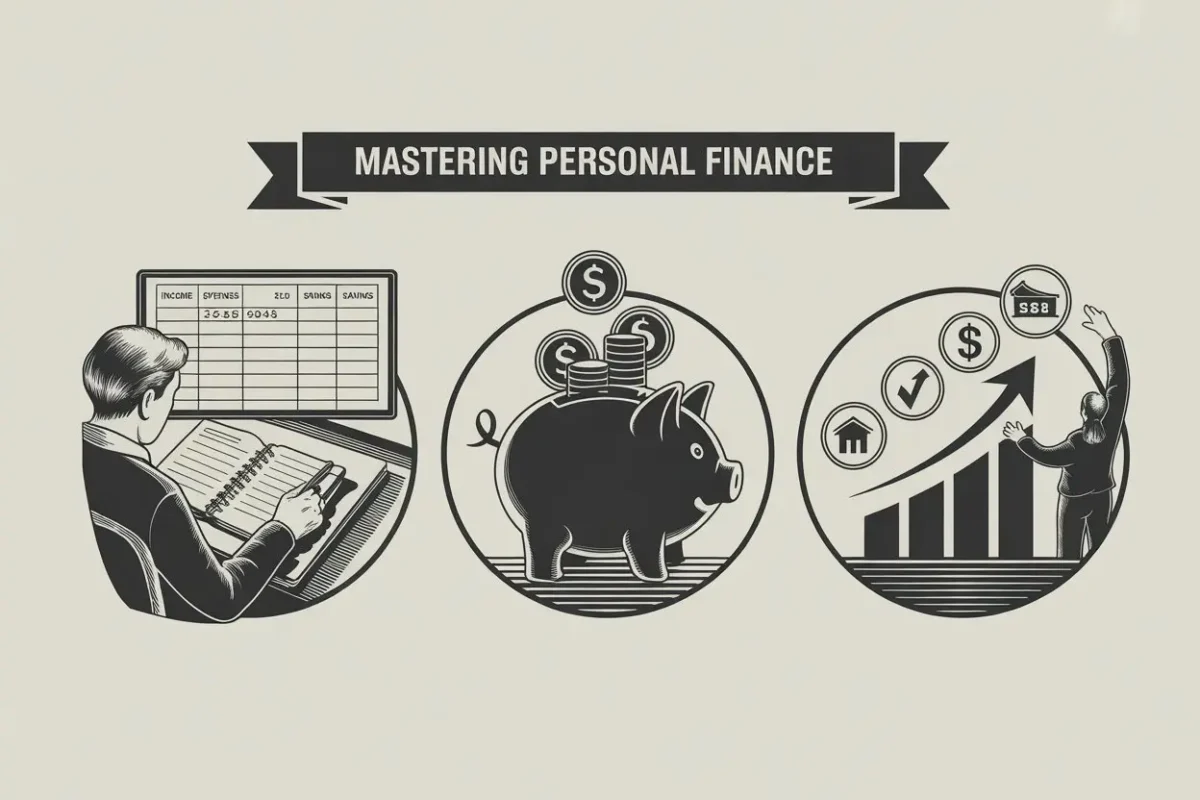
Investing is often hailed as the key to financial independence and wealth creation, but diving into the markets without mastering the personal finance basics can be risky. Before you buy your first stock, fund, or cryptocurrency, it’s crucial to build a strong financial foundation. This ensures that your investments are sustainable, well-planned, and resilient against unexpected challenges.
In this guide, we’ll break down the essential building blocks of personal finance—budgeting, saving, debt management, emergency funds, goal setting, and risk planning—and explain why each step is critical before you start investing. By the end, you’ll have a practical understanding of how to organize your money and make smarter investment decisions.
Table of Contents
Why Personal Finance Comes Before Investing
Personal finance is the groundwork of any wealth-building strategy. Without stability and structure, even the best investments can’t secure your future.
Think of your financial journey as building a house:
- Savings form the foundation.
- Debt control strengthens the walls.
- Investments are the roof protecting and growing your wealth.
As financial author Dave Ramsey puts it:
“Financial peace isn’t the acquisition of stuff. It’s learning to live on less than you make.”
The idea is simple—if you can manage money wisely today, your future investments will thrive tomorrow.
Step 1: Master the Budget — Your Financial Roadmap
The Power of Budgeting
Budgeting is the cornerstone of personal finance. It helps you understand where your money goes and ensures spending aligns with priorities. Without a budget, investing becomes guesswork.
A well-structured budget tells you:
- How much you can realistically save and invest.
- Which expenses are draining your income.
- How to adjust lifestyle habits to reach financial goals faster.
Popular Budgeting Frameworks
1. The 50/30/20 Rule
One of the simplest frameworks divides after-tax income as follows:
- 50% Needs: Rent, mortgage, utilities, food, insurance.
- 30% Wants: Dining out, entertainment, travel.
- 20% Savings & Debt Repayment: Emergency fund, investments, loans.
2. Zero-Based Budget
Every dollar you earn is assigned a purpose. This method ensures accountability and reduces “leakage” from untracked spending.
(Suggested visual: Pie chart comparing 50/30/20 vs. Zero-Based budgeting allocations.)
Digital Tools That Help
- Mint or YNAB (You Need A Budget) for tracking expenses.
- Wally and Goodbudget for UAE residents seeking dirham-based tools.
Establishing budgeting habits creates positive cash flow — the primary ingredient for wealth creation.
Step 2: Build an Emergency Fund Before You Invest
An emergency fund protects you from financial shocks — job loss, medical bills, or sudden repairs. It keeps your investments intact during crises.
How Much to Save
Most advisors recommend 3 to 6 months’ worth of living expenses. Freelancers or business owners might aim for 9 to 12 months due to fluctuating income.
| Monthly Expenses (AED) | Emergency Fund (3 Months) | Emergency Fund (6 Months) |
|---|---|---|
| 5,000 | 15,000 | 30,000 |
| 10,000 | 30,000 | 60,000 |
| 15,000 | 45,000 | 90,000 |
(Image idea: A bar chart comparing various buffer levels against monthly expenses.)
Where to Keep It
- High-yield savings account (earn interest + immediate access).
- Money market account (slightly better returns but limited withdrawals).
- Short-term Treasury Bills for low-risk savers in the U.S. context.
Avoid tying emergency funds in volatile markets or assets that could lose value during urgent withdrawals.
Step 3: Manage Debt — The Hidden Drain on Wealth
Debt can either be a tool or a trap depending on how you use it. Good debt—like student loans or home mortgages—can help you build equity or income potential. Bad debt—like high-interest credit cards—erodes financial health.
The Cost of Expensive Debt
If you owe AED 10,000 on a credit card at 20% interest and only pay the minimum monthly, you could pay over AED 18,000 in interest over several years. This is money that could have been invested for growth.
Strategies to Pay Down Debt
- Debt Avalanche: Start with the highest-interest debt first, minimizing total interest paid.
- Debt Snowball: Tackle the smallest debt first to gain motivation from quick wins.
- Consolidation: Combine multiple high-interest debts into a single lower-interest loan.
Practical Tip
Always pay off high-interest loans before investing heavily. The guaranteed “return” from eliminating 18–20% credit card interest often exceeds most investment gains.
Step 4: Understand Cash Flow and Net Worth
Before investing, you need a clear picture of your personal cash flow—how much money comes in, how much goes out—and your net worth, the difference between assets and liabilities.
Tracking Cash Flow
Cash flow determines how much you can invest each month without jeopardizing essentials.
| Income | Expenses | Net Cash Flow |
|---|---|---|
| AED 15,000 | AED 12,000 | +AED 3,000 |
That AED 3,000 can then be channeled into savings or investments.
Calculating Net Worth
Net Worth=Total Assets−Total Liabilities
Example:
- Assets: AED 300,000 (car, cash, investments, property)
- Liabilities: AED 200,000 (loans, credit cards)
- Net Worth = AED 100,000
Your goal is to gradually grow this number by saving, reducing debt, and investing wisely.
Step 5: Set Financial Goals That Guide Investments
Without clear financial goals, investing can feel like throwing darts in the dark. Goals create timelines, discipline, and measurable success.
Categories of Financial Goals
| Time Horizon | Example Goal | Recommended Saving or Investment Type |
|---|---|---|
| Short-term (0–3 years) | Emergency fund, vacation | High-yield savings or term deposits |
| Medium-term (3–10 years) | Home down payment | Balanced fund, index fund |
| Long-term (10+ years) | Retirement, child’s education | Stocks, ETFs, real estate |
Financial goals should be SMART:
- Specific: “Save AED 100,000 for a down payment.”
- Measurable: Track progress monthly.
- Attainable: Based on realistic income.
- Relevant: Aligned with your values.
- Time-bound: Within a defined period.
(Suggested image: Funnel diagram showing short-, medium-, and long-term goal categories.)
Step 6: Learn Basic Risk Management
Before investing, you must understand how risk works—and how to manage it.
Types of Financial Risks
- Market risk: The possibility that investments decrease in value.
- Inflation risk: Savings lose buying power over time if returns are lower than inflation.
- Liquidity risk: Difficulty accessing funds when needed.
- Personal risk: Job loss, illness, or family emergencies.
Building Protection Layers
- Insurance: Health, disability, and life insurance shield your finances from catastrophic expenses.
- Diversification: Spread investments across asset classes (stocks, bonds, real estate).
- Emergency reserves: Already covered above but critical for stabilizing your strategy.
As Warren Buffett reminds investors:
“Risk comes from not knowing what you’re doing.”
Learning the fundamentals before investing drastically reduces your exposure to avoidable mistakes.
Step 7: Establish Smart Saving and Investment Habits
After mastering the basics, you can start incorporating disciplined saving and investing into your monthly routine.
Automate Savings
Set a fixed percentage of your income to automatically transfer into savings and investment accounts right after payday. This creates consistency and removes emotional spending decisions.
Use the “Pay Yourself First” Approach
Prioritize saving before paying bills or discretionary expenses. It fosters accountability and guarantees progress toward financial goals.
(Chart idea: Flow diagram illustrating automatic transfers from income to savings, goals, and investments.)
Start Small, Stay Consistent
Even saving AED 500–1,000 monthly, when invested in a diversified fund, compounds significantly over time. For example, AED 1,000 invested monthly for 20 years at 8% annual growth becomes over AED 589,000.
Step 8: Know When You’re Ready to Invest
You’re ready to invest when:
- You’re debt-free from high-interest loans.
- You’ve built an emergency fund.
- You’re consistently saving a portion of income.
- You have a clear understanding of your goals and risk profile.
Only then should you allocate funds into diversified investments like:
- Low-cost index funds or ETFs
- Mutual funds
- Retirement accounts or pension plans
- Real estate (for intermediate to advanced investors)
(Suggested graphic: Checklist summarizing “Investment Readiness”).
Having these fundamentals ensures you invest from a position of strength—not desperation or speculation.
Common Mistakes to Avoid Before Investing
- Ignoring financial literacy: Never invest in something you don’t understand.
- Investing borrowed money: Leverage magnifies both gains and losses.
- No emergency fund: Poor liquidity often forces premature withdrawals.
- Neglecting cash flow: Overcommitting to investments can trigger financial stress.
- Chasing trends: Herd mentality often leads to buying high and selling low.
Personal finance success is about patience, planning, and discipline—not chasing shortcuts.
Step 9: Continuous Learning and Adaptation
Financial management isn’t a one-time event but an ongoing process. As your income and goals evolve, your financial strategy should mature too.
Recommended Reading & Resources
- The Simple Path to Wealth by JL Collins — investing fundamentals.
- Your Money or Your Life by Vicki Robin — creating mindful spending habits.
- I Will Teach You to Be Rich by Ramit Sethi — modern personal finance systems.
Online tools like Investopedia, Morningstar, and Khan Academy Finance also offer free beginner-to-advanced materials.
Conclusion: Build First, Invest Second
Before you commit money to the markets, commit to your financial future by mastering the essentials. These personal finance basics—budgeting, saving, debt control, risk management, and goal-setting—create the sturdy financial platform from which investments can safely grow.
Approach your financial life as you would any engineering project: foundation first, structure next, finishing touches last. Once stability is in place, investing transforms from stressful speculation into a confident, informed path toward wealth and independence.